West Highland White Terrier
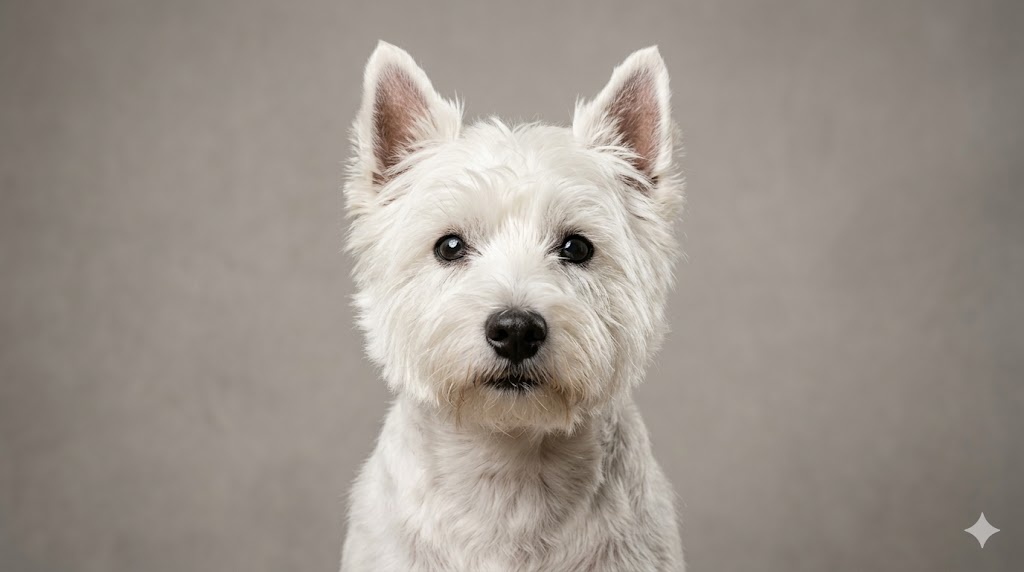
The West Highland White Terrier - universally called the "Westie" - is a small, sturdy, pure-white Scottish terrier with a black-button nose, dark eyes, and a personality larger than most dogs twice its size.
🗓️ Last reviewed: June 2026
Overview
The West Highland White Terrier - universally called the "Westie" - is a small, sturdy, pure-white Scottish terrier with a black-button nose, dark eyes, and a personality larger than most dogs twice its size. Bred to hunt rats, foxes, and badgers in the Scottish Highlands, the Westie retains every gram of terrier confidence and stubborn independence. Behind the cute teddy-bear appearance is a serious working terrier - bold, vocal, and absolutely certain of its own importance.
History & Origins
Small white working terriers have existed in Scotland for centuries. The modern Westie was developed in the late 1800s on the Poltalloch estate in Argyll, Scotland, by Colonel Edward Donald Malcolm. After accidentally shooting a brown terrier of his own pack - mistaking it for game - Malcolm decided to breed only white dogs so they could be distinguished from quarry. The pure white colour locked in.
The breed was initially called the "Poltalloch Terrier" and the "Roseneath Terrier." The current name was adopted around 1908. The Kennel Club (UK) recognised the breed in 1907; the AKC followed in 1908.
The breed exploded in popularity in the late 20th century, helped enormously by long-running dog food advertising. Westies became one of the most popular small breeds in Britain and a familiar pet worldwide.
Appearance
Small, sturdy, square. Adults stand 25-28 cm (10-11 in) and weigh 7-10 kg (15-22 lb).
Key features:
- Coat: harsh, straight outer coat with a soft thick undercoat. The famous "Westie head" is achieved by shaping the head furnishings into a rounded chrysanthemum.
- Colour: pure white only - the breed's defining feature.
- Head: broad, with bushy eyebrows, sharp dark almond eyes, and small erect ears.
- Tail: carrot-shaped, 12-15 cm long, carried up jauntily; never docked.
Temperament & Character
Bold, confident, and lively. The Westie is a terrier through and through - independent, alert, and quick to defend itself. Most are friendly with family and reserved or watchful with strangers. The breed bonds firmly with its people but does not need constant cuddling.
Westies are vocal. The breed barks at strangers, sounds, and minor injustices - making excellent alarm dogs and indifferent quiet companions. Most have moderate prey drive; rats, mice, and squirrels are not safe, and some Westies struggle to live peacefully with cats.
Care
Coat & Grooming
Two paths.
Hand-stripped (show standard): the harsh coat is plucked out a few hairs at a time every 6-8 weeks. Preserves coat texture, colour, and weather-resistance. Skilled groomer or owner required.
Clipped (most pets): professional grooming every 6-8 weeks. Easier and cheaper but the coat becomes softer and may yellow over time.
Whatever the method, brush 2-3 times weekly with a slicker and metal comb. The leg furnishings and beard tangle easily. The breed's pure white coat shows everything; regular bathing every 3-4 weeks keeps it presentable.
Clean ears weekly. Pluck or trim ear-canal hair. Brush teeth daily. Trim nails every 3 weeks. Trim hair between paw pads.
Westies shed less than most breeds. The harsh coat is partly self-cleaning.
Exercise & Activity Needs
Moderate. Adults need 45-60 minutes of daily exercise - walks, indoor play, scent games. The breed is more athletic than the size suggests and enjoys earthdog, barn hunt, agility, and rally.
Health & Lifespan
Average lifespan is 13-15 years.
Common concerns:
- Atopic dermatitis (skin allergies) - extremely common in this breed. Many Westies have lifelong skin and ear issues.
- Westie skin disease - a constellation of conditions including epidermal dysplasia, requiring specialist care.
- Pulmonary fibrosis (Westie lung disease) - a serious breed-specific lung condition.
- Craniomandibular osteopathy (CMO) - abnormal jaw bone growth in puppies; usually resolves with age.
- Legg-Calvé-Perthes (hip joint).
- Patellar luxation.
- Globoid cell leukodystrophy - a fatal neurological storage disease; DNA test available.
- Liver disease and copper toxicosis - relatively common.
- Cataracts.
Skin issues are the single biggest health challenge in this breed. Choose a breeder who openly discusses skin disease history in their lines.
Feeding & Nutrition
Adults typically eat 1/2 to 1 cup of quality food per day in two meals. The breed gains weight easily; measure portions.
Food allergies are common. Many Westies do best on a hydrolysed or novel-protein diet, particularly if skin or ear issues are present. Discuss with a vet familiar with the breed's specific dermatological challenges.
Pros & Cons
Pros
- Sturdy small dog with big personality.
- Long-lived.
- Low-shedding - often tolerated by allergy sufferers.
- Adaptable to apartments.
- Distinctive, photogenic appearance.
Cons
- Vocal - barks readily.
- Significant skin issues common; high vet bills.
- High grooming demands.
- Stubborn and independent.
- Strong prey drive.
- Some lines have multiple inherited diseases.
Best Suited For
- Active singles, couples, retirees.
- Apartment dwellers tolerant of barking.
- Families with older children.
- Owners willing to budget for grooming and skin care.
- Terrier sport homes (earthdog, barn hunt).
Not suited for households with cats or small pets, noise-sensitive neighbours, or anyone unwilling to manage skin-disease care.
West Highland White Terrier puppy growth chart
A typical growth curve for a toy breed like the West Highland White Terrier, estimated from its adult weight of 7-10 kg. Puppies vary with sex, genetics and diet, so treat this as a guide - for your own puppy, use the puppy weight predictor.
| Age | Typical weight | % of adult |
|---|---|---|
| 2 mo | 2.3-3.3 kg | 33% |
| 3 mo | 3.2-4.5 kg | 45% |
| 4 mo | 3.9-5.5 kg | 55% |
| 6 mo | 5.3-7.5 kg | 75% |
| 9 mo | 6.7-9.5 kg | 95% |
| 12 mo | 7-10 kg | 100% |
| Adult | 7-10 kg | 100% |
West Highland White Terrier - frequently asked questions
Why are Westies prone to skin problems?
The breed is genetically predisposed to atopic dermatitis and a cluster of related skin conditions. Cause is multifactorial - immune, allergic, and genetic. Lifelong skin care is common.
Do they bark a lot?
Yes. Westies are vocal alarm dogs. Training reduces but rarely eliminates barking.
Are they good with kids?
With respectful older children, yes. The breed can be impatient with very young toddlers and may snap defensively if handled roughly.
Can Westies live with cats?
Sometimes, with careful introduction. The breed's prey drive often makes cohabitation difficult; rats and small pets are not safe.
Are they hypoallergenic?
No dog is fully hypoallergenic. Westies shed minimally and produce moderate dander; many allergy sufferers tolerate them.
🧠 Test yourself: guess the dog
Three clues from our quiz bank, each about another of our dogs. Can you name them?
Clue 1.This tiny toy spaniel takes its French name from the butterfly that its large, fringed, upright ears resemble.
It's the Papillon - read the full profile →
Clue 2.Bred in Wales to drive cattle, this short-legged dog has large erect ears and a fox-like face.
It's the Pembroke Welsh Corgi - read the full profile →
Clue 3.This long-bodied, short-legged hound comes in smooth, wirehaired, and longhaired coats.
It's the Dachshund - read the full profile →
💛 Adoptable West Highland White Terriers near you
Real dogs of this breed (and close mixes) waiting in shelters and rescues right now, live from Petfinder. We have no affiliation and earn nothing - if someone catches your eye, the link goes straight to their shelter. New to adopting? Start with our adoption guide.
Widget not loading (some ad-blockers hide it)? Search directly on petfinder.com.