Whippet
The Whippet is a medium-sized English sighthound - a smaller, lighter version of the Greyhound bred for racing and rabbit coursing in the 1800s.
🗓️ Last reviewed: June 2026
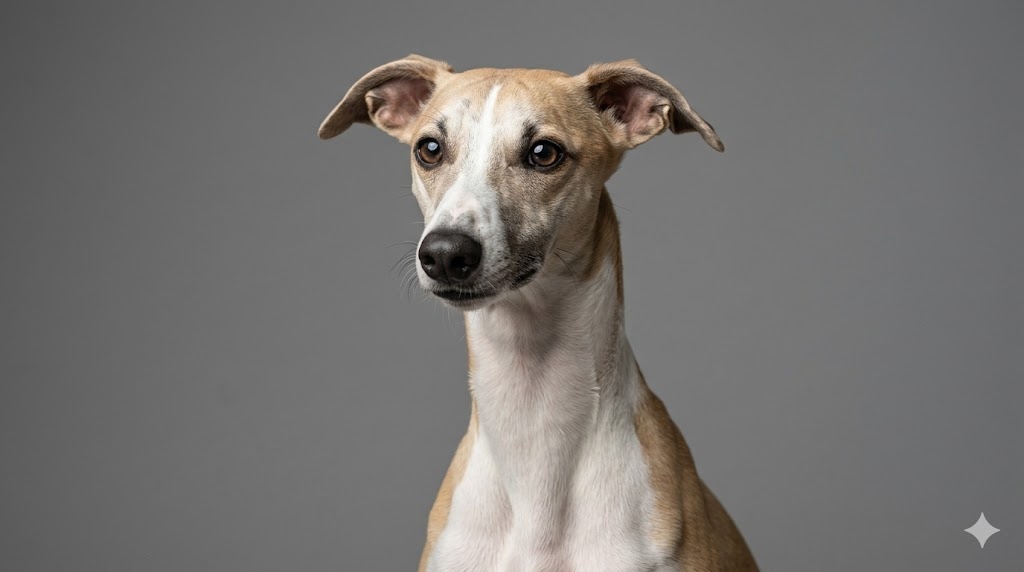
Overview
The Whippet is a medium-sized English sighthound - a smaller, lighter version of the Greyhound bred for racing and rabbit coursing in the 1800s. Sleek, elegant, and built for explosive speed, the Whippet is also one of the gentlest, most affectionate breeds in the world. Sometimes called the "poor man's racehorse" for its history of working-class popularity, the modern Whippet combines remarkable athletic capability with a couch-loving home demeanour that surprises most first-time owners.
History & Origins
The Whippet emerged in 19th-century northern England, particularly the mining and mill towns of Lancashire and Yorkshire. Working-class enthusiasts wanted a coursing and racing dog smaller and cheaper to keep than the Greyhound. The Whippet was developed from smaller Greyhounds crossed with terriers (for tenacity) and possibly small Italian Greyhounds (for refinement).
The breed quickly became popular for rabbit coursing, rag racing (chasing a waved cloth down a track), and informal track racing. The Whippet was the working-class racehorse - entire towns would gather on Sundays to watch races and place bets.
The Kennel Club recognised the breed in 1891. The AKC followed in 1888 (one of the earliest US recognitions). Today the Whippet is a popular companion and a regular winner in lure coursing, agility, and dock diving competitions.
Appearance
Medium-sized, slim, elegant. Males stand 47-51 cm (18½-20 in) and weigh 11-18 kg (25-40 lb); females are slightly smaller. The build is balanced, lean, and aerodynamic - a sprinter's silhouette.
Key features:
- Coat: very short, fine, smooth, close to the body.
- Colour: any colour or combination - fawn, brindle, black, blue, red, white, parti-coloured. No colour is preferred over another.
- Head: long, lean, with a slight stop and small dark almond eyes.
- Ears: small, rose-shaped, folded back along the neck when relaxed.
- Tail: long, tapering, carried below the topline.
Temperament & Character
Gentle, affectionate, and surprisingly quiet. Whippets are deeply bonded to family, typically excellent with children, and friendly with other dogs (especially other sighthounds). Most are reserved with strangers - not unfriendly, just selectively warm.
At home Whippets are couch potatoes. The breed sleeps 14-18 hours a day and produces almost no noise - many Whippets rarely bark. They are clean, low-odour, and gentle in the house.
Outside, the same dog becomes a 50-km/h missile. Whippets accelerate from couch to top speed in seconds and chase anything that moves. Recall is famously unreliable in open country. Most owners use long lines and never trust off-leash freedom near roads or unfamiliar areas.
Prey drive is high. Cats and small pets are at risk; some Whippets cohabit with cats peacefully, others cannot.
Care
Coat & Grooming
The short single coat is the lowest-maintenance of almost any breed: weekly rub-down with a rubber curry, baths every 6-8 weeks. Sheds minimally.
The lack of undercoat and body fat means limited insulation. Whippets need coats in cold or wet weather and shade in heat. Provide soft beds - there is almost no body padding for hard floors.
Clean ears weekly. Trim nails every 3 weeks (delicate nails). Brush teeth several times weekly.
Exercise & Activity Needs
Surprisingly modest given the speed. Adults need 30-60 minutes of daily exercise - a sprint, a couple of structured walks, and indoor play. The breed needs at least one daily opportunity for full-speed running in a safe enclosed space.
The breed excels at lure coursing, dock diving, agility (very fast at it), straight racing, and rally. After exercise Whippets sleep extensively.
Health & Lifespan
Average lifespan is 12-15 years.
Common concerns:
- Eye conditions - progressive retinal atrophy, lens luxation, cataracts.
- Heart disease - adult-onset cardiomyopathy.
- Anaesthetic sensitivities - sighthounds metabolise anaesthetics differently; inform the vet, choose a sighthound-experienced practice.
- Injuries from running - torn paw pads, cuts, muscle strains.
- Hypothyroidism.
- MDR1 (mild) - uncommon but possible.
- Bloat (GDV) - moderate risk, despite the lean build.
- Skin tears - thin skin and lack of fat make superficial wounds common.
The breed is one of the healthiest medium-sized breeds overall.
Feeding & Nutrition
Adults typically eat 1½-2 cups of quality food per day in two meals. The breed maintains lean condition naturally - Whippets should look slightly bony to outsiders. Ribs visible at running speed, easily felt at rest.
Lean is correct; "filling out" a Whippet is harmful. Overfeeding compromises athletic performance and longevity.
Pros & Cons
Pros
- Gentle, affectionate, family-oriented.
- Very low grooming and minimal odour.
- Quiet - rarely barks.
- Calm at home; intense athleticism outside.
- Long-lived for a medium breed.
- Good with children.
Cons
- Strong prey drive - small pets at risk.
- Unreliable recall in open country.
- Cold-sensitive; needs coats and beds.
- Skin and tail tears common.
- Reserved with strangers.
- Anaesthetic sensitivities.
Best Suited For
- Apartment dwellers and house residents alike.
- Families with children of any age.
- Mild-climate homes.
- Households with secure outdoor exercise space.
- Sighthound enthusiasts.
- Lure coursing and dock diving homes.
Not suited for households with cats or rabbits (sometimes manageable, sometimes not), cold-climate outdoor lifestyles, or owners wanting an off-leash dog in open country.
Whippet puppy growth chart
A typical growth curve for a medium breed like the Whippet, estimated from its adult weight of 11-18 kg. Puppies vary with sex, genetics and diet, so treat this as a guide - for your own puppy, use the puppy weight predictor.
| Age | Typical weight | % of adult |
|---|---|---|
| 2 mo | 3-4.9 kg | 27% |
| 3 mo | 4.4-7.2 kg | 40% |
| 4 mo | 5.5-9 kg | 50% |
| 6 mo | 7.5-12.2 kg | 68% |
| 9 mo | 9.4-15.3 kg | 85% |
| 12 mo | 10.7-17.5 kg | 97% |
| Adult | 11-18 kg | 100% |
Whippet - frequently asked questions
Are Whippets good apartment dogs?
Excellent - they are quiet, clean, calm at home, and need only short bursts of exercise. The space requirement is for daily running, not for the home itself.
Are they good with kids?
Generally excellent - gentle, patient, and tolerant. The breed bonds easily with children.
Can Whippets live with cats?
Sometimes - depends on the individual dog and careful introduction. Many Whippets cohabit peacefully with household cats; some cannot.
Do they shed?
Minimally. The short single coat sheds steadily but produces less hair than almost any other breed.
How fast are they really?
Top sprint speeds around 55-60 km/h. The Whippet has the highest acceleration of any breed pound-for-pound. The breed accelerates from standing to top speed in 2.5 seconds.
🧠 Test yourself: guess the dog
Three clues from our quiz bank, each about another of our dogs. Can you name them?
Clue 1.A sturdy little Scottish ratting terrier with a carrot-shaped tail and a hard white outer coat, often appearing on shortbread tins.
It's the West Highland White Terrier - read the full profile →
Clue 2.A big, fluffy, double-coated dog from Japan, it has small triangular eyes, a broad head, and a plush tail that curls over its back.
It's the Akita - read the full profile →
Clue 3.A massive yet agile estate-guarding breed, it combines mastiff bulk with bulldog tenacity in a roughly 60/40 ancestral mix.
It's the Bullmastiff - read the full profile →
💛 Adoptable Whippets near you
Real dogs of this breed (and close mixes) waiting in shelters and rescues right now, live from Petfinder. We have no affiliation and earn nothing - if someone catches your eye, the link goes straight to their shelter. New to adopting? Start with our adoption guide.
Widget not loading (some ad-blockers hide it)? Search directly on petfinder.com.