Praying Mantis
The Praying Mantis is a predatory insect kept by enthusiasts for its fascinating hunting behaviour and almost alien appearance.
🗓️ Last reviewed: June 2026
Overview
The Praying Mantis is a predatory insect kept by enthusiasts for its fascinating hunting behaviour and almost alien appearance. Several species are commonly kept; lifespans are short (typically under a year for adults) but the predatory feeding behaviour makes them captivating pets.
Common Pet Species
- Chinese Mantis (Tenodera sinensis).
- European Mantis (Mantis religiosa).
- Carolina Mantis.
- Orchid Mantis (Hymenopus coronatus) - striking pink/white flower mimic.
- Ghost Mantis (Phyllocrania paradoxa).
- Giant Asian Mantis.
Appearance
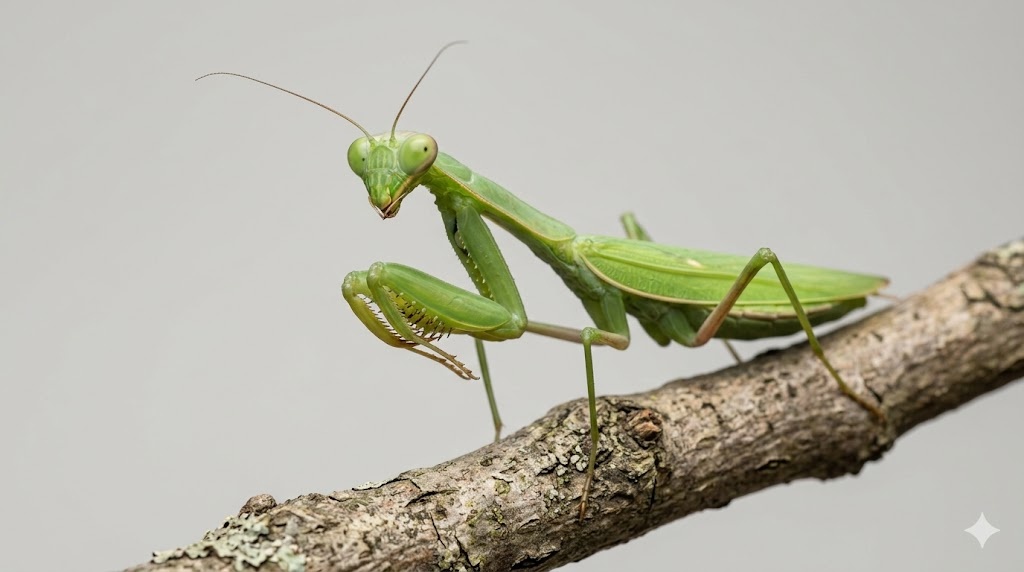
Size varies: 3-10 cm depending on species. Triangular head with rotating ability. Large folded forelegs (raptorial) for grasping prey.
Temperament & Handling
Predatory but not dangerous to humans. Most can be carefully handled - slow, deliberate movements. Bites are rare and harmless.
Enclosure
Minimum cage height: 3× length of mantis. Mesh top for ventilation; sides may be plastic or glass.
Provide branches and silk plants for climbing and ambush hunting.
Heating, Humidity, Lighting
- Temperature: 22-28°C (species-specific).
- Humidity: 50-70%.
- Daily light misting.
Diet
Live insects only. Flies, crickets, moths sized to mantis (prey should be roughly 1/3 to 1/2 the mantis's body size).
Feed nymphs every day; adults every 2-3 days.
Health & Lifespan
6 months to 1 year as adult (most species). Total life cycle 1-2 years including nymph stages.
Common concerns:
- Moulting failures - biggest cause of death. Adequate height and humidity essential.
- Dehydration.
Pros & Cons
Pros: fascinating to observe, low cost, low space, child-friendly with supervision. Cons: very short lifespan, live insect feeding, cannibalistic (cannot house together).
Praying Mantis - frequently asked questions
Can I keep two together?
No - they eat each other. Single mantis per enclosure.
Do they bite?
Bites are extremely rare and harmless to humans.
How long do they live?
Adults 6 months to 1 year. Total life cycle from hatching about 1-2 years.
Are they good for kids?
For observation, yes - fascinating educational pets. Older children only.
Where do I get one?
Specialist invertebrate dealers. Sometimes wild-caught local species (where legal).
🧠 Test yourself: guess the exotic
Three clues from our quiz bank, each about another of our exotic. Can you name them?
Clue 1.This large, hairy spider can flick irritating hairs from its abdomen as a defense and grows by shedding its entire exoskeleton.
It's the Tarantula - read the full profile →
Clue 2.Used in classrooms and films, this docile, climbing insect cannot fly and grows several inches long.
It's the Madagascar Hissing Cockroach - read the full profile →
Clue 3.Kept as a low-maintenance pet abroad, this slow nocturnal animal needs calcium to build its huge spiral shell.
It's the Giant African Land Snail - read the full profile →