Stick Insect (Phasmid)
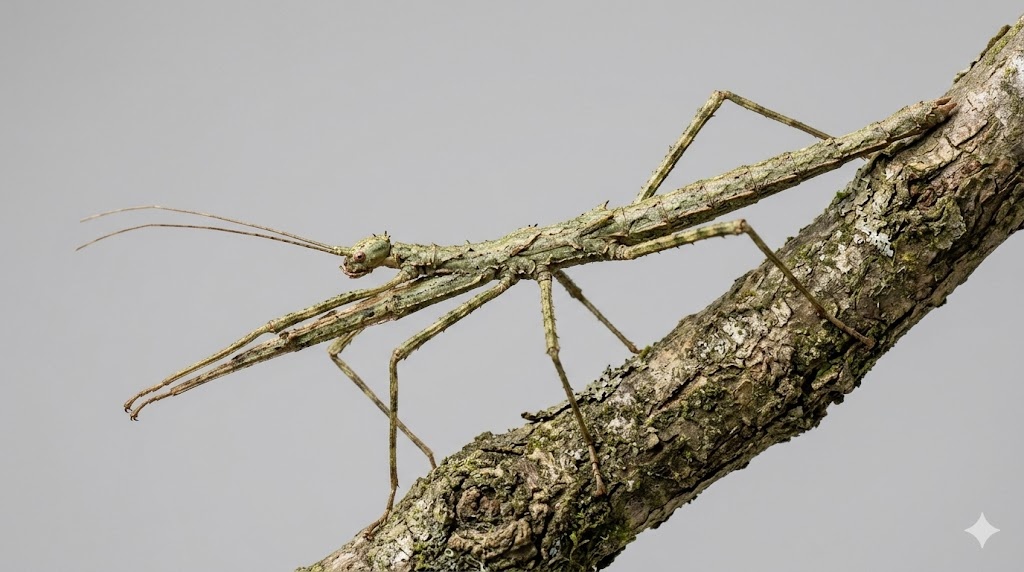
Stick insects are masters of camouflage - twig-like, leaf-like, or moss-like insects that hide in plain sight.
🗓️ Last reviewed: June 2026
Overview
Stick insects are masters of camouflage - twig-like, leaf-like, or moss-like insects that hide in plain sight. Over 3,000 species exist; about a dozen are commonly kept as pets. Quiet, undemanding, fascinating to observe.
Common Pet Species
- Indian Stick Insect (Carausius morosus) - most common beginner species. Parthenogenetic (no males needed).
- Pink-Winged Stick Insect.
- Giant Spiny Stick Insect.
- Vietnamese Stick Insect.
- Australian Spiny Stick Insect.
Appearance
Size varies enormously - 5 cm to over 30 cm depending on species. Most resemble twigs or leaves.
Temperament & Handling
Calm, slow, fragile. Handle gently - legs can fall off (regenerate at next moult). Most are not dangerous; some larger species can give a mild bite or pinch.
Enclosure
Mesh or screen enclosure 30 × 30 × 45 cm vertical for smaller species; larger for big species. Vertical orientation essential - they hang to moult.
Mesh side preferred over solid glass for ventilation.
Heating, Humidity, Lighting
- Temperature: 22-28°C.
- Humidity: 60-80% (species-specific).
- Daily misting.
Diet
Strict herbivores. Each species has specific plant preferences. Common food plants:
- Bramble (blackberry leaves) - accepted by most species.
- Privet.
- Oak.
- Eucalyptus (specific species).
- Ivy.
Replace fresh leaves every 2-3 days.
Health & Lifespan
1-2 years.
Common concerns:
- Moulting issues - fail to shed completely; cause is often low humidity.
- Loss of legs during moulting.
- Pesticide poisoning from contaminated plant foods.
Pros & Cons
Pros: fascinating camouflage, easy care, quiet, child-safe (with supervision). Cons: short lifespan, specific food plants required, fragile.
Stick Insect (Phasmid) - frequently asked questions
Do I need both males and females?
Many species (especially Indian Stick Insect) reproduce parthenogenetically - females produce viable eggs without males. Some species need males.
Are they good for kids?
Yes, with supervision - calm and easy to observe.
Where do I get plant food?
Bramble grows wild in many regions - collect from areas free of pesticides and pollution.
How long do they live?
1-2 years.
Can they fly?
Some species have wings; many are flightless. Check species before adding to room with open windows.
🧠 Test yourself: guess the exotic
Three clues from our quiz bank, each about another of our exotic. Can you name them?
Clue 1.A heavy-bodied arachnid kept as a pet, the females of which can live for decades, far longer than the short-lived males.
It's the Tarantula - read the full profile →
Clue 2.This predatory insect, named for its folded, spiked forelegs held as if in prayer, is the only insect that can swivel its head nearly 180 degrees.
It's the Praying Mantis - read the full profile →
Clue 3.One of the world's largest land mollusks, this shelled creature can grow as long as an adult's hand and is a serious invasive pest.
It's the Giant African Land Snail - read the full profile →