Ball Python
The Ball Python (Python regius) - called "Royal Python" in much of the world - is the most popular pet snake in the world.
🗓️ Last reviewed: June 2026
Overview
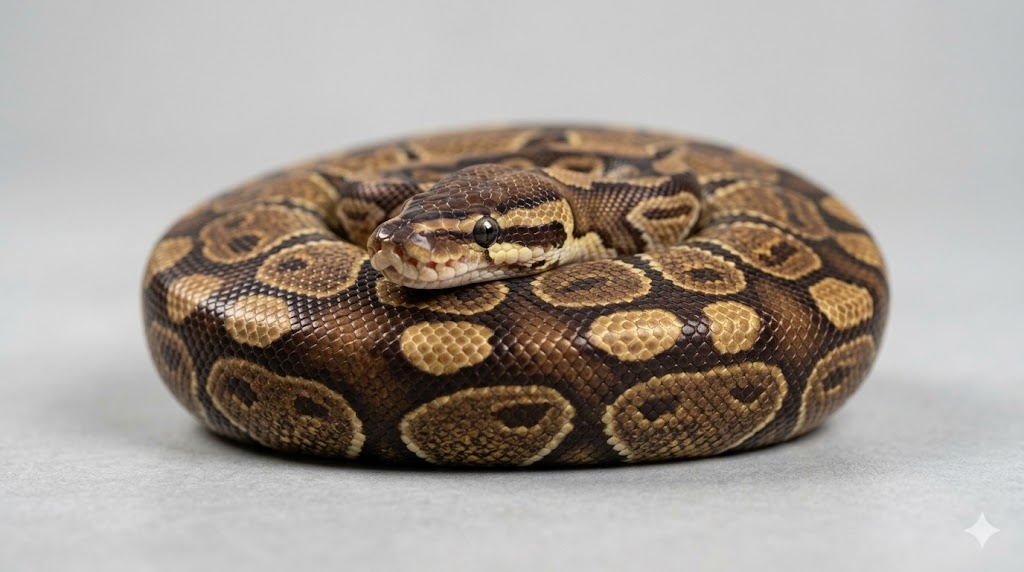
The Ball Python (Python regius) - called "Royal Python" in much of the world - is the most popular pet snake in the world. Small for a python (adult 1-1.5 m), docile, and famously hardy, the species combines manageable size with hundreds of striking morph patterns.
Natural History
Native to West and Central Africa. Lives in grasslands, savannas, and forest edges. Largely terrestrial but climbs occasionally. Nocturnal/crepuscular. When threatened, curls into a tight ball with head protected - hence "Ball" Python.
Appearance
Adults 1-1.5 m length (some females reach 1.8 m). Females larger than males.
Wild colour: brown with darker blotches. Hundreds of captive-bred morphs - pastel, banana, pied, leucistic, axanthic, spider (welfare-controversial due to neurological "wobble"), and many more.
Temperament & Handling
Docile and slow-moving. Among the easiest snakes to handle. Most accept handling well after settling. Bites are rare and minor.
Ball Pythons are known for refusing food - particularly during winter months in adult males. This is normal in mature snakes but can stress new keepers. Hatchlings can be picky eaters.
Enclosure
Minimum: 1.2 × 0.6 × 0.6 m for an adult. Larger preferred - modern keeping has moved away from the very small enclosures historically recommended.
Provide:
- Hide on warm side and cool side.
- Climbing branches.
- Water bowl large enough for soaking.
- Substrate: aspen, cypress mulch, or coconut husk.
Heating & Lighting
- Warm side: 30-32°C surface; 28-30°C ambient.
- Cool side: 24-26°C.
- Night: can drop to 22-25°C.
- UVB: modern best practice is low-output UVB; older keeping ignored it.
Humidity
50-60% normally; 70-80% during shed cycles.
Diet
Carnivorous. Frozen-thawed rodents:
- Hatchlings: pinky/fuzzy mice every 5-7 days.
- Juveniles: small mice or rat pups every 7-10 days.
- Adults: appropriately sized rats every 10-14 days.
Avoid live feeding - risk of injury to the snake.
Health & Lifespan
20-30 years; some reach 40+.
Common concerns:
- Respiratory infections from cool damp conditions.
- Mites.
- Scale rot from dirty wet substrate.
- Inclusion body disease (IBD).
- Obesity from over-feeding.
- Anorexia / food refusal - often normal but watch weight.
Pros & Cons
Pros:
- Manageable size.
- Docile and easy to handle.
- Long-lived.
- Hundreds of morphs.
- Quiet, odourless.
Cons:
- 20-30+ year commitment.
- Food refusal can stress new keepers.
- Frozen rodent feeding.
- Some morphs have welfare issues (Spider gene wobble).
Best Suited For
- First-time snake keepers.
- Apartment dwellers.
- Adults and older children.
Not suited for anyone uncomfortable with frozen rodents or unable to commit to 20-30 years.
Ball Python - frequently asked questions
Why do they refuse food?
Adult Ball Pythons (especially males) often stop eating during winter months - a natural seasonal pattern. As long as weight is maintained, this is normal. Hatchlings refusing food often need substrate or hide adjustments.
Are they aggressive?
No - among the most docile snake species. Bites are rare.
How long do they live?
20-30 years on average; documented up to 47 years.
Are they good for kids?
With older children and parental supervision, yes.
Do they need UVB?
Old advice: no. Modern advice: low-output UVB benefits welfare.
🧠 Test yourself: guess the reptile
Three clues from our quiz bank, each about another of our reptiles. Can you name them?
Clue 1.A heavy-bodied, short-legged reptile, this docile lizard gives birth to live young rather than laying eggs, and makes a calm omnivorous pet.
It's the Blue-Tongue Skink - read the full profile →
Clue 2.This nonvenomous constrictor earns its royal name by hunting and eating other snakes, even venomous ones.
It's the King Snake / Milk Snake - read the full profile →
Clue 3.Native to Australia's arid interior, this omnivorous lizard flattens its body and flares spiny scales to look larger to predators.
It's the Bearded Dragon - read the full profile →