Crested Gecko
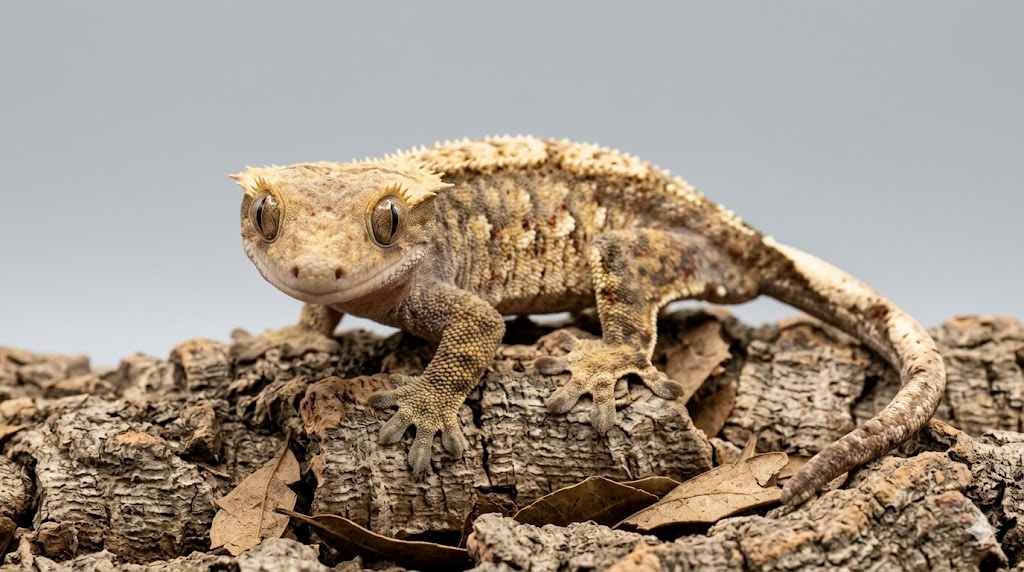
The Crested Gecko (Correlophus ciliatus) was thought extinct until rediscovered in New Caledonia in 1994.
🗓️ Last reviewed: June 2026
Overview
The Crested Gecko (Correlophus ciliatus) was thought extinct until rediscovered in New Caledonia in 1994. Since then it has become one of the most popular pet reptiles thanks to easy care requirements - no UVB needed, room temperature suitable, complete commercial diet available. Crested Geckos are arboreal, nocturnal, and famously hardy.
Natural History
Native to the southern islands of New Caledonia in the Pacific. Lives in tropical rainforest, arboreal in trees and shrubs.
Appearance
Adults 20-25 cm length including tail, 35-55 g.
Distinctive "crests" (eyelash-like projections) from above eyes along the neck and back. Toe pads (and tail tip) are sticky - they climb glass.
Hundreds of colour morphs: red, yellow, dalmatian, harlequin, pinstripe, lily white, and many combinations.
Temperament & Handling
Generally tolerant. Adults usually accept handling well. Juveniles are jumpy and may leap dramatically - handle low to soft surfaces.
Crested Geckos drop their tails readily (autotomy) and cannot regrow them - tailless Crested Geckos are common.
Enclosure
Minimum: 45 × 45 × 60 cm (vertical) for one adult. Larger preferred. Arboreal - height matters more than floor space.
Provide:
- Cork bark, branches, vines for climbing.
- Live or fake plants for cover.
- Water dish.
- Hides at different heights.
- Substrate: coco fibre, moss, or paper.
Heating & Lighting
- Temperature: 20-25°C ambient - room temperature suits them. Avoid above 28°C (heat stress).
- No heat lamp needed in most homes.
- UVB: low-output UVB (Arcadia 5-6%) increasingly recommended; older keepers manage without using D3 in diet.
Humidity
60-80%. Mist enclosure 1-2 times daily (morning and evening). Allow some drying between mistings.
Diet
Complete commercial Crested Gecko Diet (CGD) by Pangea, Repashy, or others - mixed with water to slurry. Replace every 2 days.
- CGD as staple - feed 2-3 times weekly.
- Insects as enrichment - crickets, dubia roaches dusted with calcium 1 time weekly.
Avoid feeding only fruit - calcium and protein deficiencies result.
Health & Lifespan
15-20 years.
Common concerns:
- Metabolic bone disease from inadequate calcium.
- Floppy tail syndrome (FTS) - from poor hide options; provide vertical hides.
- Tail drop - common; no regrowth.
- Impaction.
- Mouth rot.
Pros & Cons
Pros:
- Room temperature suitable.
- Complete commercial diet (no live feeding required).
- Long-lived.
- Hardy and tolerant.
- Climb glass - entertaining to watch.
Cons:
- Tail drop with no regrowth.
- Need humidity management.
- 15-20 year commitment.
Best Suited For
- First-time reptile owners.
- Owners wanting low-maintenance reptile.
- Apartment dwellers.
Not suited for very dry climates without humidity management.
Crested Gecko - frequently asked questions
Do they need live insects?
Not strictly. Complete commercial diet is sufficient. Insects add enrichment.
Why don't tails regrow?
The species lacks the regeneration mechanism present in many gecko species. Tailless Crested Geckos are common and live normally.
Do they need UVB?
Older advice: no. Modern advice: low-output UVB plus dietary supplementation is the safer practice.
Are they good for kids?
Yes - among the easiest reptiles for older children.
How long do they live?
15-20 years.
🧠 Test yourself: guess the reptile
Three clues from our quiz bank, each about another of our reptiles. Can you name them?
Clue 1.This spotted desert lizard is a top beginner reptile and, unusually for geckos, has movable eyelids.
It's the Leopard Gecko - read the full profile →
Clue 2.Often sold tiny but reaching over five feet, this tree-dwelling herbivore is a far bigger commitment than buyers expect.
It's the Green Iguana - read the full profile →
Clue 3.Native to the grasslands of west and central Africa, this constrictor is a favorite of breeders who have produced hundreds of color and pattern morphs.
It's the Ball Python - read the full profile →