Green Iguana
The Green Iguana (Iguana iguana) is a large arboreal lizard from Central and South America - once one of the most heavily sold reptiles in the pet trade, now widely regretted by owners who underestimated the species.
🗓️ Last reviewed: June 2026
Overview
The Green Iguana (Iguana iguana) is a large arboreal lizard from Central and South America - once one of the most heavily sold reptiles in the pet trade, now widely regretted by owners who underestimated the species. Adult Green Iguanas reach 1.5-2 m, require massive custom enclosures, may become aggressive at sexual maturity, and live 15-20 years. Among the most rehomed reptiles in existence.
Natural History
Native to tropical rainforests of Central America, South America, and the Caribbean. Highly arboreal - lives in tree canopies. Strict herbivore.
Appearance
Adults 1.5-2 m total length (most of it tail). 4-8 kg.
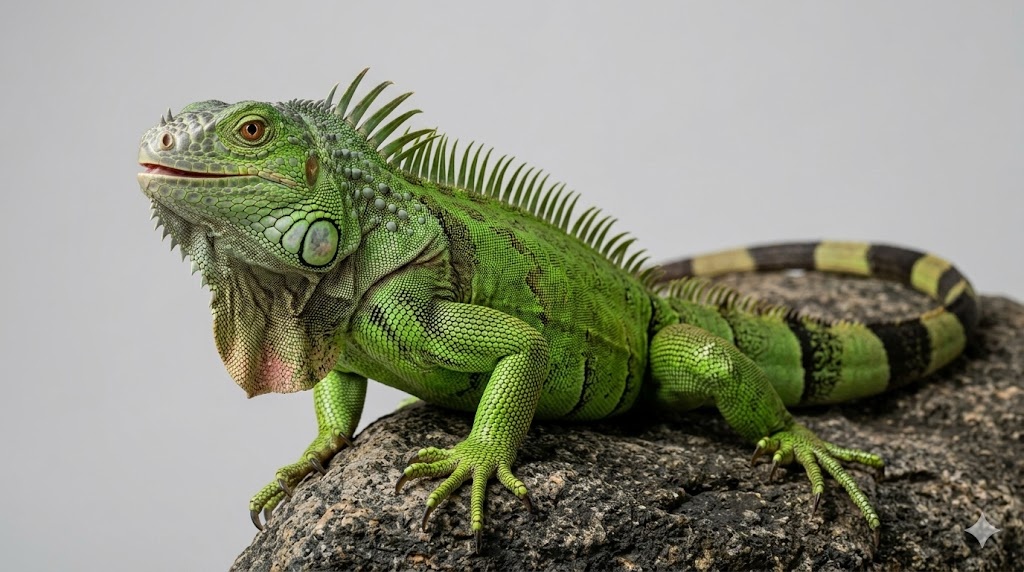
Bright green juveniles dull to grey-green as adults. Distinctive spinal crest of scales, dewlap (throat fan), and large lateral scales.
Temperament & Handling
Variable. Hand-raised juveniles tame to handling. Many become aggressive at sexual maturity (around 2 years), particularly males during breeding season. Adult males defending territory can cause serious injury - bites, scratches, tail whips.
Enclosure
Adult minimum: 1.8 × 1.2 × 1.8 m custom enclosure or dedicated room. Vertical orientation - they climb constantly. Most owners build wooden custom enclosures.
Provide:
- Tall climbing structures.
- Multiple basking branches.
- Large water bowl (they soak).
- High-humidity zones.
Heating & Lighting
- Basking spot: 35-43°C.
- Warm ambient: 28-32°C.
- Cool ambient: 24-27°C.
- Night: can drop to 22-25°C.
- UVB essential - high-output. Replace every 6-12 months.
Humidity
70-80%. Daily misting; large enclosure makes humidity management challenging.
Diet
Strict herbivore. Calcium-rich greens and vegetables only.
- Daily: dark leafy greens - collard, mustard, turnip greens, dandelion, hibiscus.
- Vegetables: squash, sweet potato, green beans, snap peas.
- Limited fruit.
- Avoid: spinach, kale (oxalates in excess), animal protein, dog food, insects.
Calcium supplement at every meal; vitamin D3 supplement.
Health & Lifespan
15-20 years.
Common concerns:
- Metabolic bone disease - extremely common in pet iguanas due to inadequate UVB or calcium.
- Kidney disease from too much protein.
- Mouth rot.
- Respiratory infections.
- Egg binding in unbred females (can occur even without males).
- Sexual maturity aggression in males.
Pros & Cons
Pros:
- Impressive prehistoric appearance.
- Hand-raised juveniles can be tame.
Cons:
- Massive size at maturity.
- Frequent aggression at sexual maturity.
- Requires custom-built enclosure.
- 15-20 year commitment.
- Very high MBD rate in pet populations.
- One of the most rehomed reptiles.
Best Suited For
- Experienced reptile keepers with space for custom enclosure.
- Adults committed to lifetime management.
Not suited for typical pet homes, apartment dwellers, families with children, first-time reptile owners. Most pet Green Iguanas end up in rescue or euthanised.
Green Iguana - frequently asked questions
Are Green Iguanas good pets?
For most homes, no. The species was historically over-marketed as a beginner reptile; the reality is a 2 m aggressive territorial lizard requiring custom housing and decades of care.
Why do they become aggressive?
Sexual maturity at 2 years triggers territorial behaviour, particularly in males. Some are manageable lifelong; many are not.
How long do they live?
15-20 years.
Do they need UVB?
Absolutely. Without high-output UVB, metabolic bone disease develops quickly.
Can you keep one in a regular cage?
No. Adults need dedicated rooms or custom large-format enclosures.
🧠 Test yourself: guess the reptile
Three clues from our quiz bank, each about another of our reptiles. Can you name them?
Clue 1.This slender egg-laying snake earns farmers' favor by hunting mice in grain stores, and is closely related to the rat snakes.
It's the Corn Snake - read the full profile →
Clue 2.This desert lizard from Australia puffs out and darkens a spiny throat pouch when threatened or displaying, creating the namesake feature.
It's the Bearded Dragon - read the full profile →
Clue 3.This spotted desert lizard is a top beginner reptile and, unusually for geckos, has movable eyelids.
It's the Leopard Gecko - read the full profile →