🐾 Smart pet care, real pet parent NEW 50+ buyer guides published πŸ“© Weekly newsletter As an Amazon Associate we earn from qualifying purchases
Home/ Pets/ Reptiles/ King Snake / Milk Snake

King Snake / Milk Snake

King Snakes (Lampropeltis getula and related) and Milk Snakes (Lampropeltis triangulum) are closely related North and Central American constrictors popular as pets.

🦎
🐾
Coming soon
πŸ“Ί Video guide in production

King Snake / Milk Snake β€” the full video guide

Coming soon. Subscribe to the newsletter to get notified when this video drops.

Lifespan
15–20 years
Category
Reptiles
Difficulty
See care section

Overview

King Snakes (Lampropeltis getula and related) and Milk Snakes (Lampropeltis triangulum) are closely related North and Central American constrictors popular as pets. The genus includes some of the most strikingly patterned snakes β€” bands of red, black, white, and yellow that mimic dangerous coral snakes. Hardy, manageable, and reliable feeders.

Natural History

Native across North and Central America. Variety of habitats. Crepuscular/nocturnal. Constrictors.

The famous mimicry: "red touches yellow, kills a fellow / red touches black, friend of Jack" distinguishes venomous coral snakes from non-venomous Milk Snakes in North America (does not apply outside the US).

King Snakes eat other snakes (including venomous species) β€” never house with another snake.

Appearance

Size varies by species:

  • Common King Snake: 1–1.5 m.
  • California King: 1–1.2 m.
  • Sinaloan Milk Snake: 1–1.2 m.
  • Honduran Milk Snake: 1.2–1.5 m.

Many subspecies and morphs with brilliant red, black, white, yellow banding patterns.

Temperament & Handling

Generally docile though some individuals are nippy. Smell-driven feeders β€” must wash hands before handling to avoid being mistaken for prey.

Enclosure

Minimum: 1.2 Γ— 0.4 Γ— 0.4 m. Larger acceptable.

Provide:

  • Hides on warm and cool sides.
  • Climbing branches.
  • Water bowl.
  • Secure lid β€” escape artists.

Heating & Lighting

  • Warm side: 28–30Β°C.
  • Cool side: 22–25Β°C.
  • UVB: beneficial.

Humidity

40–60%.

Diet

Carnivorous, including ophiophagic (other snakes). Pet keeping diet:

  • Frozen-thawed mice or small rats by size.
  • Adults eat every 10–14 days.

Never house two King Snakes together β€” cannibalism is common.

Health & Lifespan

15–20 years.

Common concerns:

  • Mites.
  • Respiratory infections.
  • Scale rot.

Pros & Cons

Pros:

  • Beautiful patterns.
  • Reliable feeders.
  • Hardy.
  • Long-lived.

Cons:

  • Cannot be housed together (cannibalism).
  • Some individuals nippy.
  • 15–20 year commitment.

FAQ

King vs Milk Snake? Closely related β€” same genus. King Snakes are larger and broader; Milk Snakes are slimmer with more dramatic banding.

Can I keep two together? No. They eat each other.

Are they venomous? No β€” non-venomous constrictors. The coral-snake mimic pattern is purely defensive.

Are they good for kids? With older children and adult supervision, generally yes.

How long do they live? 15–20 years.

🎬 YOUTUBE LONG-FORM SCRIPT

Working title

The King Snake β€” The Powerful North American Predator

Estimated length

10–12 minutes

Thumbnail concept

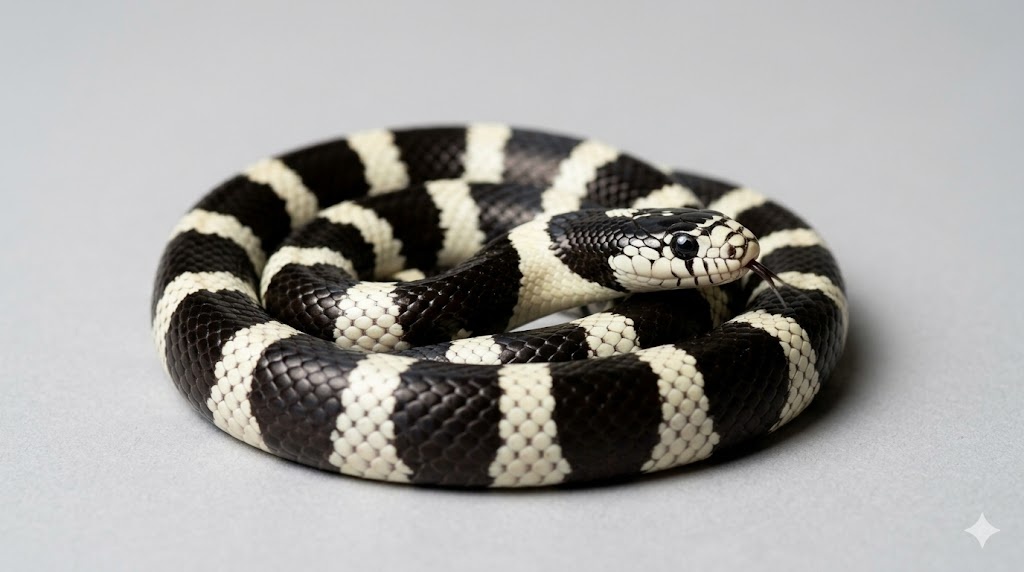
California kingsnake with bold black-and-white banded pattern, coiled. Caption: "EATS OTHER SNAKES".

Thumbnail Image Prompt

Studio photograph of a California kingsnake coiled on a flat surface, bold alternating black and white bands, alert raised head, soft warm background, gentle natural lighting, 85mm lens at f/2.5, professional pet reptile photography, alert curious expression.

Description with timestamps

The king snake β€” particularly the California kingsnake β€” is a striking, hardy, alert beginner snake. Today we cover the species, setup, the strict-feeder reality, handling, health, and whether a king snake is right for your home.

⏱ Timestamps 00:00 Intro Hook 01:00 Origin: North America 02:30 Setup: Secure Vivarium 04:00 Diet: Whole Prey, Solo Feeding 05:30 Handling and Temperament 07:00 Health: Standard Concerns 08:30 3 Biggest Mistakes New Owners Make 10:00 Is a King Snake Right For You? 11:00 Outro

πŸ”” Subscribe for a new species each week.

00:00–01:00 INTRO HOOK

"King snakes are powerful, striking, hardy North American snakes. The California kingsnake is the most popular pet variety β€” bold black-and-white banded pattern, reliable feeder, manageable size. They also eat other snakes. Single housing is mandatory. Today: complete king snake care."

01:00–02:30 ORIGIN: NORTH AMERICA

"King snakes (Lampropeltis) include several species across North America. The most popular pet types: California kingsnake (L. californiae) β€” banded black/white or brown/yellow. Eastern kingsnake (L. getula) β€” chain-link pattern. Mexican black kingsnake β€” entirely black, striking. All are non-venomous constrictors. They are immune to many native venomous snake bites and prey on other snakes in the wild β€” hence 'king'."

02:30–04:00 SETUP: SECURE VIVARIUM

"Adult enclosure: 120 Γ— 60 Γ— 60 cm. Very secure lid β€” king snakes are exceptional escape artists. Substrate: aspen, cypress, paper. Temperature: warm side 28–30Β°C, cool side 22–24Β°C. Humidity: 40–60%. Hides: two minimum. Water dish: large enough to soak. Single housing only β€” king snakes will eat cage mates."

04:00–05:30 DIET: WHOLE PREY, SOLO FEEDING

"Whole prey: mice scaled to body size. Frozen-thawed. Feeding schedule: hatchlings weekly, adults every 10–14 days. Feed in separate container to reduce substrate ingestion. King snakes are reliable feeders."

05:30–07:00 HANDLING AND TEMPERAMENT

"King snakes are alert and active. Most tolerate handling well with regular practice. Some hatchlings musk or strike defensively until tame. Support body. Avoid 48 hours post-feed."

07:00–08:30 HEALTH: STANDARD CONCERNS

"Lifespan 15–20 years. Respiratory infection. Mites. Cryptosporidium. Cannibalism if housed together. Find a reptile vet."

08:30–10:00 3 BIGGEST MISTAKES NEW OWNERS MAKE

"Mistake one: housing two king snakes. One eats the other. How to avoid: never co-house. Mistake two: weak enclosure security. Escapes are dramatic. How to avoid: locking lid. Mistake three: cedar/pine substrate. Toxic. How to avoid: aspen, cypress, paper."

10:00–11:00 IS A KING SNAKE RIGHT FOR YOU?

"Checklist: Single secure vivarium. You can feed whole prey. Reptile vet identified. 15-20 year commitment. You appreciate active snakes. Tick four β€” the king snake is excellent."

11:00–11:30 OUTRO AND CTA

"That is the king snake β€” bold North American predator. Hardy. Striking. Active. Next species? Comment below. Subscribe and the bell. Next week: the Russian tortoise β€” the small hardy chelonian." (End screen: subscribe button, 'watch next: Russian Tortoise' thumbnail, channel logo)

One smart pet email a week.

Vet-reviewed care, training, and gear. No spam, unsubscribe in one click.

🐢
🐱
🐰