Leopard Gecko
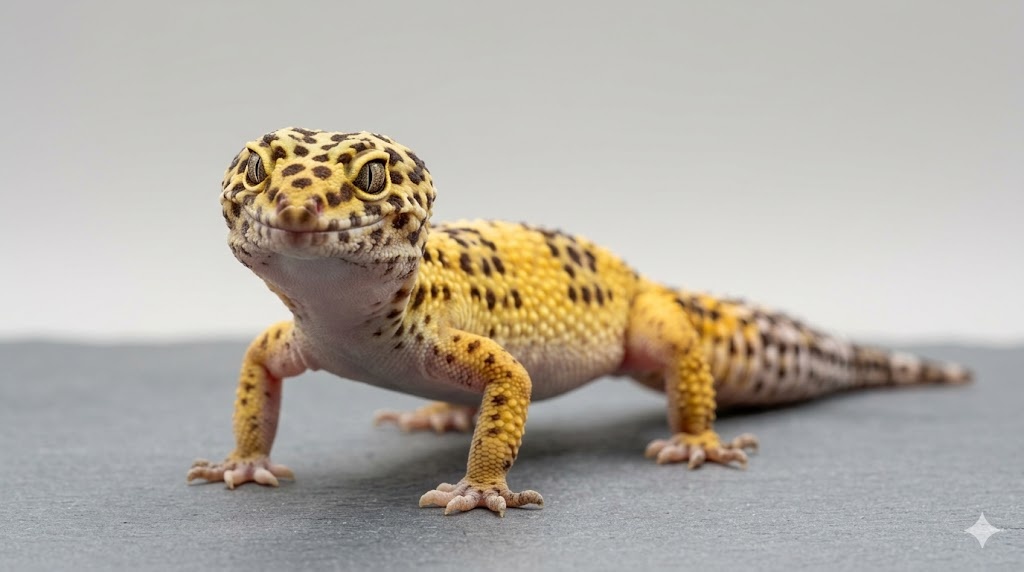
The Leopard Gecko (Eublepharis macularius) is one of the most popular pet reptiles in the world - small, hardy, gentle, easy to handle, and famously tolerant of beginner keepers.
🗓️ Last reviewed: June 2026
Overview
The Leopard Gecko (Eublepharis macularius) is one of the most popular pet reptiles in the world - small, hardy, gentle, easy to handle, and famously tolerant of beginner keepers. Native to the rocky deserts of central Asia, the species adapts well to captivity and has been selectively bred for decades into hundreds of colour and pattern morphs.
Natural History
Wild range: Afghanistan, Pakistan, northwestern India, and Iran. Lives in rocky semi-arid grasslands. Crepuscular (active at dawn and dusk). Unlike most geckos, Leopard Geckos have eyelids and lack toe pads - they walk rather than climb walls.
Appearance
Adults 20-25 cm length, 50-90 g. Females smaller than males.
Wild colour: yellow with black spots. Hundreds of captive-bred morphs: albino, tangerine, blizzard, eclipse, Mack Snow, super giant, and many others.
Temperament & Handling
Gentle and tolerant. Among the easiest reptiles to handle - most accept handling daily. Avoid the tail base; Leopard Geckos can drop their tails (autotomy) under stress and regrow them, though regrown tails look different.
Enclosure
Minimum: 90 × 45 × 45 cm for one adult. Larger preferred. Glass or PVC terrarium.
Provide:
- Three hides - warm, cool, humid (moist hide for shedding).
- Substrate: paper towel, ceramic tile, or reptile carpet. Loose substrate (sand, woodchips) can cause impaction.
- Climbing branches and rocks.
- Shallow water dish.
Heating & Lighting
- Warm side: 30-32°C basking surface, 27-29°C ambient.
- Cool side: 22-24°C.
- Night: can drop to 18-22°C; no overnight heat needed in most homes.
- UVB: debated - many keepers maintain without UVB by providing D3-supplemented food. Low-output UVB (Arcadia 7%) is the safer modern recommendation.
Humidity
Ambient 30-40%. Moist hide for shedding (paper towels or moss kept damp).
Diet
Insectivorous. Live insects:
- Staple: crickets, dubia roaches, mealworms.
- Occasional: waxworms, hornworms (treats, fatty).
- Avoid: lightning bugs (toxic).
Insects must be gut-loaded (fed quality food) and dusted with calcium + D3 supplement before feeding. Calcium-only dust 1-2 times weekly; with-D3 dust 1 time weekly.
Juveniles eat daily; adults every 2-3 days.
Health & Lifespan
15-25 years.
Common concerns:
- Metabolic bone disease (MBD) from inadequate calcium/D3.
- Impaction from inappropriate substrate.
- Cryptosporidium - devastating infection; quarantine new geckos.
- Mouth rot.
- Egg binding in females.
- Obesity from over-feeding waxworms.
Pros & Cons
Pros:
- Easy to handle.
- Long-lived.
- Small space.
- Quiet, odourless.
- No UVB required (with proper supplementation, though modern advice favours UVB).
Cons:
- Live insect feeding.
- Need 15-25 year commitment.
- Crypto risk requires careful sourcing.
- MBD risk from inadequate supplementation.
Best Suited For
- First-time reptile owners.
- Families with older children.
- Apartment dwellers.
Not suited for owners squeamish about live insect feeding.
Leopard Gecko - frequently asked questions
Are they good for kids?
Yes - among the most child-friendly reptiles for older children with supervision.
Do I need UVB?
Long-running debate. Modern best practice favours low-output UVB plus dietary supplementation. Many older keepers manage without UVB and supplements alone.
How long do they live?
15-25 years with good care. Plan accordingly.
Do they smell?
Almost no odour. Clean cage weekly to maintain.
Do they bite?
Rarely. Bites are mild even from upset geckos.
🧠 Test yourself: guess the reptile
Three clues from our quiz bank, each about another of our reptiles. Can you name them?
Clue 1.This large arboreal lizard has a third 'eye' on top of its head that senses light and shadow from above.
It's the Green Iguana - read the full profile →
Clue 2.A hardy beginner snake, this powerful squeezer is known for occasionally eating tankmates of its own kind.
It's the King Snake / Milk Snake - read the full profile →
Clue 3.This stocky Australian lizard gapes its mouth to flash a startling cobalt-colored mouth-organ at predators when threatened.
It's the Blue-Tongue Skink - read the full profile →