🐾 Smart pet care, real pet parent NEW 50+ buyer guides published πŸ“© Weekly newsletter As an Amazon Associate we earn from qualifying purchases
Home/ Pets/ Reptiles/ Red-Eared Slider Turtle

Red-Eared Slider Turtle

The Red-Eared Slider (Trachemys scripta elegans) is the most commonly kept pet turtle in the world β€” and the most commonly surrendered.

🦎
🐾
Coming soon
πŸ“Ί Video guide in production

Red-Eared Slider Turtle β€” the full video guide

Coming soon. Subscribe to the newsletter to get notified when this video drops.

Lifespan
20–40 years
Weight
1–2 kg
Category
Reptiles
Difficulty
See care section

Overview

The Red-Eared Slider (Trachemys scripta elegans) is the most commonly kept pet turtle in the world β€” and the most commonly surrendered. Sold as cute hatchlings for $20, the species grows to 25–30 cm, lives 30+ years, requires a massive heated filtered aquarium, and is invasive in many countries when released.

Natural History

Native to the south-central United States. Semi-aquatic β€” lives in ponds and slow rivers, basking heavily.

Now considered one of the world's worst invasive species. Banned for import to the EU (since 1997) and many Asian countries.

Appearance

Adults 20–30 cm shell length (females larger than males), 1–2 kg.

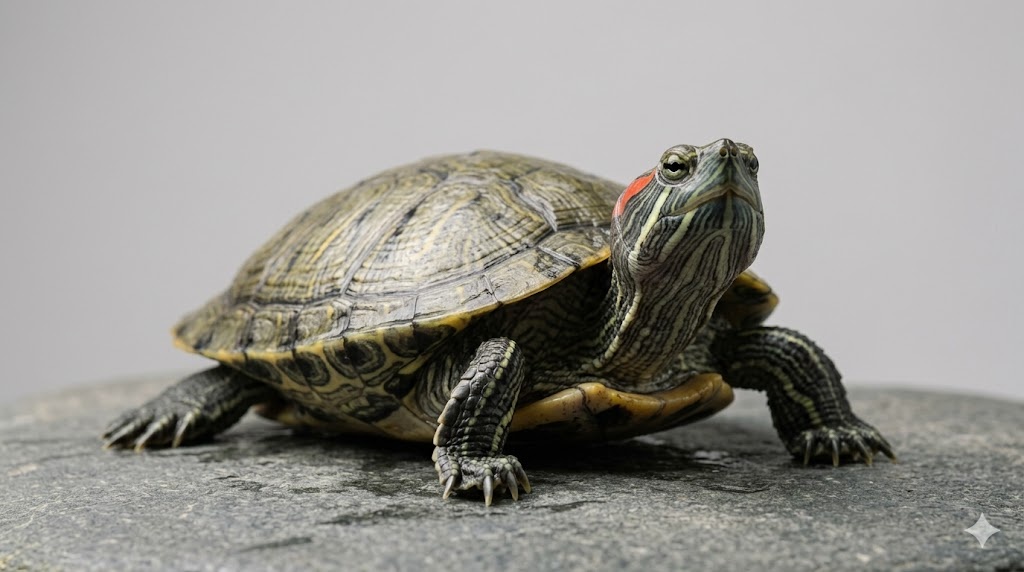
Green to olive shell with red stripe behind each eye (the "red ear").

Temperament & Handling

Active swimmers; not handling pets. Will bite if mishandled. Better observed than touched.

Enclosure

Adult minimum: 380 L (100 gallon) aquarium or larger. Many keepers use stock tanks or outdoor ponds for adults.

Provide:

  • Strong external filter β€” turtles produce enormous waste.
  • Basking platform (UVB-lit, dry).
  • Deep water for swimming.
  • Tight-fitting lid (or high-sided enclosure).

Heating & Lighting

  • Water: 24–28Β°C.
  • Basking spot: 32–35Β°C.
  • UVB essential β€” high-output, replaced every 6–12 months.

Humidity

Aquatic β€” humidity not separately managed.

Diet

Omnivore, shifting with age. Juveniles more carnivorous; adults more herbivorous.

  • Pellets as base β€” quality aquatic turtle food.
  • Leafy greens: dandelion, collard, mustard, kale.
  • Vegetables: squash, sweet potato.
  • Limited protein: fish, shrimp, insects.
  • Calcium supplement.

Health & Lifespan

20–40 years.

Common concerns:

  • Metabolic bone disease.
  • Respiratory infections.
  • Shell rot.
  • Vitamin A deficiency (causes swollen eyes).
  • Salmonella β€” turtles carry Salmonella; always wash hands.

Pros & Cons

Pros:

  • Active and interesting to watch.
  • 30+ year companion.
  • Hardy when properly housed.

Cons:

  • Massive enclosure as adults.
  • Constant water maintenance.
  • Salmonella carrier.
  • Cannot release β€” invasive species.
  • Not for handling.
  • Lifetime commitment 30+ years.

Best Suited For

  • Owners willing to commit to large aquariums and decades of care.
  • Outdoor pond keepers in suitable climates.

Not suited for apartment dwellers without space, anyone planning short-term ownership, households with very young children (Salmonella).

FAQ

Why are they considered invasive? Released or escaped pets establish in wild ponds, outcompeting native species. Banned from import in EU and many other regions.

How big do they get? Adult females reach 25–30 cm shell length. Males slightly smaller.

How long do they live? 20–40 years; some over 50.

Are they good for kids? Older children with adult supervision. The Salmonella risk and long lifespan make young-child ownership inadvisable.

Can I let them go in a pond? Never. Releasing pet turtles is illegal in most places and ecologically damaging.

🎬 YOUTUBE LONG-FORM SCRIPT

Working title

The Red-Eared Slider β€” The Surprisingly Demanding Aquatic Turtle

Estimated length

10–12 minutes

Thumbnail concept

Red-eared slider basking on log under UVB, water visible. Caption: "300 LITRES MINIMUM".

Thumbnail Image Prompt

Photograph of a red-eared slider basking on a wooden log under bright UVB light, distinctive red stripe behind each eye, brown-and-yellow patterned shell, water visible below, soft tropical-tank background, warm side lighting, 85mm lens at f/2.5, professional pet reptile photography.

Description with timestamps

The red-eared slider is one of the most commonly purchased and most commonly abandoned pet turtles. They grow large, live decades, and need enormous tanks. Today: the truth about red-eared sliders before any purchase.

⏱ Timestamps 00:00 Intro Hook 01:00 Origin: Southern United States 02:30 Setup: 300+ Litre Tank 04:00 Diet: Omnivore Transitioning to Herbivore 05:30 Outdoor Pond Option 07:00 Health: Shell Rot, Salmonella 08:30 3 Biggest Mistakes New Owners Make 10:00 Is a Slider Right For You? 11:00 Outro

πŸ”” Subscribe for a new species each week.

00:00–01:00 INTRO HOOK

"Red-eared sliders are sold as palm-sized babies. They grow to dinner-plate size. They live 30–40 years. They need 300+ litres of water. They are illegal as pets in the EU. They are the most abandoned aquatic turtle in the world. Today: the unvarnished picture before any purchase."

01:00–02:30 ORIGIN: SOUTHERN UNITED STATES

"Red-eared sliders (Trachemys scripta elegans) are native to the southern United States and northern Mexico. CITES regulated. Illegal to keep as pet in EU (Invasive Alien Species regulation). Established feral populations on multiple continents have caused ecological damage. Check law before purchase β€” confiscation possible."

02:30–04:00 SETUP: 300+ LITRE TANK

"Tank minimum for one adult: 300 litres. Larger preferred β€” 450+ litres ideal. Filtration: powerful external canister rated 2Γ— tank volume per hour. Basking area: dry platform with overhead heat lamp and UVB. Basking temperature: 32–35Β°C. Water 24–27Β°C. UVB: high-output T5 essential. Substrate: bare bottom or large smooth river stones. Decorations: hides and underwater plants."

04:00–05:30 DIET: OMNIVORE TRANSITIONING TO HERBIVORE

"Juveniles: 50/50 animal/plant β€” pellets, fish, insects plus leafy greens. Adults: 30/70 animal/plant β€” primarily leafy greens, occasional pellets and fish. Calcium supplementation. Cuttlebone in tank. Never: dairy, bread, dog food."

05:30–07:00 OUTDOOR POND OPTION

"Many keepers move adult sliders to outdoor ponds β€” easier than maintaining huge indoor tanks. Pond minimum: 2000+ litres, secure walls, predator protection. Sliders tolerate UK and northern European summers but need indoor housing or hibernation arrangements in winter."

07:00–08:30 HEALTH: SHELL ROT, SALMONELLA

"Lifespan 30–40 years. Shell rot from poor water quality. Respiratory infection from cold drafts. Metabolic bone disease without UVB. Salmonella β€” turtles carry it; wash hands always. Find an exotics vet experienced with chelonians."

08:30–10:00 3 BIGGEST MISTAKES NEW OWNERS MAKE

"Mistake one: small tanks. Stunts growth, causes shell deformities. How to avoid: 300 litres minimum from purchase. Mistake two: ignoring legality. EU possession can mean confiscation. How to avoid: confirm law before purchase. Mistake three: skipping UVB. Causes MBD. How to avoid: high-output T5 from day one."

10:00–11:00 IS A SLIDER RIGHT FOR YOU?

"Checklist: Legal where you live. 300+ litre tank or large pond. Powerful filtration and UVB. Exotics vet identified. 30-40 year commitment with succession. Tick five β€” the slider can be a wonderful pet. Otherwise β€” please reconsider. Most sliders are abandoned within a year."

11:00–11:30 OUTRO AND CTA

"That is the red-eared slider β€” the most commonly abandoned aquatic turtle. Wonderful for the right owner, tragedy for most. Next species? Comment below. Subscribe and the bell. Next week: the blue-tongue skink β€” the friendly large lizard." (End screen: subscribe button, 'watch next: Blue-Tongue Skink' thumbnail, channel logo)

One smart pet email a week.

Vet-reviewed care, training, and gear. No spam, unsubscribe in one click.

🐢
🐱
🐰