Russian Tortoise
The Russian Tortoise (Testudo horsfieldii) is a small, hardy tortoise from central Asia - one of the most popular pet tortoises due to its manageable size, cold tolerance, and active personality.
🗓️ Last reviewed: June 2026
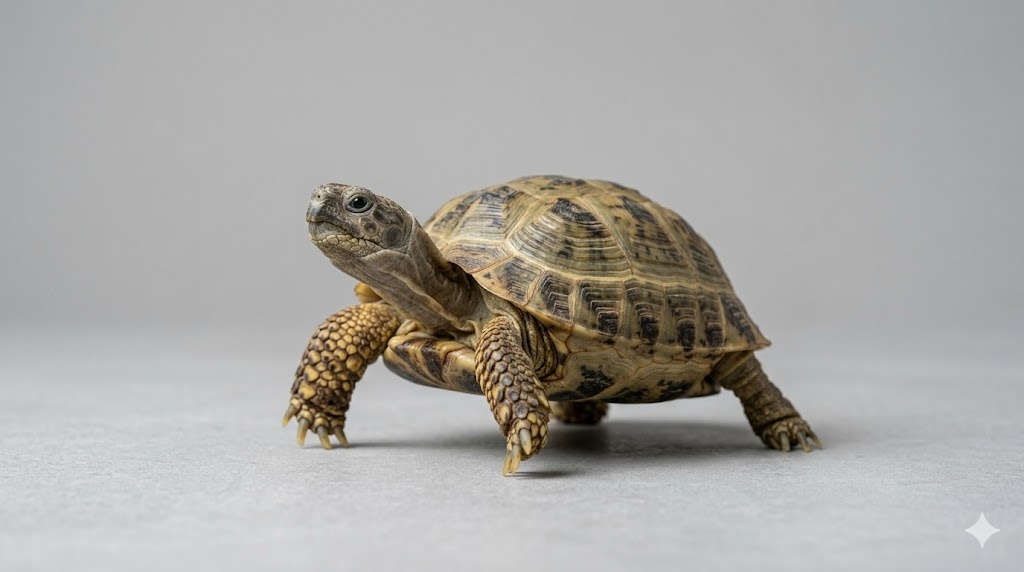
Overview
The Russian Tortoise (Testudo horsfieldii) is a small, hardy tortoise from central Asia - one of the most popular pet tortoises due to its manageable size, cold tolerance, and active personality. Unlike many tortoise species that require tropical conditions, Russian Tortoises tolerate a wide temperature range and can live outdoors in temperate climates.
Natural History
Native to Afghanistan, Iran, Pakistan, China, Russia, Kazakhstan, Uzbekistan. Lives in semi-arid steppes and rocky hillsides. Diurnal. Hibernates in winter.
CITES Appendix II protected - buy only from captive-bred sources, never wild-caught.
Appearance
Adults 13-25 cm shell length, 500-1500 g. Females larger than males.
Yellowish-brown to olive shell with dark patterns. Four toes on each foot (distinguishing from related species with five).
Temperament & Handling
Active, curious, interactive. Russian Tortoises recognise their owners and approach for food. Generally tolerant of handling though they prefer being left to roam.
Enclosure
Indoor minimum: 1.2 × 0.6 m. Outdoor pen strongly preferred for warmer months.
Outdoor enclosure: secure fencing extending 30 cm below ground (they dig), 30+ cm above (they don't climb but can wedge over). Provide shade, basking area, hides, dig area, water dish.
Indoor: large terrestrial enclosure with high sides, substrate (topsoil + sand mix or coco fibre), hide, basking area.
Heating & Lighting
- Basking spot: 32-35°C.
- Cool side: 22-25°C.
- Night: can drop to 15-20°C.
- UVB essential - high-output (Arcadia 12% or T5 10.0). Replace every 6-12 months.
Humidity
40-55% - drier than most reptiles.
Diet
Strict herbivore. Wild diet is high-fibre leafy plants.
- Daily: dark leafy greens (collard, mustard, turnip greens, dandelion, plantain).
- Variety: weeds, edible flowers (hibiscus, dandelion).
- Limited: vegetables (squash, carrot top).
- Minimal/avoid: fruit, lettuce, spinach, beans, animal protein.
Calcium supplement on every meal.
Health & Lifespan
40-80 years (some over 100).
Common concerns:
- Metabolic bone disease from inadequate UVB/calcium.
- Respiratory infections.
- Shell pyramiding from high-protein diet or low humidity.
- Parasites (especially in wild-caught).
- Egg binding.
Buy only captive-bred. Wild-caught Russian Tortoises are heavily parasitised.
Pros & Cons
Pros:
- Manageable size.
- Cold-tolerant - outdoor in temperate climates.
- 40+ year companion.
- Active and interactive.
Cons:
- Long lifespan exceeds most owners' lives.
- UVB and calcium essential.
- Outdoor space ideal.
- Hibernation requires research and preparation.
Russian Tortoise - frequently asked questions
How long do they live?
40-80 years; some reach 100+. Plan succession in your will.
Can they live outside?
Yes, in temperate climates with secure fencing. Indoor for winter (or hibernation under careful research).
Are they good for kids?
For older children, yes - but the lifetime commitment exceeds childhood.
Do they hibernate?
Wild Russian Tortoises hibernate. Captive hibernation is possible but requires careful research; many keepers avoid it.
Can I keep two together?
Females generally yes. Two males will fight. Mixed-sex housing leads to breeding stress on females.
🧠 Test yourself: guess the reptile
Three clues from our quiz bank, each about another of our reptiles. Can you name them?
Clue 1.Named for the dark rosettes hatchlings wear over bands, this nocturnal pet licks its eyes to keep them clean.
It's the Leopard Gecko - read the full profile →
Clue 2.Long thought extinct, this lizard has eyelash-like fringes over its eyes and cannot regrow its tail once dropped.
It's the Crested Gecko - read the full profile →
Clue 3.This nonvenomous constrictor earns its royal name by hunting and eating other snakes, even venomous ones.
It's the King Snake / Milk Snake - read the full profile →