Chinchilla
The chinchilla (Chinchilla lanigera) is a small, dense-coated rodent native to the Andes mountains of South America.
🗓️ Last reviewed: June 2026
Overview
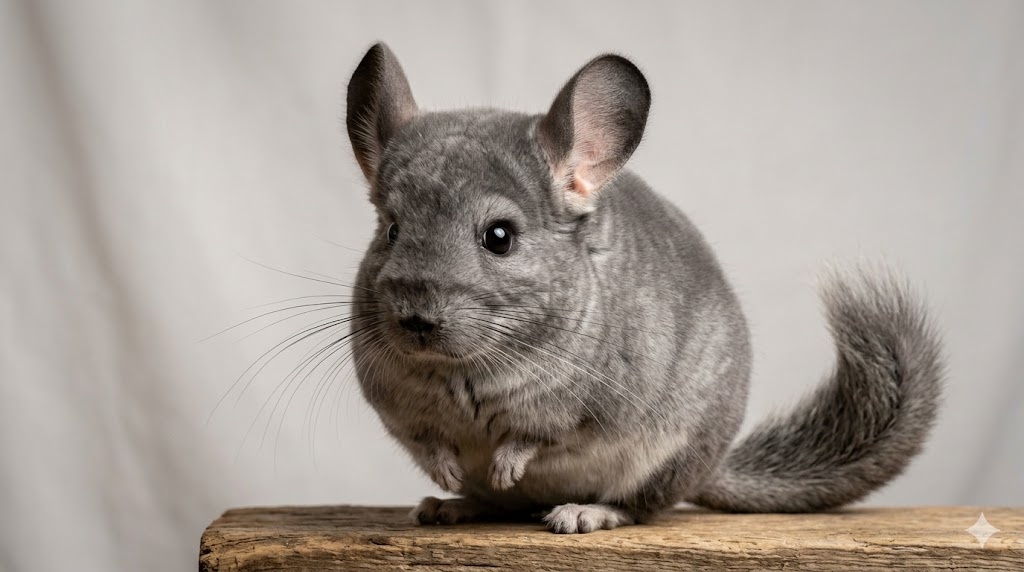
The chinchilla (Chinchilla lanigera) is a small, dense-coated rodent native to the Andes mountains of South America. With the softest fur of any land mammal - over 80 hairs per follicle compared to 2-3 in humans - chinchillas are striking, long-lived pets that require specific care: cool temperatures, dust baths, hay-based diet, and large cages.
Natural History & Origin
Wild chinchillas live at altitudes of 3,000-5,000 m in the Andes. The breed nearly went extinct in the early 1900s due to fur trade demand (hundreds of chinchillas needed for one coat). The modern pet population descends from 11 chinchillas brought to the US in 1923 by mining engineer Mathias Chapman.
Wild chinchillas remain critically endangered.
Appearance
Adults weigh 400-800 g, body length 25-35 cm plus tail.
Colours: standard grey (wild), white, beige, ebony, sapphire, violet, charcoal, mosaic, and many others.
Temperament & Handling
Active, curious, mostly nocturnal. Chinchillas are not particularly cuddly - most prefer interaction on their own terms. Many enjoy gentle scratching and explorations but few tolerate being held for long.
Chinchillas have fur slip - under stress (rough handling, predator attacks) they shed large patches of fur in the attacker's grip. The fur grows back over months. Handle gently.
Housing
Minimum enclosure: 1 × 0.5 × 1.5 m tall (vertical space is critical - chinchillas climb and jump constantly). Larger is much better. Multi-level wire cages with solid platforms.
Provide:
- Wooden chew items (chinchilla teeth grow continuously).
- Wooden hideout / nest box.
- Heavy ceramic bowl for hay.
- Water bottle.
- Sand bath (dust bath) - provided 2-3 times weekly for 15 minutes; chinchillas roll to clean their dense coat. Use specifically chinchilla dust, not sand.
- Solid floor sections (wire mesh causes pododermatitis).
Temperature is critical. Chinchillas overheat above 24°C. Many die in summer without air conditioning. Provide cold-cooling tiles, marble slabs, and AC.
Diet
- Unlimited grass hay (timothy preferred) - the staple of diet.
- Plain chinchilla pellets - small portion daily.
- Limited treats - small piece of dried rose hip, herb, or oat 1-2 times weekly.
Avoid: fresh fruit and vegetables (cause GI upset), nuts and seeds (too fatty), sugary treats. Chinchilla digestive systems are sensitive - sudden diet changes cause GI stasis (life-threatening).
Health & Lifespan
12-20 years - exceptional for a small rodent.
Common concerns:
- Dental disease (malocclusion) - major issue; teeth grow constantly.
- Heat stroke - fatal above 28°C.
- GI stasis - from dietary changes or stress.
- Fur ring in males - fur wraps around penis, causes injury.
- Bumblefoot.
- Bladder stones.
- Ringworm.
Find an exotic vet experienced with chinchillas before acquisition.
Pros & Cons
Pros:
- Long-lived (12-20 years).
- Dense beautiful coat.
- Quiet apartment pets.
- Don't smell.
- Allergy-friendly for some people (low dander).
Cons:
- Temperature-sensitive - AC essential in summer.
- Not particularly cuddly.
- Fragile (fur slip).
- Expensive setup.
- Long emotional commitment.
Best Suited For
- Adults and older children.
- Cool-climate or air-conditioned homes.
- Quiet households.
Not suited for hot climates without AC, households expecting cuddly interaction, or short-term commitments (15-year companion).
Chinchilla - frequently asked questions
Why do they take dust baths?
The fur is so dense water cannot reach the skin properly. Wet chinchilla coats develop fungal infections. Dust baths (special chinchilla sand) absorb skin oils and keep the coat in condition.
How cold do they need it?
Comfortable below 22°C, ideal 15-20°C. Dangerous above 27°C.
How long do they live?
12-20 years. Plan for a long emotional commitment.
Are they good for kids?
Older children; not for young kids - chinchillas are fragile and not cuddly.
Are they hypoallergenic?
Not fully, but the low-dander coat is tolerated by some allergy sufferers.
🧠 Test yourself: guess the small mammal
Three clues from our quiz bank, each about another of our small mammals. Can you name them?
Clue 1.This desert rodent from Mongolia thumps its hind feet to signal alarm and barely needs to drink water.
It's the Gerbil - read the full profile →
Clue 2.A strictly solitary nocturnal rodent that hoards food in cheek pouches reaching back to its shoulders.
It's the Syrian Hamster - read the full profile →
Clue 3.Like humans, this stout cavy cannot make its own vitamin C and must get it from food.
It's the Guinea Pig - read the full profile →
Social Needs
Most chinchillas live happily as bonded same-sex pairs. Sometimes do well alone with significant human interaction. Pairing adult unfamiliar chinchillas is difficult.