🐾 Smart pet care, real pet parent NEW 50+ buyer guides published πŸ“© Weekly newsletter As an Amazon Associate we earn from qualifying purchases

Degu

The degu (Octodon degus) is a diurnal social rodent native to Chile β€” an unusual pet choice that combines daytime activity (rare in small pets), strong social bonds, and an intelligent curious temperament.

πŸ‡
🐾
Coming soon
πŸ“Ί Video guide in production

Degu β€” the full video guide

Coming soon. Subscribe to the newsletter to get notified when this video drops.

Lifespan
6–8 years
Category
Small Mammals
Difficulty
See care section

Overview

The degu (Octodon degus) is a diurnal social rodent native to Chile β€” an unusual pet choice that combines daytime activity (rare in small pets), strong social bonds, and an intelligent curious temperament. Degus are increasingly popular but require specific care, particularly a very low-sugar diet to prevent diabetes.

Natural History & Origin

Wild degus inhabit central Chile's open scrubland. They live in extended family groups in elaborate burrow systems. Active during the day (diurnal), eat grasses and shrubs, communicate with a wide vocabulary of vocalisations.

Appearance

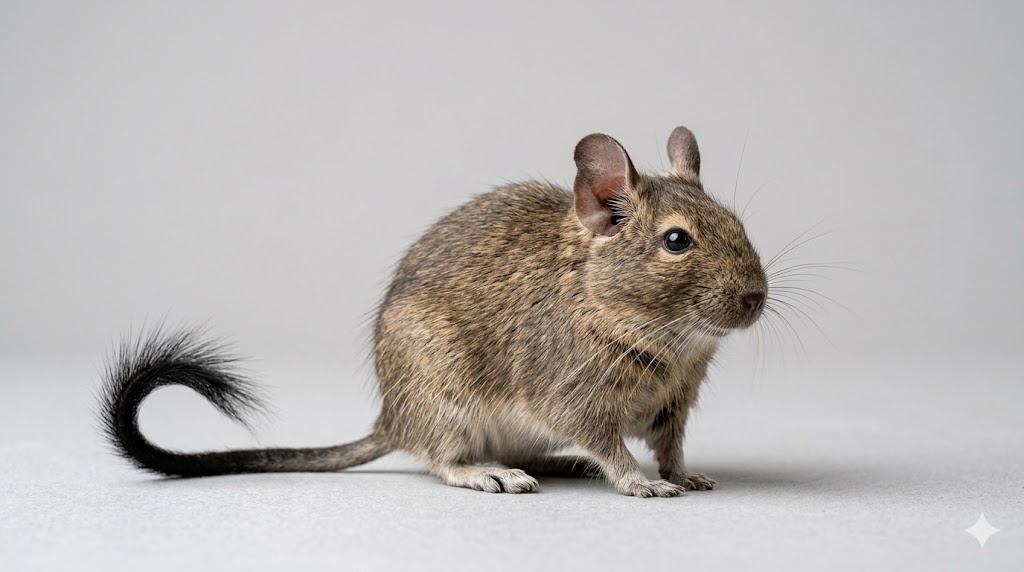
Adults weigh 170–300 g, body length 12–18 cm plus tufted tail.

Coat: agouti (wild), with a tan belly. Genetic colour varieties include blue and "pied" (white markings) but most pet degus are wild-type colour.

Temperament & Handling

Active, social, intelligent. Degus bond closely with their group (degu and human). They are diurnal, so active during human waking hours β€” unlike most small mammals.

Handle gently and never by the tail β€” the tail tip can break off and never regrows.

Housing

Minimum enclosure: 1 Γ— 0.5 Γ— 1.5 m tall, larger for more degus. Multi-level wire cages with solid platforms (similar to chinchilla housing).

Provide:

  • Wooden chew toys.
  • Hideouts.
  • Solid wheel (30+ cm β€” degus need very large wheels).
  • Sand bath (chinchilla sand, similar care to chinchillas).
  • Heavy ceramic bowls and water bottle.
  • Climbing branches.

Diet

Critical: degus are highly prone to diabetes and develop it quickly with sugar.

  • Chinchilla pellets (plain, no fruit) as staple.
  • Unlimited grass hay (timothy).
  • Daily fresh greens β€” small amount of vegetables; avoid sugary ones.
  • No fruit, no sweetened treats, no carrots.
  • Limited seeds.

Diabetes in degus is often fatal and is preventable with strict diet control.

Health & Lifespan

6–8 years (some live 10+).

Common concerns:

  • Diabetes β€” extremely common with improper diet; often fatal.
  • Dental disease (malocclusion).
  • Cataracts.
  • Tail injuries.
  • Bumblefoot.

Social Needs

Highly social. Always keep at least same-sex pairs (preferably 3–4 from the same family). Lone degus are depressed and short-lived.

Adult degu introductions are difficult β€” best with same-litter siblings.

Pros & Cons

Pros:

  • Diurnal β€” active when humans are.
  • Highly intelligent and social.
  • Long-lived for size.
  • Bond strongly with humans.
  • Engaging to observe.

Cons:

  • Must be kept in groups.
  • Diabetes risk requires strict diet.
  • Large enclosure needed.
  • Uncommon β€” vet expertise variable.
  • Tail injury risk.

Best Suited For

  • Owners wanting a daytime-active small pet.
  • Multi-degu households.
  • Adults and older children.

Not suited for households unwilling to keep groups, or those unable to maintain strict diabetes-prevention diet.

FAQ

Why no fruit or carrots? Degus develop diabetes very quickly on sugary food. Even small amounts of fruit or carrot can trigger the disease.

Are they good for kids? Older children with supervision. Better than nocturnal alternatives for daytime interaction.

How long do they live? 6–8 years average, up to 10+.

Do they smell? Mild musky odour; clean cage weekly to manage.

Are they hypoallergenic? No.

🎬 YOUTUBE LONG-FORM SCRIPT

Working title

The Degu β€” The Chilean Diurnal Social Rodent

Estimated length

10–12 minutes

Thumbnail concept

Group of degus on a wooden branch, alert intelligent expressions. Caption: "DAY-ACTIVE COLONY".

Thumbnail Image Prompt

Studio photograph of a group of three degus on a wooden branch, sandy-brown coats with light bellies, alert intelligent expressions, long tufted tails visible, bright eyes, soft cream background, gentle natural lighting, 85mm lens at f/2.5, professional pet photography, engaged active expressions.

Description with timestamps

Degus are day-active social Chilean rodents β€” intelligent, vocal, and increasingly popular as alternative pets. Today we cover species basics, setup, the strict no-sugar diet, social needs, health, and whether degus are right for your home.

⏱ Timestamps 00:00 Intro Hook 01:00 Origin: Chilean Lowlands 02:30 Setup: Tall Cage, Sand Bath 04:00 Diet: NO SUGAR Ever 05:30 Social: Same-Sex Groups 07:00 Health: Diabetes, Dental, Tail Slip 08:30 3 Biggest Mistakes New Owners Make 10:00 Are Degus Right For You? 11:00 Outro

πŸ”” Subscribe for a new species each week.

00:00–01:00 INTRO HOOK

"Degus are day-active. They live in groups. They are intelligent. They are diabetic by default β€” they cannot process sugar. Today: everything first-time degu owners need to know."

01:00–02:30 ORIGIN: CHILEAN LOWLANDS

"The common degu (Octodon degus) is native to Chile, where it lives in colonies of up to 100 in arid scrubland. Degus are uniquely diurnal among popular pet rodents β€” they are awake during the day and sleep at night. They are also genuinely intelligent. Degus can solve tool-use problems, recognise individual humans, and communicate using a complex vocabulary of squeaks, whistles, and chatters. They have been pet animals since the 1990s and are increasingly common in Europe."

02:30–04:00 SETUP: TALL CAGE, SAND BATH

"Tall multi-level cage. Minimum 1 m Γ— 0.6 m Γ— 1 m for a pair. Bar spacing: 1.2 cm maximum. Levels: platforms, branches, hides. Substrate: paper bedding. Sand bath: chinchilla sand in a shallow dish, available daily. Wheel: 28 cm solid surface minimum. Chews: untreated wood, hay blocks. Water: bottle. Temperature: 18–22Β°C. Heat-stress above 25Β°C."

04:00–05:30 DIET: NO SUGAR EVER

"Degus are diabetic by default. Any sugar β€” including fruit, sweet root vegetables, sugary commercial mixes β€” causes diabetes within months. Base: degu pellets (with hay-based formulation, no fruit pieces) plus unlimited timothy hay. Fresh vegetables: small daily portion of broccoli, kale, dandelion, herbs. NO carrots, NO fruit, NO peas, NO sweetcorn. Protein: occasional dried mealworm. Treats: tiny dried herbs, plain rolled oats, small portion of seed. Avoid: ALL fruit, sweet vegetables, sugary commercial 'rodent treats', dairy, nuts in excess."

05:30–07:00 SOCIAL: SAME-SEX GROUPS

"Degus must live in groups. Same-sex pairs from a litter are minimum. Groups of three or four are better. Adult introductions are difficult and often fail. Switzerland legally requires group housing."

07:00–08:30 HEALTH: DIABETES, DENTAL, TAIL SLIP

"Lifespan five to eight years. Diabetes from dietary mistakes β€” the major preventable killer. Cataracts β€” sometimes related to diabetes. Dental disease β€” continuously growing teeth. Hay essential. Tail slip β€” never lift by the tail. Skin sheath strips. Bumblefoot from wire flooring. Find an exotics vet."

08:30–10:00 3 BIGGEST MISTAKES NEW OWNERS MAKE

"Mistake one: sugary treats. Cause diabetes. How to avoid: zero sugar diet. Always. Mistake two: solo degu. Severe stress. How to avoid: minimum pair. Mistake three: cheap cages. Inadequate space and dangerous wheels. How to avoid: tall multi-level cage, 28 cm wheel."

10:00–11:00 ARE DEGUS RIGHT FOR YOU?

"Checklist: Tall cage for pair or group. Strict no-sugar diet feasible. Day-active household. Exotics vet identified. 5–8 year commitment. Tick four β€” degus are wonderful."

11:00–11:30 OUTRO AND CTA

"That is the degu β€” Chilean colony rodent, day-active, intelligent, diabetic-prone. Fascinating pet for the right owner. Next species? Comment below. Subscribe and the bell. Next week: the African pygmy hedgehog β€” the spiny solitary." (End screen: subscribe button, 'watch next: Hedgehog' thumbnail, channel logo)

One smart pet email a week.

Vet-reviewed care, training, and gear. No spam, unsubscribe in one click.

🐢
🐱
🐰