Dwarf Hamster
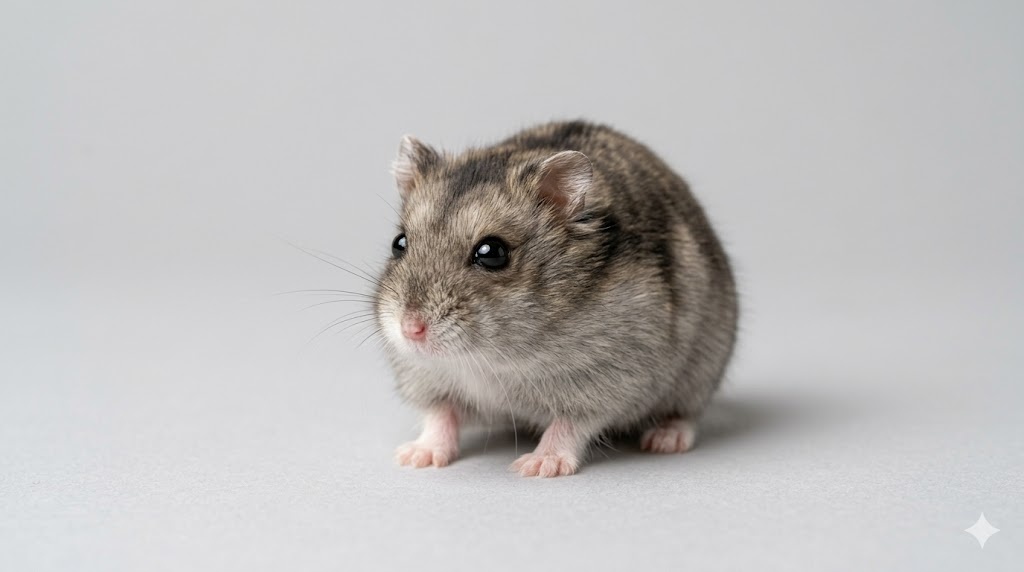
"Dwarf hamster" refers to three small hamster species commonly kept as pets: the Roborovski (the smallest and fastest), Campbell's, and Winter White.
🗓️ Last reviewed: June 2026
Overview
"Dwarf hamster" refers to three small hamster species commonly kept as pets: the Roborovski (the smallest and fastest), Campbell's, and Winter White. All are smaller than Syrians, more social with their own kind, but often less tolerant of handling.
Natural History & Origin
- Roborovski hamster (Phodopus roborovskii) - Mongolian deserts. The smallest and fastest pet hamster.
- Campbell's dwarf (Phodopus campbelli) - Mongolia, China. Originally classified with Winter Whites; now separate species.
- Winter White (Phodopus sungorus) - Russia, Kazakhstan. Coat changes to white in winter (in wild conditions).
Many pet "Russian dwarves" are actually Campbell's × Winter White hybrids.
Appearance
- Roborovski: 5-6 cm body, 25-30 g. Sandy tan with white belly and white "eyebrow" markings.
- Campbell's: 8-10 cm body, 30-45 g. Tan with dark dorsal stripe.
- Winter White: 7-9 cm body, 30-45 g. Grey-brown with dorsal stripe; turns white in winter under cold/short-day conditions.
Temperament & Handling
Smaller and faster than Syrians. Roborovskis are notoriously difficult to hold - they prefer to be observed rather than handled. Campbell's and Winter Whites can be handled but vary individually.
Dwarves are often nippy as young animals; patient daily interaction over weeks can build trust.
Housing
Minimum 80 × 50 cm floor space (similar to Syrian). Deep bedding for burrowing (15-25 cm).
Same housing principles as Syrian:
- Solid wheel (Roborovski: 21+ cm; Campbell's and Winter White: 25+ cm).
- Sand bath (essential for desert species).
- Multi-chamber hideouts.
- Aspen, paper, or hemp bedding only.
Diet
Same as Syrian hamster. Slightly more concentrated mix preferred for the smaller size.
Important: Campbell's hamsters are prone to diabetes. Avoid sugary fruits and starchy vegetables (corn, carrot in moderation). Many breeders feed a specifically diabetes-safe diet.
Health & Lifespan
1.5-3 years. Roborovskis can reach 3.5.
Common concerns:
- Diabetes - Campbell's and Winter Whites especially.
- Wet tail in stressed young.
- Cancers in older hamsters.
- Eye infections.
- Pyometra in unspayed females.
- Dental issues.
Pros & Cons
Pros:
- Tiny, low food costs.
- Roborovskis are very long-lived for hamsters.
- Can sometimes be kept in same-sex pairs.
- Quiet apartment pets.
Cons:
- Difficult to handle (especially Roborovski).
- Diabetes risk.
- Pair-living often fails.
- Short lifespan.
- Nocturnal.
Best Suited For
- Owners who want a small pet to observe rather than cuddle.
- Adults and older children.
Not suited for young children wanting to hold the pet, or first-time owners expecting a Syrian-like tameness.
Dwarf Hamster - frequently asked questions
Roborovski vs Campbell's vs Winter White - which is best?
Roborovski: smallest, fastest, hardest to hold, longest-lived. Campbell's and Winter White: slightly larger, more tameable, more prone to diabetes.
Can I keep dwarfs in pairs?
Sometimes, with caveats. Roborovskis are most tolerant. Always have a spare cage ready.
Are they good for kids?
Older children only. Dwarves are too fast and fragile for young children.
How long do they live?
1.5-3 years; Roborovskis up to 3.5.
🧠 Test yourself: guess the small mammal
Three clues from our quiz bank, each about another of our small mammals. Can you name them?
Clue 1.This nocturnal insectivore performs 'self-anointing,' frothing saliva and spreading it over its quills.
It's the African Pygmy Hedgehog - read the full profile →
Clue 2.This musky mustelid does a hopping dance when playful and was once carried to control rodents on ships and farms.
It's the Ferret - read the full profile →
Clue 3.Born hairless and blind in a fur-lined nest, the young of this hopping mammal are called kits.
It's the Rabbit (Domestic) - read the full profile →
Social Needs
Variable by species:
Best practice: plan for solo housing. If pairing, prepare a second enclosure in case fights start (common after 6 months of age).