Fancy Mouse
The fancy mouse - domestic Mus musculus - is the smallest commonly kept small mammal pet.
🗓️ Last reviewed: June 2026
Overview
The fancy mouse - domestic Mus musculus - is the smallest commonly kept small mammal pet. Mice are observation pets rather than handling pets, best appreciated for their darting curiosity and the entertaining social dynamics of a group. They are inexpensive, easy to house, and short-lived.
Natural History & Origin
The wild house mouse originated in central Asia and spread worldwide with humans. Domestication began in ancient China and Japan, where mice were kept for their coat colour mutations. The fancy mouse breeding hobby formalised in Victorian Britain.
Appearance
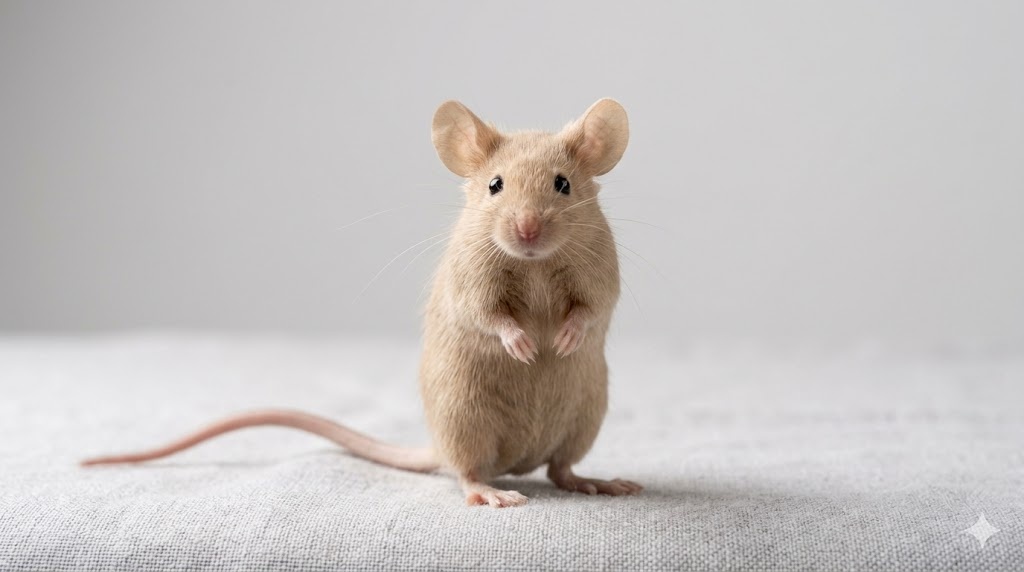
Adults weigh 15-30 g, body length 6-10 cm plus tail.
Colours and varieties: black, white, agouti, cream, dove, champagne, fox, marked, broken, satin, longhaired, curly, and many others.
Temperament & Handling
Fast, fragile, observation-oriented. Most pet mice can be handled with patient socialisation, but they are not naturally cuddly and prefer their own activities to human interaction.
Pick up by cupping or by gently scooping. Never grab by the tail tip (can break) - the tail base is acceptable for very brief support if needed.
Housing
Minimum enclosure: 50 × 30 cm for 2-3 mice; larger preferred. Multi-level habitats work well - mice climb readily.
Avoid wire bars wider than 0.6 cm - mice escape through impossibly small gaps.
Provide:
- Deep paper bedding (10+ cm) for burrowing.
- Multiple hideouts.
- Wheel (20+ cm).
- Climbing ropes and platforms.
- Ceramic dish and water bottle.
Diet
- Quality mouse mix (grains, seeds).
- Small portions of fresh vegetables every 2-3 days.
- Limited fruit and protein.
Health & Lifespan
1.5-2.5 years.
Common concerns:
- Mammary tumours - extremely common in females.
- Respiratory infections - universal.
- Skin issues.
- Old-age tumours.
Pros & Cons
Pros:
- Inexpensive setup and feeding.
- Fascinating to observe.
- Quiet apartment pets.
- Variety of colours.
Cons:
- Short lifespan.
- Cage smell (especially males) - frequent cleaning.
- Not cuddly.
- Escape artists.
- Health issues common.
Best Suited For
- Adults and older children wanting observation pets.
- Apartment dwellers.
- Multi-mouse households.
Not suited for young children wanting to hold the pet or owners expecting cuddly interaction.
Fancy Mouse - frequently asked questions
Can I keep male mice together?
Rarely successful. Most adult males fight. Females in same-sex groups are the easy default.
Do they smell?
Males more than females. Frequent bedding changes (twice weekly) and good ventilation help.
How long do they live?
1.5-2.5 years.
Are they good for kids?
For observation, yes. For handling, less ideal - mice are fast and fragile.
🧠 Test yourself: guess the small mammal
Three clues from our quiz bank, each about another of our small mammals. Can you name them?
Clue 1.This tiny nocturnal marsupial has a membrane between its limbs that lets it glide between trees and a fondness for sweet sap.
It's the Sugar Glider - read the full profile →
Clue 2.This palm-sized nocturnal hoarder stuffs food into stretchy cheek pouches to carry back to its nest.
It's the Dwarf Hamster - read the full profile →
Clue 3.This social herbivore is born fully furred with open eyes and can run within hours of birth.
It's the Guinea Pig - read the full profile →
Social Needs
Females: keep in same-sex groups of 2-4. Males: typically solitary - most adult males fight when housed together. Some bonded male groups raised together can succeed but commonly fail.
Never mix unneutered males with females (rapid reproduction).