Fancy Rat
The fancy rat - domestic Rattus norvegicus - is widely considered the most intelligent and trainable small mammal pet.
🗓️ Last reviewed: June 2026
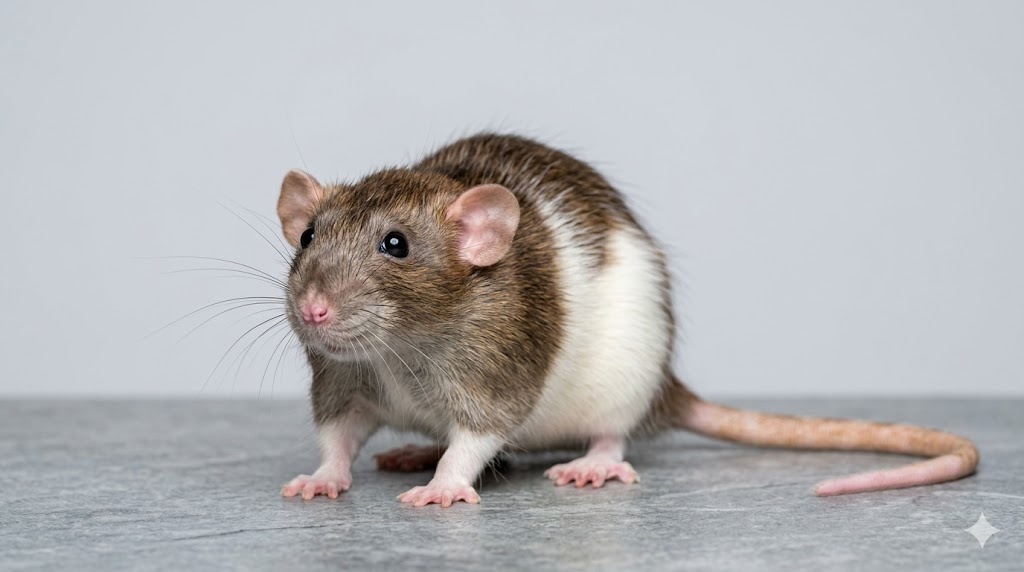
Overview
The fancy rat - domestic Rattus norvegicus - is widely considered the most intelligent and trainable small mammal pet. Friendly, social, and capable of learning tricks rivalling those of dogs, fancy rats overcome their wild ancestors' poor reputation entirely. The breed has been domesticated for over 200 years and bears as much resemblance to wild rats as a Chihuahua does to a wolf.
Natural History & Origin
Wild brown rats originated in northern China and East Asia, spreading globally with human commerce. Domestication began in 19th-century Europe with rat-catchers selectively breeding tame and colour-mutant rats. The first formal "fancy rat" exhibitions were held in 1901 in Britain.
Appearance
Adults weigh 300-500 g (females smaller). Bucks (males) are larger and lazier; does (females) are smaller and more active.
Colour and pattern varieties: agouti, black, hooded, Berkshire, Irish, blue, mink, cinnamon, Russian blue, dumbo (low-set ears), rex (curly coat), hairless, tailless (Manx - welfare concern), and many others.
Temperament & Handling
Highly intelligent and social. Fancy rats recognise their owners, come when called by name, learn tricks (fetch, navigate mazes, distinguish colours), and form genuine bonds with humans. They are typically excellent with respectful handling.
Rats are nocturnal-crepuscular but adjust to household schedules and become active at the times their humans are home.
Bites are rare and almost always defensive. Hand-raised rats are exceptionally gentle.
Housing
Minimum enclosure: 90 × 60 × 90 cm for two rats - taller is better. Multi-level cages with platforms, ropes, hammocks. Cage by Critter Nation or Savic Royal Suite are popular.
Provide:
- Solid floors (wire bottoms cause foot injuries).
- Paper-based bedding (no pine/cedar).
- Multiple hammocks (rats love sleeping in fabric).
- Hideouts at multiple levels.
- Toys, ropes, tunnels.
- Heavy ceramic food bowls and water bottle.
- Daily free-roam time in a rat-proofed room.
Diet
- Lab block / rat pellets as staple - high-quality balanced formula (Oxbow, Mazuri, etc.). Mixed seed-based foods produce nutritional imbalances.
- Daily fresh vegetables - broccoli, kale, peas, carrots, herbs.
- Limited fresh fruit.
- Occasional protein - small piece of cooked chicken or egg.
- Limited treats - rats are food-motivated and gain weight easily.
Avoid: citrus (in males - linked to kidney issues), onion, raw beans, blue cheese, sugary processed foods.
Health & Lifespan
2-3 years average. Some reach 3.5-4.
Common concerns:
- Respiratory disease - chronic mycoplasma infection is nearly universal; manage with dust-free bedding, good ventilation, and antibiotics during flare-ups.
- Mammary tumours - extremely common in females; spaying significantly reduces risk.
- Cancers in older rats.
- Foot injuries from wire floors.
- Pododermatitis (bumblefoot).
- Pituitary tumours.
Find an exotic vet experienced with rats before acquisition. Most rat health issues are treatable in early stages.
Pros & Cons
Pros:
- Highly intelligent and trainable.
- Affectionate and bondable.
- Quick to litter-train.
- Cheap and easy to feed.
Cons:
- Short lifespan.
- Respiratory disease nearly universal.
- Must be kept in groups.
- Mammary tumours common.
- Some social stigma.
Best Suited For
- Adults and older children (8+).
- Owners who want an interactive, trainable small pet.
- Households able to keep a group.
Not suited for owners with rat phobias, families unable to keep at least two, or those expecting long-lived pets.
Fancy Rat - frequently asked questions
Are fancy rats safe to own?
Yes. Domesticated rats are clean, gentle, and do not carry the disease load of wild rats.
Do they bite?
Rarely. Hand-raised rats are exceptionally tame.
Can I keep just one?
No. Rats are strongly social. Lone rats become depressed.
How long do they live?
2-3 years on average; up to 4 with careful care.
Are they good for kids?
Older children with supervision. Younger kids find the short lifespan emotionally difficult.
🧠 Test yourself: guess the small mammal
Three clues from our quiz bank, each about another of our small mammals. Can you name them?
Clue 1.This crepuscular mammal can swivel its eyes for nearly 360-degree vision to watch for predators while feeding.
It's the Rabbit (Domestic) - read the full profile →
Clue 2.This social herbivore is born fully furred with open eyes and can run within hours of birth.
It's the Guinea Pig - read the full profile →
Clue 3.This palm-sized nocturnal hoarder stuffs food into stretchy cheek pouches to carry back to its nest.
It's the Dwarf Hamster - read the full profile →
Social Needs
Strictly social. Keep at least in same-sex pairs (two males or two females). A lone rat is depressed and short-lived.
Most rats live happily in groups of 3-5. Introductions to new rats take careful neutral-territory work over days.