Ferret
The ferret (Mustela putorius furo) is a domesticated form of the European polecat, kept by humans for over 2,500 years originally for rabbit hunting and rodent control.
🗓️ Last reviewed: June 2026
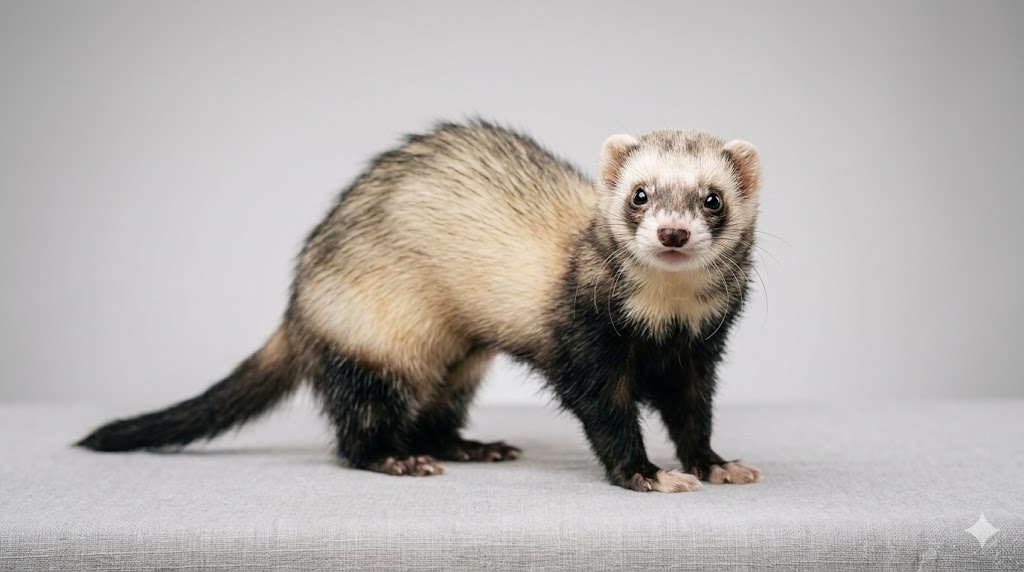
Overview
The ferret (Mustela putorius furo) is a domesticated form of the European polecat, kept by humans for over 2,500 years originally for rabbit hunting and rodent control. Modern pet ferrets are playful, affectionate, social, and demanding - they sleep 16+ hours a day but are tornadoes of activity for the remaining hours. Ferret ownership is closer to keeping a kitten that never grows up than to a typical small mammal.
Natural History & Origin
Domesticated from European polecats around 500 BC. Used by Greeks and Romans for rabbit hunting (the original "ferret out" came from this). The breed survived as a working animal until modern times, then transitioned to pet status in the 1980s onward.
Appearance
Adults: males ("hobs") 1-2 kg; females ("jills") 0.5-1 kg. Long flexible bodies (35-50 cm plus tail).
Colour and pattern varieties: sable (natural), albino, silver, panda, chocolate, cinnamon, blaze, mitt, and many others.
Temperament & Handling
Playful, mischievous, affectionate. Ferrets are deeply bonded to their humans, demand interaction, and have a distinctive "dance of joy" (war dance) when playing.
Ferrets sleep 14-18 hours daily but are intensely active when awake. Most "ferret-proof" an entire room or apartment because the animals find every gap, hole, and unsecured cabinet.
Bites and nips are common in puppies and require training. Ferrets steal and hide objects ("ferret" comes from Latin furittus, "little thief").
Housing
Large multi-level cages (Ferret Nation or Critter Nation style) - minimum 80 × 60 cm × 1 m tall, larger for two ferrets. Cage time is for sleeping and confinement; ferrets need 4+ hours of supervised free-roam time daily.
Provide:
- Hammocks (multiple).
- Hideouts and tubes.
- Litter pan (ferrets can be litter-trained to ~80%).
- Heavy ceramic bowls.
Ferret-proof rooms thoroughly. Block all gaps over 2.5 cm, secure cabinets, remove rubber items (eaten and cause obstructions), and never leave running washing machines open.
Diet
Strict carnivores. Need a meat-based high-protein diet - minimum 30% protein, minimum 18% fat, low carbohydrate, no fibre.
Options:
- Premium ferret kibble with chicken/turkey as first ingredient.
- High-quality kitten food (acceptable but less ideal).
- Raw or whole prey diet - increasingly recommended; requires research.
Avoid: dog food (too much fibre), vegetables and fruit (cannot digest properly), dairy, sugary treats.
Always-available food is normal - ferrets eat 8-10 small meals daily.
Health & Lifespan
6-10 years (US lines often shorter due to early-age neutering and adrenal issues).
Major concerns:
- Adrenal disease - extremely common, especially in US ferrets neutered too young. Symptoms: hair loss, itching, aggression. Treatment includes deslorelin implants.
- Insulinoma - pancreatic tumour producing chronic low blood sugar.
- Lymphoma and other cancers.
- Dental disease - common.
- Adenocarcinoma.
- ECE (epizootic catarrhal enteritis).
- Heatstroke - ferrets cannot tolerate temperatures above 27°C.
- Distemper - vaccination essential.
Find an exotic vet specifically experienced with ferrets before getting one.
Pros & Cons
Pros:
- Playful, intelligent, affectionate.
- Bonded to humans.
- Litter-trainable.
- Entertaining and hilarious.
Cons:
- High exercise and supervision needs.
- Significant health issues (adrenal, insulinoma, cancer).
- Distinctive musky odour (intensified if not de-scented; even de-scented ferrets smell).
- Steal and hide everything.
- Expensive vet care.
- Banned in some jurisdictions (California, Hawaii, NYC).
Best Suited For
- Adults and older children (10+) with strong adult supervision.
- Active households with hours daily for the animal.
- Households without small pets (rabbits, hamsters, birds - ferrets are predators).
Not suited for working households without daily supervision time, homes with prey-type small pets, or anyone unprepared for the smell and health issues.
Ferret - frequently asked questions
Are ferrets legal?
Most places yes. Banned: California, Hawaii, New York City, some other localities. Check local laws.
Do they smell?
Yes. Even de-scented neutered ferrets have a musky odour. Daily cage hygiene helps; never bathe more than monthly (over-bathing increases oil production).
Are they good with kids?
Older children only. Bites and nips are common; ferrets are not gentle to handle the way rabbits are.
Are they good with other pets?
Cats and dogs can coexist with careful introduction. Birds, rabbits, hamsters, mice are prey - never safe with ferrets.
How long do they live?
6-10 years. Often shorter in the US due to adrenal disease.
🧠 Test yourself: guess the small mammal
Three clues from our quiz bank, each about another of our small mammals. Can you name them?
Clue 1.Friendly and curious, this tufted-tailed burrower loves to dig tunnels and rarely bites, making it a great first pet.
It's the Gerbil - read the full profile →
Clue 2.Born hairless and blind in a fur-lined nest, the young of this hopping mammal are called kits.
It's the Rabbit (Domestic) - read the full profile →
Clue 3.The smallest pet of its kind, one variety from the deserts of Mongolia and China is barely two inches long.
It's the Dwarf Hamster - read the full profile →
Social Needs
Highly social. Pairs are strongly recommended; many do best in groups of 3-4. Lone ferrets can do well with intensive human interaction but most thrive with ferret company.