🐾 Smart pet care, real pet parent NEW 50+ buyer guides published πŸ“© Weekly newsletter As an Amazon Associate we earn from qualifying purchases
Home/ Pets/ Small Mammals/ Sugar Glider

Sugar Glider

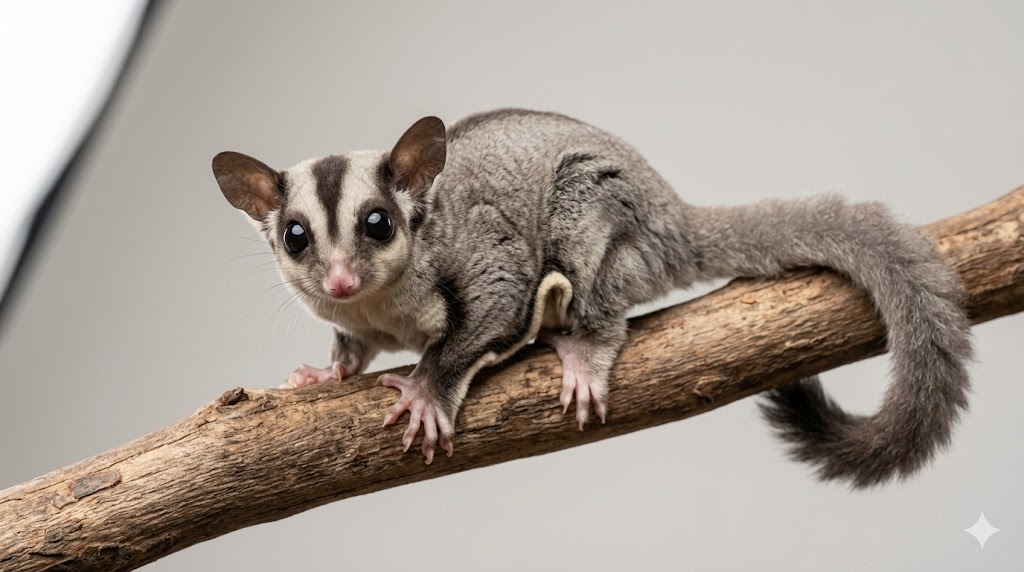
The Sugar Glider (Petaurus breviceps) is a small Australian marsupial that glides between trees using a membrane stretched between wrist and ankle.

πŸ‡
🐾
Coming soon
πŸ“Ί Video guide in production

Sugar Glider β€” the full video guide

Coming soon. Subscribe to the newsletter to get notified when this video drops.

Lifespan
10–15 years
Category
Small Mammals
Difficulty
See care section

Overview

The Sugar Glider (Petaurus breviceps) is a small Australian marsupial that glides between trees using a membrane stretched between wrist and ankle. Despite the cute appearance and pet shop marketing, sugar gliders are challenging exotic pets β€” strictly social, nocturnal, demanding of specific diets and large flight cages, with bites and noise that surprise most new owners.

Natural History & Origin

Wild sugar gliders live in eucalyptus forests of eastern Australia, Tasmania, New Guinea, and Indonesia. They live in colonies of 6–10 in tree hollows, glide up to 50 m between trees, and forage at night for sap, nectar, pollen, insects, and small vertebrates.

Appearance

Adults weigh 100–160 g, body 15–17 cm plus tail of similar length.

Colours: standard grey (wild), white-face, mosaic, leucistic, albino, platinum, and others.

The gliding membrane (patagium) stretches from wrist to ankle and is the breed's defining feature.

Temperament & Handling

Strictly social, nocturnal, bonded only to people who put in long daily handling time. Sugar gliders bonded to their humans wear them ("pouching" in shirts) for hours and follow constantly. Unbonded gliders bite hard and repeatedly.

The "crabbing" noise β€” a loud rapid clicking β€” is the breed's defensive sound and is genuinely loud at night.

Housing

Minimum enclosure: 1 m Γ— 0.6 m Γ— 1.8 m tall β€” flight cage, vertical orientation. Pairs and groups need significantly larger.

Provide:

  • Multiple hideouts (fleece pouches preferred).
  • Climbing branches and ropes.
  • Wheel (specifically a glider-safe model β€” most rodent wheels are dangerous).
  • Heavy ceramic dishes.
  • Water bottle.

Diet

Critically complex. Wild diet (sap, pollen, nectar, insects) is hard to replicate. Multiple diet plans exist:

  • BML diet (Bourbon's Modified Leadbeater) β€” most respected, scratch-mixed.
  • TPG / HPW diets β€” alternatives.
  • Commercial pellets β€” generally inadequate.

Most include nectar, fruit/vegetable mash, calcium supplements, vitamins, and protein (cooked egg, insects).

Improper diets cause calcium deficiency and hind-leg paralysis β€” common cause of death.

Health & Lifespan

10–15 years.

Major concerns:

  • Hind-leg paralysis (HLP) from calcium deficiency β€” preventable with proper diet.
  • Self-mutilation β€” psychological; from stress, loneliness, illness.
  • Dental disease.
  • Cataracts.
  • Cancer in older gliders.

Find an exotic vet experienced with marsupials before acquisition.

Social Needs

Strictly social. A single sugar glider is widely considered an abuse case. Always keep at least same-sex pairs (better: groups of 3–4). Lone gliders develop severe stress, self-mutilation, and early death.

Pros & Cons

Pros:

  • Unique, fascinating.
  • Long-lived for size.
  • Bond strongly with humans (with daily handling).

Cons:

  • Strictly social β€” must keep groups.
  • Nocturnal β€” active when humans sleep.
  • Loud (crabbing).
  • Complex diet requirements.
  • Bites readily until bonded.
  • Banned in some jurisdictions.
  • Often unethically bred and sold.

Best Suited For

  • Experienced exotic-pet owners.
  • Households able to dedicate hours daily.
  • Multi-glider homes.
  • Tolerant neighbours (or detached houses).

Not suited for first-time exotic pet owners, apartment dwellers in shared buildings, families with young children, or anyone unable to commit to complex diet.

FAQ

Are sugar gliders legal? Varies widely. Banned in California, Hawaii, Pennsylvania, Alaska, parts of Canada and Europe. Check local laws.

Are they good for kids? Not for typical family pet roles. They bite, are nocturnal, and need specialist care.

Can I keep one? Strongly discouraged. The breed is colony-living; a lone glider is psychologically suffering.

How long do they live? 10–15 years β€” a long commitment.

Why no commercial food? Most "sugar glider food" products are nutritionally inadequate and lead to calcium deficiency. Active diet preparation is required.

🎬 YOUTUBE LONG-FORM SCRIPT

Working title

The Sugar Glider β€” The Gliding Marsupial That Bonds Like a Dog

Estimated length

10–12 minutes

Thumbnail concept

Sugar glider mid-glide with patagium spread, eyes wide. Caption: "MARSUPIAL, NOT RODENT".

Thumbnail Image Prompt

Action photograph of a sugar glider in mid-glide with patagium membrane fully spread between front and back legs, large dark eyes wide, soft grey fur with black dorsal stripe, soft indoor background, gentle natural lighting, 85mm lens at f/2.5, professional pet action photography, ultra-sharp focus on face.

Description with timestamps

Sugar gliders are small Australian marsupials β€” not rodents β€” that glide between trees and bond intensely with their colony. They are legal in some places, illegal in others, and require significant specialised care. Today: the complete picture.

⏱ Timestamps 00:00 Intro Hook 01:00 The Marsupial Glider 02:30 Setup: Tall Cage, Lots of Climbing 04:00 Diet: Complex Specialised Nutrition 05:30 Social: Always in Pairs or Colonies 07:00 Health: Calcium Deficiency, Tumours 08:30 3 Biggest Mistakes New Owners Make 10:00 Is a Sugar Glider Right For You? 11:00 Outro

πŸ”” Subscribe for a new species each week.

00:00–01:00 INTRO HOOK

"Sugar gliders are marsupials, not rodents β€” distantly related to kangaroos and koalas. They glide between trees, live in colonies, and bond like small dogs. They also require strict specialised nutrition, large cages, and are illegal in many jurisdictions. Today: everything you need to know before deciding."

01:00–02:30 THE MARSUPIAL GLIDER

"Sugar gliders (Petaurus breviceps) are small omnivorous marsupials native to Australia, Indonesia, and Papua New Guinea. Legal status varies widely: banned in California, Hawaii, NYC, Massachusetts, and parts of Australia and Europe. Check local law before purchase. Wild sugar gliders live in colonies of seven to fifteen and bond strongly within the colony. Captive gliders must be kept in pairs minimum. They are nocturnal, vocal (chattering, crabbing, barking), and have a strong bonding instinct toward their owner that takes weeks of patient pouch-time to develop."

02:30–04:00 SETUP: TALL CAGE, LOTS OF CLIMBING

"Tall climbing cage. Minimum 90 Γ— 60 Γ— 180 cm. Bar spacing 1.2 cm. Branches, ropes, ladders, gliding distances. Pouch: cloth nesting pouches for daytime sleep. Wheel: large solid wheel (30 cm). Substrate: removable tray with paper bedding. Temperature: 18–24Β°C minimum, prefer 21–27Β°C. Light cycle: 12-hour dark/light."

04:00–05:30 DIET: COMPLEX SPECIALISED NUTRITION

"Sugar gliders are omnivores with very specific dietary needs. Wrong diet causes hindlimb paralysis (metabolic bone disease) within months. Standard captive diets include the Pet Glider Diet, BML, OHPW, or Suncoast β€” all formulations that balance calcium-phosphorus ratio. Includes: fruit, vegetables, plain yoghurt, boiled egg, cooked chicken, calcium supplement, multivitamin, insectivore mix. Never: cat food alone, sugary fruits in excess, raw onion, garlic, chocolate, dairy beyond plain yoghurt, anything with fluoride or pesticide. Diet research before purchase is non-negotiable."

05:30–07:00 SOCIAL: ALWAYS IN PAIRS OR COLONIES

"Single sugar gliders die of stress and depression. Always minimum pair. Same-sex pairs or neutered male with female pair work best. Bonding to owner takes 6–12 weeks of daily pouch time."

07:00–08:30 HEALTH: CALCIUM DEFICIENCY, TUMOURS

"Lifespan 12–15 years in captivity. Metabolic bone disease from calcium deficiency β€” preventable with correct diet. Stress disease in solo gliders. Tumours, especially scent gland. Self-mutilation in unbonded or stressed gliders. Find an exotics-experienced vet β€” most general vets cannot treat sugar gliders well."

08:30–10:00 3 BIGGEST MISTAKES NEW OWNERS MAKE

"Mistake one: ignoring law. Illegal possession can mean confiscation and euthanasia. How to avoid: confirm legality in writing before purchase. Mistake two: solo glider. Cruel and short-lived. How to avoid: always pairs. Mistake three: wrong diet. Causes metabolic bone disease. How to avoid: use an established diet formulation. No improvisation."

10:00–11:00 IS A SUGAR GLIDER RIGHT FOR YOU?

"Checklist: Legal where you live. You can keep at minimum a pair. You commit to a complex diet. You can find an exotics vet. You are home in the evening to bond. 12-15 year commitment. Tick five β€” sugar gliders can be wonderful. Otherwise β€” choose another pet. Sugar gliders are not for casual ownership."

11:00–11:30 OUTRO AND CTA

"That is the sugar glider β€” gliding marsupial, complex care, deeply bonded. Not for everyone. Next category? Comment below β€” starting birds next. Subscribe and the bell. Next week: the budgerigar β€” the world's most popular pet bird." (End screen: subscribe button, 'watch next: Budgerigar' thumbnail, channel logo)

One smart pet email a week.

Vet-reviewed care, training, and gear. No spam, unsubscribe in one click.

🐢
🐱
🐰