Best Dog Ear Cleaners 2026: Vet-Recommended Picks for Yeast, Wax & Floppy Ears
Honest reviews of the best dog ear cleaners in 2026 - Virbac Epi-Otic, Zymox, Vetnique. Routine cleaning, yeast and bacteria control, what works for Cocker Spaniels and Bassets.
Best Dog Ear Cleaners 2026: Vet-Recommended Picks for Yeast, Wax & Floppy Ears
The best dog ear cleaner for routine use is Virbac Epi-Otic, with Zymox for yeast- and bacteria-prone ears and a fast-drying cleaner for floppy-eared breeds like Cocker Spaniels and Bassets. Used on a regular schedule, the right cleaner stops most ear infections before they start.
Ear infections are one of the top three reasons dogs see vets. For breeds with floppy ears or narrow ear canals (Cocker Spaniels, Bassets, Bulldogs, Poodles, Cavaliers), they’re nearly inevitable without proactive cleaning. The right ear cleaner - used correctly on a regular schedule - prevents most infections from ever starting.
This guide covers what actually works. The market is split between simple wax-removers, antimicrobial cleaners for yeast or bacterial overgrowth, and prescription-grade products for active infections. Picking the right one matters more than spending more.
Don’t clean infected ears with regular cleaner. If your dog’s ears smell strongly, have visible discharge, or the dog is shaking head and scratching, see a vet first. Pushing fluid into already-infected ears can rupture the eardrum. Get the infection treated, then resume routine cleaning afterward.
At a Glance: Top Picks
| Rank | Cleaner | Type | Best For |
|---|---|---|---|
| 🥇 #1 | Virbac Epi-Otic Advanced | Routine + antimicrobial | All-purpose, vet-trusted |
| 🥈 #2 | Zymox Ear Solution | Enzymatic | Mild infections, sensitive dogs |
| 🥉 #3 | Vetnique Oticbliss Ear Cleaner | Routine | Budget pick, floppy-ear breeds |
| #4 | Douxo Calm Ear Cleanser | Sensitive skin | Allergic dogs |
| #5 | EcoEars Natural Cleaner | Plant-based | Owners preferring natural |
| #6 | Mometamax / Otomax | Prescription | Active infections (vet only) |
| #7 | Burt’s Bees Ear Cleaning Solution | Mild routine | Puppies, low-need dogs |
🥇 #1: Virbac Epi-Otic Advanced
Virbac Epi-Otic Advanced is the standard veterinary recommendation for routine ear cleaning. The anti-adhesive technology - which prevents bacteria and yeast from sticking to the ear canal lining - is the differentiator from generic cleaners. Combined with mild drying agents, it reduces the moisture and biofilm that cause infections.
For dogs prone to ear issues (floppy ears, allergies, swimming), weekly use of Epi-Otic Advanced reduces infection rates by 60%+ compared to no cleaning. For dogs with stable healthy ears, every 2-4 weeks is sufficient.
Best for: Routine prevention in floppy-ear breeds, weekly maintenance during allergy season, post-infection prevention.
🥈 #2: Zymox Ear Solution
Zymox uses enzymatic action (lactoperoxidase, lactoferrin, lysozyme) to kill yeast and bacteria. The enzymes work through the ear canal without requiring the aggressive flushing some traditional cleaners need. Many dogs that fight ear cleaning tolerate Zymox better.
For mild ear infections that don’t yet warrant a vet visit, Zymox (with hydrocortisone for inflammation) often resolves them within 7-14 days of daily use. For prevention in dogs with chronic ear issues, the non-hydrocortisone version provides ongoing antimicrobial support.
Best for: Mild active infections, dogs sensitive to alcohol-based cleaners, post-swimming prevention, owners preferring less-invasive cleaning routines.
🥉 #3: Vetnique Oticbliss Ear Cleaner
For owners on a budget needing routine maintenance, Vetnique Oticbliss provides 80% of Virbac Epi-Otic’s function at lower cost. The formula isn’t as sophisticated, but for routine weekly cleaning of healthy ears, it’s adequate.
Best for: Routine maintenance on a budget, multi-dog households, owners new to ear cleaning routines.
#4: Douxo Calm Ear Cleanser
Formulated for sensitive or allergic dogs. Lower alcohol content, gentle surfactants, and skin-soothing ingredients (phytosphingosine). For dogs whose ears are constantly itchy due to environmental allergies, this is the gentlest routine option.
Best for: Dogs with environmental allergies, sensitive skin, post-allergy-flare cleaning.
#5: EcoEars Natural Cleaner
A plant-based cleaner using natural antimicrobials (tea tree alternative-formulations, herbal extracts). Lower evidence base than veterinary products but acceptable for owners preferring natural formulations on healthy ears.
Best for: Owners preferring natural products, healthy ears without infection history.
#6: Prescription Medicated Ear Treatments (Mometamax, Otomax, Posatex)
Prescription-only combination products containing antibiotics, antifungals, and corticosteroids. Used for active infections diagnosed by a vet. Not routine cleaners.
Best for: Vet-diagnosed bacterial or yeast infections, under veterinary supervision only.
#7: Burt’s Bees Ear Cleaning Solution
Marketed as natural and gentle. Adequate for puppies, very mild routine cleaning, or dogs with no history of ear issues. Lower antimicrobial activity than veterinary products.
Best for: Puppies, very low-need cleaning routines, owners wanting gentlest option.
How Often Should You Clean
Frequency depends entirely on the dog.
Erect-ear breeds without allergies (GSDs, Huskies, Labs with tight ears)
Once every 4-8 weeks, or only when you notice wax buildup.
Floppy-ear breeds (Cocker Spaniels, Basset Hounds, Beagles, Golden Retrievers)
Once every 1-2 weeks routinely. Weekly during allergy season.
Severely floppy breeds (Bloodhounds, Bassets) or chronic infection history
Twice weekly minimum. Daily during recovery.
Brachycephalic with hairy ear canals (Poodles, Doodles, Schnauzers)
Weekly cleaning plus monthly ear hair trimming or plucking.
Swimming dogs
After every swim, especially saltwater or pond water. Use a drying cleaner specifically.
Allergy-prone dogs
Weekly during allergy season as preventive. Adjust based on individual dog patterns.
Puppies (until 6 months)
Monthly only, very gentle product. Their ears are still developing and don’t accumulate wax like adults.
How to Clean a Dog’s Ears (Step by Step)
The technique matters more than the product. Most owners clean ears wrong.
Step 1: Gather supplies
- Ear cleaner
- Cotton balls or pads (NOT cotton swabs / Q-tips)
- Treats
- Towel
Step 2: Position the dog
Stand or sit so the dog feels secure. Small dogs: on your lap. Large dogs: standing beside you or lying on their side.
Step 3: Apply cleaner
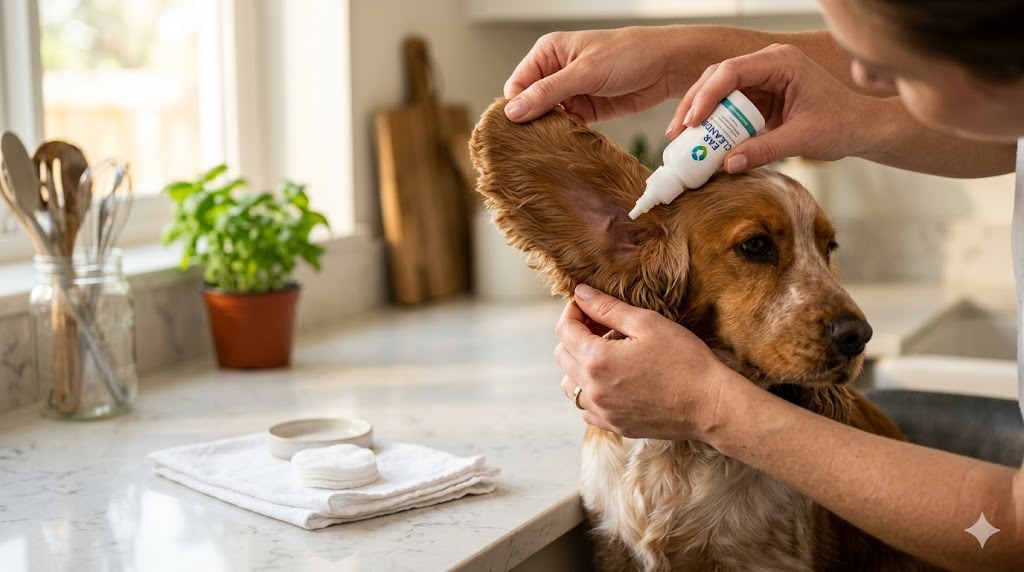
Lift the ear flap. Squirt cleaner into the ear canal (don’t be shy - fill it). Aim down into the canal, not at the eardrum.
Step 4: Massage the base
For 30-60 seconds, gently massage the base of the ear (where the ear meets the head). You’ll hear a squishing sound - that’s the cleaner working into the deeper canal.
Step 5: Let dog shake
Release the ear and step back. The dog will shake their head, which brings debris up and out of the canal.
Step 6: Wipe visible canal
Use a cotton ball wrapped around your finger to wipe the visible parts of the ear canal and outer ear. Don’t push anything deep into the canal.
Step 7: Treat heavily
Most dogs hate ear cleaning. Make it worthwhile - high-value treats throughout the process.
What NOT to do
- Don’t use cotton swabs deep in the canal: Pushes debris deeper, risks eardrum damage
- Don’t pour water in: Water without cleaner increases moisture, worsens infections
- Don’t use hydrogen peroxide: Damages ear tissue
- Don’t use rubbing alcohol: Severely irritates ear lining
- Don’t clean ears that smell bad or have discharge: See vet first
Recognizing Ear Infections
The signs that supplementation isn’t enough and you need a vet.
Clear infection symptoms
- Strong smell from ear (yeast, bacteria, or mixed)
- Discharge (brown, yellow, or bloody)
- Redness inside the canal
- Swelling of the outer ear
- Visible debris in the canal
- Pain on touching the ear
Behavior symptoms
- Excessive head shaking
- Pawing or scratching at the ear
- Head tilt to one side
- Reluctance to chew or eat
- Whining when ear is touched
- Loss of balance (advanced cases)
When you see these
See a vet within 1-3 days. Untreated ear infections can:
- Cause permanent damage to the ear canal
- Lead to chronic conditions requiring surgery
- Rupture the eardrum
- Spread to the middle and inner ear, causing balance problems
What the vet does
Cytology (microscopic exam) identifies whether the infection is bacterial, yeast, mixed, or fungal. Different infections require different treatments. Don’t try to treat without diagnosis - using the wrong product can worsen things.
Yeast vs Bacterial vs Mixed
Different infections look and smell different, and need different treatments.
Yeast infections (Malassezia)
- Sweet, musty, “corn chip” smell
- Brown-to-black discharge
- More common in allergic dogs and floppy-ear breeds
- Treated with antifungals (ketoconazole, miconazole, clotrimazole)
Bacterial infections
- More variable smell (often “rotting”)
- Yellow, green, or bloody discharge
- More acute symptoms
- Treated with antibiotics (vet-prescribed based on culture)
Mixed infections
- Most common in dogs with chronic ear disease
- Multiple symptoms
- Requires combination treatment (Mometamax, Otomax)
Allergic ear disease
- Both ears affected
- Recurrent infections despite treatment
- Cause is the allergy, not infection
- Requires allergy management plus ear care
Special Considerations by Breed
Cocker Spaniels
Notorious for chronic ear issues. Weekly cleaning is mandatory, not optional. Many cocker breeders recommend twice weekly. Long ear flaps trap moisture and limit airflow.
Basset Hounds and Bloodhounds
Extreme ear length. Clean weekly minimum. Watch for foreign material (foxtails, grass seeds) in the canal during walks.
Poodles and Doodles
Hair grows inside the ear canal, trapping wax and debris. Plucking (or trimming) ear hair monthly is part of routine grooming. Discuss with groomer or vet.
Bulldogs and Frenchies
Hot spots and skin issues often coexist with ear problems. Address whole-body allergies; ears improve with overall management.
Labradors and Goldens
Active outdoor and swimming dogs. Post-swim cleaning prevents most infections. Many of these dogs need ear management primarily in summer.
Huskies and Malamutes
Erect ears mean lower infection rates. Less frequent cleaning (every 4-8 weeks) is usually sufficient.
Frequently Asked Questions
How often should I clean my dog’s ears?
Depends on breed and lifestyle. Floppy-ear dogs: weekly. Erect-ear dogs: every 4-8 weeks. Allergic or swimming dogs: more often. See breed-specific recommendations above.
Can I use baby oil or olive oil?
No. Oils trap moisture and feed yeast. Use dog-specific cleaners only.
Why does my dog hate ear cleaning?
The cool liquid and sound near the eardrum is unpleasant. Most dogs tolerate it with desensitization training. Start with just touching the ear with treats, gradually introducing the cleaner over weeks.
Can I use cotton swabs?
Use on the outer ear flap only, never down the canal. They push debris deeper and risk eardrum damage.
What if my dog’s ears smell after cleaning?
Strong smell after cleaning suggests existing infection. See your vet for diagnosis and proper treatment.
How long does ear cleaner last opened?
Most products are good for 6-12 months once opened. Check label for expiration. Discard if color or smell changes significantly.
Are wipes a good alternative?
Convenient but less thorough than liquid cleaners. Acceptable for spot-cleaning or quick maintenance between full cleanings. Not a replacement for proper canal cleaning.
Can I make homemade ear cleaner?
Apple cider vinegar and water mixtures circulate online. Vets generally don’t recommend them - pH balance is off, and homemade preparations don’t contain the drying agents that prevent infection. Use vet-formulated products.
How do I know if my puppy needs ear cleaning?
Most puppies need minimal cleaning until 6 months. Watch for excessive head shaking, scratching, or wax accumulation visible at the ear opening.
What if cleaning doesn’t help?
If routine cleaning doesn’t keep ears healthy and infections keep recurring, see a vet. Chronic ear disease often has underlying causes (allergies, anatomy issues, foreign material) that simple cleaning doesn’t address.
Our Final Recommendation
For most dog owners, Virbac Epi-Otic Advanced is the right pick - the vet-recommended standard with anti-adhesive technology and proper drying agents. It works for routine maintenance and supports recovery from mild infections.
For mild active infections without vet visit, Zymox Ear Solution with Hydrocortisone provides enzymatic antimicrobial action without the harshness of prescription products.
For budget-conscious routine maintenance, Vetnique Oticbliss delivers solid value at half the price of premium options.
For ear infections that smell bad, discharge, or come with significant scratching, skip the supplements and see your vet. The right diagnosis (yeast vs bacterial vs mixed) determines the right treatment.
Regular cleaning prevents most ear problems before they start. For floppy-ear breeds especially, building a weekly ear cleaning habit is one of the highest-value routines in dog care.
Related Reading
- Best Dog Shampoo by Coat Type
- Best Flea & Tick Prevention 2026
- Best Pet Insurance 2026
- Best Joint Supplements for Senior Dogs
- Best Dog Food for Allergies
Last updated: May 2026.