Best Dog Shampoo by Coat Type 2026: Short, Long, Double-Coat & Sensitive Skin
Honest reviews of the best dog shampoos in 2026 - Earthbath, Pro Pet Works, TropiClean, Veterinary Formula. Matched to coat type, skin issues, and grooming needs.
Best Dog Shampoo by Coat Type 2026: Short, Long, Double-Coat & Sensitive Skin
The right dog shampoo depends almost entirely on coat type. The best dog shampoo is matched to the coat: a gentle oatmeal formula (Earthbath) for normal and short coats, a moisturizing wash for double coats like Huskies, a medicated or veterinary formula for itchy skin, and a tearless puppy shampoo for faces. The right shampoo depends almost entirely on coat type, not the brand on the front.
A shampoo that works beautifully on a Poodle’s curly coat will strip oils from a Husky’s double coat. A formula made for Bulldog wrinkles will leave a Cocker Spaniel’s coat tangled. The shelf at the pet store presents these as interchangeable products; they aren’t.
This guide is organized by coat type, then by specific issues (allergies, dandruff, odor, fleas, color enhancement). For each, the actual top pick - not three rebranded versions of the same formula - and the honest difference between premium and budget when it matters.
Bath frequency by coat type: Short smooth coats (Labs, Frenchies): every 4-6 weeks. Long-haired (Goldens, Cocker Spaniels): every 3-4 weeks. Double-coat (Huskies, Malamutes, GSDs): every 6-8 weeks only - over-washing strips waterproofing. Curly/wool coats (Poodles, Doodles): every 3-4 weeks plus professional groom every 6-8 weeks. Hairless breeds (Xolo): weekly.
Quick Match: Best Shampoo by Coat Type
| Coat Type | Best Match | Why |
|---|---|---|
| Short / smooth | Earthbath All-Natural Oatmeal | Gentle, moisturizing, no oil stripping |
| Long / silky | Isle of Dogs No. 16 | Detangles, restores shine |
| Double-coat | Pro Pet Works Oatmeal & Aloe | Won’t strip waterproofing |
| Curly / wool (Poodle) | Bio-Groom Super White | Volume without weighing down |
| Wrinkled (Bulldog, Pug) | Douxo Chlorhexidine | Antibacterial for skin folds |
| Sensitive / allergic skin | Veterinary Formula Hypoallergenic | Fragrance-free, minimal ingredients |
| Itchy / flea-prone | Adams Plus Flea & Tick | Pyrethrin-based, vet-recommended |
| Smelly / outdoor | Skout’s Honor Probiotic | Bacterial control, not just masking |
| White / light coats | Chris Christensen White on White | Brightens without bleaching |
| Puppy | Earthbath Puppy Wild Cherry | Tearless, gentle for under-6-month puppies |
🥇 Best Overall: Earthbath All-Natural Oatmeal & Aloe
If you can only buy one shampoo and your dog has a normal coat without specific issues, Earthbath Oatmeal & Aloe is the safe default. It’s gentle enough for sensitive skin, effective on dirt and oil, and the natural formulation doesn’t strip the coat of natural oils. Most groomers and vets recommend it as the broad-spectrum choice.
Best for: Most dogs with no specific skin or coat issues, puppies over 6 weeks, owners wanting a one-bottle solution.
By Coat Type
Short / Smooth Coats (Labs, Frenchies, Boxers, Beagles)
These coats are easier to wash but more prone to skin issues showing immediately (they have less hair to hide redness). Match the shampoo to the skin condition.
Top pick: Earthbath All-Natural Oatmeal & Aloe (above)
Alternative for oily skin: TropiClean Deep Cleaning Shampoo - strips excess oil better. Use only every 6+ weeks; don’t over-strip.
Alternative for dry skin: Pro Pet Works Oatmeal Shampoo - heavier moisturizing.
Long / Silky Coats (Yorkies, Maltese, Shih Tzus, Cocker Spaniels)
Long-haired breeds tangle dramatically after bathing. The right shampoo prevents this. Isle of Dogs No. 16 has detangling compounds that reduce post-bath matting by 60%+ in real grooming use.
Combine with: A matching conditioner. For long coats, conditioner is not optional - it’s the difference between a manageable coat and a daily mat-fighting battle.
Double-Coats (Huskies, Malamutes, GSDs, Newfoundlands)
Double-coats have a coarse outer guard hair layer and a soft dense undercoat. The waterproofing comes from natural oils. Over-washing strips these oils and damages the coat’s function.
Top pick: Pro Pet Works Oatmeal & Aloe Shampoo - gentle, moisturizing, won’t strip oils.
Avoid: Degreasing shampoos (clarifying, deep-cleaning). They wreck double-coats.
Bath frequency: 6-8 weeks maximum. Between baths, brush thoroughly to remove dirt and dead undercoat - a slicker brush plus an undercoat rake works better than more shampooing.
Curly / Wool Coats (Poodles, Doodles, Bichons)
These coats are dense, curl tightly, and continue to grow rather than shed naturally. Shampoo choice affects coat volume and styling.
Top pick: Bio-Groom Super White Shampoo - adds volume, brightens light coats, doesn’t weigh down curls.
Alternative for darker curly coats: Chris Christensen Smart Wash - color-neutral, professional-grooming favorite.
Always pair with: Conditioner specifically for curly coats. Without it, curls become brittle.
Wrinkled Breeds (Bulldogs, Pugs, Shar-Peis)
Wrinkled coats look short and easy - but the skin folds trap moisture and breed bacteria. The shampoo needs to be antibacterial without being harsh.
Top pick: Douxo Chlorhexidine 3% PS Shampoo - vet-grade antibacterial, kills the bacteria responsible for skin-fold infections.
Use protocol: Bathe whole dog every 3-4 weeks. Between baths, clean wrinkles 2-3 times weekly with Douxo wipes or a damp cloth.
Watch for: Yeast in wrinkles (smells musty). If present, switch to Douxo Pyo or vet-prescribed ketoconazole shampoo.
By Skin / Health Issue
Sensitive / Allergic Skin
For dogs with allergies, the goal is to remove allergens (pollen, dust mites, food residue) without adding new ones (fragrance, dyes, harsh detergents). Veterinary Formula Hypoallergenic does exactly this - nothing extra.
For more severe skin allergies, consult a veterinarian about medicated shampoos: chlorhexidine for bacterial issues, ketoconazole for yeast, miconazole for combination.
Itchy / Flea-Prone
Flea shampoo kills the fleas on the dog at bath time but doesn’t substitute for topical preventatives. Use as part of an integrated flea management plan: shampoo for active infestation, topical preventative (Frontline, Bravecto) for ongoing prevention.
For non-pesticide alternatives, oatmeal shampoo plus thorough brushing and a flea comb is effective for very light infestations.
Smelly / Outdoor Dogs
Strong dog odor usually comes from skin bacteria, not just dirt. Probiotic shampoos work by introducing beneficial bacteria that outcompete the odor-producing strains. The result is genuinely longer-lasting freshness than fragrance-only formulas.
For very strong odors (skunk encounter, swamp roll): use a degreasing shampoo (Dawn dish soap works in a pinch) first, then probiotic on the second wash.
Special Cases
White / Light Coats
White and cream coats yellow over time from saliva, tear staining, and oxidation. Whitening shampoos use optical brighteners (not bleach) to make coats appear whiter.
Top pick: Chris Christensen White on White Shampoo - professional show-grade whitening. Used by show groomers; safe for skin.
Avoid: Anything with bleach or strong peroxide. These damage coat and skin.
Puppy Shampoo
Puppy skin has different pH than adults. Adult shampoos can irritate.
Top pick: Earthbath Puppy Wild Cherry Shampoo - tearless, mild, safe for puppies as young as 6 weeks.
Use protocol: Bathe puppies only when needed (visible dirt, after vomiting, etc.). Over-bathing damages developing coat. After 6 months, transition to adult shampoo matching coat type.
Senior Dogs
Senior dogs often develop dry skin, mild itching, and reduced coat oil production.
Top pick: Pro Pet Works Oatmeal & Aloe Shampoo - moisturizing without being heavy.
Avoid: Cooling formulas (peppermint, menthol). They can irritate older skin.
What’s in the Bottle: Ingredients to Know
Good ingredients
- Oatmeal: Soothing, anti-itch
- Aloe vera: Moisturizing, anti-inflammatory
- Chlorhexidine: Antibacterial (use vet-grade)
- Coconut oil derivatives: Mild cleansing
- Vitamin E: Skin barrier support
- Pyrethrins / pyrethroids: Flea/tick kill (use as directed)
Ingredients to avoid
- Sulfates (SLS, SLES): Drying, irritating
- Parabens: Endocrine concerns
- Artificial dyes: Allergenic potential
- Strong fragrances: Irritate sensitive dogs
- Essential oils not specified for dogs: Many human essential oils are toxic
- Bleach or peroxide: Damage coat and skin
Avoid using on dogs
- Human shampoo: pH mismatch (human skin: 5.5, dog skin: 6.2-7.4)
- Baby shampoo: Better than adult but still pH-mismatched
- Dish soap: Use only for emergency degreasing, not regular bathing
Bathing Technique
The right shampoo with bad technique is half-wasted. Quick rules.
Before the bath
- Brush out tangles and mats - they tighten when wet
- Trim nails if needed
- Have everything ready (towels, treats, ear cotton)
Water temperature
Lukewarm (similar to human comfortable bath, not hot). Hot water dries skin.
Lather
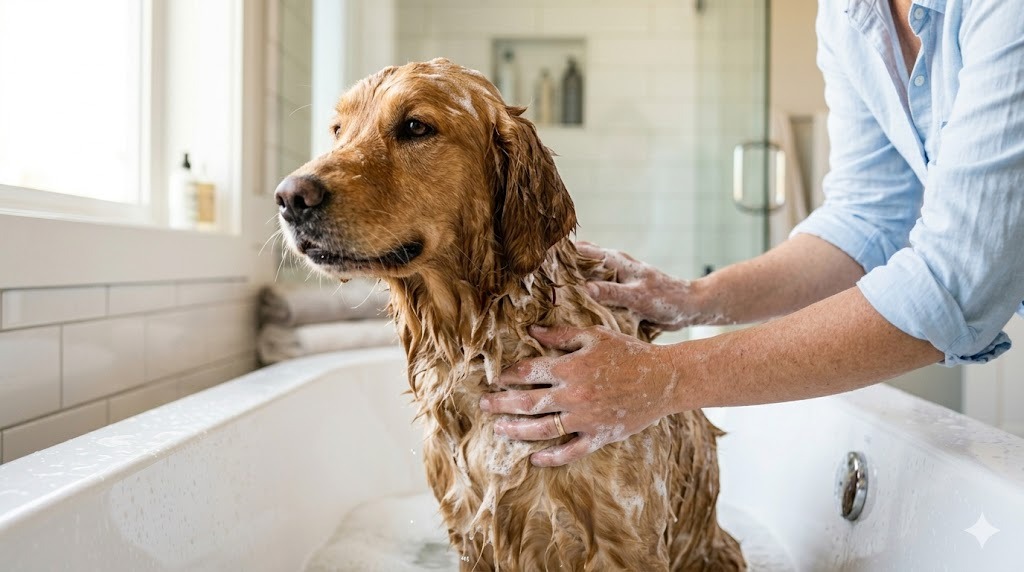
Most shampoos need 5-10 minutes of contact time for full effect. Lather, then wait while you talk to your dog before rinsing. Cover the dog’s whole body except face and ears.
Rinse twice
Residual shampoo causes itching. Rinse until water runs completely clear - this takes longer than people think. Press fingers into the coat near the skin; if you feel slipperiness, keep rinsing.
Face and ears
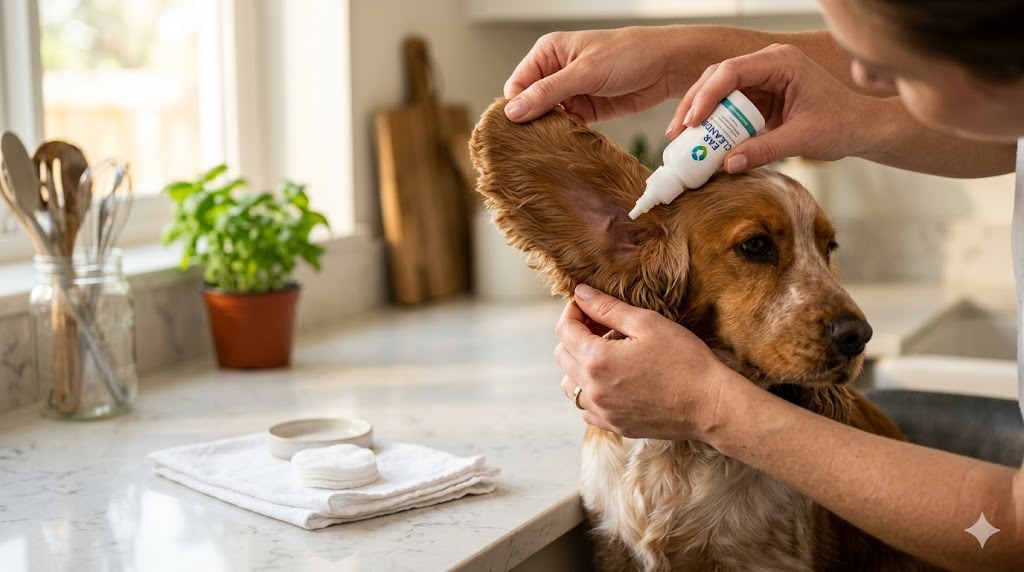
Use a damp cloth on the face. Don’t pour water over the face. Cotton balls in ears prevent water entering the canal (a major cause of ear infections).
Drying
Towel-dry, then air dry or use a dog-specific dryer. Avoid human hair dryers - too hot for most dog skin. Use cool or low-heat settings on high-velocity dog dryers.
Frequently Asked Questions
How often should I bathe my dog?
Depends entirely on coat type. Short coats: 4-6 weeks. Long coats: 3-4 weeks. Double-coats: 6-8 weeks. Curly coats: 3-4 weeks plus pro groom every 6-8 weeks. Wrinkled breeds: 3-4 weeks. Hairless: weekly.
Can I use human shampoo on my dog?
Not regularly. Human shampoo’s pH (~5.5) is too acidic for dog skin (6.2-7.4) and causes dryness, irritation, and dandruff over time. Emergency one-time use is fine; routine use causes problems.
Is oatmeal shampoo really better?
For most dogs with normal or mildly itchy skin, yes. Oatmeal is genuinely soothing - colloidal oatmeal is a recognized treatment for itchy skin in both humans and dogs. It’s not marketing fluff.
What about waterless / spray shampoos?
Useful between baths for spot-cleaning. Not a replacement for actual baths. Use occasionally for muddy paws or odor freshening, not as primary cleaning.
My dog is afraid of baths. What do I do?
Gradual desensitization. Start with treats in an empty tub (no water). Build to dry brushing in the tub. Then warm water on paws only. Then full bath with treats every 30 seconds. Most dogs accept baths within 4-6 weeks of patient training. Some never love it but tolerate it.
Do I really need conditioner?
For short coats: optional. For long, curly, or wool coats: essential. Conditioner detangles, prevents matting, restores moisture, and reduces broken hairs.
Are “natural” shampoos better?
Sometimes. “Natural” is unregulated marketing language. What matters is the actual ingredient list - sulfate-free, fragrance-light, no artificial dyes. Many “natural” shampoos contain irritating essential oils. Read labels, not marketing claims.
What’s the difference between hypoallergenic and sensitive skin shampoos?
Mostly marketing. Both should mean fragrance-free, dye-free, minimal additive. Look for ingredient transparency over labels.
Should I use medicated shampoo if my dog has fleas?
Yes, but combine with a topical preventative. Shampoo kills current fleas; topical (Frontline, Bravecto) prevents reinfestation. Shampoo-only flea control fails - eggs in carpets and bedding hatch and reinfest within days.
How long does dog shampoo last?
Unopened: 2+ years. Opened: 12-18 months. Discard if it changes color, smells off, or separates dramatically.
Our Final Recommendation
For most dogs without specific issues, Earthbath All-Natural Oatmeal & Aloe is the right default - gentle, effective, safe for most coat types.
For double-coated breeds (Huskies, Malamutes, GSDs), Pro Pet Works Oatmeal & Aloe is gentler on the coat’s natural oils.
For long-haired breeds, Isle of Dogs No. 16 dramatically reduces post-bath matting.
For sensitive or allergic skin, Veterinary Formula Hypoallergenic minimizes provocations.
For wrinkled brachycephalic breeds, Douxo Chlorhexidine is the vet-grade pick for managing skin-fold bacteria.
The bottle is the cheap part. The right bottle for your specific dog matters far more than premium pricing.
Related Reading
- Best Dog Ear Cleaners
- Best Cat Brush for Shedding
- Best Flea & Tick Prevention 2026
- Best Calming Donut Dog Beds
- How to Bathe a Bulldog Properly
Last updated: May 2026.