Best Cat Brushes for Shedding 2026: Furminator, Hertzko, Safari & Picks for Every Coat
Honest reviews of the best cat brushes for shedding in 2026 - Furminator, Hertzko self-cleaning, Safari, ChomChom roller. Matched to short, long, and double coats.
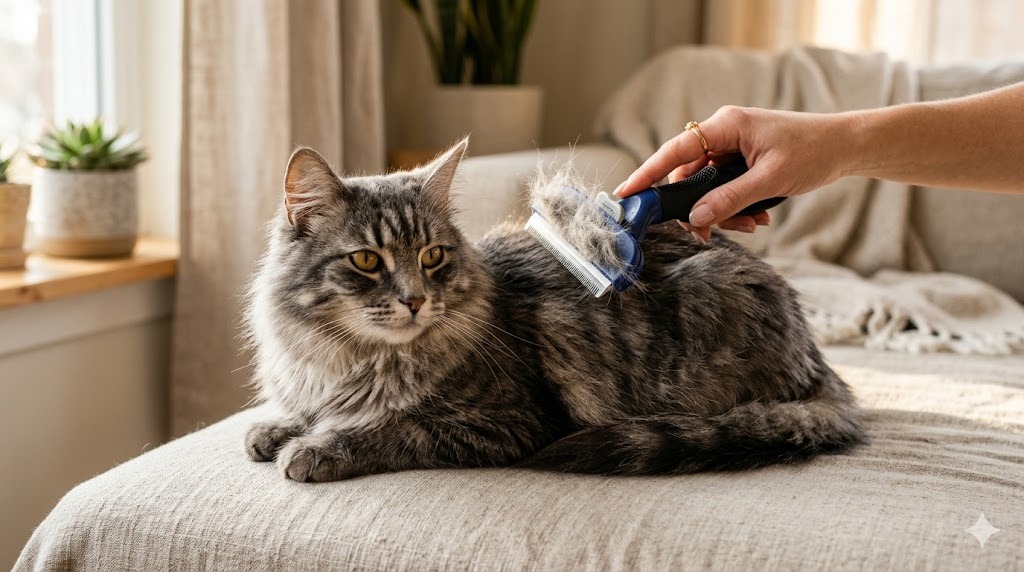
Best Cat Brushes for Shedding 2026: Furminator, Hertzko, Safari & Picks for Every Coat
The best cat brush for shedding depends on the coat: a Furminator deshedder for heavy double coats, a Hertzko self-cleaning slicker for everyday long-hair grooming, a Safari or rubber brush for short coats, and a ChomChom roller for the furniture afterward. Used a few times a week, the right one cuts loose hair by 60-80%.
Cat shedding is mostly a fact of life - most domestic cats lose ~70 hairs per square inch per year, and shedding accelerates dramatically in spring and fall as cats blow out their winter or summer coats. The right brush, used regularly, reduces hair on your couch and clothes by 60-80%, prevents painful mats in long-haired cats, and meaningfully reduces hairballs (which cats often vomit on your bedroom carpet at 4 a.m.).
The wrong brush - too coarse, too fine for the coat, or used incorrectly - does little or worsens shedding by breaking healthy hairs. This guide covers what actually works for which coat type, the realistic limits of “deshedding” tools, and the routine that turns brushing from chore to a 5-minute habit your cat actually enjoys.
Why cats shed so much: Cats have multiple hair types in their coats - guard hairs, awn hairs, and downy undercoat. The undercoat sheds year-round, with seasonal “blowouts” in spring and fall. Indoor cats often shed year-round because artificial lighting disrupts the natural shedding cycle. Regular brushing captures the loose undercoat before it ends up on your furniture.
At a Glance: Top Picks
| Rank | Brush | Coat Type | Self-Cleaning | Best For |
|---|---|---|---|---|
| 🥇 #1 | Furminator Deshedding Tool for Cats | Short, medium | Yes | Heavy shedders |
| 🥈 #2 | Hertzko Self-Cleaning Slicker Brush | All coats | Yes | Daily maintenance, beginners |
| 🥉 #3 | Safari Self-Cleaning Slicker | Medium-long | Yes | Long-haired cats, value |
| #4 | ChomChom Roller | All coats | Yes (manual) | Furniture cleaning, kitten-friendly |
| #5 | GoPets Professional Slicker | All, especially long | Yes | Premium pick, designed for tangles |
| #6 | Pet Republique Pin & Bristle | Short, smooth | No | Final-finish brushing |
| #7 | Hands-on Pet Grooming Glove | Short, sensitive cats | N/A | Cats that hate brushes |
🥇 #1: Furminator Deshedding Tool for Cats
The Furminator is the standard deshedding tool because the design works. Most “deshedding” tools simply slick the top coat without reaching the undercoat. The Furminator’s edge passes through the topcoat and removes the loose dead undercoat directly. The result is dramatically more hair captured per session and meaningfully reduced shedding over the following days.
The catch is overuse. Daily Furminator sessions on a cat will eventually pull healthy undercoat, leaving bald patches and irritated skin. The right schedule: 2-3 times weekly during peak shedding seasons, weekly during normal periods. Five minutes per session is plenty.
Real-world expectations: Within 2 weeks of regular use, you’ll see noticeable reduction in cat hair on furniture and clothes. The hair captured per session decreases - a sign you’re catching the loose hairs rather than over-stripping.
Best for: Cats with significant shedding, short or medium coats with dense undercoats (American Shorthairs, Maine Coons, British Shorthairs), owners frustrated with hair coverage on furniture.
🥈 #2: Hertzko Self-Cleaning Slicker Brush
The Hertzko is the daily maintenance brush for most cats. The fine bent wires reach into the undercoat gently, capturing loose hair without the aggressive cutting action of the Furminator. The self-cleaning button retracts the bristles to release captured hair - a small feature that hugely improves the brushing experience.
For cats that hate brushing, the Hertzko’s gentler action often gets a better reception. Many owners use both tools - Hertzko for daily quick sessions, Furminator for weekly deeper deshedding.
Best for: Daily maintenance routine, cats new to brushing, owners wanting a gentle starting point, multi-pet households needing one tool for cats and dogs.
🥉 #3: Safari Self-Cleaning Slicker Brush
For owners on tighter budgets, the Safari delivers most of the Hertzko’s function at lower cost. The wider head means faster brushing for medium-to-long coats. Quality is acceptable for the price.
Best for: Budget-conscious shoppers, medium-to-long coats, secondary brush for travel or backup.
#4: ChomChom Roller
Not technically a brush - a manual lint-roller-style device that captures hair from furniture, clothes, and (gently) the cat. The fabric chamber catches hair as you roll back and forth. Empty the chamber periodically.
For furniture and clothes, ChomChom is the most effective non-electric tool available. Many owners pair it with a brush - brush captures hair from the cat; ChomChom captures the hair that ended up on furniture between brushings.
Best for: Furniture and clothes cleaning, kitten-friendly grooming (gentle), cats that won’t tolerate brushes.
#5: GoPets Professional Slicker
A premium slicker brush with rounded pin tips. The rounded tips reduce risk of scratching sensitive skin, particularly important for older cats and cats with thin coats. Self-cleaning button. Designed primarily for long-haired cats and dogs.
Best for: Long-haired cats (Maine Coons, Persians, Ragdolls), elderly cats, owners willing to pay premium for finish quality.
#6: Pet Republique Pin & Bristle Brush
A two-sided brush - pin side for working through the coat, bristle side for final finishing. The bristle side distributes natural oils through the coat, leaving a shiny finish. Best used after a slicker brush, not as primary deshedding tool.
Best for: Short-coated cats (American Shorthair, Russian Blue, Bombay), final-finish grooming, show cats.
#7: Hands-on Pet Grooming Glove
A rubber-tipped grooming glove worn on your hand. You pet your cat normally; the rubber tips collect hair. Most cats accept this readily because it feels like normal petting.
Best for: Cats that hate brushes, kittens, sensitive senior cats, light maintenance between proper brushing sessions.
By Coat Type
Short coats (American Shorthair, Russian Blue, Bombay, Burmese)
Light shedding year-round, denser undercoat than appearance suggests. Many short-coated cats benefit from regular brushing despite their compact-looking coats.
Recommended routine: Furminator twice weekly + Pet Republique brush weekly for finishing.
Medium coats (Maine Coon kittens, Norwegian Forest cats, mixed-breed shorthairs)
Need regular brushing to prevent mat formation, especially behind ears and on belly.
Recommended routine: Hertzko daily (or every other day) + Furminator weekly during shedding seasons.
Long coats (Persian, Maine Coon, Ragdoll, Norwegian Forest, Birman)
Most demanding maintenance category. Daily brushing prevents painful mats. Once a mat forms, it often requires professional removal under sedation.
Recommended routine: Daily brushing with slicker (Hertzko or GoPets) + weekly Furminator + monthly bath with conditioner.
Double coats (Maine Coon, Norwegian Forest, Siberian)
Outer guard hairs and dense undercoat. Heavy seasonal shedding in spring and fall when the undercoat blows out. Daily attention needed during these periods.
Recommended routine: Weekly Hertzko + Furminator 3 times weekly during shedding season + line brushing for mats.
Curly or wavy coats (Selkirk Rex, LaPerm, Devon Rex)
Different brushing technique. Avoid slickers (can damage curl pattern). Use finger detangling and a wide-tooth comb.
Recommended routine: Wide-tooth comb weekly + gentle finger detangling + occasional professional grooming.
Hairless breeds (Sphynx, Peterbald)
Don’t need brushing for hair - but need weekly baths to manage skin oil production.
Recommended routine: No brushing needed; focus on bath schedule.
How to Brush a Cat (Step by Step)
Step 1: Read the cat’s mood
Cats only tolerate brushing when relaxed. Don’t try when they’re stressed, hungry, or playful. Wait for the natural calm period - typically after eating or while resting.
Step 2: Start gentle
Approach with the brush in hand. Let the cat sniff it. Begin with one or two strokes in the cat’s preferred petting direction.
Step 3: Brush the “yes” zones first
Most cats enjoy brushing on the head, cheeks, chin, shoulders, and back. Build positive association by spending time in these zones before moving to less-favored areas.
Step 4: Move toward problem areas gradually
Belly, hind legs, and base of tail are where mats form but also where cats are most sensitive. Brush these once the cat is settled, in short sessions, with treats.
Step 5: Watch for stress signals
Twitching tail, flattening ears, growling, hissing - stop immediately. End on a positive note before pushing too hard. Cats remember brushing as bad experience if you push past their tolerance.
Step 6: Brush in coat direction first, then against
For short-coated cats: stroke direction first to capture loose hair. For deshedding (Furminator): against direction to lift undercoat.
Step 7: Reward and end
End each session with a treat or favorite play. Cats associate brushing with the consequence - make it positive.
Common mistakes
- Brushing too long (cats tolerate 5-10 minute sessions, not 30)
- Working through mats roughly (use detangling spray or scissors for severe mats)
- Forcing the cat to lie still (let them sit naturally)
- Using human hairbrushes (bristles are wrong for cat coat)
Dealing With Mats
Once mats form, brushing alone won’t remove them. Mats pull at the cat’s skin painfully and require careful handling.
Small mats (under 1 inch)
- Work fingers gently into the mat to separate fibers
- Use detangling spray on the mat
- Slowly comb through with a wide-tooth comb, holding the base of the hair to prevent pulling skin
- If unable to comb through after 5 minutes, cut out the mat
Larger mats
- Don’t try to brush through - too painful for the cat
- Carefully cut out with blunt-tip scissors, lifting the mat away from skin first
- For multiple or thick mats, professional grooming with sedation is appropriate
Prevention is everything
A weekly brushing routine prevents 95% of mats. Reactive brushing (after mats form) is dramatically more difficult.
When to call a professional
- Multiple mats throughout the coat
- Mats close to the skin (skin issues likely beneath)
- Cat won’t tolerate any brushing
- Long-haired cat that hasn’t been brushed in months
Cost: $40-80 for a professional grooming. Some severe cases require sedated shave-down ($150+).
Bathing and Grooming Combined
For most cats, bathing is rare. But shedding-heavy cats benefit from occasional baths.
When to bathe
- Heavy shedding seasons (spring and fall) - 1-2 baths during peak
- After exposure to allergens, perfume, or chemicals
- Hairless breeds (weekly)
- Cats with skin issues per vet recommendation
What to use
- Cat-formulated shampoo (NOT dog shampoo, NOT human shampoo)
- Earthbath, Burt’s Bees, Vet’s Best all have decent cat formulas
- Avoid lavender, tea tree, citrus oils - toxic to cats
Combine with brushing
Brush thoroughly before bath (removes loose hair before it gets wet) and after bath when dried (catches loosened hair). Many owners report best deshedding after a bath cycle.
Frequently Asked Questions
How often should I brush my cat?
Short coats: 1-2 times weekly. Medium coats: 3-4 times weekly. Long coats: daily. Double coats during shedding season: daily.
Will brushing reduce hairballs?
Yes, significantly. Hairballs form when cats swallow loose hair during self-grooming. Removing that hair with a brush before the cat swallows it dramatically reduces hairball frequency.
My cat hates brushing. What do I do?
Start gradually. Use the grooming glove first - most cats accept this as normal petting. Move to actual brushes slowly. Use treats consistently. Some cats never love brushing but tolerate it; others come to enjoy the routine.
Can I overbrush my cat?
Yes. Daily Furminator use can over-strip undercoat, leaving bald patches and irritated skin. Use deshedding tools 2-3 times weekly maximum. Slicker brushes can be used daily without issues.
Are deshedding shampoos worth it?
Modestly. Some shampoos with conditioners help release loose hair during bathing. The effect is real but smaller than regular brushing.
What about deshedding capsules or supplements?
Most evidence is weak. Omega-3 fatty acid supplementation supports coat health and may modestly reduce shedding. Specific “shedding control” products are usually marketing.
Why is my cat shedding so much suddenly?
Common causes: seasonal change, stress (new house, new pet), dietary deficiency, parasites (fleas), or skin conditions. If shedding is unusual or accompanied by bald patches, see a vet.
Can I use a dog brush on my cat?
Some dog brushes work fine on cats. The Furminator and Hertzko have versions for each species - choose the cat version for the proper size and tooth spacing. Avoid dog-only specialty brushes (rake brushes are too aggressive for cats).
Do automatic / robotic cat groomers work?
Not really. The cat needs to hold still for them, which most cats won’t. Manual brushing remains the standard.
What if my cat hides during brushing time?
Try different times of day. Most cats are more receptive after meals or naps. Also try different brushes - some cats hate one brush type but tolerate another.
Our Final Recommendation
For most cat owners, the combination of the Furminator Deshedding Tool (used 2-3 times weekly) and the Hertzko Self-Cleaning Slicker (used daily for maintenance) covers all shedding management needs at reasonable cost.
For long-haired breeds (Persian, Maine Coon, Ragdoll), add daily slicker brushing with the GoPets Professional Slicker to prevent mats - the single highest priority for these coat types.
For cats that resist traditional brushing, the Hands-on Pet Grooming Glove is the gentle alternative that many cats accept as normal petting.
The right brushing routine pays off in dramatically less hair on your furniture, fewer hairballs, and a coat that stays healthy across all life stages. Building a 5-minute daily routine is one of the highest-value habits in cat ownership.
Related Reading
- Best Cat Trees & Towers 2026
- Best Cat Toys for Indoor Enrichment
- Best Wet Cat Food
- Best Smart Litter Box: Litter-Robot Review
- Best Pet Insurance for Cats
Last updated: June 2026.