Best Smart Litter Box 2026: Litter-Robot, Whisker & Petkit Compared
Honest reviews of the best automatic litter boxes in 2026 - Litter-Robot 4, Whisker Litter-Robot 3, Petkit Pura X, Leo's Loo Too. Cleaning, app features, multi-cat, real durability.
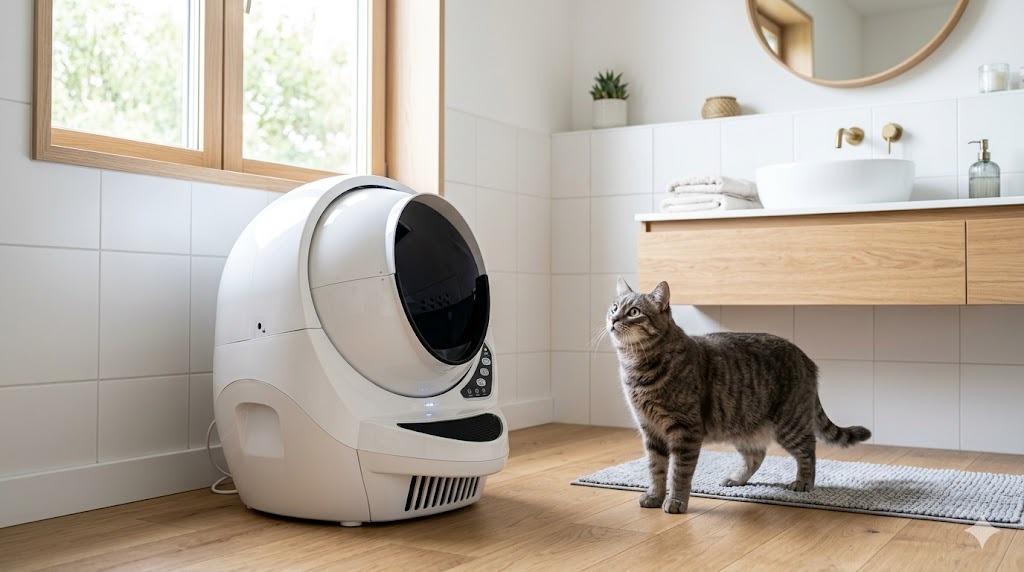
Best Smart Litter Box 2026: Litter-Robot, Whisker & Petkit Compared
The best smart litter box is the Litter-Robot 4 - the most reliable self-cleaning unit, with the best app and built-in weight and usage tracking - while the Litter-Robot 3 is a cheaper proven option and Leo’s Loo Too or Petkit Pura X undercut both on price. For multi-cat homes, reliability and capacity matter more than the feature list.
The premise of a smart litter box is simple: stop scooping. After the cat exits, the unit automatically rotates, sifts, or rakes waste into a sealed compartment. You change the compartment liner every 7-14 days instead of scooping daily. Some models add app monitoring of cat weight, frequency of use, and litter level - useful health data, especially for senior cats and multi-cat households.
The category has matured. Litter-Robot remains the dominant brand, but competitors have closed the gap on features at significantly lower prices. This guide covers what the premium picks actually deliver over their cheaper rivals, which model fits which household size, and the honest downsides that the marketing leaves out.
Why this category is worth the cost: A two-cat household scoops a litter box 14 times a week. A smart box reduces that to one liner change every 1-2 weeks. Across a 12-year cat lifespan, that’s roughly 7,000 fewer scoops. The break-even on time saved is about 6 months for most owners.
At a Glance: Top Picks
| Rank | Litter Box | App | Capacity | Best For |
|---|---|---|---|---|
| 🥇 #1 | Litter-Robot 4 | Yes | 3+ cats | Premium pick, multi-cat |
| 🥈 #2 | Litter-Robot 3 Connect | Yes | 2-3 cats | Proven workhorse |
| 🥉 #3 | Petkit Pura X | Yes | 1-2 cats | Best value smart |
| #4 | Leo’s Loo Too by Casa Leo | Yes | 2-3 cats | Litter-Robot alternative |
| #5 | PetSafe ScoopFree Crystal | Some | 1-2 cats | Crystal litter, low maintenance |
| #6 | Litter Genie Pro Auto | Yes | 1-2 cats | Budget smart |
| #7 | Pet Zone Smart Scoop | No | 1 cat | Mechanical, no electronics |
🥇 #1: Litter-Robot 4
The Litter-Robot 4 is the current gold standard. The mechanical design is fundamentally the same as the Litter-Robot 3 - a rotating globe that sifts clumps into a sealed drawer below - but every component is meaningfully upgraded. Quieter motors. Better cat sensing (eliminating most false triggers from a tail or paw entering the dome). A weighing system that learns each cat’s individual weight and tracks changes over time. Larger waste capacity. Standard trash-bag compatibility.
The OmniSense weighing feature deserves attention. In multi-cat households, the unit identifies which cat is using the box and tracks each cat’s litter usage and weight separately. This is genuinely useful health data - weight loss is often the first sign of kidney disease, hyperthyroidism, or other conditions in cats, and most owners only notice once it’s significant.
Real-world durability: Litter-Robots have a strong reliability record. The 3 series (predecessor) commonly runs 8-10 years. The 4 is expected to match.
Best for: Multi-cat households (2-4 cats), owners wanting health monitoring, anyone willing to pay premium for the best in the category.
🥈 #2: Litter-Robot 3 Connect
For owners not needing the latest features, the Litter-Robot 3 remains an excellent buy and is often $200-$300 cheaper when on sale. The mechanical core is the same proven design, and the WiFi connect feature provides 80% of the 4’s app functionality.
Best for: Single or two-cat households, owners wanting Litter-Robot reliability without the latest features, anyone catching a 3 on sale.
🥉 #3: Petkit Pura X
The Petkit Pura X is the strongest mid-budget smart litter box. It uses a different mechanism than Litter-Robot - a horizontal rotation rather than the globe - and the cleaning result is comparable. Most owners coming from manual scooping consider the experience equivalent to Litter-Robot for half the price.
Best for: Single or two-cat households with smaller cats, budget-conscious smart-box shoppers, modern-design homes (the unit looks more like minimalist furniture than appliance).
#4: Leo’s Loo Too by Casa Leo
A direct Litter-Robot competitor at a slightly lower price point. Similar globe-rotation mechanism, WiFi app, multi-cat support. Different aesthetic. Solid build quality. The main differentiator is price and design preference - function is comparable.
Best for: Owners who prefer the Casa Leo design language or find a better price than Litter-Robot at the time of purchase.
#5: PetSafe ScoopFree Crystal
A different approach: rather than rotating mechanism, this uses crystal silica litter and a low-tech rake mechanism. Disposable trays simplify cleanup. Lower upfront cost.
The tradeoff is ongoing cost - disposable trays add $25+/month. Many cats don’t like crystal litter, which is harder on paws than clumping clay.
Best for: Owners who don’t want to handle litter at all, cats that already tolerate crystal litter, lower upfront budget.
#6: Litter Genie Pro Auto
The Litter Genie brand expanded from waste containers to a budget smart litter box. Acceptable function for the price, smaller capacity, less reliable long-term than the premium picks. Use it as a stepping stone before upgrading.
Best for: Budget-conscious shoppers, single-cat households, owners testing whether they’ll like a smart box before paying premium.
#7: Pet Zone Smart Scoop
A mechanical (not electronic) self-cleaning box. A rake rakes the box after each use, depositing waste in a tray. No app, no electronics. Lower failure mode but lower convenience too.
Best for: Tech-skeptical owners, electricity-conscious households, single-cat use only.
What Each Brand Actually Delivers
Cleaning quality
- Litter-Robot 3/4: Best. Globe rotation captures clumps reliably.
- Petkit Pura X / Leo’s Loo Too: Equivalent to Litter-Robot in normal use.
- PetSafe ScoopFree: Acceptable. Some smaller clumps stay in tray.
- Mechanical (Pet Zone): Adequate but lower reliability.
Noise level
- Litter-Robot 4: Quietest.
- Litter-Robot 3: Noticeable cycle sound. Not loud, but cats sometimes startle.
- Petkit Pura X: Quiet.
- Leo’s Loo Too: Comparable to Litter-Robot 3.
Multi-cat capability
- Litter-Robot 4: Best - per-cat weight tracking.
- Litter-Robot 3: Good - large enough for multiple cats, no per-cat tracking.
- Leo’s Loo Too: Good - comparable to Litter-Robot 3.
- Petkit Pura X: Good for 1-2 small cats; tight for 3+.
- PetSafe / Pet Zone: Single-cat only.
App and health monitoring
- Litter-Robot 4: Most comprehensive (weight per cat, frequency, patterns).
- Litter-Robot 3 / Leo’s Loo Too: Solid (frequency, status alerts).
- Petkit: Solid (weight, frequency).
- Others: Basic or none.
Will My Cat Use It?
This is the question every potential buyer asks. The honest answer: most cats accept smart litter boxes within 1-4 weeks. About 5-10% never do.
Cats most likely to accept
- Young cats (under 5 years)
- Cats already used to covered/dome litter boxes
- Cats raised around appliance noise
- Cats with no existing litter aversion
Cats most likely to struggle
- Senior cats (over 12)
- Cats with arthritis (the entry threshold matters)
- Cats with existing fear of household appliances
- Cats currently inappropriately eliminating outside the box
Introduction protocol (works for 85% of cats)
Week 1: Place the smart box next to the existing manual box. Don’t turn it on. Let the cat investigate.
Week 2: Turn on the smart box but skip the auto-cycle (most have a manual mode). Let the cat use it. Begin scooping the manual box less frequently.
Week 3: Auto-cycle on. Cat should have used the smart box at least a few times. Remove the manual box gradually.
Week 4: Smart box only. Continue monitoring; some cats relapse to inappropriate locations briefly before settling.
When introduction fails
If the cat refuses after 4 weeks, try moving the box to a different location. If still refusing, accept that this cat isn’t going to use it. Litter-Robot offers a 90-day return; most competitors offer 30 days. Plan around return windows.
Multi-Cat Considerations
Smart boxes work for multi-cat households, but the math is different than single-cat.
How many cats per box?
- One box per cat plus one extra - the standard cat behaviorist recommendation
- For two cats, two boxes (can mix one smart + one manual)
- For three cats, two smart boxes
- Don’t expect one smart box to serve four cats reliably
Hierarchy issues
Some cats refuse to use a box another cat just used. Smart boxes auto-clean after each use, partially solving this. But dominant cats may still block access by hovering near the box.
Per-cat tracking (Litter-Robot 4 only)
The weighing system identifies which cat is using the box. This data helps spot weight changes (often the first sign of disease) and detect litter box avoidance early.
Maintenance Reality
The marketing implies you never deal with litter. The reality is more nuanced.
Daily
Nothing for most boxes. App-equipped boxes notify you when full.
Every 7-10 days
Empty waste drawer (1-2 cats) or every 4-7 days (3+ cats). Lift the drawer, swap the liner, done. 30 seconds.
Monthly
Add litter (about 1/3 of a 30 lb bag for the average household). Wipe down sensors.
Quarterly
Deep clean. Disassemble, wash globe or chamber, replace any worn rubber seals. Roughly 30-45 minutes.
Annual
Replace internal filters (if present). Inspect motor for wear noise.
Total time spent on litter box per month: 1-2 hours versus 8-12 hours for manual scooping in a two-cat household.
Litter Choice Matters
Smart boxes work best with specific litter types. Using the wrong litter causes mechanical jams, smell escapes, and cat refusal.
Clumping clay (best for most boxes)
Most smart boxes require clumping clay litter. Sodium bentonite forms hard clumps that sift cleanly into the waste compartment.
Recommended brands: Dr. Elsey’s Ultra, World’s Best, Tidy Cats Free & Clean.
Lightweight clay
Compatible with most boxes but creates more dust. Acceptable.
Crystal / silica
Only compatible with PetSafe ScoopFree. Don’t try in Litter-Robot.
Pine, paper, walnut
Generally not compatible. The clumps are softer and break apart during sifting.
Tofu / corn (natural clumping)
Compatible with Litter-Robot 4 and Petkit. Sometimes works in Litter-Robot 3 (test).
Frequently Asked Questions
Is Litter-Robot worth it for one cat?
Yes, if you can afford it. The time savings still add up over a 10-year lifespan, and health monitoring matters most for single-cat owners (you notice less when there’s only one).
Will my cat actually use it?
85-90% of cats adapt within 4 weeks. The most reliable predictor of failure is age (over 12) and existing litter aversion. Use the manufacturer’s return window as a safety net.
How loud is the cleaning cycle?
Litter-Robot 4: ~50 dB (quiet conversation). Litter-Robot 3: ~60 dB (normal speech). Most cats acclimate within a week.
Does it work for big cats?
Litter-Robot 3 and 4: yes, including Maine Coons. Petkit and smaller smart boxes: cats up to 12 lb only.
How much does it cost to run?
Electricity: less than $1/month per box. Litter: similar to manual scooping (no extra litter consumed). Optional supplies (filters, liners): $5-15/month.
What happens if it breaks?
Premium brands (Litter-Robot, Leo’s Loo Too): warranty service, replacement parts available, repair guides online. Budget brands: less reliable support.
Can dogs use a smart litter box?
No - and many dogs will try to eat the contents. Place the box in a cat-only room with a small pet door (the gates section of this site covers options).
Will I save money?
Long-term, possibly. Manual scooping uses no equipment but more litter (clumps disposed of with extra clean litter). Smart boxes use less litter long-term. Break-even is roughly 3-4 years for most households.
What about smell?
Sealed waste drawers contain odor far better than open boxes. The smell escapes briefly during the cleaning cycle. Most owners report less odor in the room with a smart box than with a scooped traditional box.
How long do smart litter boxes last?
Litter-Robot: 8-12 years typical. Petkit: 4-6 years. Budget brands: 2-4 years.
Our Final Recommendation
For most cat owners ready to invest in this category, the Litter-Robot 4 is the right pick. Reliable mechanical design, the best app of the category, per-cat health monitoring that pays off across a cat’s life. Yes, it’s expensive - and yes, it’s worth it for households that can budget it.
For owners who’d rather pay less for similar function, the Petkit Pura X delivers most of the Litter-Robot experience for roughly half the price.
For single-cat homes seeking proven reliability without the latest features, the Litter-Robot 3 Connect is a strong buy, especially during sales.
A smart litter box solves one of cat ownership’s persistent annoyances. The break-even is real, the time savings are real, and the health monitoring catches issues you’d otherwise miss.
Related Reading
- Best Cat Trees & Towers 2026
- Best Cat Toys for Indoor Enrichment
- Best Wet Cat Food
- Best Pet Insurance for Cats
- Best Cat Brush for Shedding
Last updated: May 2026.