GPS Dog Trackers: How They Work and What to Check Before Buying
Cellular GPS trackers, GPS fence collars and Bluetooth tags like the AirTag: what each can and cannot do, what battery claims mean, coverage, subscription costs over the years, and why Whistle trackers no longer work.
 AI illustration
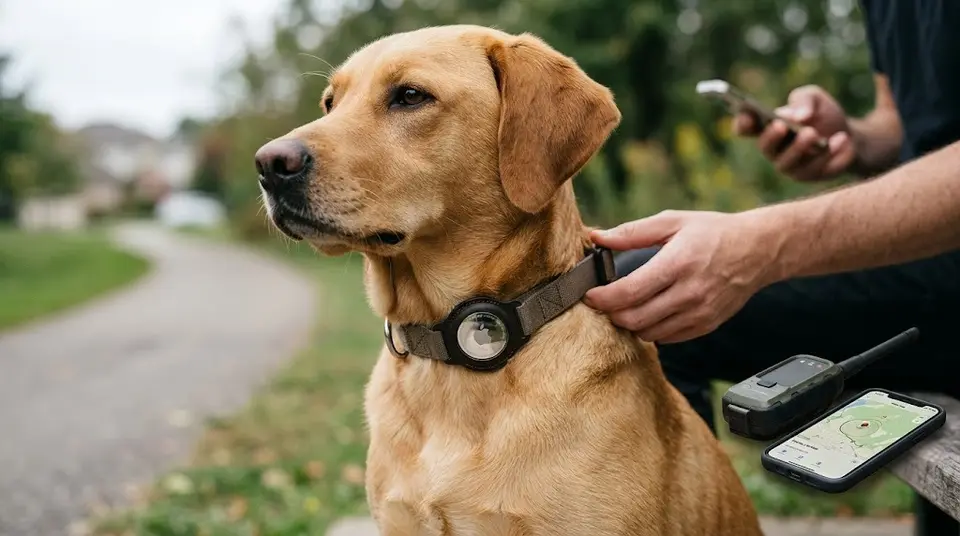
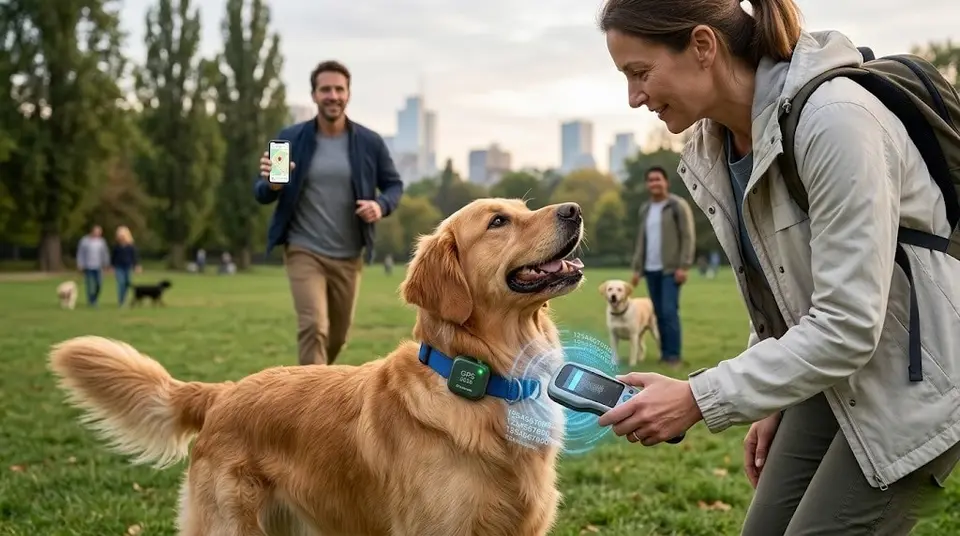
A GPS dog tracker is a small GPS receiver with a mobile connection: it works out where the dog is and sends that to your phone, which is why every one of them needs a paid plan for as long as you use it. Before buying, check three things - whether the tracker works where you live and travel, how often you will really charge it, and what the plan costs over the years you will keep it. A Bluetooth tag such as an AirTag is a different, cheaper thing that only works where other people’s phones pass by.
Whistle trackers are finished. Tractive bought Whistle from Mars Petcare in July 2025 and moved its customers to Tractive; the Whistle service has been closed. If you see a Whistle tracker for sale second-hand, do not buy it.
The Three Kinds of Tracker
| Kind | How it finds the dog | Plan needed | Good for |
|---|---|---|---|
| Cellular GPS tracker | GPS, reported over a mobile network | Yes | Knowing where the dog is, anywhere with signal |
| GPS fence collar | GPS boundaries drawn in an app; the collar signals the dog | Yes | A boundary as well as a location |
| Bluetooth tag (AirTag and similar) | Nearby phones detect it and report its position | No | A cheap backup in towns |
Cellular GPS trackers
Some are a collar with the tracker built in; others clip to the collar your dog already wears. Stated battery life varies a lot between models, from about two weeks to about three months on the makers’ own figures, and coverage varies too: some work in one country, others in more than 175. Most add activity and sleep records and an alert when the dog leaves a safe zone.
GPS fence collars
A fence collar combines a tracker with boundaries you draw in an app; as the dog approaches a boundary the collar signals it. They cost more than a plain tracker (the one we read lists several hundred dollars and up to 48 hours between charges), and they need a plan too. A fence collar depends on training, and the correction some of them can deliver is a subject to read about first. Our wireless dog fence guide covers both.
Bluetooth tags
Not a GPS tracker. An AirTag has no GPS and no cellular connection: other Apple devices that pass nearby detect its Bluetooth signal and report where it is. That works where there are people with iPhones, and not where there are none. Apple says it runs for more than a year on a replaceable coin battery and is rated IP67. There is no plan to pay for. More in AirTag for Dogs.
What a Battery Claim Means
A stated battery life is a best case. “Up to” figures assume a dog that spends most of its time at home, often in a power-saving zone near a base or your phone; a dog that is out all day, or a tracker in live mode during a search, uses the battery much faster.
How to Choose
Where do you live and travel? A cellular tracker only works where it has a signal and where the maker operates. Look up your home, your usual walks and your holiday places on the maker’s coverage information before you buy.
How often will you really charge it? A tracker on the charger finds nobody. If you know you will forget, the longer battery matters more than any feature.
How big is your dog? Makers give a minimum dog weight for each model. For a very small dog, look at the weight of the device itself.
What will the plan cost over three years? Add the device and the plan together for the period you expect to keep it. Longer prepaid terms are cheaper per month and tie you in. Plan prices change often and differ by country, so check them on the maker’s site on the day you compare.
Is it waterproof? Look for an IP rating; IP67 and IP68 are the common ones for trackers.
Do you need a fence or a location? A tracker tells you when the dog leaves an area. Only a fence collar tries to stop it.
What a Tracker Does Not Do
- It does not replace a microchip and an ID tag. A collar can come off; a chip cannot. See Microchip vs GPS Tracker.
- It does not work without a signal - deep valleys, forest and basements can defeat any cellular tracker.
- It does not work without the plan. A cellular tracker stops reporting when the subscription stops.
- It is not a medical device. Activity and sleep figures are a prompt to call the vet, not a diagnosis.
Frequently Asked Questions
Do I really need a subscription?
For a cellular tracker, yes: the plan pays for the mobile connection. An AirTag needs none, and does much less.
What happened to Whistle?
Tractive bought it from Mars Petcare in July 2025 and closed the service. Whistle devices no longer track.
Can I track a cat?
Some makers sell smaller trackers for cats. Check the minimum weight for the model, and use a breakaway collar.
Can a tracker keep my dog in the yard?
A tracker sends you an alert when the dog crosses a boundary. It does not stop the dog. A GPS fence collar is the product for that, with the training it needs.
How accurate is the location?
It varies with the sky above the tracker: open ground is best, and trees, buildings and indoor spaces make it worse. Use the live mode when you are actually searching.
Are there trackers with no monthly fee?
Not for long range. Without a cellular plan you are relying on other people’s phones, as an AirTag does.
Summing Up
Decide first whether you need a location, a boundary or just a cheap backup. For a cellular tracker, check the coverage for your own address, be realistic about charging, and price the plan over several years. Whatever you choose, keep the microchip registration and the ID tag up to date.
Related Reading
Last updated: October 2026.