Best Wireless Dog Fence 2026: Halo, SpotOn, Invisible Fence & PetSafe Compared
Honest comparison of wireless dog fences in 2026 - Halo Collar 4, SpotOn GPS Fence, Invisible Fence Boundary Plus, PetSafe Stay+Play. Real performance, training time, costs, and safety.
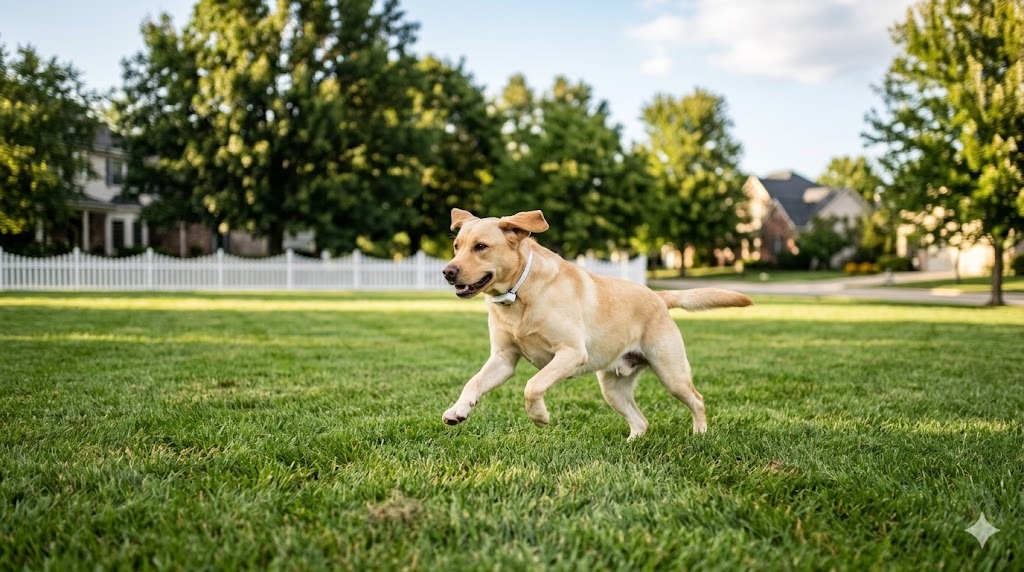
Best Wireless Dog Fence 2026: Halo, SpotOn, Invisible Fence & PetSafe Compared
The best wireless dog fence is a GPS system - SpotOn or the Halo Collar 4 - for properties without buried wire, giving accurate, app-mapped boundaries; a traditional in-ground Invisible Fence stays the most precise, and PetSafe Stay+Play is the budget circular option. All of them require real training time: the collar is a teaching tool, not a magic wall.
Wireless and GPS dog fences are now genuinely useful technology. The combination of real-time location tracking, training-mode warnings, and customizable boundary mapping has made invisible containment a workable alternative to physical fences in many properties. The technology splits into three categories: traditional in-ground wired (Invisible Fence brand), GPS-based wireless (Halo, SpotOn), and transmitter-based wireless (PetSafe Stay+Play).
The right choice depends on property size, terrain, and how rigorous the boundary needs to be. This guide covers what each system actually does, the real installation and training requirements, and which dogs do well with invisible boundaries versus which absolutely need a physical fence.
When invisible fences fail: No invisible fence stops a determined chase response. Dogs in high prey drive (squirrels, deer, other dogs) will run through correction, and once outside the boundary, can’t return through it without another correction. Invisible fences work for low-to-moderate motivation containment. For high-drive dogs or persistent escape attempts, physical fences are required.
At a Glance: Top Picks
| Rank | System | Type | Coverage | Best For |
|---|---|---|---|---|
| 🥇 #1 | Halo Collar 4 | GPS app-based | Unlimited | Premium customization, smart home |
| 🥈 #2 | SpotOn GPS Fence | GPS app-based | Up to 1,000 acres | Large properties, no installation |
| 🥉 #3 | Invisible Fence Boundary Plus | In-ground wire | Up to 25 acres | Established yards, premium service |
| #4 | PetSafe Stay+Play Wireless | Transmitter-based | 105 ft radius | Small to medium yards, budget |
| #5 | SportDOG In-Ground | In-ground wire | Up to 100 acres | Hunting and large rural properties |
| #6 | PetSafe In-Ground PIG00 | In-ground wire | Up to 25 acres | DIY budget pick |
| #7 | eXtreme Dog Fence | In-ground wire | Up to 25 acres | DIY heavy-duty wire |
🥇 #1: Halo Collar 4
The Halo Collar is the most sophisticated wireless fence system available. App-based boundary drawing lets you create any shape - exclude the garden, include the porch, set different rules for different areas. Multiple boundaries mean you can set up your home yard, a vacation rental, a favorite hiking trail, and switch between them in the app.
The training program is the differentiator from competitors. Most invisible fence systems leave training to the owner; Halo includes a structured 21-day program developed with Cesar Millan that walks owners through introduction, boundary training, and proofing. Results are notably better than DIY training.
Real-world performance: GPS accuracy is generally good but can drift 10-20 feet under heavy tree cover. Most owners set boundary lines 10 feet inside the actual property line to compensate.
Best for: Owners with technology comfort, properties with complex shapes or multiple zones, dogs that respond to structured training programs.
🥈 #2: SpotOn GPS Fence
SpotOn is the rural and large-property pick. The system handles properties up to 1,000 acres, which puts it well beyond what Halo or any wired system can cover. GPS accuracy is consistently better than Halo (3-10 feet versus 10-20 feet), making it the choice when precise boundaries matter.
The “walk the line” setup is genuinely clever - you walk the property line wearing or carrying the collar, and the system records the GPS coordinates as you go. No drawing on a map. The result is a boundary that exactly matches your property.
Best for: Rural properties, working dog operations, hunting properties, anyone needing precise boundaries on irregular land.
🥉 #3: Invisible Fence Boundary Plus
For owners who want the most reliable invisible containment and are willing to pay for premium service, Invisible Fence Boundary Plus is the gold standard. The wire is professionally buried, the system rarely fails (and when it does, professionals service it), and training is included in the cost.
The reliability of wire-based systems versus GPS is real. Wire doesn’t drift under tree cover, doesn’t lose signal on cloudy days, doesn’t require satellite reception. For owners who want set-it-and-forget-it containment, the wired system delivers it.
Best for: Established properties, owners willing to pay for premium service, long-term homeowners, high-stakes containment (dogs near busy roads).
#4: PetSafe Stay+Play Wireless Fence
The most affordable wireless option ($300). Uses a transmitter in the house that creates a circular boundary up to 105 feet radius (about 3/4 acre). No GPS, no app, just a transmitter and collar.
Best for: Small properties, single-zone containment, budget-conscious shoppers.
Limitations: Circular boundary only (can’t exclude garden or include front yard separately), 105 foot maximum range, signal can be affected by metal structures.
#5: SportDOG In-Ground Wire System
A wire-based system marketed primarily for hunting and working dogs. Heavy-duty wire and collars, larger battery, designed for large properties up to 100 acres.
Best for: Hunting properties, working dog operations, large rural acreages.
#6: PetSafe In-Ground PIG00
A DIY in-ground system at a reasonable price ($250). You install the wire yourself (rent a trencher or use a lawn edger). Compatible with PetSafe collars across multiple price points.
Best for: DIY-capable owners, budget-conscious wired solution, properties under 25 acres.
#7: eXtreme Dog Fence
Heavy-gauge wire DIY system. The wire is more durable than competitors (16 gauge vs typical 18-20 gauge), so it survives lawn aerators, occasional cuts from gardening tools, and weather better.
Best for: DIY installations expecting heavy outdoor use, properties with active landscaping.
The Three Wireless Fence Approaches Explained
Wire-based (in-ground)
A wire is buried 1-6 inches under the soil around the property perimeter. The transmitter sends a signal through the wire that the collar detects. When the dog approaches the wire, the collar emits a warning beep, then static correction if the dog crosses.
Pros: Highly reliable, precise boundary, low maintenance once installed, no monthly fees.
Cons: Installation labor (DIY or pro), wire can be cut by lawn equipment, fixed boundary, can’t easily change zones.
GPS-based (Halo, SpotOn)
The collar uses GPS satellites to track location and compares position against a boundary defined in an app or by walking the line.
Pros: No installation, flexible boundaries (change anytime), multiple boundary support, often includes tracking, geofence alerts.
Cons: GPS drift in poor reception areas, requires charging, subscription costs for premium features, battery life shorter than wired.
Transmitter-based wireless (PetSafe Stay+Play)
A radio transmitter in the house broadcasts a circular boundary signal. The collar detects signal strength and corrects when boundary is crossed.
Pros: No wire to install, instant setup, portable to other properties.
Cons: Circular boundary only, range limited (typically 90-180 foot radius), signal affected by metal and electronics.
Training: The Part That Determines Success
The collar isn’t the solution - training is. Most invisible fence failures trace back to inadequate training, not equipment problems.
Week 1: Boundary introduction with flags
- Place visible flags every 10-15 feet around the boundary
- Walk the dog on leash near the boundary at the warning beep level (no correction yet)
- Stop, redirect, treat for moving back
- Build dog’s association: beep → move back → reward
Week 2: First corrections
- Walk dog on leash near boundary at correction-on setting
- If dog crosses, brief static correction (lowest effective level)
- Heavy treats and redirect immediately
- Multiple short sessions per day
Week 3: Off-leash supervision
- Long line for safety
- Dog off-leash with supervision
- Reward staying in yard, correct only when boundary tested
- Add distractions (toys, treats, neighbors) at boundary
Week 4-6: Proofing
- Maintain supervision while dog learns boundary in different conditions
- Test with squirrels, other dogs walking by, kids playing nearby
- Don’t trust the dog alone until consistent for 2+ weeks
When training works
- Dogs respect the boundary consistently
- Even visible high-value targets across the boundary don’t trigger crossing
- Owner can leave dog briefly without escape
When training fails
- Dog crosses boundary anyway (motivation outweighs correction)
- Dog won’t approach yard edge (over-corrected, scared of yard)
- Dog learns to “test” - beep, correction, test again
Both failure modes mean the system isn’t working for your dog. Persisting risks lost dog or behavior damage.
Which Dogs Do Well - and Which Don’t
Strong fit
- Adult dogs with stable temperament
- Dogs already responsive to training
- Low-to-moderate prey drive
- Dogs that respect existing boundaries (verbal “stay in yard”)
- Properties without high-value attractions outside boundary
Mediocre fit
- Young dogs (under 1 year) - boundary concept harder to grasp
- Dogs with separation anxiety - boundary becomes additional stress
- Dogs in households with constant visitor traffic - frequent boundary tests
- Multi-dog households - one dog crossing may trigger others
Poor fit
- High prey drive dogs (sighthounds, terriers, hunting breeds in active mode)
- Dogs with history of running through pain
- Anxious or fearful dogs (correction worsens behavior)
- Dogs that have crossed before - they learn the boundary’s gap
- Reactive dogs (correction increases reactivity)
Safety Considerations
Correction levels
Modern collars offer adjustable correction strength. Start at the lowest level that produces any response. Many dogs respond to vibration or audible warning alone - never escalate beyond what’s needed.
Avoid over-correction
Excessive correction creates behavior problems: yard avoidance, anxiety, aggression toward objects across the boundary. The goal is mild deterrence, not punishment.
Collar fit and rotation
Static correction collars must touch skin. But constant contact in the same spot causes pressure sores. Rotate collar position every few days and check skin condition.
Avoid leaving 24/7
Most manufacturers recommend removing the collar for 8+ hours daily. Use it during outdoor time, remove indoors.
Boundary failures
If the dog crosses the boundary, mark the date and circumstances. After 2-3 crossings, the system isn’t containing your dog - escalate to physical fencing.
Never punish boundary crossings
The dog is already corrected by the system. Additional punishment from the owner confuses the dog and doesn’t reinforce training.
When You Need a Physical Fence Instead
Despite the marketing, invisible fences don’t work for every dog or every property. Switch to a physical fence if:
- Your dog has crossed the invisible boundary 3+ times
- High-traffic road near boundary (safety risk if dog crosses)
- High prey drive breeds (Greyhounds, Whippets, Terriers, hunting hounds)
- Dog has anxiety or fear-based behavior worsened by correction
- Property has lots of attractive nuisances (neighbor cats, deer, kids on bikes)
- Children play near the boundary (visitors and friends still cross freely, which dogs notice)
Physical fences cost more upfront ($3,000-$10,000+ professional installation) but are the only reliable containment for high-drive or escape-prone dogs.
Frequently Asked Questions
How long does it take to train a dog to a wireless fence?
Average: 3-4 weeks of structured training plus another 4-6 weeks of supervised proofing before trusting the dog alone. Faster for highly responsive dogs, slower for stubborn or fearful ones.
Will my dog cross the boundary if motivated enough?
Yes, sometimes. Even well-trained dogs may cross under strong motivation (chasing a squirrel, panic from fireworks, escape attempts during separation anxiety). Plan for this - never use invisible fence as sole containment near busy roads.
Is the static correction painful?
It’s an unpleasant sensation, not pain. Comparable to a TENS unit or static discharge from a doorknob. Modern systems are adjustable; start at the lowest effective level.
What if the power goes out?
Wire-based systems: the boundary signal stops. Dogs can freely cross. Most owners pair with a UPS backup or accept that during outages, dogs need to be supervised.
GPS systems: most have internal batteries that last 18-24 hours; not affected by power outages.
Can multiple dogs share one system?
Yes. Each dog wears their own collar; all collars share the same boundary. Buy additional collars from the same manufacturer.
How long do collars last?
Wire-based collar batteries: 3-12 months depending on system. GPS collars: 18 hours to 7 days between charges depending on system. Replace collars themselves every 4-6 years.
Do invisible fences work in snow?
Wire-based systems work fine - signal travels through frozen ground. GPS-based systems can be affected by heavy snow on the collar antenna, but typically still functional.
Is the Halo Collar 4 better than the Halo 3?
The 4 has improved GPS accuracy, longer battery life, and more sophisticated app. If buying new, choose the 4.
How much does professional installation cost?
Invisible Fence brand: $1,500-$3,000 fully installed including training. DIY wire: $250-$500 in materials. GPS: no installation cost.
What about training collars / e-collars instead?
E-collars (Educator, Mini Educator) are training tools, not containment. They require owner to deliver corrections via remote. For containment, dedicated wireless fence systems are designed for the purpose.
Our Final Recommendation
For most tech-comfortable owners with complex properties, the Halo Collar 4 is the right pick - flexible boundaries, built-in training, GPS tracking included, no installation.
For owners of large rural properties or precise boundary requirements, the SpotOn GPS Fence is the precision choice - better GPS accuracy, no subscription required for basic, up to 1,000 acre coverage.
For established homeowners who want premium reliability, the Invisible Fence Boundary Plus with professional installation is the gold standard - wire-based reliability, lifetime support, expert training.
For budget-conscious owners with small properties, the PetSafe Stay+Play Wireless is the entry point - limitations exist, but $300 covers basic single-zone containment.
The single most important factor isn’t which system you buy - it’s whether you commit to the training. Without proper introduction, no invisible fence reliably contains a dog. With proper training, most well-temperamented adult dogs respect the boundary consistently. Plan for the time investment, and the equipment becomes effective.
Related Reading
- Best GPS Dog Trackers
- Best No-Pull Dog Harness
- Best Dog Crates: Wire, Plastic & Wooden
- Best Online Dog Training Courses
- Best Pet Insurance 2026
Last updated: May 2026.