Best Dog Ramps for Cars 2026: Senior, Large-Breed & SUV Picks That Last
Honest reviews of the best dog car ramps in 2026 - PetSafe Solvit, Pet Gear, Heeve, Twistep. Senior dog mobility, SUV-friendly designs, weight ratings, and how to train your dog to use one.
Best Dog Ramps for Cars 2026: Senior, Large-Breed & SUV Picks That Last
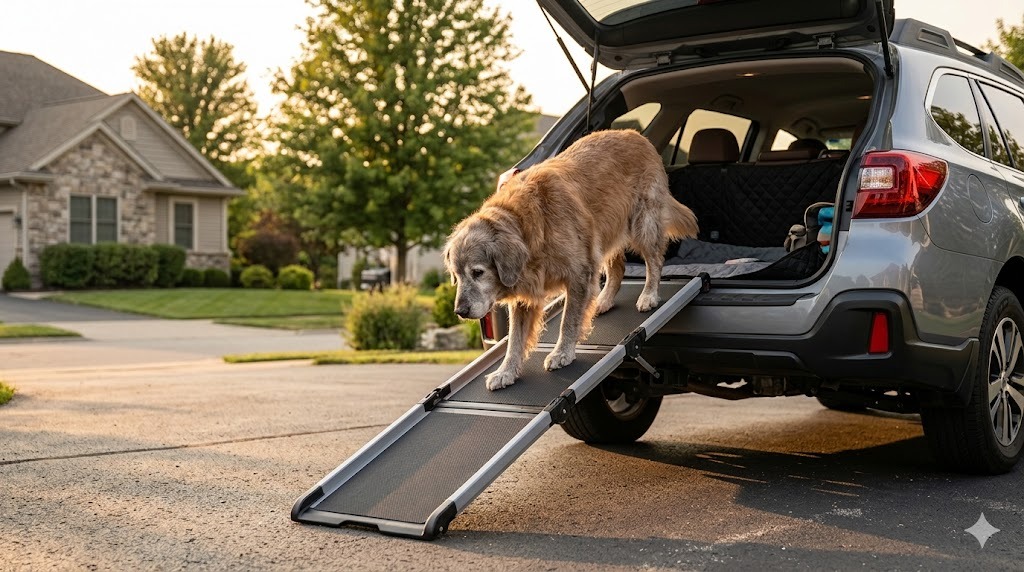
The best dog car ramp is a sturdy, non-slip folding or telescoping ramp rated above your dog’s weight - PetSafe Solvit and Pet Gear lead for length and grip, with Twistep a compact pick for SUVs. The numbers that matter are a gentle slope and a surface your dog will actually trust, so plan a short training period.
A dog jumping in and out of a car looks normal - until it isn’t. Repeated impact on hard surfaces shortens the working life of canine joints, especially in larger breeds, hip-dysplasia-prone lines, and dogs over six years old. A ramp prevents thousands of cumulative high-impact landings across a dog’s life and dramatically reduces the rate of orthopedic injury in senior years.
The category is small but the price spread is wide - $50 for a folding plastic ramp to $300 for an aluminum bi-fold or telescoping aluminum ramp. The two questions that determine the right buy are: how high does it need to reach (SUV vs sedan vs truck bed), and how heavy is the dog. This guide covers what fits which vehicle and dog, plus the training side that determines whether the dog will actually use it.
The orthopedic case for a ramp: Veterinary studies show that repeated jumping from height of 2+ feet onto hard ground accelerates degenerative joint disease in dogs over 25 kg. By age 8, dogs in jumping households show measurably more arthritis than dogs trained to use ramps. The cost of one ramp is roughly equivalent to one veterinary X-ray series.
At a Glance: Top Picks
| Rank | Ramp | Length | Capacity | Best For |
|---|---|---|---|---|
| 🥇 #1 | PetSafe Solvit Deluxe Telescoping | 71” extended | 400 lb | SUVs and trucks, premium |
| 🥈 #2 | Pet Gear Tri-Fold Travel Ramp | 71” | 200 lb | Standard cars, value |
| 🥉 #3 | Heeve Aluminum Bi-Fold Ramp | 84” | 500 lb | Large breeds, lifted SUVs |
| #4 | PetSafe Happy Ride Folding Ramp | 62” | 150 lb | Sedans, compact storage |
| #5 | Twistep Hitch-Mounted Step | 9” rise | 500 lb | SUVs with hitch, alternative |
| #6 | Frisco Folding Plastic Ramp | 66” | 150 lb | Budget pick |
| #7 | PetSTEP Original Pet Ramp | 70” | 500 lb | Indoor + outdoor use |
🥇 #1: PetSafe Solvit Deluxe Telescoping Ramp
The Solvit telescoping is the premium standard. Two features make it the top pick: adjustable length and aluminum construction. Adjustable length means one ramp works for an SUV, a sedan, the bed of a truck, the back of a station wagon, and your house steps - different vehicles, different heights, one ramp. Aluminum is lighter than steel, more durable than plastic, and won’t degrade in weather like plywood.
The walking surface is the part owners praise most. The full-length anti-slip coating is grippy enough that even nervous dogs walk it confidently. Side rails (the small raised edges) prevent the dog from stepping off mid-ramp.
Real-world durability: Owners report 8-12 years of regular use. The aluminum doesn’t bend, the joints stay tight, the surface coating wears slowly.
Best for: SUVs, trucks, owners who switch between vehicles, large dogs over 50 lb, anyone wanting to buy once and never replace.
🥈 #2: Pet Gear Tri-Fold Travel Ramp
For most owners with dogs under 80 lb and a standard sedan or compact SUV, the Pet Gear Tri-Fold is the right balance. The tri-fold design stores compactly - important if your trunk also holds groceries, kids’ gear, or work supplies. The walking surface is grippy enough for most dogs, and 71” of length gives a gentle slope from most car heights.
Best for: Sedans, compact SUVs, medium-sized dogs (under 80 lb), owners prioritizing storage compactness.
🥉 #3: Heeve Aluminum Bi-Fold Heavy Duty Ramp
For Great Danes, Mastiffs, Newfoundlands, large Goldens, and other big breeds, smaller ramps fail. The Heeve is the genuine heavy-duty pick - rated for 500 lb, built from industrial aluminum, with an 84” length that produces a gentle slope even from the back of a lifted truck. Owners of mobility-assisted seniors (where the human walks beside the dog) prefer this ramp’s stability.
Best for: Large breeds (over 80 lb), lifted SUVs, pickup trucks, multi-dog households where one ramp serves two dogs.
#4: PetSafe Happy Ride Folding Ramp
A simpler PetSafe model - single-fold, plastic, 62” extended. Designed for compact storage in small cars. Adequate for smaller dogs in sedans but underbuilt for SUV heights or larger breeds.
Best for: Sedans and hatchbacks, dogs under 60 lb, budget-conscious owners with cars rather than SUVs.
#5: Twistep Hitch-Mounted Dog Step
Not a ramp - a single permanent step mounted to a tow hitch receiver. The dog jumps onto the step, then onto the vehicle. Splits the height into two smaller jumps rather than eliminating the jump entirely.
Best for: SUVs and trucks with hitch receivers, dogs that refuse ramps but tolerate a single shorter jump, mid-active senior dogs.
#6: Frisco Folding Plastic Pet Ramp
The reliable budget pick. Plastic construction, simple bi-fold, 66” extended. Lighter on quality than premium picks but acceptable for medium dogs and occasional use.
Best for: Tight budgets, occasional use, dogs under 50 lb, testing whether your dog will accept a ramp before investing in a premium model.
#7: PetSTEP Original Pet Ramp
A rugged plastic ramp designed for both car and household use. 500 lb capacity, weather-resistant. Owners use it for boats, RVs, and house steps as well as cars.
Best for: Multi-purpose use (car + house + boat), households where the dog needs help in multiple locations.
Ramp Length: The Key Decision
The ramp length determines the slope. The slope determines whether your dog will use it.
Slope angle math
- Gentle slope (18-22°): Most senior dogs walk this confidently.
- Moderate slope (23-28°): Many dogs accept after training.
- Steep slope (29°+): Most dogs refuse or slip.
Required length by vehicle height
| Vehicle Type | Loading Height | Minimum Ramp Length for Gentle Slope |
|---|---|---|
| Sedan / hatchback | 18-24” | 60” |
| Compact SUV / station wagon | 24-28” | 70” |
| Full SUV (Tahoe, Suburban) | 28-32” | 80” |
| Lifted SUV / pickup bed | 30-36” | 84”+ |
| Minivan rear | 20-26” | 65-70” |
Rule of thumb: ramp length should be about 3× the vehicle’s loading height for a comfortable senior-dog slope.
If your ramp is too short, even the best surface won’t help - the dog won’t walk a slope steeper than they’re comfortable with. This is the most common cause of “my dog refuses the ramp” complaints.
Material: Aluminum vs Plastic vs Wood
Aluminum
Pros: Lightest strong material, weatherproof, premium durability (10+ years). Cons: Higher price, thermal conduction (hot in summer, cold in winter - most ramps have rubber/textured walking surfaces to mitigate). Verdict: Best long-term choice for larger dogs and SUV owners.
Plastic
Pros: Affordable, lightweight, weatherproof. Cons: Capacity limits (usually 150-250 lb), surface wears faster, fold joints develop play. Verdict: Good budget option for medium dogs and sedans.
Wood (DIY)
Pros: Inexpensive, customizable, very strong. Cons: Heavy, prone to splintering, degrades in weather. Verdict: Suitable for indoor use or covered transport only.
Folding fabric (rare)
Pros: Very compact storage. Cons: Limited capacity, surface deforms under weight. Verdict: Avoid for senior dogs or anything over 30 lb.
Training Your Dog to Use the Ramp
Buying the ramp is half the work. Most dogs need 1-2 weeks of training to use it confidently. Senior dogs in particular often refuse ramps initially - they’re suspicious of any new surface.
Week 1: Indoor flat introduction
Lay the ramp flat on the floor in your living room. Treat the dog for stepping on it. Reward each paw on the surface. The goal is for the dog to walk across it confidently on the ground before any incline is introduced.
Week 2: Slight incline
Lift one end of the ramp 2-4 inches. Treat the dog for walking up and down. Increase the angle each day in small steps. The dog should associate the ramp surface with treats before the angle becomes meaningful.
Week 3: Actual vehicle use
Place the ramp at the back of your car (engine off). Treat the dog at each step. Lure with a favorite toy or high-value treat at the top. Be patient - many dogs need 5-10 attempts before voluntarily walking up.
Common failure points and fixes
Dog stops halfway up: The slope is too steep, or the surface looks unstable. Use a longer ramp or check that the ramp end is flush with the vehicle.
Dog walks up but refuses to walk down: Walking down feels more dangerous than up. Train downward direction separately. Use a leash to gently guide pace.
Dog jumps off the side: Add side rails or a barrier. Some ramps include this; others require purchase.
Dog refuses entirely: Try a hitch step (Twistep) instead - splitting the height into two smaller jumps may be more acceptable than a long ramp.
Safety Setup
Stable placement
The ramp must rest firmly against the vehicle. Movement during use will scare the dog and may cause falls. Many ramps include attachment straps; use them.
Surface check
Wipe the walking surface clean before each use. Wet leaves, ice, mud, and gravel reduce grip. In winter, brush the surface with a stiff brush to clear ice.
Speed control
Use a leash to control descent speed. Senior dogs often start too fast and lose footing. A short leash kept slightly tight slows the pace.
Side support for very large dogs
For dogs over 70 lb with mobility issues, walk alongside with a hand on the dog’s hindquarters. This provides reassurance and prevents falls.
Body harness (for some seniors)
A support harness (with handles on top) lets you assist a wobbling senior. Common pick: the Help ‘Em Up Harness or the Ginger Lead.
Stairs and Beds (Bonus Uses)
A good car ramp doubles for other applications.
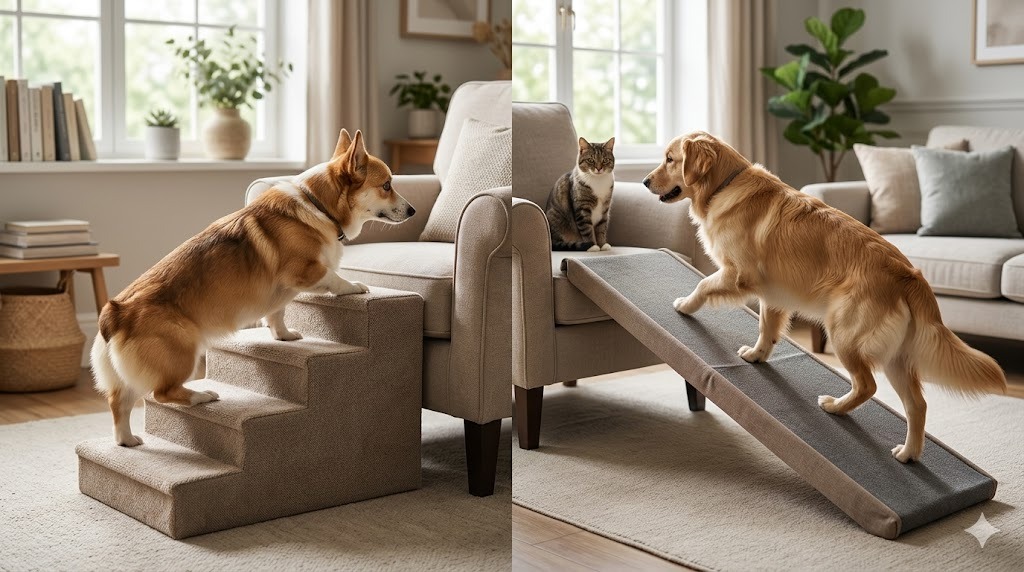
Sofas and beds
Many seniors who can’t jump onto the bed lose the privilege of sleeping there. A small ramp restores access. Some dedicated bed ramps exist (shorter, lower capacity); for medium-to-large dogs, a regular car ramp works.
House stairs
For senior dogs unable to climb stairs to a second floor, a ramp over the bottom 3-4 steps provides assistance. Aluminum bi-folds (Heeve) work well.
Boats and RVs
For households that boat or camp, the same ramp serves all loading scenarios. Aluminum ramps are weatherproof; plastic ones survive but stain in marine environments.
Frequently Asked Questions
How long should a dog ramp be?
For sedans, 60-70 inches. For SUVs, 70-80 inches. For lifted trucks, 80+ inches. The general rule is 3× the loading height for a comfortable senior slope.
Can I use stairs instead of a ramp?
Pet stairs (a series of small steps) work for couches and low beds. For cars with loading heights above 18”, stairs become impractical - too tall to be portable, too short-stepped to be safe.
Will my dog actually use it?
Most dogs accept ramps within 1-2 weeks of patient training. About 10% of dogs refuse ramps entirely. For those dogs, alternatives include hitch steps, lifting (for smaller dogs), or training to wait while you back the vehicle up to lower loading surfaces.
How heavy is a dog ramp?
Plastic ramps: 8-14 lb. Aluminum ramps: 14-24 lb. Heavy aluminum bi-folds: 22-28 lb. If you’ll be loading the ramp into the vehicle yourself, factor weight into your choice.
Will the ramp scratch my car?
Most ramps have rubberized contact pads where they rest against the bumper or trunk. Inspect for wear; replace if the rubber thins. Some owners place a small towel between the ramp and bumper for extra protection.
Are car ramps safe in rain?
Aluminum ramps with anti-slip surfaces work in moderate rain. Heavy rain creates slip risk on any ramp. In freezing weather, ice on the surface is dangerous - brush clear before use.
Can two dogs use one ramp at a time?
Single-file only. The walking surface isn’t wide enough for safe side-by-side use, and dogs bumping each other risk falls.
How do I store the ramp?
Folded ramps fit behind a back seat or under a cargo cover. Telescoping ramps lie flat. For permanent storage in a sedan trunk, choose tri-fold designs.
Do dog ramps prevent injury?
Long-term, yes. Dogs jumping in and out of vehicles thousands of times across a decade accumulate joint wear that ramps prevent. The benefit is largest for breeds prone to hip and elbow dysplasia, large breeds in general, and dogs over six.
Are there ramps for very small dogs?
Yes, though they’re often marketed as “bed steps” or “couch ramps.” For small dogs (under 25 lb) loading into sedans, the same standard ramps work - just buy the lower-capacity, cheaper version.
Our Final Recommendation
For most SUV and crossover owners, the PetSafe Solvit Deluxe Telescoping Ramp is the right pick. Adjustable length covers any vehicle, aluminum lasts a decade, and the 400 lb capacity handles every breed except the largest. Buy once.
For sedan owners with medium dogs, the Pet Gear Tri-Fold Travel Ramp offers the best storage compactness at a fair price.
For large breeds, lifted vehicles, or multi-dog homes, the Heeve Aluminum Bi-Fold is the only category genuinely engineered for the weight and the geometry.
A ramp is one of those purchases that doesn’t feel necessary until it is - and by then, the dog has already accumulated years of jumping impact that can’t be undone. Buying it before the dog needs it, while teaching its use as part of normal routine, is one of the highest-leverage things you can do for your dog’s long-term mobility.
Related Reading
- Best Dog Strollers for Senior Dogs
- Best Joint Supplements for Senior Dogs
- Best Orthopedic Dog Beds
- Best Dog Seat Covers for Cars
- Best Pet Insurance 2026
Last updated: May 2026.