Best Dog Strollers 2026: Senior, Travel & Multi-Dog Models That Actually Last
Honest reviews of the best dog strollers in 2026 - Pet Gear No-Zip, HPZ Pet Rover, Ibiyaya, and budget picks. Who needs a dog stroller, how to choose, real-world durability.
Best Dog Strollers 2026: Senior, Travel & Multi-Dog Models That Actually Last
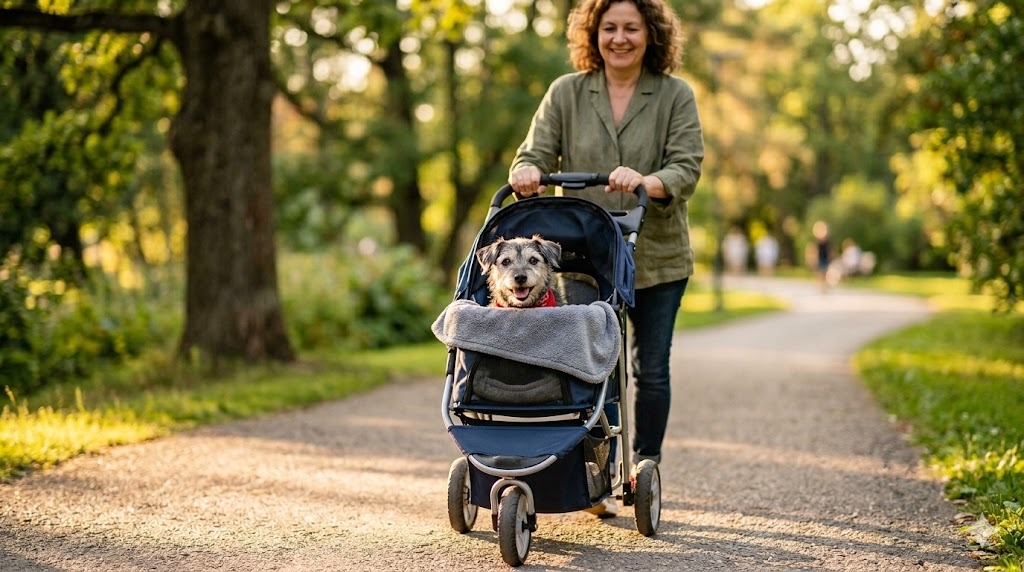
The best dog stroller is a sturdy, large-wheeled model rated above your dog’s weight - Pet Gear No-Zip for easy entry, HPZ Pet Rover for all-terrain, and a budget Ibiyaya-style pick for light use. It’s genuinely worth it for arthritic seniors, flat-faced breeds that overheat, and post-surgery recovery.
Dog strollers used to be a punchline - the symbol of the over-pampered city dog. That changed once veterinarians started recommending them. A stroller is now standard advice for arthritic seniors who still want fresh air, for brachycephalic breeds that overheat after ten minutes of walking, for post-surgical recovery, and for puppies finishing their vaccination schedule. Used right, a stroller adds years of quality outdoor time to a dog’s life.
The problem is the market. Most “dog strollers” on Amazon are repurposed baby strollers with weak frames, terrible wheels, and zipper enclosures that fail within a year. The good models - heavy frames, real shock absorption, ventilated mesh - cost two to three times more and last five to ten times longer. This guide separates the strollers built for actual dog use from the ones designed to ship cheaply.
When a vet will tell you to buy a stroller: advanced arthritis, recovery from orthopedic surgery (TPLO, IVDD, hip replacement), heart failure with exercise restriction, hospice care, brachycephalic heat intolerance, post-vaccination puppy outings, and reactive dogs in dense public spaces. A stroller is medical equipment for older dogs in the same way a wheelchair is for older humans.
At a Glance: Top Picks
| Rank | Stroller | Capacity | Best For |
|---|---|---|---|
| 🥇 #1 | Pet Gear No-Zip Special Edition | up to 30 lb | Premium daily-use pick |
| 🥈 #2 | HPZ Pet Rover Premium | up to 75 lb | Large/multi-dog households |
| 🥉 #3 | Ibiyaya Speedy Fold Buggy | up to 55 lb | Jogging and active owners |
| #4 | Pet Gear Expedition No-Zip | up to 70 lb | Large seniors, budget premium |
| #5 | Paws & Pals 4-Wheel Folding | up to 30 lb | Budget reliable pick |
| #6 | Frisco 3-Wheel Standard | up to 35 lb | Mid-range value |
| #7 | BestPet Heavy Duty Extra Large | up to 50 lb | Two small dogs, hot climates |
🥇 #1: Pet Gear No-Zip Special Edition
The Pet Gear No-Zip is the bed-aft-rest of dog strollers. The “no-zip” patent matters more than it sounds - zippers fail. Every cheap stroller eventually develops a stuck or broken zipper, and on a stroller carrying a senior dog, that’s a problem. The magnetic closure on this model has held up across thousands of owner reviews over a decade.
The wheels: Air-filled rubber tires, not solid plastic. The difference is dramatic on cracked sidewalks, gravel paths, or grass. Senior dogs feel the bumps; air-ride wheels eliminate most of them.
Real-world durability: Owners report 5-8 years of regular use. The frame doesn’t develop wobble, the mesh doesn’t tear, the fabric resists fading.
Best for: Small-to-medium senior dogs (Cavaliers, Pugs, Shih Tzus, small Terriers, mini Poodles), brachycephalic breeds needing climate management, owners who want one stroller for the dog’s lifetime.
🥈 #2: HPZ Pet Rover Premium
The HPZ Pet Rover is the standout for big dogs. Most “large dog strollers” rate their capacity optimistically - list 50 lb but flex worryingly above 35. The Pet Rover frame is genuinely engineered for 75 lb dogs and tested in real use by Lab, Bulldog, and Golden Retriever owners.
The convertible feature isn’t a gimmick. The interior detaches as a standalone carrier - useful for vet trips, airline travel, or moving a recovering dog from car to apartment without a transfer.
Best for: Large senior dogs (Goldens, Labs, German Shepherds in late life), households with two medium dogs, owners managing post-surgical mobility for a big breed.
🥉 #3: Ibiyaya Speedy Fold Buggy
If you run or bike with your dog, a four-wheel stroller will give you a workout in frustration. Three-wheel jogging strollers are designed for sustained forward motion. The Ibiyaya is the strongest pick in this category - lighter than the competition, with a real hand brake (most jogging dog strollers omit this) and a smooth front-wheel lock.
Best for: Joggers, hikers on packed trails, anyone needing to move quickly with a dog that can’t keep up - whether due to age, injury, or breed limitations.
#4: Pet Gear Expedition No-Zip
The big-dog version of the #1 pick. Same patented no-zip closure, same air-ride wheels, scaled up to hold dogs up to 70 lb. Slightly less polished than the HPZ Pet Rover but considerably cheaper, and the no-zip closure remains a meaningful durability advantage.
Best for: Owners of larger seniors who want premium quality without the HPZ price tag.
#5: Paws & Pals 4-Wheel Folding Pet Stroller
The reliable budget pick. Standard zippered enclosure, plastic wheels, basic frame. Acceptable durability for occasional use - vet trips, short walks, weekend outings - but not designed for daily heavy use over years. Most owners report 1-2 years of solid service.
Best for: Owners on a tight budget, occasional-use scenarios, testing whether your dog will tolerate a stroller before upgrading.
#6: Frisco 3-Wheel Standard Dog Stroller
Chewy’s house-brand mid-tier option. Better materials than the budget tier, missing the premium features (air-ride wheels, no-zip closure). Solid value if you’ll use the stroller weekly but not daily, and your dog is under 35 lb.
Best for: Mid-frequency use, dogs 15-35 lb, owners wanting Chewy’s return policy and customer service.
#7: BestPet Heavy Duty Extra Large
A wide-bodied 4-wheel stroller designed for two small dogs or one medium dog with room to stretch. Strong ventilation makes it the pick for hot climates and brachycephalic breeds that need cooling airflow during outdoor time.
Best for: Two-dog households (under 25 lb each combined to 50 lb), hot-climate owners of Frenchies, Bulldogs, Pugs, Boxers.
Who Actually Needs a Dog Stroller
This is the question every new owner asks. The honest answer: more dogs than the internet jokes about.
Senior dogs with mobility issues
The largest user group. Dogs over 10 years old often develop arthritis, mild cognitive decline, or simple cardiac limitations that cut walks short. Without a stroller, these dogs lose outdoor stimulation entirely. With one, you can drive to a park, push them through the scents and sights, and let them get out to walk only the parts they can manage.
Post-surgical recovery
TPLO surgery, hip replacement, IVDD recovery - all require 6-12 weeks of restricted activity. A stroller lets the dog leave the apartment, see other dogs and people, and avoid the depression that often accompanies long crate rest.
Brachycephalic breeds in summer
French Bulldogs, English Bulldogs, Pugs, Boston Terriers, Shih Tzus, and Boxers cannot regulate temperature normally. Above 22°C with humidity, walking becomes dangerous. A stroller with ventilation lets them be outside without the breathing strain.
Reactive or fearful dogs
For dogs overwhelmed in dense urban environments, a stroller is a portable safe space. The bolstered enclosure reduces hypervigilance. The dog observes from a protected position rather than feeling exposed.
Puppies before full vaccination
Most puppies finish their core vaccinations at 16 weeks. From 8-16 weeks, they need socialization but should not walk on shared ground (parvo, distemper risk). A stroller solves this - the puppy gets sights, sounds, smells, and exposure without paw contact with unknown surfaces.
Multi-dog households
One older dog who can’t keep up, one younger dog who can - a stroller lets you walk both at the same pace.
Hospice and palliative care
For dogs in their final weeks or months, a stroller is the difference between being stuck inside and getting outdoor time. Many owners report this is the most meaningful purchase of their dog’s late life.
Stroller Types Explained
4-Wheel Standard
The default design. Stable at rest, easy to push, simple steering. Best for sidewalks, paved paths, indoor spaces (vet waiting rooms, airports).
3-Wheel Jogging
Front wheel locks straight for high speed; unlocks to swivel for low-speed turns. Required if you run with the dog. Less stable when stationary on slopes.
All-Terrain
Larger wheels, often air-filled, designed for grass, gravel, packed trails. Heavier and bulkier but handle real outdoor surfaces.
Travel / Convertible
Stroller with a detachable interior that doubles as a carrier or car seat. Worth the cost only if you actually travel - vet trips, flights, road trips.
Double / Wide
Two side-by-side compartments, or one wide compartment. Designed for two dogs or one dog plus storage.
How to Choose the Right Size
The weight limit is only half the question. The other half is interior dimensions.
| Dog Weight | Recommended Interior Floor | Stroller Size |
|---|---|---|
| Under 15 lb | 18” × 11” | Small / standard |
| 15-30 lb | 22” × 13” | Medium |
| 30-55 lb | 26” × 16” | Large |
| 55-75 lb | 30” × 19” | Extra-large |
| Two small dogs (under 25 lb combined) | 26” × 16” | Large or wide |
The test: Measure your dog from nose to tail base while standing. The interior floor should be at least that length plus 4 inches, so the dog can turn around comfortably.
For dogs who like to lie down on walks, prioritize length over weight rating. A 25 lb Dachshund needs more floor than a 25 lb Frenchie.
What to Look For
Frame
Steel - heaviest, strongest, lasts longest. Best for daily use. Aluminum - lighter, less durable under heavy dogs. Good for travel. Plastic-reinforced - budget. Wobble develops in 6-12 months.
Wheels
Air-filled rubber (pneumatic) - best ride quality, best shock absorption. Need occasional inflation. EVA foam - middle ground. Won’t go flat, decent ride. Solid plastic - cheap. Every crack in the pavement transfers to your dog.
Enclosure
No-zip / magnetic - best long-term durability. No failure point. Standard zipper - works for years if quality, fails earlier on cheap models. Open top - for very calm dogs only. Risk of jumping out.
Brake
Foot brake on rear wheels - standard. Hand brake on handle - only on premium jogging models. Essential if you run.
Ventilation
Mesh windows on three sides - required for hot climates and brachycephalic breeds. Single window only - too little airflow for summer use.
Introducing Your Dog to a Stroller
Most dogs accept a stroller within a week. Some take longer.
Day 1-3: Static introduction
- Place stroller open in your living room
- Toss treats inside, don’t push or close
- Let the dog explore the interior voluntarily
- Feed meals next to or partially inside
Day 4-7: Closed and stationary
- Close the canopy briefly while dog is inside
- Stay calm, don’t make a fuss
- Open immediately if dog shows stress
- Build up to 5-10 minutes inside, doors closed, at home
Week 2: Movement
- Roll a few feet inside, with treats
- Take outside, push 5 minutes at most
- Reward calm behavior; ignore whining
- Build up to 20-30 minute trips
When introduction fails
Some dogs panic the first time the stroller moves. Common reasons: wheel rattle scares them, motion sickness, claustrophobic dogs. Solutions: louder dogs need slower introduction; motion-sick dogs benefit from ginger before trips; claustrophobic dogs may prefer open-top strollers.
Safety: What to Watch For
Always tether your dog with the included tether strap. Dogs jump out - this is the single most common cause of stroller-related injury.
Never leave the stroller unattended on a slope. Even with the brake set, gravity wins on uneven ground.
Check heat carefully. A stroller with a closed canopy can trap heat. On warm days, prefer mesh-ventilated models and avoid direct sun.
Watch the brake. Test the brake before every walk. Worn brake pads cause rolling on inclines.
Inspect wheels weekly. Loose bearings cause wobble that worsens. Tighten or replace at the first sign.
Don’t exceed weight rating. Over-capacity strollers fail at the frame joints, often suddenly.
Frequently Asked Questions
Are dog strollers worth the money?
For senior dogs, surgical recovery, brachycephalic breeds, and unvaccinated puppies - yes, dramatically so. They add quality-of-life outdoor time that would otherwise be impossible. For a healthy adult dog with no special needs, a stroller is a luxury, not a necessity.
How long do dog strollers last?
- Premium (Pet Gear, HPZ): 5-10 years of regular use
- Mid-tier (Frisco, Ibiyaya): 2-4 years
- Budget (Paws & Pals, BestPet): 1-2 years
Can I jog with my dog in a stroller?
Only with a 3-wheel jogging model that has a locking front wheel and a hand brake. Pushing a 4-wheel stroller at running speed is unstable and dangerous.
My senior dog refuses the stroller. What now?
Try a slower introduction (2-3 weeks), put their favorite blanket inside, feed meals there. If the dog still refuses, the issue is usually motion or enclosure. Try open-top strollers for claustrophobic dogs, or try medication for motion sickness (ask your vet about Cerenia).
Can my dog walk on leash from inside the stroller?
Many models have a leash clip on the interior. This tethers the dog so they can’t jump out but doesn’t substitute for walking. Use this for safety, not as a leash for active walking.
How heavy is too heavy for a stroller?
Beyond 75 lb, there are very few quality strollers - the HPZ Pet Rover is the top pick and rates to 75 lb. For dogs over 90 lb, consider pet wagons (Radio Flyer makes a version) or veterinary mobility aids instead of strollers.
Will it fit in my car?
Premium strollers fold but remain bulky - typically 30” × 12” × 24” folded. They fit most SUV trunks but not compact car trunks. Check folded dimensions before buying if car storage matters.
Can I take a dog stroller on a plane?
Most airlines allow folded strollers as gate-check. Check your airline’s specific policy. Dogs travel separately under their airline rules - the stroller is for ground transport at the airport.
Are dog strollers safe in hot weather?
Only if well-ventilated. Mesh on three sides plus a reflective canopy works. Closed-canopy strollers can hit dangerous temperatures within minutes in direct sun. Above 25°C, prefer early-morning or evening walks even with a ventilated stroller.
How do I clean a dog stroller?
Remove the interior pad and machine wash (most are washable). Wipe down the frame with mild soap and water. Vacuum hair from the mesh. For odors, a sprinkle of baking soda left in the stroller overnight, then vacuumed out, works well.
Our Final Recommendation
For most dog owners needing a stroller, the Pet Gear No-Zip Special Edition is the right pick. The no-zip closure, air-ride wheels, and steel frame justify the premium for a product the dog will use weekly for years.
For owners of large senior dogs or two medium dogs, the HPZ Pet Rover Premium is unmatched at its size class. The convertible feature also makes it the best pick for travel.
For active owners and joggers, the Ibiyaya Speedy Fold Buggy with hand brake and locking front wheel is the safer running pick.
A dog stroller is the kind of purchase that doesn’t make sense until you need it. When you do - when your dog’s hind legs give out on the third block of a walk, or when your Bulldog can’t manage a summer afternoon - a quality stroller is the difference between sitting indoors and still having a life together.
Related Reading
- Best Joint Supplements for Senior Dogs
- Best Orthopedic Dog Beds for Seniors
- Best Dog Boots for Hot Pavement and Cold Surfaces
- Pet-Friendly Hotels & Airlines: 2026 Travel Guide
- Best Calming Donut Dog Beds
Last updated: May 2026.