Best Dog Boots 2026: Hot Pavement, Snow, Hiking & Real-World Picks
Honest reviews of the best dog boots in 2026 - Ruffwear Grip Trex, Muttluks, Pawz disposable, QUMY hiking boots. Hot pavement, winter snow, hiking trails. Sizing and fit.
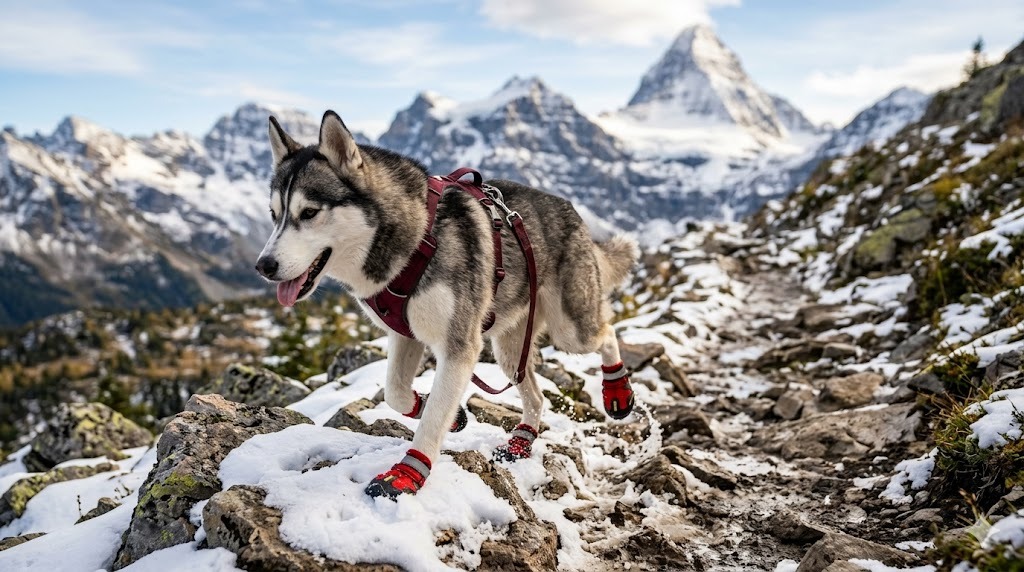
Best Dog Boots 2026: Hot Pavement, Snow, Hiking & Real-World Picks
The best dog boots are the Ruffwear Grip Trex for hiking and rough trails, Muttluks for winter snow and salt, and disposable Pawz for cheap, lightweight paw protection around town. Fit is everything - measure the paw, expect a break-in period, or the boots end up in the donation pile.
Dog boots solve real problems most owners underestimate. Hot summer pavement reaches 60-65°C in direct sun - temperatures that cause paw burns within seconds. Winter ice melt chemicals (calcium chloride, sodium chloride) burn and crack paw pads. Sharp gravel, hot sand, and rough trails cause cuts that can take weeks to heal. The right boots prevent all of these issues, but the wrong boots become an instant donation-pile failure.
This guide covers what actually works for different conditions and dog activities, the realistic fit and training requirements, and which boots survive heavy use versus which fail within weeks. Most failures come from buying generic boots for specific conditions - winter boots for hiking, cheap rubber socks for serious cold, indoor-style booties for rough terrain.
The paw pavement test: Place the back of your hand on the pavement for 7 seconds. If you can’t keep it there comfortably, neither can your dog. This applies year-round - paw pads are sensitive at both extremes. Boots solve the temperature issue; alternative is walking only during cool early morning or evening hours.
At a Glance: Top Picks
| Rank | Boots | Type | Use Case | Best For |
|---|---|---|---|---|
| 🥇 #1 | Ruffwear Grip Trex | Hiking/all-terrain | Year-round outdoor | Premium pick, active dogs |
| 🥈 #2 | Muttluks Original Fleece | Winter | Snow, ice melt | Cold climates |
| 🥉 #3 | Pawz Natural Rubber | Disposable | Brief outings, ice | Budget, occasional use |
| #4 | QUMY Hiking Dog Boots | Hiking | Trails, mountains | Active hikers |
| #5 | Hipidog Anti-Slip Indoor Socks | Indoor traction | Senior dogs on hardwood | Mobility support |
| #6 | Canada Pooch Hot Pavement Boots | Summer | Hot surfaces | Urban summer use |
| #7 | Kurgo Step n Strobe | All-weather + LED | Night walking + protection | Visibility safety |
🥇 #1: Ruffwear Grip Trex Dog Boots
The Ruffwear Grip Trex is the standard against which other dog boots are measured. Real Vibram outsole - the same material used in human hiking boots - provides genuine grip on wet rocks, hot pavement, snow, ice, and rough trails. The mesh upper breathes during summer heat, the durable construction handles long-distance use.
The key advantage is versatility. Many owners buy boots for one specific use (winter) and find them useless for everything else. Grip Trex works year-round - they’re the only boots most active dog owners need.
The trade-off is the learning curve. Dogs new to boots typically need 1-2 weeks of indoor practice before walking comfortably. Some dogs adapt in days; some take longer. Most accept them once they learn boots mean “going on adventures.”
Real-world durability: 2-4 years of regular hiking use is typical. The Vibram soles outlast most other components.
Best for: Active dogs, hikers, working dog owners, year-round outdoor activity, dogs in regions with multiple seasonal challenges.
🥈 #2: Muttluks Original Fleece-Lined Boots
For winter use in cold climates, Muttluks are the standard. The fleece lining provides genuine warmth, the leather sole grips on snow and ice, and the leather upper handles ice melt chemicals without degrading. The construction is genuinely durable - many owners report 5+ winter seasons of use.
The Muttluks are designed for the specific demands of winter walking: cold protection, ice traction, and chemical resistance. Trying to use them year-round defeats the purpose - the fleece is too warm in summer.
Best for: Cold climates (Canada, northern US, northern Europe), winter walking on treated sidewalks, sled dog walks, dogs that struggle with cold weather.
🥉 #3: Pawz Natural Rubber Disposable Boots
Pawz are the cheapest practical dog boots - disposable rubber balloons that slip onto the paw. They’re not designed for hiking or long-term wear; they’re designed for brief outings when paws need protection from ice melt, hot pavement, or wet conditions for short periods.
The disposable nature has hidden advantages: no fit struggle (the rubber stretches), no straps to fail, and the dog gets used to wearing something on paws without permanent equipment. Many owners use Pawz as a training tool before investing in premium boots.
Best for: Occasional brief outings, post-paw-injury protection during recovery, ice melt chemical avoidance on sidewalk walks, training transition to full boots.
#4: QUMY Hiking Dog Boots
A mid-range hiking boot with reinforced sole, secure ankle strap, and ripstop fabric upper. Performs well on dirt trails and rocky terrain. Significantly cheaper than Ruffwear ($30-40 per set of 4) with about 70% of the durability.
Best for: Casual hikers, dogs that won’t see heavy daily use, budget-conscious hiking gear.
#5: Hipidog Anti-Slip Indoor Socks
Not really boots - anti-slip socks with rubber dots on the bottom. Designed for senior dogs slipping on hardwood floors. Provides traction without the rigid structure of outdoor boots.
Best for: Senior dogs with mobility issues on slippery floors, post-surgery recovery, indoor traction support.
#6: Canada Pooch Hot Pavement Boots
Specifically designed for summer urban use. Thin sole insulates from hot asphalt, breathable upper prevents overheating. Optimized for short city walks on hot days.
Best for: Urban summer use, dogs that overheat in regular boots, brief outings on hot pavement.
#7: Kurgo Step n Strobe
Dog boots with built-in LED lights for night visibility. The lights are practical for evening walks, especially during winter when daylight is short. Less rugged than Ruffwear but adequate for casual urban use.
Best for: Evening and night walks, visibility-conscious owners, urban use where seeing dog matters.
Sizing: The Make-or-Break Factor
Most dog boot failures come from incorrect sizing. The dog’s paw isn’t sized the same as the marketing photos suggest.
How to measure
- Place the dog standing on a piece of paper
- Outline both front and rear paws (front and back paws are usually different sizes)
- Measure the longest length and widest point of each paw
- Compare to manufacturer’s size chart (Ruffwear and most premium brands give specific dimensions)
Common sizing issues
- Front paws bigger than rear: Common, especially in larger breeds. Buy different sizes for front and rear.
- Long boots that don’t fit short paws: Boot length matters as much as width
- Boots too tight at the dewclaw: Many dogs have dewclaws (small “thumb” toe) on inner paw - boots must accommodate
- Boots loose around ankle: Causes rubbing and dog removal
When sizing is right
- Dog walks normally within a few minutes of adjustment
- No visible chafing after a 30-minute walk
- Boots don’t fall off during normal activity
- No reluctance to walk after fitting
When sizing is wrong
- Dog refuses to walk
- Boots fly off within minutes
- Visible chafing or red marks after wearing
- Dog limps or walks awkwardly
Training Your Dog to Wear Boots
Most dogs initially refuse to walk in boots - they look at their feet, walk backward, try to kick them off. Patience makes the difference.
Day 1: Indoor introduction
- Put one boot on a front paw
- Treat for 30 seconds, then remove
- Repeat across paws over the day
- Don’t push the dog to walk yet
Day 2-3: Standing time
- Put boots on all paws
- Keep dog still with treats
- Build to 5-10 minutes of standing wearing all boots
- Don’t expect normal walking yet
Day 4-7: Walking practice
- Boots on, walking on carpet or indoors
- High-value treats for walking
- Build to 10-15 minutes of indoor walking
- Some dogs walk normally by now; some need more time
Week 2: Outdoor practice
- Boots on, brief outdoor walks
- Familiar surfaces first (yard, neighborhood sidewalk)
- Build to 30+ minutes
- Some dogs are walking normally; some need additional time
Week 3: Real-world use
- Boots on for actual hot pavement, hiking, or winter walks
- Most dogs accept by this point
- Some never fully love boots but tolerate them when needed
Common failure modes
- Dog removes boots: Use boots with secure ankle straps; reinforce with athletic tape if needed
- Dog refuses to walk: Pause for a few days, return to indoor practice
- Boots fall off: Sizing issue - re-measure and re-buy
- Dog limps: Check for chafing or pinching; the boots may not fit
Hot Weather Protection
The most common reason for needing dog boots is summer pavement.
When boots are essential
- Daytime walks on asphalt above 22°C (71°F) outdoor temperature
- Beach walks (sand and concrete both get hot)
- Hot car park transitions
- Trail walking in arid regions (rocky surfaces hold heat)
Boot characteristics for heat
- Thin sole for grip: Too thick reduces airflow
- Breathable upper: Mesh fabric, not solid leather or rubber
- Light color: Reflects heat better than black
- Securely fitted: Sweat-induced sliding causes blisters
Alternative: Time-of-day adjustment
For dogs that won’t wear boots, restrict walks to before 8 AM and after 8 PM in summer. Pavement cools dramatically once direct sun stops.
Signs of overheating paws
- Dog stopping repeatedly to lift paws
- Refusing to walk on certain surfaces
- Pads appearing pink or red
- Blistering or peeling (paw burn - vet visit needed)
Winter Weather Protection
Cold-weather boots have different requirements.
When boots are essential
- Walks below -5°C (23°F)
- Walking on streets treated with ice melt chemicals
- Long walks in snow (snowballs forming between toes)
- Salt-treated sidewalks
Boot characteristics for cold
- Insulated lining (fleece or similar): Genuine warmth
- Leather or treated fabric upper: Resists ice melt chemicals
- Aggressive sole pattern: Grip on snow and ice
- Tall ankle coverage: Prevents snow from entering at top
Salt and ice melt protection
After winter walks, rinse paws with warm water to remove ice melt residue. Even with boots, some residue gets through. Untreated, ice melt causes cracking and chemical burns over time.
Snowballing problem
Long-haired dogs (especially Goldens, Newfoundlands) develop snowballs between toes during snow walks. Trim toe fur, or use boots that fully cover the paw including between toes.
Specific Use Cases
Hiking and trail walking
Pick: Ruffwear Grip Trex or QUMY Hiking Boots. Why: Vibram or equivalent sole for rock grip, durable upper for brush and rough terrain.
Daily summer urban walks
Pick: Canada Pooch Hot Pavement or Pawz disposables. Why: Adequate for short paved walks; full hiking boots are overkill.
Cold weather walks in cities with salt
Pick: Muttluks Original Fleece-Lined. Why: Warmth, chemical resistance, designed for urban winter.
Beach and sand
Pick: Ruffwear Grip Trex. Why: Sand gets hot, sand can hide sharp objects, mesh upper allows sand to escape rather than accumulate.
Senior dogs on hardwood
Pick: Hipidog Anti-Slip Indoor Socks. Why: Real traction for unsteady seniors; doesn’t restrict movement like outdoor boots.
Post-injury recovery
Pick: Pawz disposable rubber. Why: Easy to put on without straps disturbing healing area, disposable means clean each time.
Hunting and working dogs
Pick: Ruffwear Grip Trex. Why: Field-tested by working dog handlers, withstands rough conditions and water exposure.
Frequently Asked Questions
Will my dog actually wear boots?
About 80% of dogs accept boots within 2-3 weeks of patient training. 15% accept but never love them. 5% never adapt. The training process determines success more than the dog’s personality.
How often should I replace dog boots?
Premium boots (Ruffwear, Muttluks): 2-4 years of regular use. Mid-range boots: 1-2 years. Disposable (Pawz): 2-3 uses each.
Can my dog wear boots all the time?
No. Boots aren’t designed for 24/7 use. Use them for specific situations (hot pavement, winter walks, hiking). The dog’s paws need normal exposure for healthy development.
What if my dog’s paws still get burned through boots?
Boots reduce but don’t eliminate paw exposure. If your dog still shows signs of paw discomfort, the boots may not fit properly or the conditions are too extreme. Avoid the most extreme conditions even with boots.
Are dog socks the same as boots?
Different categories. Socks provide traction (anti-slip) but not protection from cold, heat, or chemicals. Boots provide both. Choose based on the actual problem you’re solving.
Why won’t my dog walk normally in boots?
Most dogs need 1-2 weeks of indoor practice before walking normally outdoors. Some dogs adapt within days; some need longer. Start with low expectations and high treat reinforcement.
Do boots work for puppies?
Yes, but puppy paws grow quickly. Boots that fit at 4 months won’t fit at 6 months. Consider Pawz disposables for the rapid-growth phase, then transition to permanent boots once growth slows.
Can I make my own dog boots?
DIY boots usually fail - they don’t fit properly, the sole material is wrong, or they fall off too easily. Better to buy quality boots than spend time on DIY that won’t work.
Are dog boots waterproof?
Some yes, some no. Ruffwear Grip Trex is not waterproof (mesh upper); good for wet conditions but not designed to keep paws dry. Some specialty boots are waterproof for swimming or rain.
What about boots for cats?
Cats generally refuse boots. Cat paw protection in extreme conditions usually means avoiding those conditions entirely.
Our Final Recommendation
For most active dog owners, Ruffwear Grip Trex is the right pick - year-round versatility, real grip on all terrain, proven durability. The premium price is justified by buying once and using for years across multiple seasons.
For winter use in cold climates, Muttluks Original Fleece-Lined is the specialized choice - genuinely warm, chemical-resistant, designed for actual cold weather (not just “winter style”).
For budget-conscious or occasional use, Pawz Natural Rubber Disposables are the practical entry point - cheap enough to use without commitment, useful for brief paw protection situations.
For senior dogs needing indoor traction, Hipidog Anti-Slip Socks solve the specific problem of slippery hardwood floors without the complexity of outdoor boots.
Dog boots are real safety equipment, not fashion accessories. The right pair prevents injuries that can take weeks to heal and dramatically extends the conditions in which your dog can comfortably walk. For active dogs especially, they’re one of the higher-value gear purchases available.
Related Reading
- Best No-Pull Dog Harness
- Best Dog Strollers for Senior Mobility
- Pet-Friendly Hotels & Airlines
- Best Joint Supplements for Senior Dogs
- Best Dog Seat Covers for Cars
Last updated: June 2026.