Best Puppy Training Pads 2026: Disposable, Washable & Holders Compared
Honest reviews of the best puppy training pads in 2026 - Frisco, AmazonBasics, Wee-Wee, Bulldogology. Disposable vs washable, real absorbency, leak-proof, holder options.
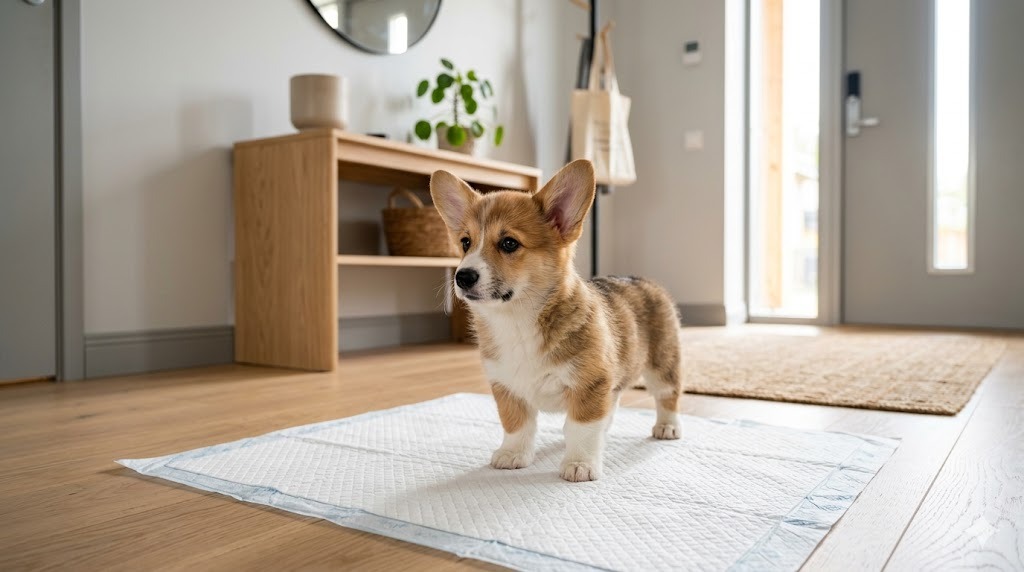
Best Puppy Training Pads 2026: Disposable, Washable & Holders Compared
The best puppy training pads are heavy-absorbency, leak-proof pads like Bulldogology or Frisco, with AmazonBasics the value pick and a washable pad if you’d rather not throw pads away. Pair them with a holder to stop shredding, and size up for larger breeds.
Puppy training pads are one of the most-used items during the first year of dog ownership, especially for apartment dwellers, working owners, and senior dog households. The market is enormous and the quality varies wildly - from premium leak-proof pads to budget pads that fail within minutes. Picking the right pad isn’t complicated, but the wrong choice creates daily cleanup headaches and slows house training.
This guide covers what actually matters: real absorbency, leak protection, attractant scents that work, and the decision between disposable and washable pads (which has gotten clearer as washable pad quality has improved). Plus the often-overlooked holder accessories that prevent pad-shifting and edge leaks.
Puppy pads are training aids, not destinations. Pads work best as a transition tool - the puppy goes on pads indoors initially, then learns to go outside. Long-term pad-only training can confuse the dog about appropriate elimination locations and slow full outdoor potty training.
At a Glance: Top Picks
| Rank | Pads | Type | Size | Best For |
|---|---|---|---|---|
| 🥇 #1 | Frisco Extra Large Training Pads | Disposable | 28” × 30” | Most households, value pick |
| 🥈 #2 | Bulldogology Premium Pads | Disposable | 24” × 24” | Premium absorbency, leak control |
| 🥉 #3 | Paw Inspired Washable Pads | Washable | Various | Eco-friendly, long-term cost savings |
| #4 | AmazonBasics Pet Training Pads | Disposable | 22” × 22” | Bulk budget pick |
| #5 | Wee-Wee Pads | Disposable | 22” × 23” | Original brand, attractant included |
| #6 | AKC Heavy Duty Training Pads | Disposable | 28” × 34” | Largest, multi-dog or large breed |
| #7 | Iris USA Wire Mesh Holder | Holder accessory | Fits 22”×23” | Prevents chewing/shifting |
🥇 #1: Frisco Extra Large Training Pads
Frisco Extra Large is the best balance of size, absorbency, and value. The 28” × 30” pad size matters more than people realize - most puppies miss the center of standard 22” pads at least 30% of the time. The larger size catches the misses and reduces floor cleanup dramatically.
The 5-layer construction is genuinely effective: top surface stays dry after wetting, absorbent core handles multiple uses if needed, plastic backing prevents floor seepage. The built-in attractant (mild scent that triggers elimination behavior) helps puppies learn pad use faster.
Best for: Most puppies and adult dogs needing pads, owners switching from smaller pads, multi-dog households.
🥈 #2: Bulldogology Premium Training Pads
For owners willing to pay premium for the best absorbency and leak protection, Bulldogology delivers. The 6-layer construction with super-absorbent polymer (the same material in disposable diapers) handles significantly more liquid than standard pads. The carbon layer addresses odor, which matters in apartments and multi-pad use.
The reinforced corners and extended plastic backing are practical upgrades - they prevent the common failures of cheaper pads (corners tearing, liquid escaping around the edge).
Best for: Apartment owners, dogs with diabetes or kidney issues (more frequent/larger pee), owners frustrated with leak problems on standard pads.
🥉 #3: Paw Inspired Washable Training Pads
For long-term users (chronic pad use for older dogs, training over months), washable pads have become genuinely competitive with disposable. The Paw Inspired construction handles regular washing without degrading, and the 3-layer construction with waterproof backing matches disposable absorbency.
The math: 5 washable pads at $40-60 total replaces approximately 500 disposable pads ($150-250). Break-even at 6-12 months. After that, the washable pads are pure savings.
Best for: Long-term pad users, environmentally-conscious owners, owners with washing machine access, multi-year arrangements.
#4: AmazonBasics Pet Training Pads
The budget bulk pick. Acceptable quality at very low price. 5-layer construction, standard size, basic attractant. Works fine for most training needs, even if not premium-grade.
Best for: Budget-conscious shoppers, training-only short-term use, secondary stock for emergencies.
#5: Wee-Wee Pads
The original brand. Solid quality at reasonable price. Built-in attractant works well. Multiple presentations (standard, super absorbent, scented, unscented).
Best for: Brand loyalty, owners who’ve trained dogs successfully on Wee-Wee in past, vet office or rescue recommendations.
#6: AKC Heavy Duty Training Pads
The largest standard pads on the market (28” × 34”). For large breed puppies, multi-dog households, or dogs with significant accidents, the extra size catches what smaller pads miss.
Best for: Large breed puppies (German Shepherds, Labradors), multi-dog households, dogs with mobility issues that result in larger accidents.
#7: Iris USA Wire Mesh Pad Holder
Not a pad - a frame that holds the pad in place. The mesh keeps the dog from chewing or scratching the pad and prevents shifting. Useful for stubborn dogs that destroy pads or move them around the room.
Best for: Puppies that chew pads, owners frustrated with pad-shifting, multi-cat households (cats love playing with loose pads).
Disposable vs Washable: The Real Comparison
Disposable pros
- Convenient - throw away after use
- No washing time investment
- Travel-friendly
- Good for guests (rotating pad as needed)
- Lower upfront cost
Disposable cons
- Ongoing cost ($30-60/month for daily use)
- Landfill waste
- Plastic content
- Quality variation between brands
Washable pros
- One-time investment, pays off after 6-12 months
- Lower environmental impact
- Often better fit and stay-in-place performance
- Can be used long-term without quality degradation
Washable cons
- Initial cost higher
- Washing labor required (typically 1-2 loads weekly)
- Needs rotation system (5+ pads recommended)
- Less convenient for travel
How to choose
For short-term training (3-6 months of puppy training, then full outdoor): disposable is the practical choice.
For long-term use (apartment-living adult dogs, senior dogs needing pad backup, multi-year arrangements): washable saves money and is more environmentally friendly.
For shared housing or boarding: disposable is more hygienic and practical.
What Makes Pads Actually Work
Absorbency
The key technical metric. Premium pads use super-absorbent polymer (SAP) - same material as diapers. Each gram of SAP holds 50+ times its weight in liquid.
Tests: Premium pads (Bulldogology, top-tier Frisco) hold 3+ cups before leaking. Budget pads (AmazonBasics, generic brands) hold 1-2 cups before leaking. The difference matters.
Top layer
The surface in contact with the dog. Quality top layers stay dry after wetting (the puppy doesn’t sit in wet). Cheap top layers stay wet, soaking the puppy’s belly and paws.
Backing
The plastic layer preventing floor leaks. Premium pads extend the backing 1+ inch beyond the absorbent area to prevent edge leaks. Budget pads match the absorbent area exactly, leading to perimeter leaks.
Attractant
A mild scent (typically pheromone-based) that triggers elimination behavior. Works most consistently in young puppies during initial training. Less impact on dogs already trained or older puppies.
Edge construction
Premium pads have sealed edges that prevent corner tearing. Budget pads often delaminate or tear at corners after a few uses.
How to Train With Pads
Step 1: Pad placement
Initially place the pad in your puppy’s preferred elimination area (often near the door, in a corner, or where the puppy naturally goes). Don’t fight the puppy’s preference initially.
Step 2: Build positive association
- Lead the puppy to the pad after meals, naps, and play sessions
- Reward when elimination happens on the pad
- Don’t punish accidents - clean and redirect quietly
Step 3: Frequent placement (first 2 weeks)
- Pad use every 1-2 hours during the day
- Cover a wider area than seems necessary
- Multiple pads in different rooms initially
Step 4: Consolidation (weeks 2-4)
- Move pads to one designated area
- Remove pads from other areas
- The puppy should now seek out pad locations
- Add a verbal cue (“go potty”) that you’ll use long-term
Step 5: Outdoor transition (4-8 weeks)
- Take pads with you outside initially
- Place pad on grass to bridge the indoor-outdoor connection
- Gradually reduce pad size or shift to grass-only
- Maintain rewards for outdoor elimination
Step 6: Pad removal
- After 1-2 weeks of reliable outdoor elimination, remove indoor pads
- Maintain consistent outdoor schedule
- Accept occasional regressions during stress or schedule changes
Common mistakes
- Punishing accidents (slows training)
- Pad too small (puppy misses it)
- Inconsistent placement (confuses puppy)
- Removing pads too soon (regression)
- Not rewarding pad use enthusiastically enough
Frequently Asked Questions
How many pads do I need per day?
Young puppies (8-16 weeks): 4-6 pads daily. Older puppies (4+ months): 2-3 pads daily. Adult dogs using pads as backup: 1-2 pads daily. Active training: more pads initially, fewer as training progresses.
Are scented pads better?
Mild attractants (pheromone-based) help puppies learn faster. Strongly perfumed pads sometimes deter use - puppies dislike strong smells. Choose mild attractant or unscented.
Can I leave pads out 24/7?
Yes, especially during initial training and for working owners. Long-term, pads in the same location help consolidate training. For chewers or anxious dogs, use a holder to prevent destruction.
My puppy is shredding the pads. What do I do?
Use a wire mesh holder (Iris USA) that prevents access to the pad surface for chewing. Move to a more enclosed location (laundry room, kitchen). Provide alternative chew toys to redirect.
Why does my puppy avoid the pad?
Common reasons: pad smells too strong, pad has been used by a different dog and odor remains, location is too far from where puppy plays, pad is too small, or puppy hasn’t connected pad with elimination yet.
Should I use pads in a crate?
Generally no. Crates work for short-duration containment (puppy can hold bladder while in crate). If you must crate longer than puppy can hold (work day), use a playpen with a pad on one side and bedding on the other instead.
What’s the difference between pee pads and training pads?
Same product, different marketing. “Training pads” emphasizes the learning function; “pee pads” describes what they do. The products are interchangeable.
How do I clean up after an accident off the pad?
Enzymatic cleaner (Nature’s Miracle, Rocco & Roxie) breaks down urine compounds completely. Standard cleaners don’t eliminate the odor signature, which encourages the puppy to use the same spot again.
Are washable pads sanitary?
Yes, with proper washing - hot water, full cycle, optional pet-safe disinfectant. The waterproof backing prevents soak-through into your washing machine.
When should my puppy be off pads?
Most puppies are reliably trained outside by 5-6 months. Adjusting to apartment-living adult dogs may use pads long-term. Senior dogs sometimes return to pad use for mobility or incontinence.
Our Final Recommendation
For most households, Frisco Extra Large Training Pads offer the right balance of size, absorbency, and price - the extra-large pads catch accidents that miss center, and the 5-layer construction matches premium pads at better value.
For premium leak protection or apartment dwellers, Bulldogology Premium Pads justify their higher price with super-absorbent polymer construction and reinforced edges.
For long-term use (6+ months), Paw Inspired Washable Pads pay for themselves within a year and significantly reduce environmental impact.
For owners with chewers or pad-shifters, the Iris USA Wire Mesh Holder is the inexpensive accessory that prevents most pad destruction problems.
Pads are training tools, not destinations. The right pad supports house training, then becomes redundant as your dog learns outdoor elimination. Choose for the training phase, then reassess for whatever long-term arrangement fits your household.
Related Reading
- Best Dog Crates: Wire, Plastic & Wooden Reviewed
- Best Dog Playpens for Puppies and Adults
- How to House Train a Puppy in 21 Days
- Best Indoor Dog Gates 2026
- Best Pet Insurance for Puppies
Last updated: June 2026.