Best CBD Oil for Dogs in 2026: Tested for Anxiety, Pain, and Arthritis
An honest 2026 guide to CBD oil for dogs - what the science actually says, which brands are third-party tested, dosing, and where CBD genuinely helps.
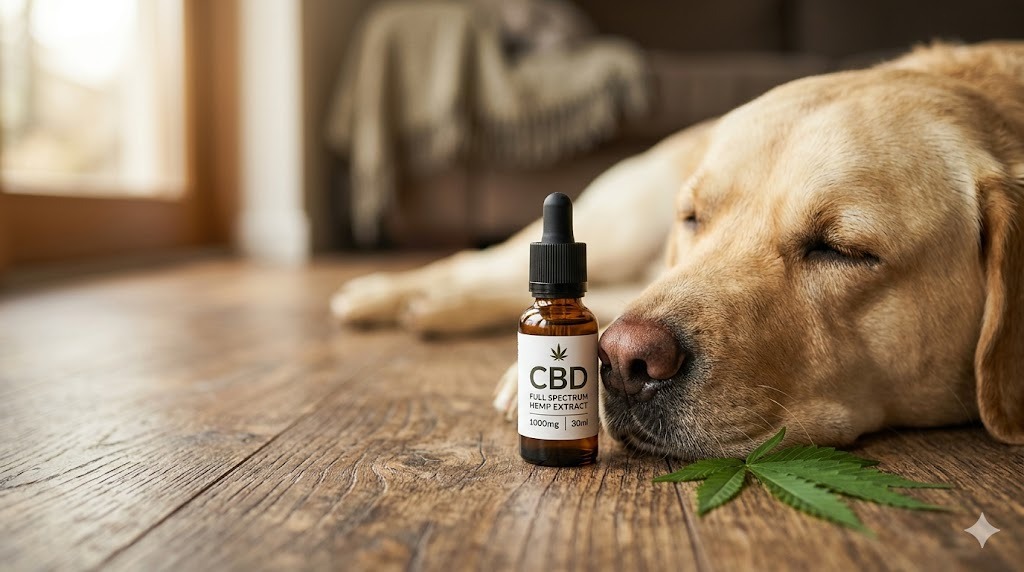
Best CBD Oil for Dogs in 2026: Tested for Anxiety, Pain, and Arthritis
The best CBD oil for dogs is a third-party-tested, full-spectrum oil with a clear certificate of analysis and accurate dosing - that lab testing matters far more than the brand name. The evidence is strongest for arthritis pain (per Cornell’s 2018 study) and mild anxiety; be skeptical of anything sold as a cure-all.
CBD for dogs has gone from “fringe alternative” to a $200+ million industry in less than a decade. With that growth came genuine science (Cornell’s groundbreaking 2018 osteoarthritis study), legitimate clinical applications, and a flood of unregulated products with misleading labels, inconsistent dosing, and questionable safety.
This guide separates the real from the noise. We’ll cover what CBD actually does (and doesn’t do), which brands have third-party testing, how to dose by weight, where it genuinely helps, and what side effects to watch for. The goal: help you make an evidence-based decision instead of falling for marketing.
Important: CBD is not FDA-approved for veterinary use in 2026. Quality varies dramatically between brands. Always consult your veterinarian before starting CBD, especially if your dog is on other medications (CBD interacts with several drug metabolism pathways).
At a Glance: Our Top 5 Picks
| Rank | Product | Best For | Price | THC |
|---|---|---|---|---|
| 🥇 #1 | ElleVet Sciences CBD+CBDA Oil | Strongest research backing (Cornell-studied) | $80-140 | <0.3% |
| 🥈 #2 | HolistaPet Pet CBD Oil | Best mid-range value | $40-80 | 0% |
| 🥉 #3 | Honest Paws CBD Oil | Best for anxiety | $40-75 | 0% |
| #4 | Charlotte’s Web Pet Oil | Most-trusted CBD parent brand | $50-90 | <0.3% |
| #5 | Penelope’s Bloom CBD | Best taste/palatability | $50-95 | 0% |
What Does CBD Actually Do for Dogs?
CBD (cannabidiol) is a compound from the hemp plant that interacts with the body’s endocannabinoid system - a network of receptors involved in pain, mood, inflammation, and immunity. Unlike THC, CBD doesn’t produce a “high.”
What the Research Supports
1. Osteoarthritis pain and mobility (Cornell University, 2018, 2020) The Cornell College of Veterinary Medicine ran controlled trials showing dogs with osteoarthritis showed significant pain reduction and improved mobility on 2 mg/kg CBD twice daily. This is the strongest peer-reviewed evidence for any CBD-for-dogs claim.
2. Seizure reduction (Colorado State University, 2019) A small but rigorous study showed CBD reduced seizure frequency in 89% of treated epileptic dogs by ~33%, when used alongside conventional anticonvulsants.
3. Anxiety reduction (multiple smaller studies, 2020-2024) Several studies show benefit for noise phobia, separation anxiety, and travel anxiety. Effect sizes vary; CBD works for about 60-70% of dogs with mild-to-moderate anxiety.
4. Inflammation modulation (in vitro and small clinical studies) Evidence for general anti-inflammatory effect is suggestive but not yet definitive at the clinical level.
What’s Less Supported (Marketing Claims to Treat with Skepticism)
- “CBD cures cancer” - No clinical evidence. May help with chemotherapy side effects.
- “CBD fixes all anxiety” - Helps some dogs; not a magic bullet.
- “CBD replaces vet medications” - Don’t stop prescribed meds. CBD is complementary.
- “Daily CBD prevents disease” - Not enough evidence for prophylactic use.
How to Choose a Quality CBD Product
CBD products are largely unregulated, meaning quality varies wildly. Use this checklist:
Non-Negotiable Quality Markers
✅ Third-party Certificate of Analysis (COA) - Published lab results showing actual CBD content, no contaminants ✅ CO2 extraction (cleanest method) or ethanol extraction (acceptable) ✅ Full-spectrum or broad-spectrum preferred over CBD isolate (entourage effect) ✅ THC below 0.3% (legal limit; many pet products are 0% THC) ✅ Tested for heavy metals, pesticides, residual solvents, microbial contamination ✅ Sourced from USA-grown hemp (most stringent regulations) ✅ Clearly labeled CBD content per ml (not just per bottle)
Red Flags
❌ “Hemp seed oil” only - Hemp seed oil contains essentially no CBD ❌ No COA available or COA from over 12 months ago ❌ Vague potency claims (“contains hemp extract”) ❌ Marketed in retail stores without batch testing ❌ Sold at suspiciously low prices ($15 for “30ml CBD oil” almost certainly isn’t real CBD) ❌ Claims to treat or cure specific diseases (FDA violations)
🥇 #1: ElleVet Sciences CBD+CBDA Oil
ElleVet is the brand actually used in the Cornell osteoarthritis studies. Their CBD+CBDA combination is more researched than pure CBD products. If you want the strongest evidence backing, ElleVet is the only choice - every other brand markets based on general CBD research, not their specific product testing.
Best for: Dogs with arthritis or joint pain (the highest-evidence application), owners who prioritize clinical research over price.
Real cost example: A 50-lb dog at clinical dose ($2 mg/kg twice daily) goes through about 1.5 bottles per month = $120-180/month.
🥈 #2: HolistaPet Pet CBD Oil
HolistaPet is the best mid-range option. Their dosing scales appropriately (a 3000mg bottle for large dogs vs 150mg for small dogs), pricing is reasonable, and quality control is consistent. The 0% THC formulation is appropriate for dogs sensitive to even trace cannabinoids.
Best for: Owners who want quality without ElleVet pricing, medium-to-large dogs, general anxiety or wellness use.
🥉 #3: Honest Paws CBD Oil
Honest Paws has positioned itself as the “approachable” CBD brand. Their Calm formula (with chamomile) targets anxiety; Mobility (with turmeric and glucosamine) targets joints; Wellness is general support. The formulations make sense, though scientific backing for the additions is mixed.
Best for: Dogs with anxiety as primary concern, owners who like condition-specific formulations, those wanting a more “branded” experience.
#4: Charlotte’s Web Pet Oil
Charlotte’s Web is the most-trusted human CBD brand and brought the same standards to pets. Their pet line uses USDA organic hemp and lots of clinical-grade testing.
Best for: Owners already familiar with Charlotte’s Web from human products, those wanting the most established brand.
#5: Penelope’s Bloom CBD
Strong reputation for palatability - many dogs accept Penelope’s Bloom when they refuse other brands. Mid-range pricing, third-party tested.
Best for: Picky dogs who refuse other CBD products.
Dosing Guide
Starting Dose (For Mild Conditions or First-Time Use)
0.1 mg/kg twice daily
Calculations:
- 10 lb dog (4.5 kg): 0.45 mg CBD twice daily
- 25 lb dog (11.3 kg): 1.1 mg twice daily
- 50 lb dog (22.7 kg): 2.3 mg twice daily
- 75 lb dog (34 kg): 3.4 mg twice daily
- 100 lb dog (45 kg): 4.5 mg twice daily
Standard Dose (For Moderate Anxiety or Arthritis)
0.5 mg/kg twice daily (5× starting dose)
Most dogs need this range for noticeable benefit.
Clinical Dose (Research-Supported)
1-2 mg/kg twice daily (based on Cornell osteoarthritis studies)
Used for confirmed arthritis or significant pain. Higher cost.
How to Adjust
- Start at lowest dose
- Wait 4-7 days to assess effect
- Increase incrementally every 7 days if needed
- Don’t exceed 4 mg/kg twice daily without veterinary supervision
Reading Product Labels
Critical: figure out CBD per mL of the oil.
Example: A 30 mL bottle containing 1500 mg total CBD = 50 mg/mL.
If your dog needs 5 mg CBD per dose, you’d give 0.1 mL (use the dropper).
Use a small kitchen scale + dropper if precision matters (it does, for small dogs).
When to Try CBD (And When Not To)
Strong Cases for CBD
- Osteoarthritis pain (best evidence)
- Generalized anxiety (separation, noise, travel)
- Adjunct to anticonvulsants (only with vet)
- Quality of life support in senior dogs
- Mild chronic inflammation
Weaker Cases (Limited Evidence)
- Cancer treatment (may help side effects, not cure)
- Allergic skin disease (some anti-inflammatory benefit)
- General “wellness” (insufficient evidence)
- Behavioral aggression (always work with behaviorist first)
Don’t Use CBD If…
- Dog is on liver-metabolized medications without vet supervision (CBD inhibits CYP450 enzymes)
- Dog has severe liver disease
- Dog is on blood thinners
- Pregnant or nursing
- Without vet consultation if on multiple medications
Common Drug Interactions to Discuss with Vet
- Anticonvulsants (phenobarbital, levetiracetam): CBD can elevate blood levels
- NSAIDs (Rimadyl, Metacam): May increase liver enzyme stress
- Steroids: Possible compounding immune effects
- Sedatives: Additive drowsiness
Side Effects to Watch For
CBD is generally well-tolerated but can cause:
- Drowsiness/sedation (most common, usually mild)
- Dry mouth (increased water drinking)
- Mild GI upset (transient diarrhea or vomiting)
- Decreased appetite (rare)
- Elevated liver enzymes (in some dogs at higher doses - periodic blood work recommended)
- Increased blood pressure (very rare)
If any side effects are severe or persistent, stop the product and consult your vet.
Form Factors: Oils vs Treats vs Capsules
Oils (Tinctures)
Pros: Most flexible dosing, fastest onset (15-30 min), can adjust precisely Cons: Taste challenges for picky dogs, refrigeration helps Best for: Precise dosing, conditions requiring exact mg
Treats/Chews
Pros: Easy administration, dogs accept readily Cons: Fixed dose per treat (less precision), pricier per mg Best for: Convenience, well-defined dosing, generalized anxiety
Capsules
Pros: No taste, exact dose Cons: Slowest onset, must be swallowed (hide in food) Best for: Dogs that won’t accept oil, owners wanting pill format
Topical Balms
Pros: Localized application (joints) Cons: Limited absorption, owners often over-apply Best for: Spot-treatment of skin issues or specific joints
Common Mistakes Owners Make
❌ Buying cheapest option - Often diluted, poorly tested, may not contain meaningful CBD ❌ Expecting instant results - Most conditions need 2-4 weeks of consistent dosing ❌ Not starting low enough - High initial doses cause sedation, may scare owners off ❌ Using human CBD products - Different concentrations, may contain xylitol (toxic to dogs) ❌ Skipping COA verification - Most “premium” brands have COAs; if you can’t find one, skip the product ❌ Not telling the vet - CBD interactions with prescribed meds are real ❌ Switching brands constantly - Some variation in response between products; give each 30 days
Frequently Asked Questions
Is CBD legal for dogs?
CBD derived from hemp (less than 0.3% THC) is legal under the 2018 Farm Bill. However, the FDA hasn’t approved any CBD product for veterinary use. Veterinarians can discuss CBD with you but may face state-by-state restrictions on prescribing or recommending it.
Will CBD make my dog high?
No. CBD doesn’t produce psychoactive effects. Products with less than 0.3% THC (legal limit) won’t intoxicate your dog. Many pet CBD products are 0% THC to be extra cautious.
How long does CBD take to work?
Anxiety: 30-60 minutes for acute use (e.g., before thunderstorms or travel) Arthritis/chronic pain: 2-4 weeks of consistent twice-daily dosing Seizures: Variable, typically weeks of consistent dosing
Can I give my dog human CBD oil?
Technically yes if it’s truly just CBD and MCT oil with no other additives. But many human products contain xylitol (toxic to dogs), peppermint, or other ingredients risky for dogs. Pet-specific products are safer.
Can CBD cause my dog to fail a drug test?
Some dogs are tested in working/sporting contexts. If your dog is subject to drug testing, choose 0% THC products and consult relevant organizations.
What’s the difference between CBD oil and hemp seed oil?
Massive. CBD oil contains the cannabidiol compound from hemp flowers and leaves. Hemp seed oil is pressed from seeds and contains essentially zero CBD. Many low-quality “hemp oil for pets” products are actually just hemp seed oil - useless for the conditions CBD treats.
Can my dog overdose on CBD?
A true overdose causing serious harm is extremely difficult. Excessive doses cause heavy sedation, GI upset, and ataxia (wobbly walking), which resolve in 12-24 hours. There are no recorded human or dog deaths from CBD alone. If accidental large ingestion occurs, contact poison control.
Will CBD help my dog with separation anxiety?
For some dogs, yes - CBD can take the edge off mild-to-moderate anxiety. For severe separation anxiety, CBD alone is rarely enough. Combine with behavioral training, environmental management, and possibly veterinary-prescribed medication (fluoxetine, trazodone).
How long should I give my dog CBD?
For chronic conditions (arthritis, anxiety), CBD is often used long-term (months to years). For acute situations (one-time travel anxiety), short-term use is appropriate. Periodic vet exams with bloodwork are wise for long-term users.
Can my puppy take CBD?
Puppies have rapidly developing endocannabinoid systems. Most veterinarians recommend waiting until at least 6 months of age, and ideally only for specific medical indications under veterinary guidance.
Our Final Recommendation
If your dog has confirmed arthritis or chronic pain, ElleVet Sciences is worth the premium - it’s the actual product used in Cornell University clinical trials, with the strongest evidence base.
For general anxiety, wellness, or moderate joint support at a reasonable price, HolistaPet offers excellent quality at a more accessible price point.
For dogs with primary anxiety concerns, Honest Paws Calm has the most-aligned formulation (CBD plus chamomile).
Whatever you choose, always:
- Verify a current third-party COA exists
- Start at the lowest dose
- Tell your vet
- Give it 30 days before judging effectiveness
- Watch for side effects and adjust accordingly
CBD is not a miracle cure, but for the conditions it does help (arthritis pain in particular), it can meaningfully improve quality of life. The science is there. The product quality varies wildly - choose carefully.
Related Reading
- Best Joint Supplements for Senior Dogs
- Dog Anxiety: 7 Natural Remedies That Actually Work
- Best Calming Chews for Dogs
- Best Calming Aids: Adaptil, ThunderEase, Pheromone Plug-Ins
- Mushroom Supplements for Dogs
Last updated: May 2026. CBD products are not FDA-approved for pets. Always consult your veterinarian before starting.