Dog Anxiety: 7 Natural Remedies That Actually Work in 2026
Evidence-based natural remedies for dog anxiety - CBD, Adaptil, L-theanine, exercise, training, supplements. What works, what's hype, and when you need a vet.
Dog Anxiety: 7 Natural Remedies That Actually Work in 2026
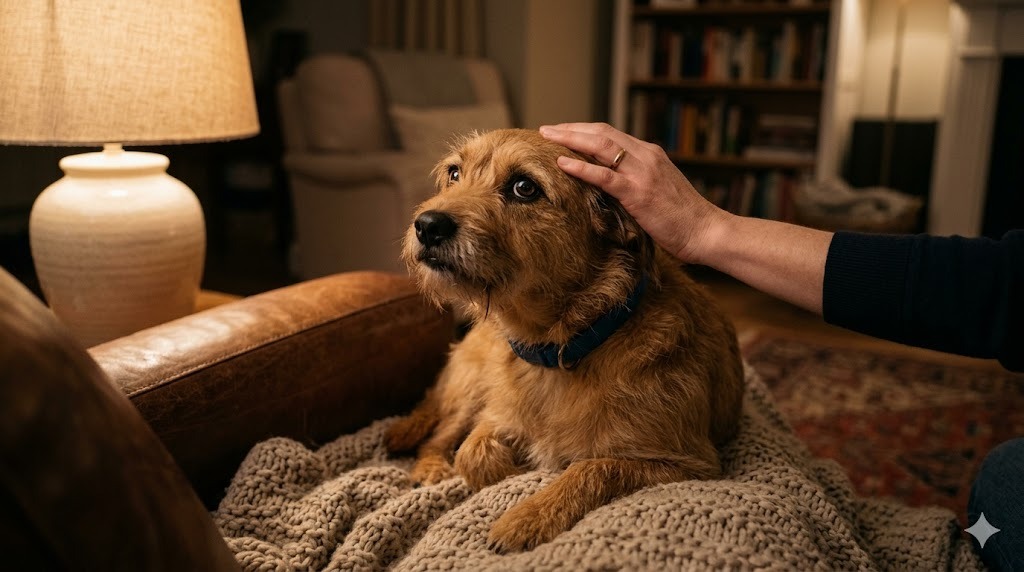
The natural remedies with real support for dog anxiety are Adaptil pheromones, L-theanine and other calming supplements, third-party-tested CBD, and - most underrated - more exercise and structured training. They genuinely help mild, situational anxiety; for severe cases like true separation anxiety or panic, they’re a supplement to a vet’s plan, not a replacement.
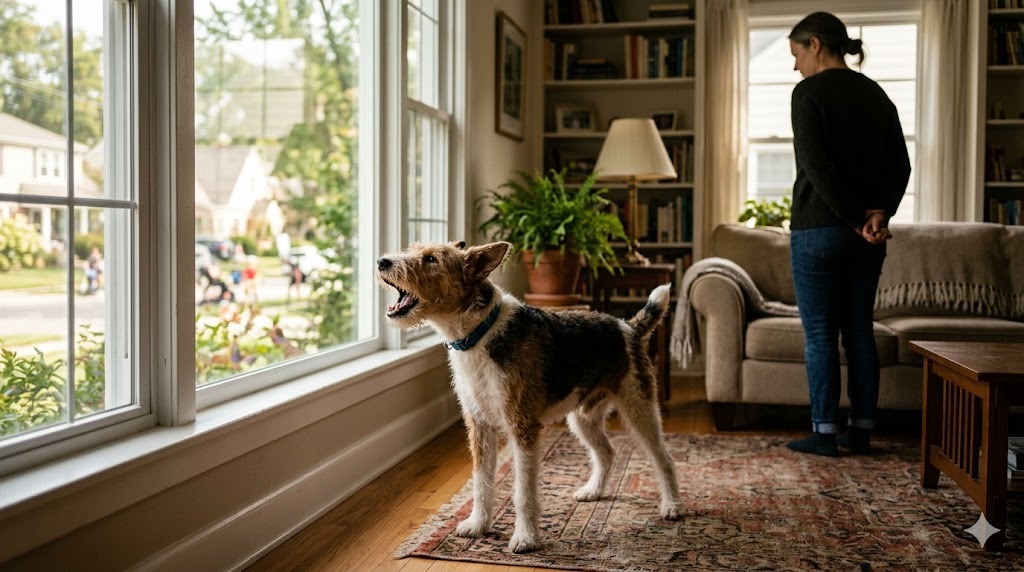
Roughly one in three dogs shows clinical signs of anxiety at some point in their life. The triggers range from thunderstorms and fireworks to separation, vet visits, new household members, and unidentifiable generalized stress. Owners who notice the signs - pacing, panting, whining, destructive chewing, refusing food, accidents in the house - usually try natural remedies before talking to a vet. That’s the right order in most cases.
This guide covers what the evidence actually shows about seven natural approaches, ranked from most to least supported. Each entry includes how it works, who it helps, who it doesn’t, and what to combine it with. None of these is a substitute for veterinary care in severe cases - but for mild to moderate anxiety, the right combination resolves most cases without medication.
Recognize when natural isn’t enough: If your dog is self-injuring (chewing paws raw, breaking teeth on crate bars), refusing food for more than 24 hours, hiding for days, or showing aggression, this is beyond home management. Schedule a veterinary behaviorist consultation. Severe anxiety often responds to short-course medication that natural remedies alone cannot replace.
Quick Summary: What Works Best for What
| Remedy | Best for | Speed | Evidence |
|---|---|---|---|
| Exercise | Generalized anxiety, energy-driven | Same day | Strong |
| Adaptil pheromone | Separation, household stress | 1-2 weeks | Strong |
| CBD oil | Acute episodes, generalized | 30-90 min | Moderate |
| L-theanine / Solliquin | Mild generalized anxiety | 2-4 weeks | Moderate |
| Compression vests (Thundershirt) | Thunder, fireworks | Same day | Moderate |
| Calming music | Separation, kennel stress | Same day | Moderate |
| Training (desensitization) | Trigger-specific phobias | 6-12 weeks | Strongest, slowest |
1. Exercise - The Underestimated Foundation
Most anxious dogs are under-exercised. A dog that gets 20 minutes of leash walking daily and lives indoors is not getting close to the activity level its body needs. Anxiety often resolves substantially with one simple change: doubling daily exercise.
What “enough” looks like
- Working breeds (Border Collie, Belgian Malinois, GSP): 2+ hours daily, with mental work
- Sporting breeds (Lab, Golden, Spaniels): 90 minutes daily
- Most medium breeds: 60-90 minutes daily
- Small breeds: 45-60 minutes daily, plus play
- Senior dogs: shorter walks but more frequently, plus mental enrichment
Why it works
Sustained exercise burns the stress hormone cortisol, increases serotonin and dopamine production, and tires the dog into actual rest rather than restless idling. Many “anxious” dogs are not anxious in a clinical sense - they’re under-stimulated and bored, presenting as anxiety.
What this doesn’t fix
True noise phobias (thunder, fireworks), separation anxiety in some cases, vet-clinic specific fear. Exercise is the foundation but not the whole solution for these.
2. Adaptil (Dog-Appeasing Pheromone)
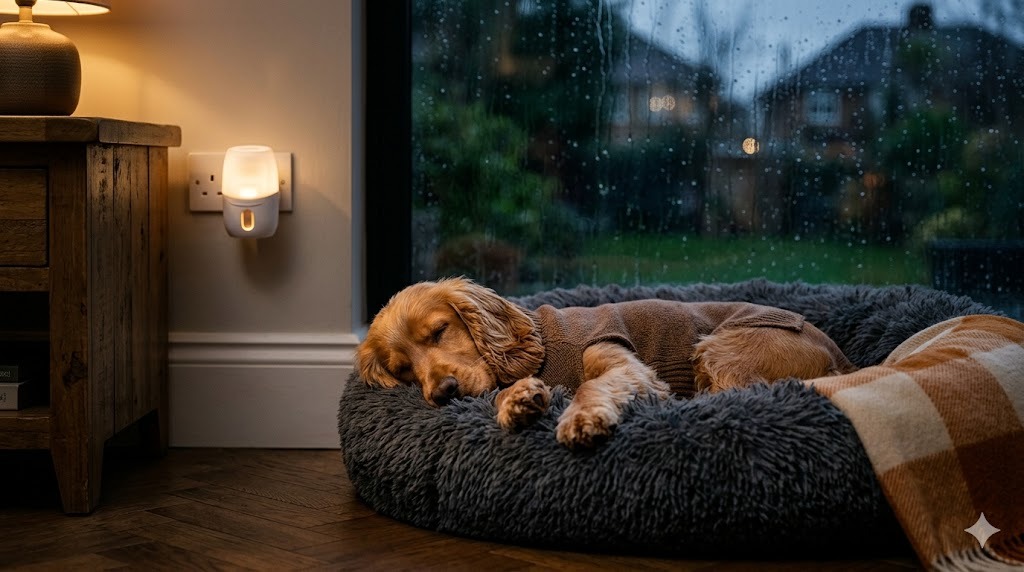
Adaptil is a synthetic version of the pheromone nursing mothers release. The pheromone signals calm and security to dogs from puppyhood. Adaptil products release it in three formats: plug-in diffusers (cover one room), collars (travel with the dog), and sprays (for short-term use on bedding or in carriers).
Best for
- New puppy in the home
- Separation anxiety (collar travels with the dog)
- General household tension
- Multi-dog conflicts
- Boarding kennel or daycare stays (collar)
What the evidence shows
Multiple peer-reviewed studies show measurable reduction in dog stress markers (cortisol, heart rate variability) with Adaptil. The effect is modest - roughly 20-30% improvement on stress scales - but real and replicable. Most useful as part of a broader plan, not as a standalone solution.
3. CBD Oil for Dogs
CBD (cannabidiol) is the non-psychoactive compound in cannabis. Dog-formulated CBD oils contain less than 0.3% THC and don’t cause intoxication. They reduce anxiety, inflammation, and seizure frequency in many dogs.
How to use it
For acute episodes (thunderstorm, vet visit): administer 30-60 minutes before the event. For chronic anxiety: daily dosing, building up gradually.
Standard dosing: 0.2 mg per kg of body weight, twice daily for chronic; 0.5 mg per kg for acute events. Start lower than your target dose for the first week.
What evidence shows
A 2019 Cornell study and several since have shown measurable anxiety reduction. Effect size is moderate - comparable to a low-dose pharmaceutical. Not a miracle, but not placebo either.
Quality matters
The CBD market is unregulated, and many products are mislabeled. Look for: third-party testing, certificate of analysis (COA) available online, dog-specific formulation, no melatonin or other added ingredients you don’t want.
4. L-Theanine and Solliquin
L-theanine is an amino acid found in tea that promotes calm without sedation. Solliquin is a veterinary calming supplement combining L-theanine with magnolia extract, phellodendron, and whey protein hydrolysate.
How it works
L-theanine increases alpha brain waves (associated with relaxed alertness) and modulates GABA, dopamine, and serotonin. It calms without making the dog drowsy or impaired.
Best for
- Mild to moderate generalized anxiety
- Long-term daily use
- Travel and kennel stress
- Dogs that don’t tolerate Adaptil
Timeline
Initial effect: a few hours. Full effect: 2-4 weeks of daily dosing. This is not an acute-rescue product - it’s a baseline lowering tool.
5. Compression Vests (Thundershirt)
A snug-fitting vest applies gentle, constant pressure across the dog’s torso. The pressure mimics swaddling and reduces anxiety in many dogs, similar to weighted blankets in humans.
Best for
- Thunderstorms
- Fireworks (Fourth of July, New Year’s)
- Vet visits and car rides
- Acute episodes
How to use it
Put it on 15-30 minutes before the expected stressor. The dog gets used to the sensation, then the actual storm or noise feels less overwhelming.
What doesn’t work
Constant 24/7 use desensitizes the dog to the pressure. Use only during anticipated stress events.
6. Calming Music and Sound Therapy
Specific frequencies and tempos measurably reduce dog heart rate and stress hormones. Multiple research groups (notably “Through a Dog’s Ear” and the Scottish SPCA) have shown that classical music, reggae, and audiobooks reduce anxiety in shelter dogs.
What to play
- Best for most dogs: Classical music, especially slow piano or strings
- Surprise winner: Reggae and soft rock (Scottish SPCA study)
- Surprise loser: Heavy metal increases stress markers
- Useful for separation: Audiobooks (the human voice creates a sense of presence)
How to use it
Play before and during stressful events: thunderstorms, fireworks, when you leave the house, during boarding. Many smart speakers have dog-calming playlists built in.
Cost
Free (Spotify, YouTube). One of the highest-value interventions in the category.
7. Behavior Training and Desensitization
The deepest intervention - and the slowest. Desensitization gradually exposes the dog to anxiety triggers at low intensity, builds positive association, and increases the threshold for fear response.
How it works
For thunder phobia: play thunder recordings at very low volume while feeding the dog favorite treats. Over weeks, gradually increase volume. The dog learns to associate the sound with food, not fear.
For separation anxiety: leave the house for 30 seconds and return calmly. Build to 1 minute, 5 minutes, 30 minutes, over weeks. The dog learns that absence is not abandonment.
For specific phobias (vet, car, vacuum): the same approach with the specific trigger.
Timeline
6-12 weeks for noticeable improvement. 6 months to a year for stable resolution. Worth the time investment - it’s the only approach that genuinely cures rather than masks.
When to bring in help
Certified positive-reinforcement trainers, veterinary behaviorists, or applied animal behaviorists. Avoid trainers who use punishment-based methods on anxious dogs - it makes things measurably worse.
When to See a Veterinary Behaviorist
The signs that home remedies have reached their limit:
- Self-injury (chewing paws, breaking teeth)
- Refusing food for over 24 hours
- Aggression toward family members
- Hiding for days
- Loss of bladder/bowel control during episodes
- Symptoms unchanged after 6+ weeks of consistent natural management
A veterinary behaviorist can prescribe short-term medication (fluoxetine, trazodone, gabapentin) that works alongside natural remedies. The medication isn’t lifelong - many dogs taper off after 6-12 months once behavior training establishes new responses.
Putting It Together: A Practical Plan
For thunder/firework phobia
- Adaptil collar daily
- Thundershirt before storms
- Calming music during events
- CBD oil 60 minutes before predicted weather
- Desensitization training between events
For separation anxiety
- Increase daily exercise
- Adaptil diffuser at home + collar travels with the dog
- Audiobooks during absences
- L-theanine daily
- Gradual departure training (5 seconds → 5 minutes → 1 hour)
For vet/car anxiety
- Thundershirt for the trip
- CBD oil 60 minutes before
- Adaptil spray on car seat or carrier
- Build positive car associations between vet visits
For generalized anxiety
- Double daily exercise
- Adaptil diffuser at home
- Daily L-theanine or Solliquin
- Calming music background
- Track triggers in a journal for 4 weeks to identify patterns
Frequently Asked Questions
How long until I see results?
Adaptil: 1-2 weeks. CBD: 30-90 minutes (acute) or 2-3 weeks (chronic). L-theanine: 2-4 weeks. Exercise: same day. Training: 6-12 weeks. Compression vests: immediate.
Can I use multiple remedies together?
Yes - most natural remedies are designed to layer. Adaptil + L-theanine + exercise + music is a common starting combination with no interactions.
Is CBD safe for dogs?
Dog-formulated CBD with under 0.3% THC is safe. Side effects are rare: mild drowsiness, dry mouth. Never give your dog human CBD with THC - even trace amounts cause significant issues in dogs.
How do I find a good CBD brand?
Look for: third-party testing certificates available online, dog-specific formulation, US-grown hemp, organic certification, no added xylitol (toxic to dogs), and consistent dosing per bottle.
Does Thundershirt really work?
For about 70% of dogs with noise phobias, yes. The other 30% show no response. It’s worth trying because it’s a one-time purchase with no side effects.
Will exercise alone solve my dog’s anxiety?
For mild generalized anxiety in under-exercised dogs, often yes. For specific phobias (thunder, separation), no - exercise is a foundation but needs to combine with targeted interventions.
Are essential oils safe for dogs?
Mostly no. Many essential oils (tea tree, citrus, pine, eucalyptus, peppermint) are toxic to dogs. Even “calming” oils like lavender can cause issues. Stick to dog-formulated pheromones and supplements rather than diffusing oils.
Should I give my dog Benadryl for anxiety?
No. Benadryl causes mild drowsiness but doesn’t address anxiety mechanisms. It’s also unsafe to give regularly without veterinary supervision. Ask your vet about trazodone or gabapentin if you need a short-term acute solution.
Can puppies have CBD?
Most CBD brands recommend not using it on puppies under 4-6 months. Puppy anxiety is usually best addressed with socialization, training, and Adaptil first.
Will my dog grow out of anxiety?
Sometimes. Puppy anxiety often resolves with consistent socialization and gentle handling. Adult-onset anxiety usually requires active management. Senior-onset anxiety often signals cognitive decline (canine dementia) and warrants a vet visit.
Our Final Recommendation
Start with the cheapest and broadest intervention: exercise. Many “anxiety” cases resolve substantially with proper exercise alone. From there, add Adaptil as the daily baseline. For acute episodes, layer CBD oil and a Thundershirt. Consider L-theanine or Solliquin if generalized anxiety persists.
Run this stack for 6 weeks. If meaningful improvement is absent, schedule a veterinary behaviorist consultation rather than continuing to try more supplements. At that point, short-course medication paired with desensitization training resolves the vast majority of cases that natural remedies don’t.
Anxiety is treatable. The dog doesn’t have to live this way, and neither do you.
Related Reading
- Best Calming Donut Dog Beds
- Best Calming Aids: Adaptil, ThunderEase
- How to Stop Dog Barking: Training and Products
- Best CBD Oil for Dogs Reviewed
- Best Pet Insurance 2026
Last updated: May 2026.