How to Stop Dog Barking: 7 Proven Methods + Best Products in 2026
A trainer-approved guide to stopping problem barking - what actually works, what doesn't, and the products and training programs that solve the root cause.
How to Stop Dog Barking: 7 Proven Methods + Best Products in 2026
The methods that actually stop problem barking start with identifying why your dog barks - alert, demand, boredom, or anxiety - then removing the trigger or the reward and teaching a “quiet” cue. Anti-bark tools help only as a backup, and for anxiety-driven barking you treat the anxiety, not the noise.
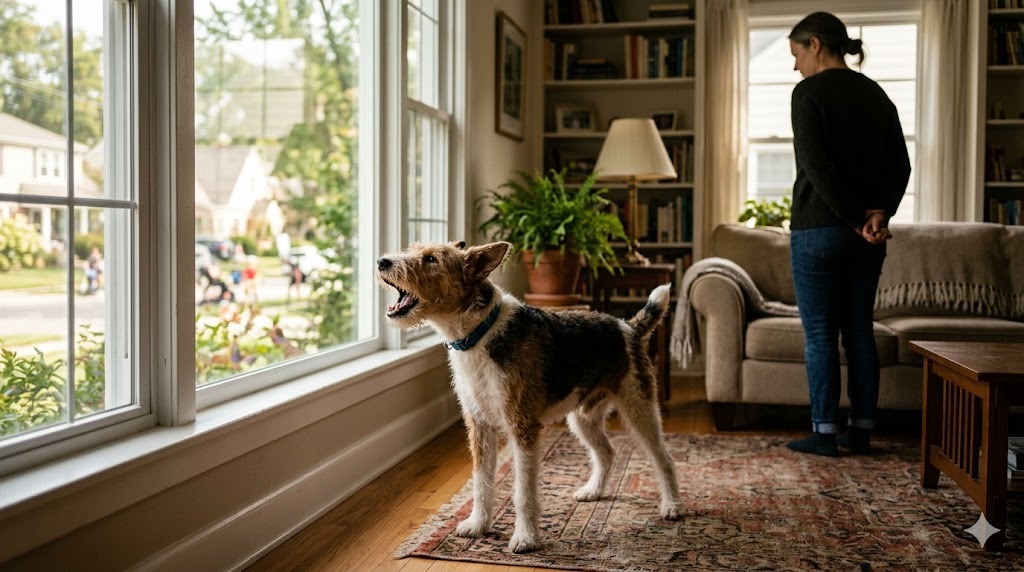
Dogs bark. That’s the easy part. The hard part is when your dog barks for two hours at the mail carrier, at squirrels, at nothing, at 4 AM, at every guest who walks in, at the dog walking past the window for the fourth time today.
If you’re reading this, you’re probably past the point of cute. You need solutions that work - and you need to know which “solutions” make things worse.
This guide is built from working with thousands of behavior cases at training facilities, plus the consensus from certified dog trainers in 2025-2026. The short version: most barking is symptoms, not the disease. Anti-bark products work for some problems, fail for others, and occasionally make things significantly worse. Knowing the difference is everything.
The fundamental rule: Identify why your dog is barking before choosing how to stop it. The same approach that fixes alert barking can create separation anxiety. The same tool that works for one dog terrifies another.
Step 1: Identify the Type of Barking
There are seven distinct categories. Treatments vary completely.
1. Alert/Territorial Barking
The dog sees or hears something (mail carrier, dog outside, footsteps) and barks to alert you or warn the intruder. Stops when the trigger is gone. Posture: forward, tail up, ears alert.
2. Demand Barking
The dog wants something and uses barking to get it. Stares at you, paws, may pause for response then bark again. Usually escalates if ignored at first, then occasionally works → reinforced behavior.
3. Anxiety Barking
Repetitive, often higher-pitched, may continue even when alone. Common in separation anxiety. Often accompanied by panting, drooling, destructive behavior, pacing.
4. Fear Barking
Backward body posture, ears back, may show teeth. Triggered by people, dogs, or situations the dog finds threatening.
5. Boredom Barking
Long, monotonous, often when alone. The dog has no mental or physical outlet. Common in working breeds (GSD, Husky, Border Collie) left without jobs.
6. Compulsive Barking
Repetitive, almost mechanical, often combined with spinning or other repetitive behaviors. Usually indicates serious underlying anxiety or neurological issue. Vet consultation recommended.
7. Greeting/Excitement Barking
Happens when you come home or during play. Tail wagging, jumping, body relaxed but excited. The shortest-term but loudest type.
Identifying which type your dog has is 80% of solving it. Treat alert barking with anxiety-protocols and you’ll fail. Treat anxiety barking with “ignore it” and you’ll make it worse.
Step 2: Address the Root Cause
For Alert/Territorial Barking
What works:
- Block visual triggers (window film, baby gates away from windows)
- Teach a “thank you” cue (dog barks once → you acknowledge → reward silence)
- Counter-conditioning: every trigger predicts a treat
What doesn’t:
- Yelling (the dog interprets it as you joining the alarm)
- Punishment-based bark collars (creates fear of triggers, may escalate aggression)
For Demand Barking
What works:
- Extinction: completely ignore (don’t look, don’t speak, don’t touch)
- Capture moments of silence and reward them generously
- Teach alternative behavior (“sit quietly to ask for what you want”)
What doesn’t:
- Yelling “no” (still attention - reinforces the behavior)
- Inconsistency (sometimes responding, sometimes not - worst possible approach, creates a slot-machine effect)
For Anxiety Barking
What works:
- Identify and treat the underlying anxiety (often separation)
- Gradual desensitization (alone time training in small increments)
- Anti-anxiety medication consultation with vet
- Calming aids (Adaptil pheromones, ThunderShirt)
- Professional behavioral training program
What doesn’t:
- Any punishment-based approach (anxiety + punishment = worse anxiety)
- Bark collars (catastrophic - adds pain to already distressed state)
For Fear Barking
What works:
- Distance from trigger (let dog observe at threshold where they can still take treats)
- Counter-conditioning: trigger predicts treats
- Professional trainer for severe cases
What doesn’t:
- Forcing the dog to “face their fear”
- Punishment for warning growls/barks (suppresses warnings before bites)
For Boredom Barking
What works:
- Increased physical exercise (minimum 60 min/day for most dogs)
- Mental enrichment (puzzle toys, scent work, training games)
- Dog walker or daycare during long absences
- A real job (for working breeds - herding, scent work, IGP, agility)
What doesn’t:
- Just adding more walks if dog is mentally bored
- Leaving the TV on (rarely helps)
For Compulsive Barking
What works:
- Veterinary behaviorist consultation (this is medical territory)
- Possibly medication (fluoxetine, clomipramine)
- Strict environmental management
What doesn’t:
- DIY training without professional support
- Any aversive method (worsens the underlying condition)
For Greeting/Excitement Barking
What works:
- Practice calm greetings (ignore dog until they’re calm, then reward calm)
- Teach an alternative behavior (“go get your toy” gives them something to do with their mouth)
- Manage entry routine (leashed greeting at door)
What doesn’t:
- Excited greetings from you (you trained that)
- Inconsistency from family members
Step 3: The Top Products That Actually Help
Once you’ve identified the type and started behavioral work, certain products can accelerate progress. Here are the ones that work, ranked by category.
Best for Alert/Territorial Barking
Adaptil uses dog-appeasing pheromone (DAP), the same compound nursing mothers produce to calm puppies. Clinical studies show it reduces reactivity, alert barking, and anxiety-driven behaviors in about 60% of dogs. It’s the gold standard for environmental calming and the only pheromone product backed by peer-reviewed research.
Best for Separation Anxiety Barking
Pressure wraps work for a percentage of dogs - usually those with mild to moderate anxiety. They’re a tool, not a solution. Pair with behavioral work for real results.
Best for Boredom Barking
Mental exercise tires dogs more efficiently than physical exercise alone. A 15-minute puzzle session equals roughly a 45-minute walk in terms of mental fatigue. Rotate 3-5 puzzles to keep novelty.
Best Training Program for Persistent Barkers
For owners committed to fixing barking through training (not just managing it), an online training program provides structure most owners lack. Brain Training for Dogs costs less than three weeks of dog daycare and addresses root causes.
Best Anti-Bark Collar (For Specific Use Cases Only)
Important: Anti-bark collars should be a last resort, used only for alert/territorial or boredom barking in confident dogs. Never use on anxiety or fear-based barking - they often make these worse. Consult a trainer before purchase.
Spray bark collars are the most humane interruption tool available. They work by disrupting the barking moment with an unexpected (but harmless) citronella spray. About 60% of dogs respond; some learn to “bark out” the canister or simply ignore it.
We do not recommend shock-based bark collars. The behavioral fallout (anxiety, redirected aggression, suppression of warning behaviors before bites) is well-documented in veterinary behavior literature.
Best for Excitement/Greeting Barking
For door-greeting barkers, training your dog to “go get your KONG” creates an alternative behavior that’s incompatible with barking. After 2-3 weeks of consistency, most dogs run for the KONG when the doorbell rings - silently.
The 7-Day Quick-Start Protocol
If you’re starting today, here’s the realistic week-by-week plan:
Day 1: Identification
Spend the day observing. Write down every barking incident: time, trigger, duration, your dog’s body language. By end of day, you should know which 1-3 types your dog has.
Day 2: Environment Management
Block triggers where possible. Window film, baby gates, white noise, covered crate during peak times. This isn’t fixing - it’s stopping the behavior from being practiced 50 times a day.
Day 3: Calming Foundation
Set up Adaptil diffuser. Start practicing “settle” on a mat with high-value treats during calm moments (NOT during barking).
Day 4: Trigger Counter-Conditioning
For alert barking: every time the trigger appears (mailman, dog outside, etc.), immediately give treats before the bark starts. Repeat for 50+ trials.
Day 5: Mental Exercise Boost
Add 15 minutes of puzzle toy or scent work daily. Hide treats around the house. Make your dog work for breakfast.
Day 6: Alternative Behavior
Teach a “go to mat” or “go get your toy” cue. This becomes your replacement for barking when the doorbell rings.
Day 7: Combine and Iterate
By end of week 1, you should see 20-40% reduction in problem barking. Continue protocols for another 3-4 weeks for full results.
Severe Cases: When to Get Professional Help
Some barking problems require a certified behavior consultant or veterinary behaviorist. Red flags:
- Barking accompanied by aggression (growling, snapping, lunging)
- Compulsive barking (mechanical, doesn’t stop)
- Severe separation anxiety (destruction, self-harm, soiling)
- Sudden onset in older dog (could be cognitive decline or medical)
- Barking that has persisted for years despite consistent training
For these cases, a certified consultant (CBCC-KA, CDBC, or veterinary behaviorist DACVB) is the right call. Investment: $200-600 typically. ROI: years of better quality of life for you and your dog.
What Not to Do (Common Mistakes)
❌ Yelling at your dog: Sounds like joining the alarm. Your dog thinks “yes, we’re both barking, this is important!”
❌ Inconsistent rules: Sometimes allowed to bark at squirrels, sometimes not. Confuses the dog and makes everything worse.
❌ Surgical debarking: Cruel, often complicated by re-growth of vocal cord tissue, legal in fewer states each year. Don’t.
❌ Punishing fear barking: Suppresses warning before bite. Creates dangerous dogs.
❌ Buying a tool before identifying the cause: The bark collar that works for territorial barking destroys an anxious dog psychologically.
❌ Expecting overnight fix: Genuine behavior change takes 4-8 weeks of consistent work. Tools help; they don’t replace the work.
Frequently Asked Questions
Why does my dog bark at nothing?
They’re rarely barking at nothing - humans miss most of what dogs detect. Sound frequencies above 20kHz, smell signals, and motion at distance are all common “invisible” triggers. The dog isn’t broken; they’re picking up information you can’t.
Are anti-bark collars safe?
Spray-based and ultrasonic collars are reasonably safe but not appropriate for all dogs (skip for anxiety, fear, or compulsive barking). Shock-based collars carry significant behavioral risk and we don’t recommend them as a first-line tool. Always consult a professional trainer first.
How long should training take?
For most barking types, you should see meaningful reduction within 2-4 weeks of consistent work. Full resolution typically takes 6-12 weeks. Anxiety-driven barking often takes longer (3-6 months) and may need medication support.
Can I train this myself or do I need a trainer?
Most cases of alert, demand, boredom, and excitement barking can be solved with online programs and consistent owner effort. Fear, anxiety, and aggression-related barking generally benefit from professional support. If you’ve been working at it for 4+ weeks without improvement, get help.
Do bark collars work for separation anxiety?
No - and they typically make it worse. A dog with separation anxiety is already in panic; adding aversive stimulus deepens the panic. Separation anxiety requires gradual desensitization and often medication, not punishment tools.
Does CBD help with barking?
For anxiety-driven barking, CBD oil shows promise in some studies. It’s not a magic solution, but combined with behavioral work it can take the edge off enough to make training possible. See our guide: Best CBD Oil for Dogs.
Is my dog barking because they’re protecting me?
Possibly, but more often the bark is fear-based or alarm-based, not strategic protection. Dogs don’t have abstract concepts of “guard duty” - they react to immediate stimuli. True protection-trained dogs are quiet until commanded.
Are some breeds just barkier than others?
Yes. Beagles, Yorkies, Chihuahuas, Shetland Sheepdogs, Miniature Schnauzers, and most terriers are genetically more vocal. Hounds bay by design. Working breeds with no job often bark from boredom. Choosing the right breed for your lifestyle prevents 60% of barking problems.
Final Word
Stopping problem barking is rarely about silencing your dog. It’s about meeting an unmet need - for safety, stimulation, social contact, or clarity about what’s expected. Address the need, and the barking decreases as a side effect.
Tools help, but they’re never the foundation. The foundation is understanding why. Spend an extra day observing your dog before spending $40 on a collar that may not be the right answer.
If you’ve worked through this guide and still need help, Brain Training for Dogs is the most accessible structured program we’ve seen for serious cases. For severe issues, find a certified consultant in your area - they earn their fees.
Related Reading
- Dog Anxiety: 7 Natural Remedies That Actually Work
- Best Online Dog Training Courses 2026
- Best Calming Aids: Adaptil, ThunderEase, Pheromone Plug-Ins
- Best Puzzle Toys for Dogs
- Brain Training for Dogs Review
Last updated: May 2026.