Calming Aids for Dogs: Pheromones, Wraps, Supplements and the Evidence
The kinds of calming aid for dogs sorted by how much evidence stands behind them - pheromone diffusers and collars, pressure wraps, supplements, CBD and the prescription gel for noise fear - which trigger each is meant for, and when anxiety needs a vet instead.
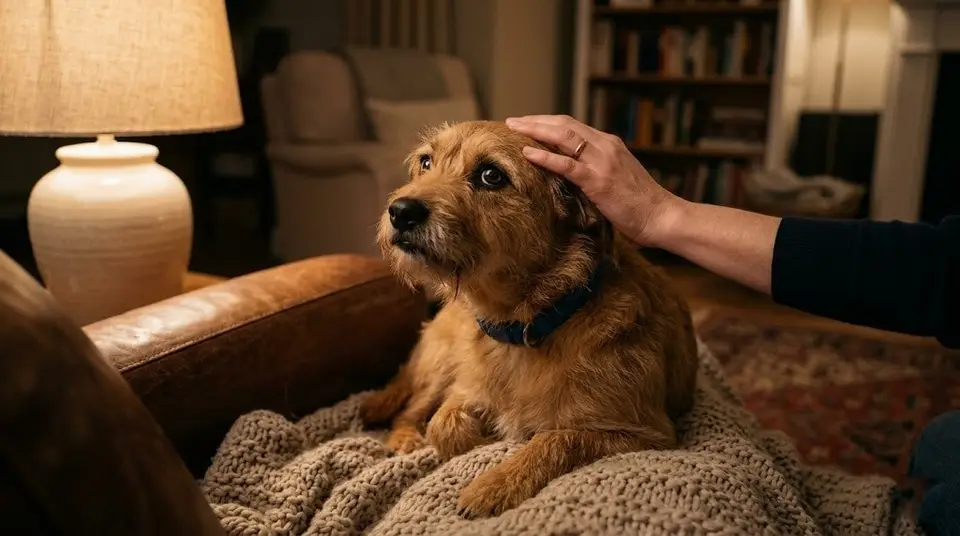
 AI illustration
The one calming product with FDA approval for a specific problem is a prescription gel for noise aversion such as fireworks (dexmedetomidine, sold as Sileo). Pheromone diffusers and collars have some published trials but limited evidence, pressure wraps help some dogs a little, and calming supplements have less behind them still. Match the aid to the trigger - and for severe anxiety, talk to a vet about actual treatment rather than another diffuser.
This is a reading guide to what the products, the labels and the published sources say - not veterinary advice. Doses, prescriptions and anything about a specific animal are your vet’s call; if your pet is unwell, contact a vet before you buy anything.
Many dogs show signs of anxiety triggered by specific situations - thunderstorms, fireworks, separation, vet visits, household changes. The market for calming products has exploded into hundreds of options ranging from pheromone diffusers to herbal supplements to prescription medications. This guide sorts them by what stands behind them, using the labels, the makers’ own pages and the published reviews.
The honest answer: for mild situational anxiety, a calming aid may take the edge off. For severe fears, calming aids work alongside training and, when necessary, prescription medication; on their own they are not enough. Don’t expect any single product to solve significant anxiety.
How strong is the evidence? A 2023 review of the evidence on noise fears in dogs found good evidence for several prescription anti-anxiety medicines, which belong to your vet, and judged that most alternative products - supplements, herbal remedies, pheromones - are unlikely to be enough when used alone. It calls the study findings for pheromones inconsistent, found one open-label study for L-theanine, and cites a trial that found no anxiety-reducing effect for CBD. Choose based on evidence and the dog’s specific trigger, not on marketing claims.
The Kinds of Calming Aid
| Kind | Evidence | Meant for |
|---|---|---|
| Prescription noise gel (dexmedetomidine) | FDA-approved for noise aversion | Fireworks, thunder, gunshots |
| Pheromone diffuser, collar or spray | Some trials, inconsistent results | Everyday stress at home; time away from home |
| Pressure wrap | A small effect is possible in some dogs | Storms, fireworks, vet visits, travel |
| Supplement chews (L-theanine and others) | Thin; one open-label study for L-theanine | Mild anxiety, alongside training |
| CBD | Unproven for anxiety | A question for your vet |
Pheromones
Pheromone products copy the appeasing pheromone nursing mothers release, and they come as a plug-in diffuser for the home, a collar that releases it for about four weeks and travels with the dog, and a spray for the carrier or car. Some brands sell the same pheromone under different names. They have been tested in published trials, and the 2023 review calls those findings inconsistent: in a blinded trial with thunder recordings, beagles wearing a pheromone collar had lower fear scores but hid more; other studies were open-label and combined the pheromone with training; and in a survey about firework fear, 28.8% of the 316 owners who had tried pheromone products called them effective - no more, the review notes, than a placebo effect would give. An earlier systematic review judged six of the seven dog studies it found to be insufficient evidence. Expect a modest effect at best.
A diffuser suits stress at home - a new pet, a move, a change in the household. Plug it in the room where the dog spends most time and give it a few weeks before you judge it. A collar suits time away from home: boarding, daycare, vet visits, travel.
The prescription gel for noise fear
For dogs with a real fear of noise (thunder, fireworks, gunshots), there is a prescription option. According to its US label (dexmedetomidine, sold as Sileo) it is indicated for the treatment of noise aversion in dogs.
How it is used: The gel goes onto the gum, between cheek and gum, where it is absorbed - if the dog swallows it, it may not work. The label says to give the first dose about 30-60 minutes before the noise, or as soon as the dog shows the first signs of fear, or when the noise starts. If the noise goes on, the dose can be repeated, with at least two hours between doses and no more than five doses per event.
Who it is not for: The label excludes dogs with severe cardiovascular, respiratory, liver or kidney disease, and it has not been evaluated in puppies under 16 weeks. Whoever handles the syringe needs impermeable gloves, because the drug can be absorbed through human skin. It is planned with your vet ahead of predictable events such as fireworks nights.
Supplement chews
Calming chews usually combine L-theanine, B vitamins, L-tryptophan and similar ingredients. Makers state their own timings; independent evidence for these ingredients in dogs is thin - for L-theanine, the 2023 review found one open-label study. If you try one alongside training, tell your vet what you are giving, especially if your dog is on medication.
CBD
CBD (cannabidiol) is widely sold for canine anxiety. The 2023 review cites one trial in which dogs heard firework recordings after cannabidiol or the prescription drug trazodone: it found no evidence of an anxiety-reducing effect for cannabidiol, unlike for trazodone. Treat it as unproven.
The FDA has not approved CBD for any use in animals and recommends that pet owners talk with their veterinarians; its safety page, written about people, lists liver injury and interactions with other medicines among CBD’s risks. We do not give doses here. Never combine it on your own with a prescription sedative or anti-anxiety drug.
Pressure wraps
A snug wrap applies constant, gentle pressure around the dog’s torso, on the same idea as swaddling. The 2023 review says a small beneficial effect is possible and that some individual dogs may benefit - not all do. Introduce it at a calm time first, check the fit, and look for rubbing if it stays on for long; follow the maker’s guidance on how long to leave it on.
Matching the Tool to the Trigger
These are the usual building blocks, to help you plan and to talk with your vet. Anything prescription - Sileo, trazodone, anti-nausea medication - is the vet’s decision, including whether it can be combined with anything else.
Thunderstorms and fireworks
- A safe place to retreat to: an inner room, closed curtains, white noise or music
- A pressure wrap, if your dog has taken to it
- A pheromone diffuser started well before a known event
- For a real noise fear: ask your vet about prescription medication ahead of the season, not on the night
Separation anxiety
- Gradual departure training matters most - products do not resolve separation anxiety
- A pheromone diffuser or collar as a low-risk extra
- Something to do while you are out: a lick mat or a food toy
- For serious cases, vets can prescribe medication approved for canine separation anxiety, used together with a training plan
Vet visits
- Pheromone spray on the carrier or in the car
- “Happy visits” between appointments, with treats and no procedures
- A lick mat to distract during the exam
- Ask the clinic in advance about pre-visit medication if your dog panics
Car rides
- Short, pleasant trips to build a better association
- A crate or crash-tested harness for safety
- For true motion sickness, ask your vet - there is a prescription medicine approved to prevent vomiting from motion sickness in dogs
General stress at home
- Predictable routines
- Enough exercise and mental work for the dog’s age and breed
- A quiet place of its own
- A pheromone diffuser as an extra
The Layered Approach
Severe or chronic anxiety responds best to several things together, not a single product.
Layer 1: Environment
- Reduce exposure to triggers where possible
- Create safe spaces (a covered crate, a bed in a quiet room)
- Predictable routines and enough exercise
Layer 2: Training
- Desensitization to specific triggers
- Counter-conditioning (changing the emotional response)
- Help from a qualified trainer or veterinary behaviorist for severe cases
Layer 3: Low-risk aids
- A pheromone diffuser or collar
- A pressure wrap
- A supplement, with your vet’s knowledge
Layer 4: Prescription medication (if needed)
- For severe cases or those not responding to the layers above
- Chosen, dosed and monitored by your vet or a veterinary behaviorist
Where People Go Wrong
Buying single products expecting cures
Anxiety responds to a layered approach. A single product rarely solves severe problems.
Skipping the training
Products manage signs. Training changes the underlying pattern. Both are needed.
Wrong product for the trigger
Pheromones are aimed at general stress, not at a severe specific fear. The prescription noise gel is for noise events, not for separation anxiety.
No plan before the event
Ask your vet about medication for firework season weeks ahead. The night itself is too late to get a prescription and to learn how to give it.
Adjusting doses yourself
If a prescribed product doesn’t seem to work, go back to the vet. Do not give more, and do not add other products on your own.
Reaching for human medicine
Human anti-anxiety drugs are not safe to share with a dog. Doses and metabolism differ.
Buying on marketing alone
“Natural” doesn’t mean “effective.” Look for what stands behind the claim.
What to Avoid
Essential oils on or around the dog
The ASPCA’s poison control center says concentrated essential oils can be a danger for pets, that concentrated tea tree oil may cause problems with only seven or eight drops, and that it is best not to apply oils to a pet at all. Of diffusers it says a short session in a secured area the pet cannot reach is not likely to be an issue.
Most herbal “calming” treats
Little independent evidence stands behind them.
Human anxiety medications
Don’t give Xanax, Valium, or other human medicines to dogs without veterinary direction.
Benadryl as a sedative
Diphenhydramine can make a dog drowsy but does not treat fear.
CBD without testing
The FDA says many CBD products it tested did not contain the amount of CBD they claimed, and that it is looking into reports of unsafe levels of contaminants, THC among them. Check the third-party certificate of analysis.
When to See a Veterinary Behaviorist
Some anxiety is beyond what home management can handle:
Signs to escalate
- Self-injury (chewing paws raw, breaking teeth on a crate)
- Aggression toward family members when anxious
- Refusing food for a day or more
- Loss of bladder or bowel control during episodes
- Persistent panic despite weeks of consistent home management
- Several anxiety problems at once
What a veterinary behaviorist provides
- A diagnosis of the specific problem
- Prescription medication options
- A training plan made for your dog
- Coordination with your regular vet
Cost and insurance
Fees vary widely by region, and serious cases take months of structured work. Some pet insurance policies cover behavior consultations and medication - check your policy.
Frequently Asked Questions
Are calming aids safe?
Each kind has its own cautions. For pheromone products, the maker reports no known side effects. Tell your vet about any supplement. For CBD, the FDA’s safety page lists liver injury and interactions with other medicines. Prescription products have label warnings your vet will go through with you.
How long do calming aids take to work?
- Pheromones: give them a few weeks before judging
- Supplement chews: makers state their own timings; independent evidence is thin
- The prescription noise gel: the label says to give it 30-60 minutes ahead or at the first signs of fear
- A pressure wrap: you will see quickly whether your dog settles in it
Can I combine calming aids?
A pheromone diffuser, a pressure wrap and calming music can be used together. Anything with an active ingredient - supplements, CBD, prescription medication - should only be combined on your vet’s advice.
Will my dog need calming aids forever?
For event triggers (fireworks, storms), only around those events. For chronic anxiety, possibly long-term, with the aim of needing less as training takes effect.
Are these aids habit-forming?
Pheromones and pressure wraps are not. For anything prescribed, ask your vet how it is started and stopped.
Should I use sedatives like acepromazine?
That is a question for your vet. The 2023 review describes acepromazine as contraindicated for noise fears: it tranquilizes without appearing to reduce anxiety, and may even heighten sensitivity to sound.
What if nothing works?
Ask for a referral to a veterinary behaviorist. They can identify the specific problem and prescribe appropriate treatment.
Are there natural alternatives?
The 2023 review judged that most alternative products are unlikely to be enough for noise fears when used alone. Pheromone trials have given inconsistent results; L-theanine has one open-label study; CBD for anxiety is unproven.
Will exercise alone solve anxiety?
It helps a restless, under-stimulated dog. It will not fix a specific fear of thunder, of being left alone, or of the vet.
Can puppies have calming aids?
Pheromone products are marketed for puppies settling into a new home. The prescription noise gel has not been evaluated in puppies under 16 weeks. Discuss anything else with your vet.
Summing Up
For mild stress at home, a pheromone diffuser is a low-risk first thing to try; expect a modest effect at best. For a real fear of noise, the prescription gel approved for noise aversion is a conversation to have with your vet before the season. A pressure wrap suits some dogs and not others. Supplements and CBD have little behind them, and anything with an active ingredient goes past your vet first.
The most important point: anxiety responds to layers, not single products. Environment and training come first; aids and, where needed, veterinary treatment sit on top.
Related Reading
- Dog Anxiety
- How to Stop Dog Barking: Find the Cause, Then Train
- Back-to-School Separation Anxiety in Dogs
Last updated: October 2026. Facts on the prescription gel are taken from its current US label; pheromone and supplement facts from the makers’ pages and the reviews cited.