Ibizan Hound
The Ibizan Hound is a tall, lean, elegant sighthound from the Balearic Islands of Spain, built for hunting rabbits across rugged, rocky ground.
🗓️ Last reviewed: July 2026
Overview
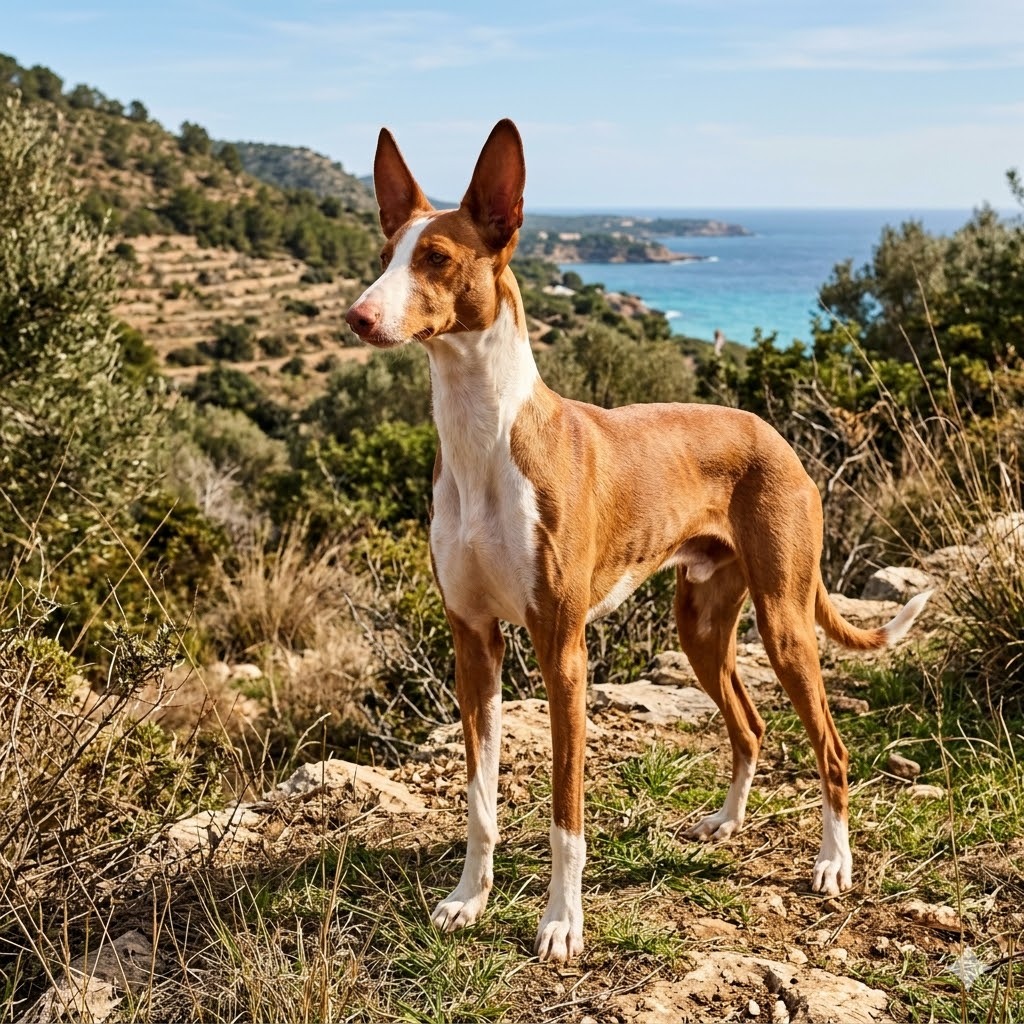
The Ibizan Hound is a tall, lean, elegant sighthound from the Balearic Islands of Spain, built for hunting rabbits across rugged, rocky ground. Instantly recognisable by its enormous erect ears, slender athletic frame, and warm red-and-white or solid-red coat, the "Beezer" is a graceful, agile hunter and a gentle, playful companion. It is one of the great canine athletes - a remarkable jumper capable of clearing surprising heights from a standstill, which makes tall, secure fencing essential. Like all sighthounds it carries a strong prey drive, needs enclosed space to run, and cannot be trusted off-leash where wildlife may bolt.
History & Origins
The Ibizan Hound takes its name from Ibiza, one of Spain's Balearic Islands, though it is found across the archipelago and the nearby Spanish mainland. It belongs to an ancient family of Mediterranean rabbit-hunting hounds with a lean, big-eared, upright build that has changed little over the centuries.
For a long time the breed was linked romantically to the hunting dogs of ancient Egypt, whose art shows similar tall, erect-eared hounds. As with several such breeds, modern genetic study has shown the connection is one of type and function rather than direct descent, and the Ibizan Hound is best understood as a long-established Mediterranean island breed.
On the islands, farmers used packs of these hounds to hunt rabbits over stony, scrubby terrain, relying on a rare combination of sight, scent, and acute hearing - those huge ears are working equipment. The dogs had to be tough, frugal, and agile to survive and earn their keep.
The breed reached the United States in the 1950s and was recognised by the AKC in 1979. It remains uncommon but treasured as a companion, show dog, and lure-coursing athlete around the world.
Appearance
Tall, lean, and finely built, the Ibizan Hound is all length and elegance. Adults stand 56-72 cm (22-28 in) at the shoulder and weigh 20-25 kg (45-55 lb); males are noticeably larger than females. The body is racy, with a long neck, deep but narrow chest, tucked waist, and long, straight legs.
Key features:
- Coat: two types - a smooth, short coat and a rougher wire coat; both are hard and weather-resistant.
- Colour: red and white in various patterns, or solid red, or solid white.
- Ears: the defining feature - very large, upright, and highly mobile, pointing in all directions.
- Eyes: small, amber, giving a soft, alert, intelligent expression.
- Nose: flesh-coloured, blending with the coat.
- Head: long and narrow, elegant and chiselled.
- Tail: long and low-set, carried in a variety of positions when moving.
The overall look is deer-like: light, athletic, and graceful, made for agility and endurance.
Temperament & Character
The Ibizan Hound is gentle, sensitive, and playful, forming close bonds with its family while retaining the self-possessed independence of a sighthound. Indoors it is quiet and mannerly; outdoors it becomes a spirited, agile athlete.
The breed is intelligent and can be clever to the point of mischief - Ibizans are known escape artists who problem-solve their way over and through barriers. Their remarkable jumping ability means a fence that would contain most dogs is nothing to a determined Beezer, so tall, secure fencing is a must.
With strangers the breed is reserved and may be shy, so early confidence-building matters. With family and children it is affectionate and playful, generally gentle, though its speed and bounce can overwhelm small children. Its strong prey drive means small fleeing animals trigger an instant chase.
Care
Coat & Grooming
Both the smooth and wire coats are easy to care for. The smooth coat needs only a weekly brush; the wire coat benefits from occasional extra grooming to keep it tidy. Shedding is moderate and manageable, and baths are needed only occasionally.
With little body fat and a fine coat, the Ibizan Hound feels the cold and appreciates a warm coat in winter and a soft, draught-free bed. Check the large ears weekly, trim nails regularly, and brush the teeth several times a week.
Exercise & Activity Needs
This is an energetic, agile breed that switches between explosive activity and long, contented rest - a classic sprint-then-nap sighthound. Adults need around 60-90 minutes of daily exercise, including opportunities to run and jump safely.
Because of the powerful prey drive and jumping ability, off-leash freedom is only safe inside fully enclosed, wildlife-free areas with high fencing. Lure coursing, agility, and fenced running games suit the breed beautifully. Long leash walks and scent-based enrichment round out its needs and keep the busy mind occupied.
Health & Lifespan
Average lifespan is 12-14 years.
The Ibizan Hound is generally a healthy, hardy breed. Points to watch:
- Anaesthetic sensitivity - typical of lean sighthounds; use an experienced vet.
- Cold intolerance - the fine coat and low body fat mean chilling is a risk.
- Seizures and axonal dystrophy - occasionally seen in the breed.
- Allergies - some individuals have sensitive skin.
- Injuries - the athletic, jumping lifestyle can lead to strains and cuts.
With sensible care and responsible breeding, most Ibizan Hounds enjoy long, active lives.
Feeding & Nutrition
Adults typically eat around 2-3 cups of quality food per day, split into two meals, adjusted for size and activity. The breed should look lean and racy, with ribs lightly covered and a clear waist - carrying extra weight burdens the fine, athletic frame.
Feed a complete, balanced diet suited to an active dog. As with other deep-chested sighthounds, avoid vigorous exercise within an hour of meals to reduce bloat risk, and consider two smaller meals rather than one large one.
Pros & Cons
Pros
- Striking, elegant, and unique in appearance.
- Gentle, quiet, and mannerly indoors.
- Athletic and gifted at agility and lure coursing.
- Low-maintenance coat.
- Generally healthy and long-lived.
Cons
- Exceptional jumper - needs very tall, secure fencing.
- Strong prey drive - unsafe off-leash near wildlife.
- Can be shy or reserved without early socialisation.
- Sensitive to cold and to harsh training.
- Clever escape artist that tests boundaries.
Best Suited For
- Owners who can provide tall, escape-proof fencing.
- Active homes interested in agility, lure coursing, or fenced running.
- People wanting an elegant, gentle, quiet indoor companion.
- Households with older, considerate children.
Not suited for homes with low or open fencing, owners seeking an off-leash trail dog in wildlife areas, harsh handlers, or those unable to invest in early socialisation and secure containment.
Ibizan Hound puppy growth chart
A typical growth curve for a medium breed like the Ibizan Hound, estimated from its adult weight of 20-25 kg. Puppies vary with sex, genetics and diet, so treat this as a guide - for your own puppy, use the puppy weight predictor.
| Age | Typical weight | % of adult |
|---|---|---|
| 2 mo | 5.4-6.8 kg | 27% |
| 3 mo | 8-10 kg | 40% |
| 4 mo | 10-12.5 kg | 50% |
| 6 mo | 13.6-17 kg | 68% |
| 9 mo | 17-21.3 kg | 85% |
| 12 mo | 19.4-24.3 kg | 97% |
| Adult | 20-25 kg | 100% |
Ibizan Hound - frequently asked questions
Why do Ibizan Hounds need such tall fences?
They are extraordinary jumpers, able to clear surprising heights from a standstill. A fence that contains most dogs is easily cleared by a motivated Ibizan, so tall, secure fencing is essential.
Are Ibizan Hounds good with children?
Generally yes with older, considerate children - they are gentle and playful. Their speed and bounce can overwhelm toddlers, so supervision is wise.
Can an Ibizan Hound be let off the leash?
Only inside fully enclosed, wildlife-free spaces. The prey drive is strong, and a bolting rabbit or cat will trigger a fast, single-minded chase.
What is the difference between the smooth and wire coats?
Both are hard and weather-resistant. The smooth coat is short and sleek; the wire coat is rougher and slightly longer, needing a little extra tidying. Care needs are otherwise similar.
Are they easy to train?
They are intelligent but independent and sensitive. Patient, reward-based training works well, while harsh methods cause them to shut down.
🧠 Test yourself: guess the dog
Three clues from our quiz bank, each about another of our dogs. Can you name them?
Clue 1.Considered one of the most intelligent dog breeds, this hypoallergenic dog is the national breed of France.
It's the Poodle (Standard, Miniature, Toy) - read the full profile →
Clue 2.This powerful black-and-tan guardian was once used by Roman armies to drive and protect herds of cattle.
It's the Rottweiler - read the full profile →
Clue 3.Compact and tireless, this versatile hunter has produced more dual champions, in both show and field, than almost any other sporting breed.
It's the Brittany - read the full profile →
💛 Adoptable Ibizan Hounds near you
Real dogs of this breed (and close mixes) waiting in shelters and rescues right now, live from Petfinder. We have no affiliation and earn nothing - if someone catches your eye, the link goes straight to their shelter. New to adopting? Start with our adoption guide.
Widget not loading (some ad-blockers hide it)? Search directly on petfinder.com.