Best Automatic Dog Feeders 2026: WiFi, App-Controlled, and Smart Options
Compare the top automatic dog feeders of 2026 - PetSafe, Petlibro, Wopet, PetKit, and PetnetSmart. WiFi vs basic, portion control, and which is right for you.
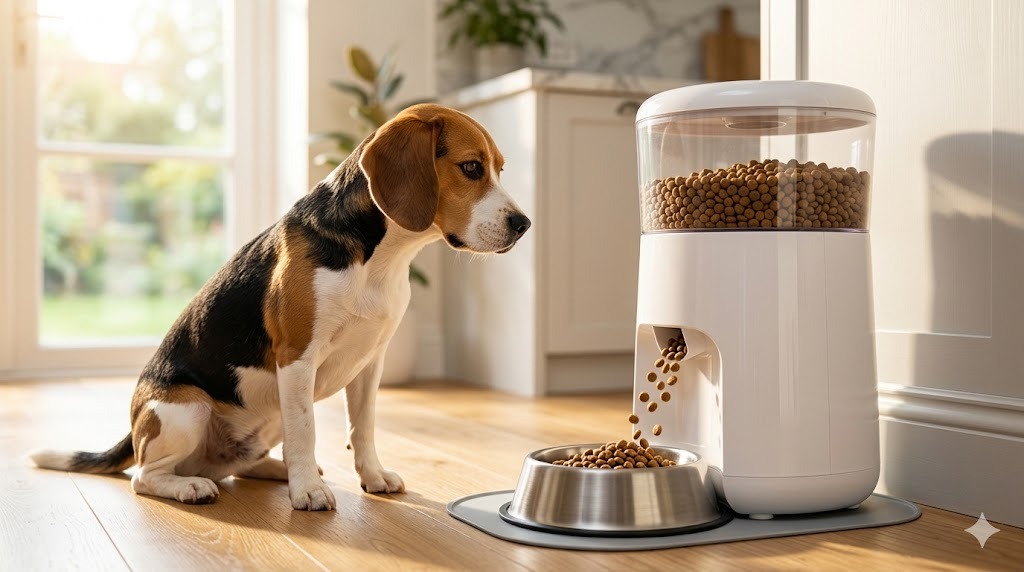
Best Automatic Dog Feeders 2026: WiFi, App-Controlled, and Smart Options
The best automatic dog feeder for most owners is a WiFi, app-controlled model with reliable portion control and a battery backup - PetSafe, Petlibro, and PetKit lead the field, and a built-in camera is worth it if you want to check in remotely. A simple non-WiFi feeder is fine if you only need plain scheduled meals.
An automatic feeder solves three problems at once: portion control (the #1 cause of canine obesity), schedule consistency (helps gastric and behavioral health), and flexibility when life happens (late dinner meetings, sudden travel). Modern feeders go further - WiFi connectivity, voice messages, integrated cameras, even individual pet ID via smart collars.
But not all feeders are equal. Cheap models jam, leak food, fail to dispense the programmed amount, or lose programming during power outages. Premium models are expensive but solve real problems. This guide compares the best 8 options in 2026, with honest assessments of what’s worth paying for.
Note: Automatic feeders work best for kibble. For wet food, you’ll need refrigerated automatic feeders (rare and expensive). For fresh/raw diets, automatic feeding isn’t practical - those need refrigeration and same-day serving.
At a Glance: Top Picks
| Rank | Feeder | Best For | Capacity | WiFi | Price |
|---|---|---|---|---|---|
| 🥇 #1 | PetSafe Smart Feed (Gen 2) | Reliability + WiFi | 24 cups | Yes | $170 |
| 🥈 #2 | Petlibro Granary Camera | Built-in camera | 17 cups | Yes | $130 |
| 🥉 #3 | PetKit Fresh Element Solo | Modern design | 16 cups | Yes | $100 |
| #4 | Wopet 7L Smart Feeder | Budget WiFi | 30 cups | Yes | $80 |
| #5 | Furbo 360 Dog Camera | Premium camera + treats | 4 cups | Yes | $220 |
| #6 | Cat Mate C3000 | Cats, wet food capable | 3 cups (cool) | No | $85 |
| #7 | PetSafe Healthy Pet Simply Feed | Reliable basic WiFi-free | 24 cups | No | $90 |
| #8 | Sure Petcare SureFeed Microchip | Multi-pet households | 1 meal | No | $180 |
🥇 Best Overall: PetSafe Smart Feed (Generation 2)
PetSafe Smart Feed is the most-recommended automatic feeder by veterinarians and dog trainers for one reason: it actually works reliably for years. The Generation 2 (2023) added WiFi without requiring a hub, fixed many of the firmware bugs from Generation 1, and added battery backup so power outages don’t disrupt feeding.
App features:
- Schedule up to 12 meals per day
- Adjust portions remotely
- “Pause meal” option for vet appointments or travel
- Meal logs to track when food was actually dispensed
- Multiple user permissions (family members)
Real-world reliability: Owner forums consistently report 95%+ accurate dispensing over multi-year use. The most common failure mode is when extremely large kibble (over 1 inch pieces) jams the dispenser. Smaller kibble (most premium brands) works perfectly.
Best for: Most owners. The reliability premium over budget options is worth it long-term.
🥈 Best with Camera: Petlibro Granary Camera Feeder
If you want to combine a feeder and a check-in camera in one device, the Petlibro Granary delivers both for less than buying separately. The camera isn’t quite as good as a dedicated Furbo or Petcube, but it’s good enough to confirm your dog is eating and check on them remotely.
Best for: Apartment dwellers, single-dog households, owners who travel for long workdays and want visual confirmation.
🥉 Best Modern Design: PetKit Fresh Element Solo
The most attractive feeder on the list, with a minimalist design that fits modern interiors. Solid build quality, sealed hopper for kibble freshness, accurate portion control. The app is clean and reliable.
Best for: Owners who care about how the feeder looks in their home, apartments where pet equipment is visible.
#4: Wopet 7L Smart Feeder
For budget-conscious owners or owners wanting to test the automatic feeder concept before investing in premium, Wopet is a reasonable starting point. It’s the value pick that does most of what premium feeders do, with some reliability trade-offs.
Best for: First-time auto-feeder buyers, larger dogs that need bigger capacity, value-focused shoppers.
#5: Furbo 360 Dog Camera with Treat Tossing
Furbo is the premium camera-feeder combination. It’s primarily a camera with treat-tossing functionality - small holding capacity (about 30 small treats), not really for full meal automation. But for engagement, anxiety management, and check-ins during work, it’s the gold standard.
Use case: Set Furbo to toss a small treat when your dog barks (positive distraction). Hear bark notifications and check in with two-way audio.
Not for: Replacing meal feeders. Buy alongside a real meal feeder.
#6: Cat Mate C3000 (For Cats with Wet Food Capability)
The only feeder on this list that handles wet food through internal ice packs and a cooling chamber. 3 meal compartments with timer-based opening.
Caveat: Doesn’t replace cold-storage feeding - at most you get one day of wet food held safely.
Best for: Cat owners feeding partial wet diets while at work.
#7: PetSafe Healthy Pet Simply Feed (Basic Non-WiFi)
If you want PetSafe quality without the WiFi cost or potential complexity, this is the simplest reliable option. Same hopper and dispenser as the Smart Feed, just without app connectivity. Set the schedule on the device and walk away.
Best for: Owners who want simplicity, don’t want another app, don’t need remote adjustment.
#8: Sure Petcare SureFeed Microchip Feeder
The unique pick for multi-pet households. Uses your pet’s existing microchip (or an included RFID tag) to identify which pet is approaching, then only opens for the correct pet.
Solves: One dog eating the other dog’s food, cats stealing from dogs, dieting pets being sabotaged by household siblings.
Caveat: Single-meal capacity per fill - not a multi-meal automatic. More of a “selective access” tool than a scheduled feeder.
Best for: Multi-pet households, dieting pets, special-diet pets in mixed households.
Features That Actually Matter
After testing 15+ feeders, here’s what to prioritize:
Must-Haves
✅ Accurate portion dispensing - Test with kitchen scale on first fill. Major brands ±5% accuracy.
✅ Sealed hopper - Prevents kibble staling, mice, humidity damage. Many cheap feeders skip this.
✅ Battery backup - When power goes out, your dog still gets fed. PetSafe, Petlibro top brands include.
✅ Programmable portion sizes - Multiple meals per day need different portion sizes (rare puppy needs 4× small meals).
✅ Easy cleaning - Top section should be removable + dishwasher safe.
Nice-to-Haves
- WiFi/app (great for remote work, business travel)
- Voice recording (calling pet to meal can help confused/elderly dogs)
- Camera (peace of mind, not necessary)
- Slow-feed mode (helps fast eaters who inhale food)
Don’t Bother With
- “Anti-jam” claims that aren’t actually anti-jam
- AI portion sizing (gimmicks more than science)
- “Pet recognition” cameras (microchip recognition like SureFeed is actually useful; visual AI mostly is not)
Daily Meal Planning Math
How Much Food Does Your Dog Need?
Use feeding guidelines from your kibble brand as a starting point. General range:
| Dog Weight | Daily Food (Premium Kibble) | Daily Meals |
|---|---|---|
| 10 lbs | 0.5-0.75 cups | 2 |
| 25 lbs | 1.25-1.5 cups | 2 |
| 50 lbs | 2.25-2.75 cups | 2 |
| 75 lbs | 3.5-4 cups | 2-3 |
| 100 lbs | 4.5-5 cups | 2-3 |
Feeding Schedule Recommendations
Most dogs: 2 meals daily, 12 hours apart (e.g., 7 AM + 7 PM).
Puppies: 3-4 meals daily until 6 months, then 2.
Senior or special-needs dogs: Sometimes 3 smaller meals for blood sugar stability or digestion.
Dogs with bloat risk (deep-chested breeds like GSD, Doberman, Great Dane): 3 smaller meals to reduce stomach distention; avoid feeding around exercise.
Setting Up Your Feeder Successfully
Step 1: Choose the Right Kibble Size
Most feeders are designed for kibble between 1/4 inch and 1 inch in diameter. Very large kibble (Mastiff or Great Dane-sized) may jam smaller hoppers. Test before committing to a feeding routine.
Step 2: Calibrate Portions
On first use, manually trigger a portion and weigh it. Adjust device settings if it’s dispensing more or less than expected. Repeat after any firmware updates.
Step 3: Transition Gradually
Don’t immediately switch your dog from hand-feeding to automatic. Start with the automatic feeder dispensing one meal a day while you do the other manually. After a week, transition fully.
Step 4: Position Smartly
Place feeder on hard floor (not carpet - kibble pieces will scatter). Wall outlet within 6 feet for plug-in models. Some dogs prefer corner placement; others prefer center of feeding area.
Step 5: Establish Meal Calls (Optional)
If your feeder has voice recording, record a consistent meal call (“Bear, dinner time!”). Plays before each meal, helps dogs anticipate feeding.
Troubleshooting Common Issues
”Feeder Jammed”
Solutions:
- Use slightly smaller kibble
- Don’t overfill hopper (leave 10% air space)
- Clean dispenser quarterly (food dust accumulates)
- Tap hopper before each refill
”App Disconnects”
Solutions:
- Move feeder closer to WiFi router
- Use 2.4 GHz network (most feeders don’t support 5 GHz)
- Reset feeder firmware
- Replace batteries (low backup can cause WiFi issues)
“Dispenses Wrong Amount”
Solutions:
- Re-calibrate with new kibble
- Replace dispensing wheel if old
- Update firmware
- Some feeders need adjustment for very small kibble
”Pet Won’t Eat From It”
Solutions:
- Place at floor level initially (some feeders are elevated)
- Skip the auto-dispense for a meal, hand-place food in dispenser bowl
- Some dogs are noise-sensitive - try quieter models
- Make first few meals “special” with high-value food
Frequently Asked Questions
Can my dog get used to an automatic feeder?
Almost always, yes. About 95% of dogs adapt within 1-2 weeks. Some take a few days; very rare dogs reject automation entirely. Start gradually.
Are automatic feeders safe for puppies?
For puppies 8+ weeks transitioning to dry food, yes. The schedule discipline is actually helpful for housetraining. Use the slow-feed mode if available - puppies tend to inhale food.
Should I use it with wet food?
Almost no automatic feeders handle wet food well (refrigeration is required). The Cat Mate C3000 is the only exception, and it’s limited to one day. For mixed feeding (kibble + wet), use the auto-feeder for kibble meals, hand-feed the wet meals.
What if my dog has medication that goes with food?
Manually administer medication with one meal you control. The auto-feeder can handle the other meals.
Does it work if I have multiple dogs?
It’s complicated. Standard feeders dispense at scheduled times - both dogs will eat from the same bowl. For separate portion control, use SureFeed (microchip-based) or have multiple feeders in different rooms with doors closed.
How long can the food stay in the hopper?
Kibble is shelf-stable but loses freshness. In sealed-hopper feeders, you can have 2-4 weeks of kibble. In non-sealed feeders, refill weekly for best taste.
What if there’s a power outage?
Premium models (PetSafe, Petlibro) include battery backup. Cheap models lose programming and need reset. Battery backup feeders dispense even during outages, which is critical for long absences.
Are these feeders safe with crates?
Use outside the crate. Most feeders are too large for inside-crate placement, and your dog should associate the crate with rest, not feeding.
Can I leave for vacation and let the feeder handle everything?
For 3-5 day trips, yes - with a backup. Always have someone check on your dog daily (even just a quick visit to verify everything is working). Auto-feeders can fail unexpectedly, and dogs can get unwell without you noticing remotely.
What about cats?
The same feeders work for cats. PetSafe and Petlibro both have models marketed for cats specifically. Cats may take longer to adapt (more food-aversion behaviors).
Our Final Recommendation
For most dog owners, the PetSafe Smart Feed (Gen 2) is the right balance of reliability, features, and price. Five years of refinement, WiFi without hub, battery backup, and a generous 24-cup capacity make it the safe default.
For owners who want to check in visually on their pet, Petlibro Granary Camera combines feeder + camera at a price point lower than buying both separately.
For budget shoppers, Wopet 7L is acceptable but expect a 3-5 year lifespan vs PetSafe’s 7-10.
For multi-pet households where one dog steals food, SureFeed Microchip solves a problem no other feeder can.
An automatic feeder pays for itself in obesity prevention alone - most dogs gain 5-15 lbs over their lifetime from over-feeding by owners. Controlled portions matter more than you think.
Related Reading
- Best Dog Water Fountains: Filtered, Quiet, Stainless
- Best Slow Feeders for Fast Eaters
- How Much Does It Cost to Feed a Dog Per Month?
- Best Smart Pet Cameras: Furbo vs Petcube
- Best Smart Litter Boxes
Last updated: May 2026.