Biodegradable Pet Poop Bags 2026
What 'biodegradable' poop bags actually do - the truth about compostable vs biodegradable claims, which products genuinely break down, and what works in 2026.
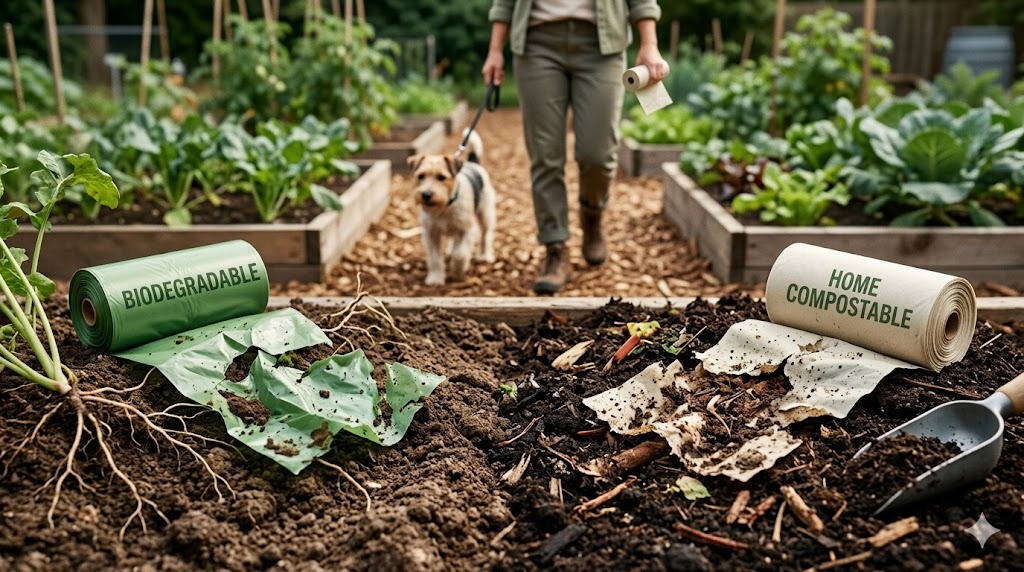
The honest truth about poop bags: most “biodegradable” bags are still plastic that lingers for decades. Only certified compostable bags - look for the ASTM D6400, BPI, or “OK Compost” seal - actually break down, and only in an industrial composter, not your backyard or a sealed landfill. If the eco-claim carries no certification, treat it as marketing.
The poop bag aisle is a masterclass in environmental marketing. Whether you are cleaning up after one of the big dog breeds or a small terrier, the same rules apply. Bags advertise “biodegradable,” “compostable,” “plant-based,” “earth-friendly,” and “eco” - and most of them, in real-world disposal conditions, end up as plastic in a landfill for decades. The terms are loosely regulated and frequently misused. A small subset of products actually break down in reasonable timeframes; most don’t.
This guide explains the difference between the marketing terms, which standards are meaningful, what actually happens to a poop bag once it goes in your trash, and which products actually deliver on their environmental claims. We’ll also address whether eco-friendly bags are even worth the premium, given how dog waste is typically disposed of.
The Term Confusion
Biodegradable
Any material can technically be called biodegradable - given enough time and the right conditions. The term has almost no regulatory meaning. A “biodegradable” bag might break down in 90 days under industrial composting conditions and persist for 50+ years in a landfill.
Compostable
A stricter term. Compostable products must break down into non-toxic components within a specific timeframe (usually 6 months) under specific conditions. Two standards matter:
- ASTM D6400 (U.S.) - for industrial composting facilities
- EN 13432 (Europe) - similar industrial standard
- Home compostable - even stricter, requires breakdown at ambient temperatures
Bio-based
Made partially or fully from plant materials (cornstarch, sugarcane). Doesn’t automatically mean biodegradable - bio-based plastics can be designed to last as long as fossil plastics.
Oxo-biodegradable
Older technology using metal additives that cause plastic to fragment in sunlight. Now considered environmentally problematic - fragments into microplastics rather than truly biodegrading. Banned in the EU.
What Actually Happens to a Poop Bag
Once you put a bagged dog mess in your trash, almost all U.S. waste flows to:
- Landfill (most common) - buried under more waste. Lack of oxygen, light, and moisture prevents virtually all biodegradation. “Biodegradable” bags persist for decades just like regular plastic.
- Incineration (some metros) - burned for energy. Bag material is largely irrelevant.
- Industrial composting (very rare for residential waste) - actually breaks down compostable bags.
This means:
- “Biodegradable” claims for products destined for landfill are largely meaningless
- Compostable bags only deliver if they reach industrial composting (or you have a hot home compost system)
- For most owners, the choice is largely environmental conscience rather than measurable impact
What Compostable Bags Actually Achieve
If your bag does reach industrial composting (some metros now compost food waste and accept certified compostable bags), it breaks down within months into water, CO2, and biomass. That’s a real environmental win.
If your bag does not reach industrial composting, the environmental benefit shrinks dramatically. Some research suggests compostable plastics in landfills may actually be slightly worse than conventional plastics because they’re more likely to release methane during slow anaerobic breakdown.
The bottom line: compostable poop bags are valuable if you have access to industrial composting that accepts them. Without that, the benefit is more about avoiding fossil-derived materials than about actual decomposition.
The Standards That Matter
When evaluating eco-friendly poop bag claims, look for explicit certifications:
- BPI (Biodegradable Products Institute) certified - U.S. equivalent of ASTM D6400
- TÜV OK Compost INDUSTRIAL - European industrial composting
- TÜV OK Compost HOME - home composting (rare and demanding)
- ASTM D6400 - direct mention in marketing
- EN 13432 - European standard
If a bag claims “biodegradable” without one of these certifications, the claim is essentially meaningless.
Genuinely Compostable Bags
Two brands stand out for actually carrying valid certifications:
BioBag
The original certified compostable pet bag brand. ASTM D6400 and BPI certified. Made from plant starches.
Earth Rated PoopBags
Mixed line - they sell both conventional plastic and certified compostable. Pay attention to which version you’re buying.
The Most Common “Eco” Bags That Aren’t Compostable
Several popular brands market eco-friendly bags that don’t carry genuine compostable certification:
- Most “biodegradable” bags on Amazon without ASTM D6400 or BPI seal
- Oxo-biodegradable bags (the additive technology that’s been discredited)
- “Recycled plastic” bags (still plastic, just from a different source)
These can still be reasonable choices - they may reduce raw material extraction or be slightly less environmentally bad - but they don’t deliver on the implied “breaks down naturally” claim.
Should You Pay More for Compostable Bags?
A practical framework:
Buy compostable if
- Your city has industrial composting and accepts pet waste bags
- You have a hot composting system at home (rare)
- Environmental impact is a major personal value and you accept the limited end-of-life benefit
- You want to avoid fossil-derived materials regardless of disposal endpoint
Conventional bags are fine if
- Your waste goes to landfill anyway (most owners)
- Budget is a primary consideration
- You’re using thick or sturdy bags (less wasted with bag failures and double-bagging)
The honest reality: for most owners, the environmental difference between premium compostable and decent conventional plastic is small if both end up in the same landfill. The difference becomes large only when compostable bags reach proper composting.
Quality Matters More Than Material
A bag that tears mid-use, requiring a second bag plus paper towels, has worse environmental impact than a single sturdy conventional bag. Focus on quality:
- Thickness: at least 0.7 mil for reliable strength
- Size: wide and deep enough that you’re not stretching
- Tie handles preferred over plain bags (faster, less mess)
- Dispenser-friendly roll size
Dispensers and Holders
A clip-on dispenser attached to your leash means you always have bags. Most cost $5-10.
What About Flushing?
Most poop bags should not be flushed - they clog plumbing and cause sewage issues. A small number of bags are labeled flushable, designed to break down in water. Even with these:
- Check that your home plumbing handles them (older or septic systems often can’t)
- Many municipal sewer systems don’t want any waste bag, flushable or not
- The waste itself can technically be flushed alone (after detaching from bag) in homes connected to standard sewer
For most owners, trash disposal is the right answer regardless of bag type.
Alternative: At-Home Pet Waste Composting
For backyards, dedicated pet waste compost systems (Doggie Dooley and similar) act as in-ground septic systems for dog waste. Pros: keeps waste out of landfill. Cons: requires backyard space, careful management, not for small breeds only (volume needs to justify maintenance).
Pet waste compost should never be used on edible plants - pathogens persist even in well-managed systems. If you garden alongside your pets, our list of pet-safe plants covers which greenery is safe to grow around dogs.
Frequently Asked Questions
What’s the difference between biodegradable and compostable?
Biodegradable means a material will eventually break down (eventually being a wide range). Compostable means it breaks down into non-toxic components within months under specific conditions. Compostable is the stricter, more meaningful term.
Do biodegradable bags really break down?
Most don’t, in real-world disposal. Landfills lack the conditions (oxygen, light, moisture, microorganisms) needed for biodegradation. A “biodegradable” bag in landfill persists for decades.
Are compostable bags worth the extra cost?
Only if you have access to industrial composting that accepts pet waste bags, or you compost at home with a hot system. Without those, the environmental benefit shrinks dramatically.
Can I compost dog poop at home?
In dedicated systems, yes (Doggie Dooley and similar). Don’t add to your garden compost - pathogens persist and contaminate vegetable beds.
What about flushing dog waste?
Possible for the waste itself (in homes on standard municipal sewer, with caution). Bags should not be flushed except for specifically labeled flushable options, and even those cause issues in many systems.
Are oxo-biodegradable bags eco-friendly?
No, current consensus. They fragment into microplastics rather than truly biodegrading. Banned in the EU as of 2021.
Which brands are actually certified compostable?
BioBag and the compostable version of Earth Rated are the most widely available genuinely BPI/ASTM D6400 certified options.
How long do compostable bags last on the shelf?
Most are good for 6-12 months from opening. They degrade in storage faster than conventional plastic - buy what you’ll use within a season.
Final Word
For most owners, the environmental benefit of premium compostable poop bags is smaller than marketing suggests - because the bag and its contents end up in landfill regardless of material. If you have access to industrial composting, certified compostable bags (BioBag, Earth Rated compostable) deliver real environmental benefit. Without it, focus on bag quality and quantity reduction.
A thick, reliable bag - biodegradable or not - that doesn’t fail mid-use is more environmentally sound than a flimsy bag (of any material) that requires double-bagging. Get the size and thickness right; choose compostable only if your disposal pathway supports it.
Related Reading
Last updated: May 2026.