Best Pet Odor Removers 2026
Honest guide to pet odor removers in 2026 - why enzyme cleaners beat masking sprays, which products actually work, and how to clean each surface type.
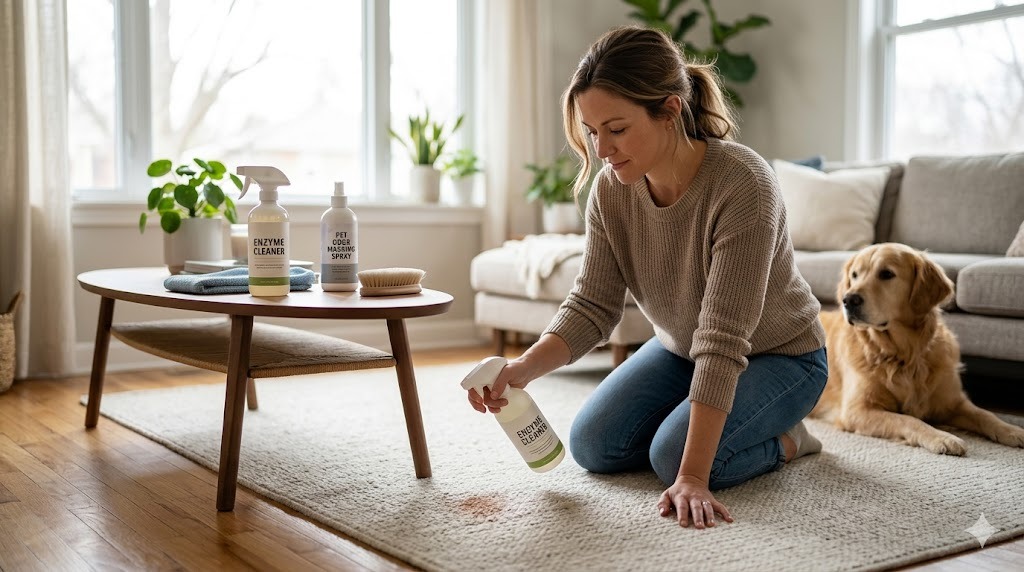
The only pet odor removers that actually work are enzyme cleaners - they digest the uric acid crystals in urine that cause the smell rather than perfuming over them. Skip the scented “neutralizer” sprays; soak the spot, let the enzymes sit, and air-dry. A masked smell always comes back.
The pet stain and odor removal aisle is a graveyard of products that smell stronger than the pet mess they’re supposed to remove. Walking by with a candle scent is not cleaning. Most “odor neutralizers” are perfumed surfactants - they break the surface tension of urine and add a smell on top, but they leave the actual cause of the odor (uric acid crystals) intact. A week later, the smell returns because the crystals were never removed.
The science of pet odor removal is settled. Uric acid crystals don’t dissolve in water, soap, vinegar, or alcohol. They require enzymes that break uric acid into evaporable components. This guide is about identifying which enzyme products actually contain working enzymes, how to use them correctly, and how to fix odors that have set in.
Why Pet Urine Smells Forever
Cat and dog urine contains uric acid that crystallizes as it dries. Once crystallized, the smell isn’t really “smell” in the usual sense - it’s a continuous low-level release of ammonia compounds. Humidity activates it (which is why a “clean” spot smells worse on a rainy day). Heat activates it (which is why steam cleaners often make pet odors worse, not better).
This means:
- Masking sprays don’t work beyond the initial spritz
- Soap and water don’t work on set-in messes
- Vinegar doesn’t work despite popular advice
- Bleach doesn’t work and is dangerous (ammonia + chlorine = toxic gas)
- Steam cleaning makes it worse by re-activating crystals
- Enzymes work by chemically breaking down the crystals
The Enzyme Cleaner Standard: Anti-Icky-Poo and Nature’s Miracle
The two products that have decades of evidence behind them are Anti-Icky-Poo (used by professional crime scene cleaners) and Nature’s Miracle (the consumer original). Both contain bacterial enzymes that consume organic waste.
Why species-specific formulas matter
The “Cat Just For Cats” version contains stronger formulations targeted at cat urine (which contains compounds dog urine doesn’t); it is one reason cat owners tend to have a harder cleanup than dog households. The “Dog” version is calibrated for dog mess. Using the dog version on cat mess is the most common reason people say “Nature’s Miracle didn’t work for me.”
How to Apply Enzyme Cleaners (Most People Get This Wrong)
The number one reason enzyme cleaners “don’t work” is incorrect application. The bacteria need time to consume the waste - if you spray and wipe, they don’t have time.
Correct procedure for carpet/fabric
- Blot up as much liquid as possible before applying cleaner. Stand on towels if you have to.
- Apply enzyme cleaner generously - soak the area, not mist it. Use enough to penetrate down to the carpet backing.
- Cover with a damp towel to keep the area moist. Enzymes work only while wet.
- Wait 15-30 minutes minimum, ideally 60 minutes for set-in stains.
- Blot, don’t scrub. Scrubbing damages fibers and pushes liquid deeper.
- Air dry naturally. Don’t use heat (kills enzymes mid-action).
For old/set-in stains
- Apply enzyme cleaner, cover with plastic wrap or a damp towel.
- Leave for 8-12 hours (overnight is ideal).
- Re-apply the next day if odor persists.
- Repeat up to 3-4 times on severely soiled areas.
For carpet stains older than 6 months, you may need to lift the carpet and treat both sides plus the pad.
When Enzymes Aren’t Enough
Some messes require additional steps before enzyme treatment will fully work.
Old urine soaked into wood subfloor
Enzyme spray on the carpet won’t reach. Steps:
- Lift carpet and pad
- Apply enzyme cleaner directly to subfloor; let dwell 24 hours
- Once dry, seal subfloor with shellac-based primer (BIN, KILZ Original)
- Replace pad and carpet (the old pad almost certainly needs replacement)
Urine on hardwood floors
- Wipe excess with paper towels
- Apply enzyme cleaner sparingly (don’t soak into wood)
- After 15 minutes, wipe and air-dry
- If hardwood is grayed or warped, refinishing may be required
Urine on mattresses
- Blot heavily with towels
- Spray enzyme cleaner generously across affected area
- Cover with a damp towel; weight with books
- Leave 8 hours
- Towel-blot, then air-dry with fans for 2-3 days
- Use a waterproof mattress protector going forward
Black Light Tip
To find old urine spots you’ve forgotten about, turn off all room lights and shine a UV/black light flashlight. Dried urine fluoresces yellow-green. This is especially useful when you can smell urine but can’t find the source.
What About Dog Vomit, Diarrhea, and Worse?
Enzyme cleaners work on most organic pet messes:
- Vomit: Scrape solids first, then enzyme treat
- Diarrhea: Pick up solids, blot liquid, then enzyme treat
- Anal gland expression: Enzyme cleaner (fishy smell is very persistent)
- Skunk spray on pets and surroundings: A baking soda + dish soap + hydrogen peroxide mix on the pet; enzyme cleaner on contaminated surfaces
For projectile vomit on multiple surfaces, treat the surface that’s the worst first while it’s freshest, then move on.
Litter Box and Litter Area Odor
If your house smells like cat box even between cleanings, the box itself is part of the problem - and persistent litter avoidance can point to a health or behavior issue worth checking in our pet problem-solver hub.
- Wash the empty box with enzyme cleaner monthly (not bleach, which masks but doesn’t remove)
- Replace plastic boxes every 2-3 years - plastic absorbs odor over time
- Switch to stainless steel if you don’t want to replace
- Use a high-quality litter mat that traps tracked litter
Carpet Cleaners and Pet Stains
If you’re shopping for a household carpet cleaner specifically for pet messes, get one with a heated cleaning option and dedicated pet pre-treat:
- Bissell ProHeat 2X Revolution Pet Pro - most-recommended consumer model
- Bissell Big Green - the heavy-duty version, popular with multi-pet households
- Hoover SmartWash+ Pet - competitive alternative
Critical: don’t use the standard carpet cleaning solution. Use one labeled for pets, and follow up with enzyme cleaner on visible stains.
Carpet Replacement Calculus
At some point, replacement beats cleaning. Replace carpet (and pad) when:
- Multiple pee spots have soaked through to subfloor
- The smell returns within days after every cleaning
- The cleaning cost over the past year would have bought new carpet
- A new pet has started marking over old spots
For rooms where pets have had repeated accidents over years, replacement plus sealing the subfloor is usually the only complete solution.
Surface-by-Surface Cheat Sheet
| Surface | Best Approach |
|---|---|
| Carpet (fresh) | Blot, enzyme cleaner, cover, wait 30 min |
| Carpet (old/set-in) | Enzyme cleaner overnight under plastic, repeat |
| Hardwood | Light enzyme application; avoid soaking |
| Tile/grout | Enzyme cleaner; let dwell in grout 15 min |
| Mattress | Blot, soak with enzyme, dry 2-3 days under fans |
| Upholstery | Blot, enzyme spray, blot dry |
| Concrete (basement) | Enzyme cleaner, ventilate; may need seal afterward |
| Subfloor (after carpet pulled) | Enzyme treatment + BIN/KILZ shellac primer |
Frequently Asked Questions
Does vinegar remove pet urine smell?
Not effectively. Vinegar can mask fresh urine briefly but doesn’t break down uric acid crystals. After the vinegar evaporates, the smell returns.
Can I use Nature’s Miracle on cat urine?
Yes, but buy the “Just For Cats” version. It’s formulated for the specific compounds in cat urine that the standard version doesn’t fully address.
Why does the spot smell worse after cleaning?
Two reasons: you may have re-wetted dried crystals (which activates the smell) without enough enzyme to consume them, or you used a non-enzyme cleaner that disturbed the crystals. Solution: apply enzyme cleaner properly and let it dwell.
Is it safe to use enzyme cleaners around pets?
Yes, most are. Keep pets off treated areas while wet (they may chew or lick), and let the area dry before allowing access.
How long do enzyme cleaners last in the bottle?
Most are good for 1-2 years unopened, 6-12 months opened. The bacteria die over time and stop working. If a bottle has been open a long time, buy fresh.
Do steam cleaners help with pet odor?
Surprisingly, no. Heat sets pet urine into carpet fibers and re-activates the crystals. Use cool extraction (regular carpet cleaner without heat) instead.
Can I make my own enzyme cleaner?
Online recipes using citrus peels and brown sugar produce a vinegar-like substance that smells citrus but doesn’t actually contain the enzymes that break uric acid. Stick to commercial products for serious messes.
What’s the difference between enzyme cleaner and bacterial cleaner?
In this context, the same. The bacteria in the product produce the enzymes that break down the waste. Both terms are used interchangeably.
Final Word
Pet odor removal is one of those rare areas where the right product genuinely matters more than the technique. Use enzymes, apply them generously, let them dwell. Skip the candle-scented “neutralizers” entirely.
Black-light your home once when you move in (or once a year). Replace mattresses or sub-flooring when cleaning truly stops working. And for the most stubborn pet odor problems, accept that replacement, not cleaning, may be the answer.
Related Reading
Last updated: May 2026.