Cat Carriers Compared 2026
Honest comparison of cat carrier types - soft-sided, hard plastic, top-loading, backpack - for vet visits, travel, and emergencies in 2026.
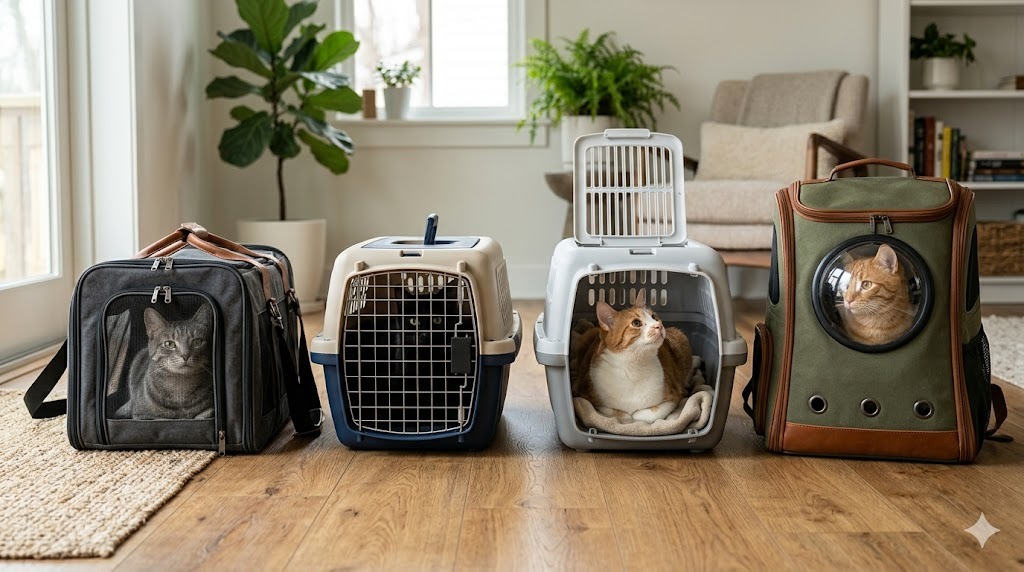
The best cat carrier is a hard-sided carrier whose top comes off - so a frightened cat can be lifted out or even examined in the base at the vet - with a soft-sided carrier for car trips and a backpack only for short, calm outings. Skip the cheap front-loading-only box; it’s the one that turns vet day into a wrestling match.
The right cat carrier turns a stressful vet visit into a manageable one. The wrong one turns it into a full-body wrestling match in your kitchen, followed by a yowling drive, followed by a cat too anxious to be examined properly. Most owners buy a cheap front-loading hard plastic carrier because that’s what their parents had, and they wonder why their cat hides under the bed at the sight of it for years afterward.
This guide explains the four major carrier categories, what each is for, what each is bad at, and how to pick one that fits your specific cat and use case. Temperament varies a lot between breeds, so it helps to know your cat - our cat breed guides describe how different breeds handle handling and travel. We’ll also cover the technique that matters more than the carrier itself - getting your cat to walk in voluntarily.
The Four Carrier Categories
- Hard-sided top-loading - best for vet visits
- Hard-sided front-loading - traditional but flawed
- Soft-sided airline-style - best for in-cabin air travel
- Backpack carriers - niche use, good for some scenarios
Each has clear strengths and clear failure modes. The right choice depends on what you’ll use it for most.
Hard-Sided Top-Loading: The Vet Visit Champion
If you only buy one cat carrier, this should be it. Top-loading hard carriers solve the single biggest pain point of cat transport: getting a reluctant cat into and out of the carrier at the vet.
Why top-loading wins
- You can lower the cat in vertically rather than pushing them through a small door
- The vet can examine the cat in the bottom half of the carrier (top removed) - often the only way to examine deeply fearful cats
- Side-access doors still exist for variety
- Hard structure protects against drops and falls
Sizing
- Cat should be able to stand, turn around, and lie down
- For most adult cats (8-12 lbs), the medium size (around 23 x 15 x 13 inches) is right
- Maine Coons and large mixed breeds need the large size or a small dog carrier
Hard-Sided Front-Loading: Traditional but Difficult
The classic plastic carrier shape, with a wire-grid front door. Some cats accept these easily, but for the difficult majority, front-loading carriers are the worst design for vet stress.
The fundamental problem
A scared cat at the back of a front-loading carrier cannot be reached without:
- Tipping the carrier and shaking the cat out (traumatic)
- Reaching in with a hand the cat may swipe at (traumatic and risky)
- Dismantling the carrier (some can be split into halves - not all)
This is why veterinarians overwhelmingly prefer top-loading carriers in their patient communications.
When front-loading might still work
- Confident cats who walk in and out willingly
- Multiple cats sharing a carrier briefly
- As a permanent “cat den” the cat sleeps in voluntarily (changes the emotional valence)
Soft-Sided Airline-Style: The Travel Special
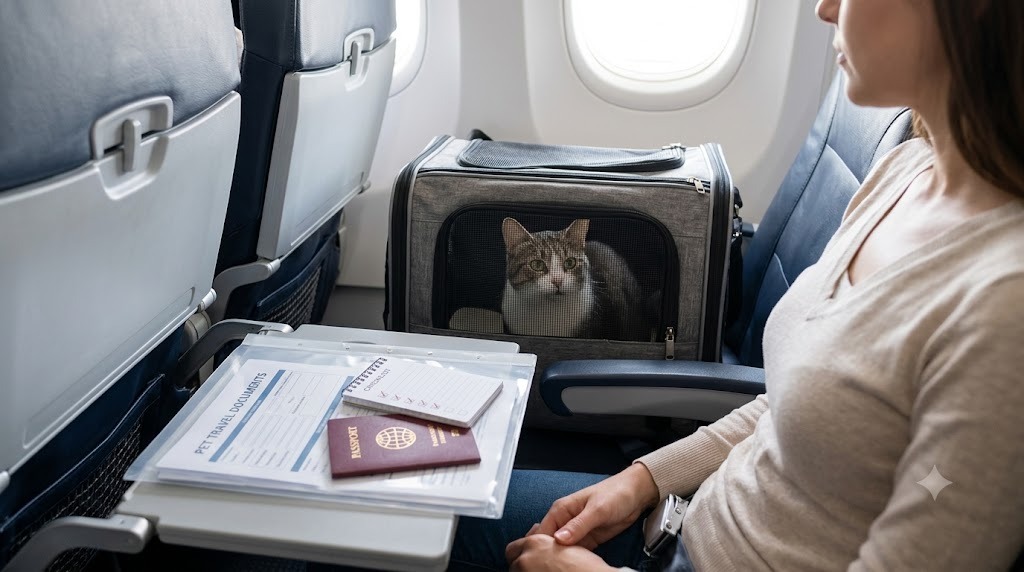
Soft-sided carriers are the only practical choice for in-cabin air travel - most airlines require carriers that fit under the seat in front of you, which is impractical for hard carriers in most aircraft.
What good soft carriers offer
- Flexible sides compress to fit airline under-seat dimensions
- Lightweight (often under 3 lbs empty)
- Mesh ventilation panels on multiple sides
- Comfortable shoulder straps
- Often have collapsible roof or expandable side for at-home use
Limitations
- Less protective in a fall or impact
- Determined cats can scratch through mesh
- Less suitable as a permanent home (cats need fresh air more freely)
Backpack Carriers: The Niche Tool
Backpack carriers - usually with a clear bubble window or full mesh - have a specific use case: hands-free transport of small to medium cats for short distances.
When backpacks work
- Vet visits for cats that tolerate enclosure well
- Walking through busy areas where pulled carriers are inconvenient
- Adventure cats who actually enjoy outings
- Owners with mobility limitations who can’t carry a side-mounted carrier safely
When backpacks don’t work
- Large cats (most backpacks max out at 15 lbs)
- Long trips (cats need to move and stretch)
- Cats with anxiety (the close enclosure intensifies stress for some)
- Hot weather (some backpacks have minimal ventilation)
The Setup Technique That Changes Everything
The carrier itself matters less than how you use it. Cats associate the carrier with vet visits - which they hate - and so they fight to avoid it. The fix is to change the emotional association.
Step 1: Leave the carrier out year-round
Don’t store it in a closet. Place it in a corner of a room your cat uses, with the door open. Put a soft blanket inside. The carrier becomes part of the cat’s environment, not a sudden threat.
Step 2: Feed near or inside it
Place treats or feed meals near the open carrier. Over a few weeks, move treats inside. The cat starts associating the carrier with food.
Step 3: Practice closing the door without going anywhere
Once your cat is comfortable inside, briefly close the door for 30 seconds while feeding. Open. Repeat. Build duration over days.
Step 4: Practice short carrier trips
Pick the cat up in the carrier, walk to a different room, set down, open door. No car. Repeat over days.
Step 5: First car trip is short and ends well
Carrier in car, drive around the block, come home, treats and play. Don’t make the first car ride the vet visit.
This sequence transforms most cats from terror-carrier dynamics to neutral or even positive carrier dynamics within 4-8 weeks. For cats whose carrier fear is part of broader anxiety, our pet behavior problem-solver walks through desensitization in more depth.
Use Case Recommendations
Owner with one indoor cat, occasional vet visits
Top-loading hard carrier (Petmate Two Door). Use as a den year-round. Best for the cat, easiest for the vet.
Owner with multi-cat household
Multiple top-loading carriers. Don’t transport cats together - they can hurt each other under stress, and the smell can become a problem in a single carrier.
Owner who flies with cat
Soft-sided airline carrier (Sherpa). Plus a separate hard carrier for everyday vet visits.
Owner who walks cat in stroller
Cat stroller instead of carrier - different product category entirely.
Owner with mobility issue or in city without car
Backpack carrier for the freedom-of-hands benefit.
What to Look For (Quick Checklist)
- Door(s) latch securely; no flimsy plastic clips
- Sized so cat can stand, turn, and lie down
- Ventilation on multiple sides
- Easy to clean (removable liner or wipeable surface)
- Sturdy enough for vet exam tables (won’t deform when cat moves)
- Manufacturer with reputation (Petmate, Sherpa, Frisco - not random no-name brands)
What to Avoid
- Cardboard “emergency” carriers for repeated use (single-use only)
- Cloth tote-bag style without rigid bottom
- Carriers with mesh too fine to allow visibility (cats need to see)
- Carriers without proper latches (sliding bolts, plastic clips that can pop open)
- Used carriers without thorough cleaning (other animal scents are stressful)
Frequently Asked Questions
Are top-loading carriers really better for vet visits?
Yes, by a large margin. Most veterinarians strongly prefer top-loading carriers because they can lift the top off to examine a fearful cat in the bottom half. With a front-loading carrier, the cat must be pulled or shaken out, which dramatically increases stress and risk of bites or scratches.
Can I use a dog carrier for my cat?
Yes, if sized correctly. Small dog carriers (especially the airline-style soft carriers) work fine for cats. Sizing for the cat’s full body when curled up is the main consideration.
How big should a cat carrier be?
The cat should be able to stand fully, turn around comfortably, and lie down. Roughly 1.5x the length of the cat from nose to base of tail.
Will my cat ever like the carrier?
Many cats can become neutral or even slightly positive about their carrier with year-round access, food associations, and slow desensitization. Full enthusiasm is rare. Tolerance is achievable.
Can two cats share a carrier?
Generally not advisable. Stress can cause normally friendly cats to redirect aggression onto each other in a confined space. Separate carriers for separate cats.
Are backpack carriers safe?
For cats they fit (typically under 13-15 lbs), yes - for short trips with adequate ventilation. Not for long journeys or hot weather.
What if my cat refuses to go into the carrier?
The fastest emergency technique: drape a towel over the cat, then gently scoop them and the towel into the carrier together. Top-loading carriers make this dramatically easier. Long-term solution: the desensitization sequence above.
Do I need a carrier for an indoor-only cat?
Yes. Emergencies, evacuations, vet visits, and travel all require a carrier. Indoor cats with no carrier are more difficult to evacuate during disasters than cats with carrier-trained behavior.
Final Word
For most households, the right answer is a top-loading hard carrier for vet visits and emergencies, used as a year-round den so the cat is comfortable with it. Add a soft-sided airline carrier only if you actually fly with your cat. Add a backpack only if you have a use case for hands-free transport.
The single highest-leverage change isn’t the carrier choice itself - it’s leaving the carrier out year-round and slowly desensitizing the cat to it. This work done early makes vet visits, emergencies, and travel dramatically less stressful for everyone involved.
Related Reading
Last updated: May 2026.