Cat Tree Buying Guide 2026
How to choose a cat tree that your cat actually uses - sizing for your cat, materials that last, stability standards, and the trees worth buying in 2026.
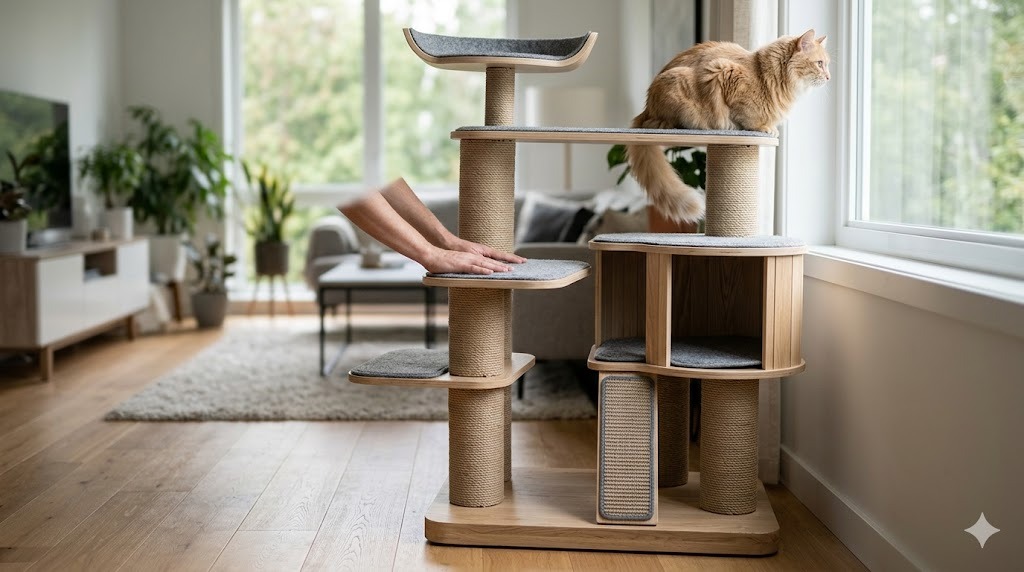
The best cat tree is a tall, heavy-based one with sisal posts and at least one wide top perch - height and stability are what decide whether a cat actually uses it. Match the perch size to your cat (big cats need bigger platforms), place it by a window, and skip the wobbly carpet towers no matter how cheap.
A cat tree is one of those purchases that looks easy and turns out to be surprisingly hard to get right. The trees on Amazon range from $50 wobbly carpet-covered cardboard towers that collapse in a week to $400 modernist furniture pieces that your cat ignores. The variables that matter - height, base width, perch size, post material, placement - aren’t always obvious until your cat refuses to use the tree you just spent two hours assembling.
This guide walks through what actually matters for cat tree selection, how to size for your specific cat, what materials survive years of use, and where to put the thing so the cat actually adopts it. Sizing depends heavily on the breed, so it helps to check the adult weight ranges in our cat breed guides before you buy.
Why Cats Need a Cat Tree
Cats aren’t just decorating their territory when they climb. Vertical space is a behavioral need that affects mood, stress, and inter-cat dynamics:
- Surveillance - cats are ambush predators; they want height to monitor their territory
- Refuge - being above ground reduces stress, especially for cats in multi-pet households
- Exercise - climbing maintains muscle and balance in indoor cats
- Scratching - outlet for natural claw maintenance (alternative to your couch)
- Resting - many cats prefer elevated nap spots over floor-level beds
A house without vertical cat space is missing a critical environmental enrichment.
The Critical Specifications
Height
- Minimum: 4 feet (taller than a standing human cat)
- Sweet spot: 5-6 feet (above most furniture for true elevation)
- Maximum useful: 7 feet (anything taller is for visual drama, not function)
Don’t buy short - most “cat trees” under 36 inches are really cat condos and don’t satisfy the climbing instinct.
Base width
The most underrated specification. A tall tree with a narrow base wobbles when a cat jumps up. Wobbling teaches cats not to use it.
- Minimum base width: 20 inches
- Better: 24-28 inches for trees 5+ feet tall
- Tip: if the tree wobbles when you push it with two fingers, it will wobble with a 12-lb cat landing on top
Perch size
The top perch must accommodate the cat’s full body when curled up.
- Small cats (under 8 lbs): 12-inch perch minimum
- Medium cats (8-12 lbs): 15-inch perch minimum
- Large cats (12-18 lbs): 18-inch perch minimum
- Maine Coons, Ragdolls, large mixed breeds: 20+ inch perch
A perch that’s too small means the cat’s head or tail hangs off, and they won’t choose it for naps.
Post diameter
Scratching posts on the tree should be wide enough that the cat can extend full claws into the material.
- Minimum post diameter: 3 inches
- Better: 4-5 inches
- Thin posts often go unused because they don’t satisfy the scratch instinct
Materials That Matter
Sisal (the gold standard)
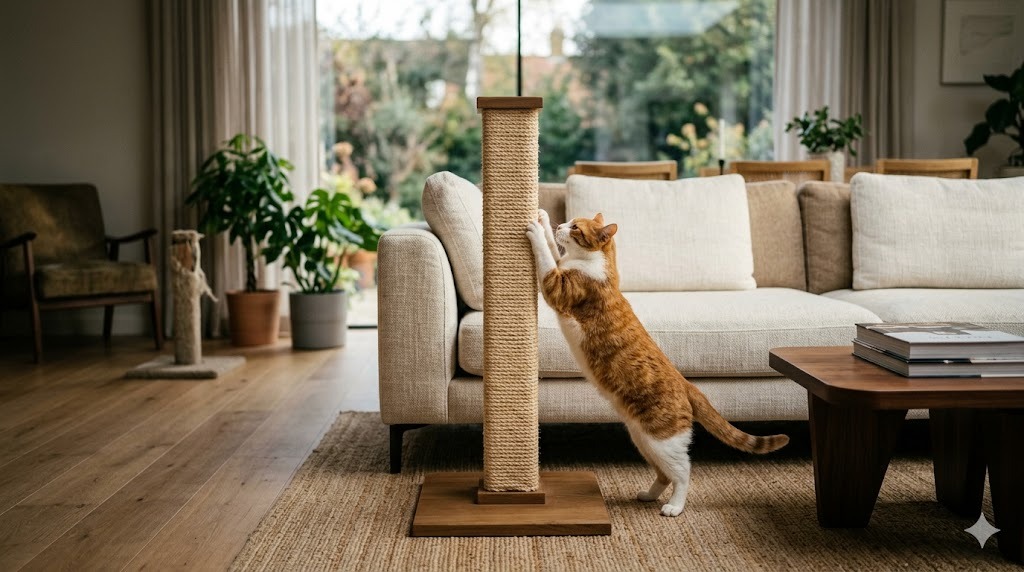
Real sisal rope wrapped around the scratching posts is the best material for cat claws. Cats prefer it, it wears slowly, and it can be re-wrapped when worn.
- Pros: cats love it, durable, replaceable
- Cons: sheds rope fibers over time
Carpeting
Common on cheap trees. Acceptable as a perch covering but avoid carpet on scratching posts - it teaches cats that carpet is a scratchable surface (and then they go after your floor carpet).
Faux fur / plush
Soft for perches and beds. Doesn’t wear well in moisture or with multiple cats. Generally fine for top perches, bad for posts.
Wood
Untreated natural wood (especially on premium modern trees) looks great and lasts long. Not appropriate for scratching posts unless covered in sisal.
Recycled / cardboard
A few brands use heavy corrugated cardboard for scratching surfaces. Excellent for cats, wears quickly, replaceable inserts available.
The Trees Worth Buying
Mid-range workhorse: Frisco / Armarkat large trees
The best balance of cost and quality for most households. 5-6 feet tall, multiple perches, real sisal posts, sturdy bases.
Premium: Catit Vesper or designer wood trees
For owners who want something that looks like furniture instead of cat furniture. Wood construction, modern aesthetic, often modular.
Budget: Smaller carpet-covered trees
Under $80, mostly with carpet covering. Acceptable for kittens and small cats who’ll outgrow them in a year. Don’t expect 5+ years of use.
For Maine Coons and giant breeds
Standard cat trees won’t handle 18-25 lb cats safely. Look for trees rated for “large breed” or “Maine Coon” with reinforced perches, oversized bases, and wider posts. The Frisco or Petfusion mega trees are the typical recommendation.
Placement: Where Cats Actually Use Cat Trees
A perfect cat tree in the wrong location is wasted money. Cats use trees that are placed where they want to be.
Best placement
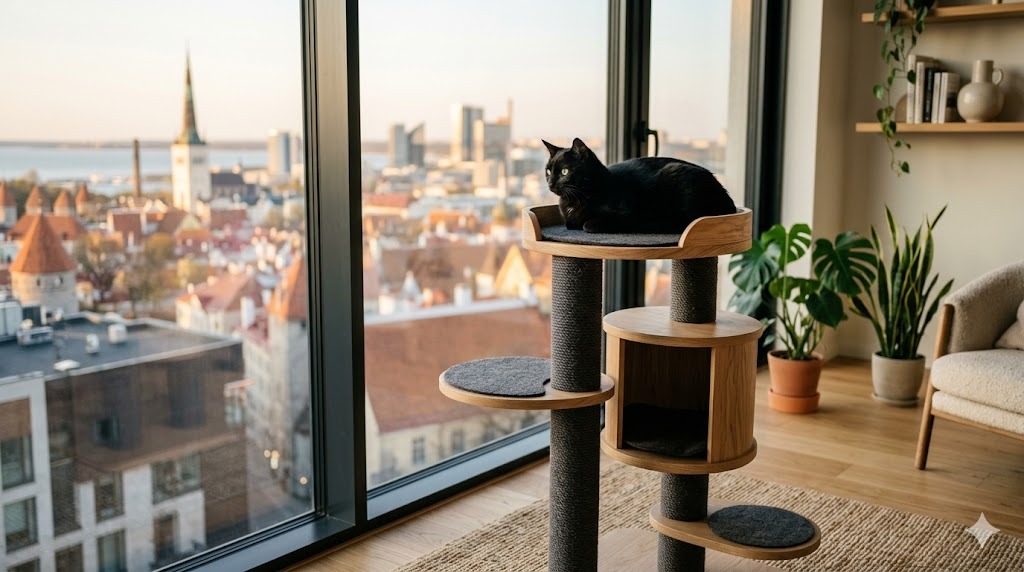
- Near a window with a view - birds, traffic, weather provide endless entertainment
- In a high-traffic family area - cats want to be near you, even from a perch
- Near where the cat already naps - they’re showing you their preferred zone
Bad placement
- Spare bedroom no one uses - cats want company
- Corners with no visibility - defeats the surveillance function
- Against shaky walls or near loud appliances - too much disruption
Window proximity matters
A cat tree positioned to give a cat a window perch is dramatically more popular than the same tree in the middle of a room.
Multi-Cat Considerations
In multi-cat households, vertical space prevents conflict. Each cat should have access to perches without being blocked by another cat.
- Multiple perches at different heights so dominant cats can’t hog “the spot”
- Separate trees in different rooms (cats often prefer separate territories)
- Tree height that allows passing without forced confrontation
A single tree for three cats often fails. Two smaller trees in different rooms often succeed.
Assembly Tips
- Read the instructions before starting - most trees have a counterintuitive assembly order
- Don’t fully tighten anything until the whole tree is together - leaves room for alignment
- Use a level on the base if your floor is uneven
- Reinforce wobble by placing the tree against a wall or in a corner if it’s marginal
- Save the spare hardware for years later
When to Replace
Cat trees don’t last forever. Replace when:
- Scratching posts are worn through to the inner cardboard tube
- Perches are sagging or torn beyond repair
- Base has loosened and tree wobbles dangerously
- Cat has stopped using it (sometimes a new tree solves “boredom”)
Better-quality trees often have replaceable posts and perches - extending life by 50-100%.
Alternatives to a Single Big Tree
For some setups, multiple smaller pieces beat one big tree:
- Wall-mounted shelves - modern, doesn’t take floor space, encourages climbing routes
- Window perches with suction cups - cheap, easy to remove
- Cat condos in addition to a tree for variety
- Existing furniture upgrades - adding cat-friendly textures to bookshelves, kitchen cabinets
Common Mistakes
1. Buying for the room, not the cat
A small cat tree to “fit” a small room often fails because cats outgrow them or refuse to use them. Cats need the height.
2. Carpet-covered posts
Teaches cats to scratch carpet. Sisal-wrapped posts are the standard.
3. Placement in a “convenient” room
Cats want to be in the main living areas. A guest bedroom tree gets ignored.
4. Buying flat-pack and assembling poorly
Tightening unevenly results in wobble. Wobble teaches cats not to use the tree.
5. One tree for many cats
Causes resource guarding. Multiple smaller trees often outperform one large one in multi-cat homes.
Frequently Asked Questions
How tall should a cat tree be?
Minimum 4 feet, ideally 5-6 feet. Trees taller than 7 feet are for aesthetics rather than additional function.
Will my cat use a cat tree?
Most cats use them when properly placed (near a window or in a busy family area). Some cats need a few weeks of adjustment plus treats placed on the perches to start using a new tree.
How long does a cat tree last?
A quality tree with sisal posts lasts 5-8 years with single-cat use, 3-5 years with multiple cats. Cheaper trees may collapse or wear out in 1-2 years.
Are wall-mounted cat shelves better than a tree?
Different use case. Wall shelves create climbing routes; a tree creates a single vertical territory. Many cats benefit from both.
Why won’t my cat use the new cat tree?
Usually placement (try moving it to a different room near a window), or initial unfamiliarity (sprinkle catnip or place treats on the perches). Some cats take 2-3 weeks to claim a new tree.
Can I make my own cat tree?
Yes - DIY plans abound online. Real sisal rope wrapping is the key. Use a heavy base (concrete weight or thick plywood) for stability.
Is sisal or carpet better for scratching posts?
Sisal. Carpet on scratching posts trains cats to scratch carpet - which they then do to your floor.
Final Word
The best cat tree is one that’s tall enough, stable enough, sized for your specific cat, made with sisal posts, and placed where your cat already wants to be. The trees that get ignored are usually short, wobbly, or in the wrong room.
For most households, a 5-6 foot Frisco or Armarkat tree with sisal posts, placed near a window in a high-traffic area, is the right starting point. Upgrade to designer wood trees if aesthetics matter; add window perches for additional vertical space at low cost.
Related Reading
Last updated: May 2026.