Flying With Your Pet 2026
2026 guide to flying with dogs and cats - cabin vs cargo, current airline policies, in-cabin carriers, fees, and what really happens to pets in the hold.

Flying with a pet in 2026 comes down to size: small dogs and cats fly in-cabin under the seat - the safest, simplest option - while larger dogs must go as checked cargo, which fewer airlines now offer and which carries real heat and stress risks. Book early, confirm the carrier dimensions, and expect more paperwork and higher fees than a few years ago.
Air travel with a pet is more complicated in 2026 than it was five years ago. The post-pandemic shake-out reduced cargo-pet capacity on most major U.S. airlines, while emotional support animal accommodations were eliminated in 2021 and never came back. What’s left is a narrower set of choices, more paperwork, and higher fees.
This guide covers the actual current landscape - which airlines still take pets in cabin and cargo, what the trip realistically looks like, and what to buy if you’ve decided to fly. We will not pretend cargo travel is risk-free, and we won’t pretend cabin travel is easy either.
The Two Questions That Decide Everything
Before researching carriers or routes, answer two questions:
-
What does your pet weigh, including the carrier?
- Under 20 lbs combined: in-cabin travel is usually possible
- Over 20 lbs: cargo or specialized pet-only freight (or no flying)
-
Is your pet a brachycephalic breed?
Get these two answers right and you’ve eliminated 80% of the decision space.
In-Cabin Travel: The Realistic Path
In-cabin pet travel is the safer and more common option. Your pet stays with you for the flight, contained in a carrier that fits under the seat in front of you. Most airlines limit you to one pet in cabin per ticketed passenger.
What works
- Cats and small dogs under about 18 lbs
- Soft-sided carrier (more flexible to fit under-seat dimensions)
- Direct flights to minimize stress
- Off-peak times (fewer humans = quieter cabin)
What doesn’t work
- Dogs too large to stand and turn in the carrier (against airline rules)
- Multiple pets in one carrier (most airlines: no)
- Carriers held in your lap during flight (must be under-seat for taxi, takeoff, landing)
Current Pet-In-Cabin Fees (U.S. airlines, 2026)
| Airline | One-way fee | Max carrier size (typical) |
|---|---|---|
| Alaska | $100 | 17 x 11 x 9.5 in (soft) |
| American | $150 | 19 x 13 x 9 in |
| Delta | $95-150 | Soft only, fit under seat |
| JetBlue | $125 | 17 x 12.5 x 8.5 in |
| Southwest | $125 | 18.5 x 8.5 x 13.5 in |
| United | $150 | Varies by aircraft |
Always confirm dimensions on the airline’s website - they update.
The Carrier: Get This Right
In-cabin carriers must be airline-compliant and survive years of use. The single biggest mistake owners make is buying a carrier that meets one airline’s dimensions but not their actual aircraft.
The Sherpa is the safest default. Its “Guaranteed on Board” program means if the airline rejects the carrier at the gate due to size, Sherpa refunds your ticket. No other major carrier brand offers this.
When Cargo Is the Only Option
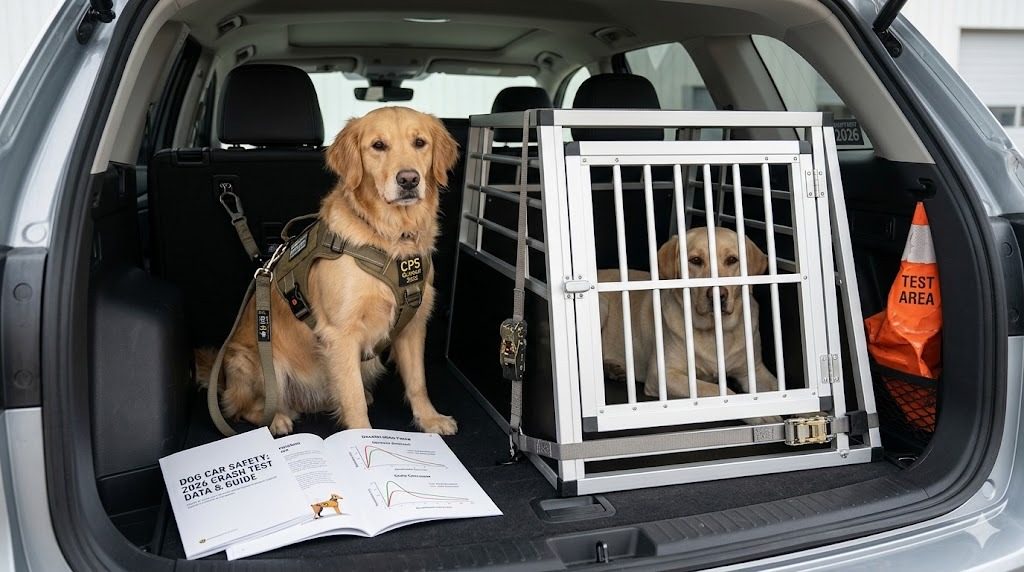
Cargo travel - your pet in a climate-controlled hold below the passenger cabin - is the only option for medium and large dogs flying domestically. The honest assessment: cargo travel is more dangerous than cabin travel, but well-prepared cargo trips are not catastrophic.
Airline cargo programs (changing rapidly)
As of 2026, only a few U.S. airlines accept pets in cargo:
- Alaska Airlines (Pet Connect program)
- Hawaiian Airlines (limited routes)
- American Airlines (PetEmbark, limited routes, conditional)
Delta and United phased out general cargo pet acceptance in the early 2020s. Both still accept service animals.
Cargo crate requirements
Cargo airlines have strict crate rules (IATA Live Animal Regulations):
- Rigid plastic or wooden construction
- Solid bottom (no wire mesh)
- Functional door with metal hardware
- Ventilation on at least three sides
- “LIVE ANIMAL” labels and arrows
- Food and water dishes attached to inside of door
- Two pre-filled water bowls (frozen recommended for slow melt)
What cargo travel actually looks like
Your pet checks in at a cargo terminal (separate from the passenger terminal) 3 hours before departure. They’re loaded into a climate-controlled hold pressurized to the same level as the cabin. Temperature is maintained between 40°F and 80°F. They sit in the hold for the duration of the flight, then are unloaded at a cargo terminal where you collect them.
The risk windows:
- Tarmac time at origin and destination (no climate control in extreme heat)
- Aircraft mechanical issues that leave pets on the tarmac
- Cargo handler errors (rare, well-publicized)
Paperwork You Actually Need
Domestic U.S. flights
- Health certificate from your vet dated within 10 days of travel (some airlines require)
- Proof of rabies vaccination (always required)
International flights
- USDA-endorsed health certificate (specific to destination country)
- Microchip (ISO-compliant)
- Rabies vaccination (timing varies - EU requires 21 days minimum)
- Country-specific tests (some require titer testing 3+ months in advance)
- Import permit (some countries)
International is where most travel falls apart. Start the paperwork 4-6 months before the trip. The USDA’s Pet Travel website has destination-specific requirements.
Pre-Flight Preparation (4 Weeks Out)
- Week 4: Vet visit to confirm health and discuss travel concerns. Get paperwork started.
- Week 3: Crate train. Pet should be eating, sleeping, and relaxing in the carrier voluntarily.
- Week 2: Confirm airline policy hasn’t changed. Re-measure crate vs. current dimensions.
- Week 1: Pack ID tags with destination contact info. Confirm reservation includes pet.
- 48 hours out: Light exercise. Limit food before flight (no fasting, but no big meal within 4 hours of departure).
- Day of flight: Bathroom break before security. Water available until carrier zips closed.
What to Pack
Pack list:
- Airline-approved carrier with identification
- Leash and slip lead (slip lead for emergency restraint)
- Collapsible water bowl
- Familiar blanket or shirt with your scent
- Treats (high-value, calorie-dense)
- Pee pads (in carrier and as backup)
- Light meal portions for the destination
- Travel medications if vet-prescribed
- All paperwork in a zipped folder
Sedation: The Honest Answer
Do not sedate your pet for cargo travel. Most U.S. airlines won’t accept sedated animals because sedation interferes with the body’s temperature regulation and can cause cardiovascular problems at altitude.
For cabin travel, sedation is a vet judgment call. A mild sedative may be appropriate for very anxious pets but should be tested at home several days before the flight to confirm response. Avoid acepromazine - it disinhibits without reducing anxiety, leaving an animal panicked but unable to express it.
Calming options that are safer:
- Adaptil or Feliway spray on the carrier 30 minutes before
- Anxiety wraps (Thundershirt)
- Vet-prescribed gabapentin (mild, predictable in most pets)
After the Flight
- Get to a designated relief area as soon as possible
- Offer water immediately, food after 30-60 minutes
- Check for any signs of injury, dehydration, or distress
- If anything seems off, vet visit within 24 hours
Frequently Asked Questions
Can I still bring an emotional support animal in cabin?
No. The Department of Transportation reclassified ESAs in 2021 - airlines are no longer required to accept them as service animals. They now travel as pets with normal fees and restrictions.
What’s the difference between a service dog and a pet?
A service dog (trained to perform tasks for a person with a disability under the ADA) can fly free in cabin per DOT rules, with documentation. A pet pays a fee and follows pet rules.
Is cargo travel safe for healthy dogs?
It can be, but it’s not risk-free. Healthy non-brachycephalic adult dogs at well-run airlines with direct flights in temperate weather have very low incident rates. Brachycephalic breeds, very young or old pets, or pets with health conditions should not travel cargo.
Can I check on my pet during a layover?
No. Once your pet is loaded into cargo, you have no access. Choose direct flights whenever possible.
Are international pet relocation services worth the cost?
For complex moves (multiple pets, exotic destinations, brachycephalic breeds), yes. Companies like PetRelocation handle paperwork, booking, and ground transport for $1,500-5,000+. For domestic flights with healthy dogs, you can DIY.
What if the airline loses my pet?
Rare but it has happened. Insist on a tracking number for the cargo manifest, photograph your pet with the crate before drop-off, and have the destination airport’s cargo phone number on hand.
Should I feed my pet right before the flight?
No big meals within 4 hours of departure (vomiting risk). Small meal 6+ hours before is fine. Always offer water until the carrier closes.
Final Word
If your pet weighs under 18 lbs and is in good health, cabin travel is straightforward - buy a Sherpa, get a vet certificate, book directly, and accept the $100-150 fee as a tax on convenience. If your pet is larger, think hard before booking cargo. Ground transport (your own car, professional pet ground transport services, or train) is often safer for distances under 1,000 miles.
Air travel is a tool. For some pets in some situations, it’s the best one. For many, it isn’t.
Related Reading
Last updated: May 2026.