VOHC-Approved Dog Dental Chews 2026
Which dental chews actually work? We compare VOHC-approved options for 2026 - what the seal really means, calorie counts, and which dogs benefit most.
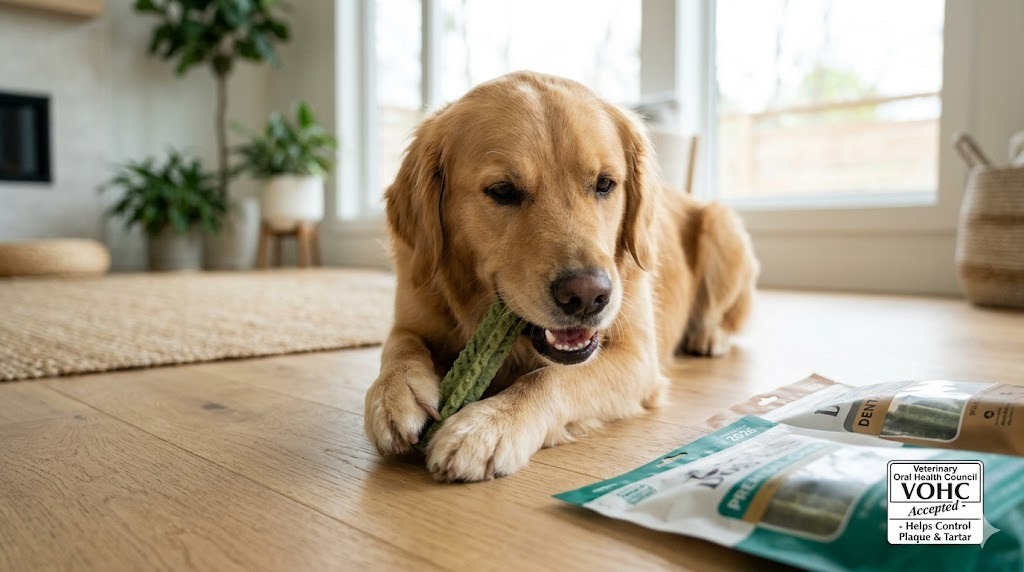
The dental chews that actually work carry the VOHC (Veterinary Oral Health Council) seal: Greenies Original for daily plaque control and OraVet for an anti-bacterial coating that fights tartar and breath. About half of all “dental” chews have no clinical backing at all, so the seal is the one thing to look for - and watch the calories.
The dental chew aisle is one of the most over-marketed sections in any pet store. Roughly half the products claim “promotes dental health” without any clinical backing whatsoever. A handful of chews - those carrying the Veterinary Oral Health Council (VOHC) Seal of Acceptance - have actually been tested and shown to reduce plaque or tartar. Most haven’t.
This guide separates the marketing from the science. We’ll cover what the VOHC seal really means, which products carry it in 2026, how dental chews compare to brushing, and which dogs benefit most - dental disease risk varies a lot across our dog breed guides, especially for small and flat-faced breeds. We’ll also be honest about the limitations - dental chews are a supplement to dental care, not a substitute for it.
What the VOHC Seal Actually Means
The Veterinary Oral Health Council is an independent board of veterinary dentists who evaluate clinical studies submitted by pet product manufacturers. A product earns the VOHC Seal when it demonstrates a meaningful reduction in plaque or tartar in well-designed trials.
Two VOHC seals to know
- VOHC Plaque Seal: product reduces plaque accumulation
- VOHC Tartar Seal: product reduces tartar (calcified plaque) accumulation
A product can hold either or both seals. Most reputable dental chews target tartar more than plaque.
What the seal doesn’t mean
- It doesn’t guarantee the product replaces brushing
- It doesn’t mean the product cleans existing tartar (chews prevent buildup; they don’t remove established tartar)
- It doesn’t endorse general health benefits - just dental ones
The VOHC-Accepted Dental Chews (2026)
The current list of VOHC-accepted chews changes occasionally. Standouts that have held the seal for years:
Greenies Original
The market leader. Distinctive toothbrush shape designed to bend around teeth and scrape as the dog chews.
OraVet Dental Hygiene Chews
Manufactured by Boehringer Ingelheim (a major animal health company). Contains delmopinol, an ingredient that creates a barrier against plaque-forming bacteria.
Virbac C.E.T. VeggieDent Chews
Plant-based chews with mechanical and antibacterial dental action. Often recommended for dogs with food sensitivities.
Whimzees (some varieties)
Some Whimzees products are VOHC-accepted; not all. Check the specific package for the seal.
Purina Pro Plan Veterinary Diets Dental Chews
Available at vets and online. Sized for different breeds, lower-calorie than Greenies.
Why Some Famous Brands Aren’t on the List
Many popular dental treats (Milk-Bone Dental Brushing Chews, Pedigree Dentastix in the U.S., countless smaller brands) don’t carry VOHC seals. That doesn’t necessarily mean they’re useless - but it does mean they haven’t been clinically proven.
How Dental Chews Compare to Brushing
The hierarchy of canine dental care, from most to least effective:
- Professional cleaning under anesthesia (every 1-3 years, performed by vet)
- Daily brushing with pet-safe toothpaste
- Veterinary dental diet (Hill’s t/d, Purina DH) - these foods have unique kibble structure that mechanically cleans
- VOHC-accepted dental chews (daily)
- Dental water additives
- Generic dental treats without VOHC seal
- Nothing
The best home routine combines brushing (multiple times per week) with daily dental chews. Owners who manage daily brushing rarely need additional chews; owners who can’t brush daily benefit most from chews.
Calorie Awareness
A common mistake: giving daily dental chews without accounting for the calories. Greenies in particular pack significant calories per chew.
Calorie counts (approximate)
- Greenies Petite: ~50 kcal per chew
- Greenies Regular: ~90 kcal per chew
- Greenies Large: ~140 kcal per chew
- OraVet (medium): ~75 kcal per chew
- VeggieDent (medium): ~60 kcal per chew
For a 30-lb dog eating ~750 calories per day, a daily Greenies Regular chew represents 12% of total intake. Adjust meal portions accordingly to avoid weight gain.
Which Dogs Benefit Most From Dental Chews
Strong fit
- Dogs whose owners cannot brush teeth daily (most owners)
- Breeds prone to dental disease (small breeds, brachycephalic breeds, sighthounds)
- Dogs already eating high-quality kibble who need additional dental support
- Senior dogs whose mouths are sensitive (a chew is more comfortable than brushing)
Weak fit
- Puppies under 4 months (introduce slowly, choose smaller sizes)
- Dogs with weight problems (calorie load is significant)
- Dogs with food allergies (check ingredients carefully - many chews contain wheat, soy, chicken)
- Dogs who don’t actually chew their treats - gulpers get no dental benefit
Sizing and Selection
Dental chews are sized by dog weight. Choosing the wrong size reduces dental benefit and can be hazardous:
- Too small: dog swallows whole, no chewing action, possible choking hazard
- Too large: dog can’t fit chew in mouth, no chewing action, may give up
Always select the correct size for your dog’s current weight. As puppies grow, transition to the next size.
Common Mistakes
1. Treating dental chews as a substitute for brushing
They aren’t. A dental chew per day prevents accumulation; brushing actively removes plaque before it calcifies. Combine both for best results.
2. Buying non-VOHC dental treats and expecting results
Marketing claims aren’t backed by data. If “promotes dental health” is on the label but no VOHC seal, the claim may be entirely unsupported.
3. Skipping the professional cleaning
Even with daily brushing and chews, most dogs need a professional cleaning every 1-3 years to remove tartar and treat issues below the gum line. Dental chews cannot do this.
4. Ignoring tooth pain
Bad breath, reluctance to chew on one side, dropping food, pawing at face - all signs of dental pain that need vet attention. Don’t try to manage with chews.
Alternatives to Chews
Dental water additives
Add to drinking water; antimicrobial action reduces plaque-forming bacteria. Less effective than chews but easier (“set and forget”).
Dental wipes
Pre-moistened cloths wiped over teeth and gums. More effective than chews; less effective than brushing. Useful for dogs who tolerate wipes but not brushing.
Veterinary dental diets
Hill’s Prescription Diet t/d and Purina ProPlan DH have unique kibble that mechanically cleans teeth as the dog chews. Effective but expensive and require vet prescription.
Recreational chewing
Bully sticks, beef trachea, and similar chews provide mechanical cleaning. Effective but caloric and may not be appropriate for aggressive chewers (choking and fracture risk).
The Honest Limitation
Dental chews - even VOHC-accepted ones - typically reduce plaque or tartar accumulation by 20-40% in clinical studies. That’s meaningful but not transformational. A dog who would have developed periodontal disease without intervention may still develop it more slowly with daily chews. They’re a useful tool, not a guarantee.
The dogs who avoid serious dental disease combine: appropriate genetic predisposition, daily brushing, dental chews, dental diets (if recommended), and professional cleanings on schedule.
Frequently Asked Questions
Are Greenies safe?
Yes, when used appropriately. Older versions had digestibility concerns that led to a major reformulation in 2006. Current Greenies are highly digestible. Always size correctly and supervise initial use.
Do dental chews replace brushing?
No. They reduce plaque accumulation but don’t actively clean teeth the way mechanical brushing does. Use both for best results.
How often should I give dental chews?
Once daily for adult dogs. Adjust meal portions to account for calories.
What’s the difference between VOHC plaque and tartar seals?
Plaque is the soft film of bacteria on teeth. Tartar is plaque that has calcified into a hard deposit. A plaque-targeting product helps prevent the next layer; a tartar-targeting product helps prevent buildup. Both are useful.
Are dental chews safe for puppies?
Most are labeled for puppies over a certain age (usually 6 months). Use the smallest size and supervise closely.
Do cats need dental chews?
Cats have similar dental issues to dogs, but most cats don’t chew treats - they swallow them whole. A few feline-specific dental treats exist with VOHC acceptance. Cat dental care relies more on diet, brushing (where tolerated), and professional cleanings.
My dog gulps the chew whole - does it still work?
Less so. The mechanical scraping action requires actual chewing. If your dog gulps, try a larger size that requires more chewing, or hold the chew while they bite into it.
How much does a dog dental cleaning cost?
Professional cleaning under anesthesia: $300-700 for routine cleaning, $800-2,500 if extractions or advanced treatment needed. More if you live in a high-cost area or use a specialist.
Final Word
For most dogs, the right dental care routine is: daily brushing if the dog tolerates it (and most can be trained to), plus a VOHC-accepted dental chew daily (Greenies or OraVet are the most-recommended), plus professional cleaning every 1-3 years based on vet recommendation.
For owners who can’t brush, daily chews become more important. For dogs with diet sensitivities, check ingredients carefully. For dogs who don’t chew their treats, find a chew shape and size that forces actual chewing, or skip them entirely.
Related Reading
Last updated: May 2026.