Senior Dog Care Checklist 2026
Complete senior dog care guide - when a dog becomes senior, joint and cognitive support, diet changes, vet schedule, and honest quality of life signals.
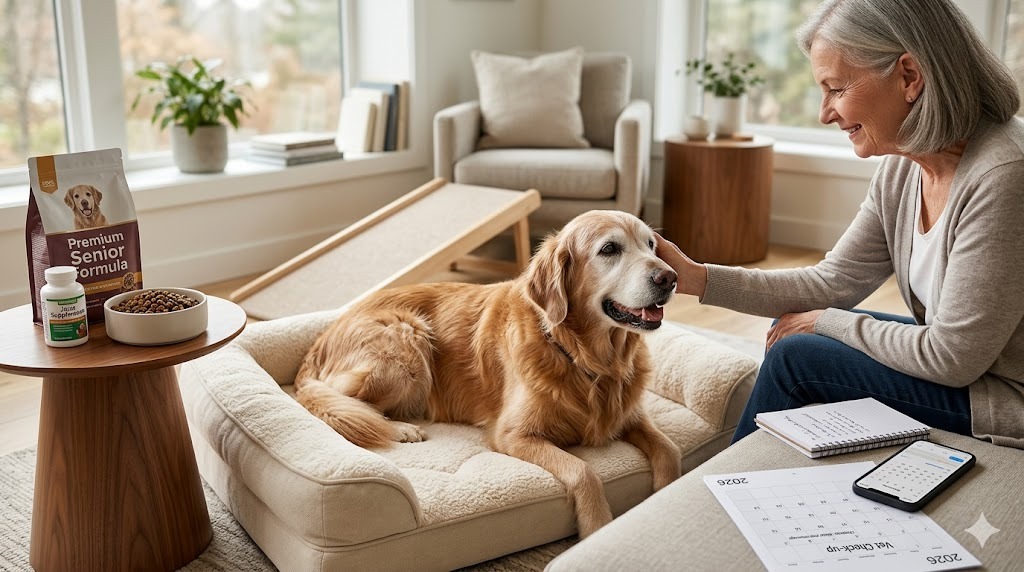
A senior dog is not the same animal as the puppy you brought home. Their joints stiffen, their cognition shifts, their appetite changes, their sleep patterns reorganize. Most owners notice when the changes are dramatic; the dogs that age best are the ones whose owners caught the changes early and adapted.
This guide is structured the way a good senior care plan should be: physical, nutritional, cognitive, medical, and honest about the harder questions later on. We’ve leaned toward the practical rather than the comprehensive - if you can do everything in this guide, you’re doing more than 90% of senior dog owners.
When Is a Dog “Senior”?
Breed and size matter more than age alone.
- Giant breeds (over 90 lbs): senior at 5-6 years
- Large breeds (50-90 lbs): senior at 7-8 years
- Medium breeds (20-50 lbs): senior at 8-10 years
- Small breeds (under 20 lbs): senior at 10-12 years
Giant dogs age faster because their cells divide more rapidly. A Great Dane is geriatric at 8. A Chihuahua might only be middle-aged at 8.
The First Sign Most Owners Miss
The earliest reliable sign of aging in dogs isn’t graying muzzle or slowing on walks - it’s reduced interest in stairs. Joint discomfort presents as avoidance long before it presents as obvious limping. A dog that used to bound up the stairs and now hesitates, takes them one at a time, or asks to be picked up, is showing early joint pain.
Catch this signal, and you can intervene before the dog is in chronic discomfort. Miss it, and you’ll catch up only when the dog is visibly limping months or years later.
Joint Health: The Most Important Lever
For most senior dogs, joint care is the single most impactful change an owner can make. Roughly 80% of dogs over 8 have osteoarthritis on imaging, but only a minority show obvious clinical signs.
Supplements that have evidence
Three supplements have meaningful clinical data behind them:
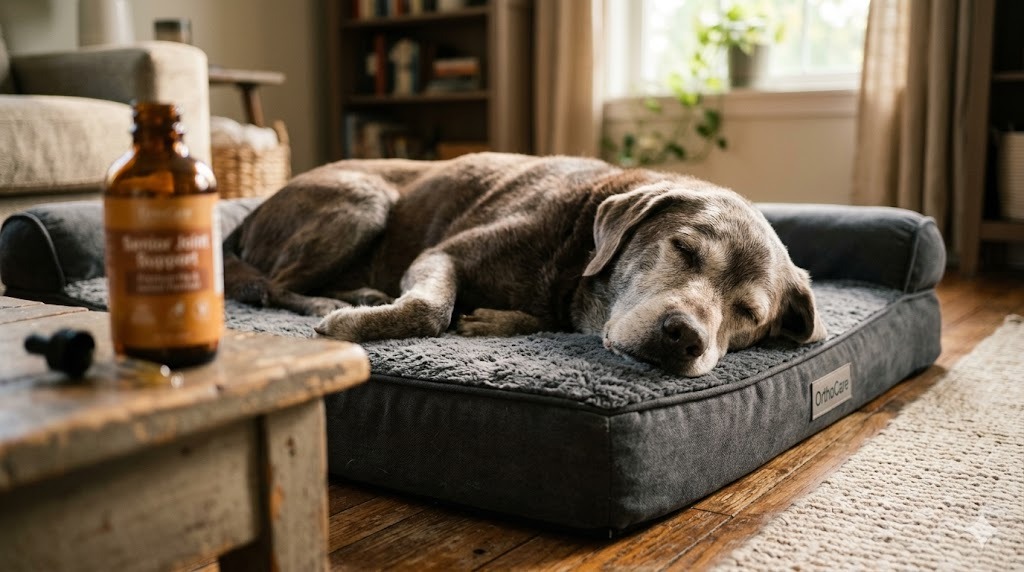
- Omega-3 fatty acids (EPA/DHA from fish oil) - anti-inflammatory, well-tolerated, supports joints, coat, and cognition
- Glucosamine + chondroitin - modest joint pain reduction at adequate doses; quality matters
- Green-lipped mussel - natural source of glucosamine and omega-3, growing evidence base
Most multi-ingredient joint supplements combine these.
Supplements with thinner evidence
- CBD oil - anecdotally helpful, very limited clinical data
- Turmeric/curcumin - poor oral absorption, mixed studies
- Hyaluronic acid - orally, evidence is weak; injectable form (vet-administered) has better data
Prescription options
For dogs with diagnosed osteoarthritis, ask your vet about:
- Galliprant (newer NSAID with fewer GI side effects)
- Adequan (injectable, modifies disease progression)
- Librela (monoclonal antibody, dramatic relief for many dogs)
These aren’t first-line for mild stiffness but transform quality of life for dogs in real pain.
Diet for Senior Dogs
Marketing claims around “senior formulas” are mostly fluff. Some seniors do well on the same food they’ve always eaten. The real diet questions are:
Is the dog lean?
A dog you can feel ribs on but not see is at the right weight. Lean dogs live longer and move better. Most senior dogs need fewer calories than they did at 4 years old - our dog food portion calculator is a useful starting point for dialing back daily amounts.
Is the protein high enough?
Old wisdom said to reduce protein for senior dogs. Current research says the opposite - seniors lose muscle mass faster and need adequate, high-quality protein to preserve it. Look for foods with 28%+ protein on a dry matter basis.
Is digestion still good?
Senior dogs sometimes develop sensitivities. Watch for loose stool, increased gas, or dropped appetite. A switch to a more digestible food (often a higher-fat, lower-fiber formula) helps some dogs.
Treats and toppers
Senior dogs often need food motivation refreshed. Warm food, broth toppers, freeze-dried protein toppers, or hand-feeding can rekindle interest in eating.
Environment Modifications
Small environment changes punch above their weight for senior dogs.
Flooring
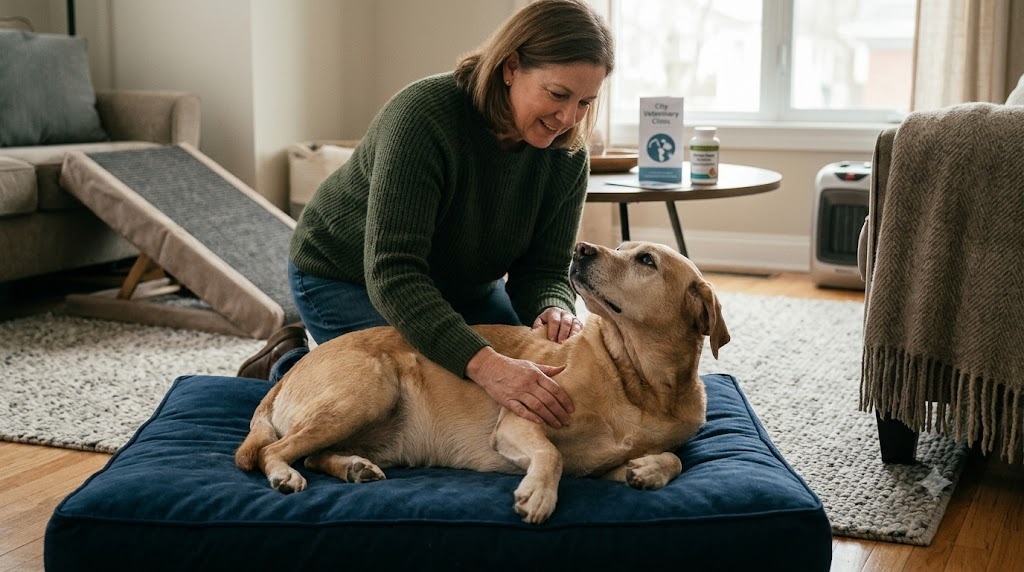
Hardwood and tile become hazards as joints weaken. Runners, rugs, or yoga mats in heavily trafficked areas (kitchen, hallways, near food bowls) reduce slips and falls.
Stairs and jumping
Block access to high beds and couches if the dog has been jumping down and landing hard. Either add a ramp or pet stairs, or train the dog to wait to be lifted.
Sleeping surface
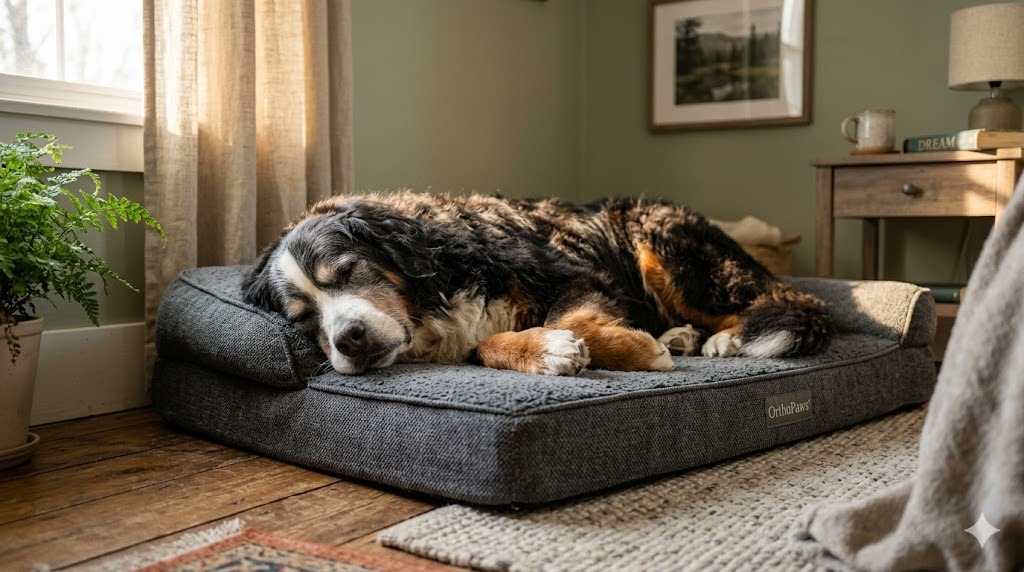
Older dogs spend 14-18 hours a day sleeping or resting. An orthopedic bed is one of the highest-value senior purchases you can make.
Food and water access
Raised bowls reduce neck strain for tall senior dogs. Multiple water stations on each floor of the house reduce travel for dogs who don’t want to walk to drink.
Cognitive Health
Roughly 30% of dogs over 11 show signs of canine cognitive dysfunction (CCD) - the dog equivalent of dementia.
Early signs
- Wandering aimlessly, especially at night
- Standing in corners or staring at walls
- Reduced interest in greeting people
- Toileting accidents in previously trained dogs
- Sleep cycle disruption (more sleep during the day, restless at night)
What helps
- Mental stimulation - puzzle feeders, scent games, gentle training of new tricks
- Routine - strict, predictable daily schedule
- Omega-3 supplementation - DHA supports cognition
- Prescription support - selegiline (Anipryl) helps some dogs; some prescription diets (Hill’s b/d, Purina Bright Mind) show clinical benefit
The Senior Vet Schedule
Healthy adult dogs see the vet once a year. Senior dogs benefit from twice-a-year visits, with baseline bloodwork on each visit. The reason is simple: most serious senior conditions (kidney disease, Cushing’s, hypothyroidism, early cancer) are easier to manage when caught at the bloodwork stage rather than the symptom stage.
Minimum twice-yearly tests for seniors
- Full physical exam
- CBC and chemistry panel
- Urinalysis (kidney function, early diabetes)
- Blood pressure check
- Thyroid panel (T4) once a year, more if symptoms
Worth discussing annually
- Dental cleaning under anesthesia (vs. risk of declining heart/kidney function with age)
- Chest X-ray baseline at 8-10 years, then every 1-2 years
- Abdominal ultrasound as a baseline at first senior visit
Pain You Might Be Missing
Dogs hide pain. The signals are often subtle:
- Reluctance to be touched in a particular area
- Panting at rest (especially overnight)
- Reduced grooming or excessive grooming of one area
- “Shifty” weight distribution while standing
- Slower greeting at the door
- Less interest in toys
If you’re unsure, vet-administered pain trial (a multi-day course of NSAID or other pain control) can reveal pain you didn’t realize was there. A dog that “becomes more like himself” on pain medication was uncomfortable before.
The Quality of Life Conversation
At some point - and it will happen - every senior dog reaches the end of comfortable life. Veterinary medicine has gotten better at extending life. It has not always gotten better at extending quality of life.
A simple framework:
Five good things a day:
- Eats with interest
- Drinks normally
- Eliminates without distress
- Has at least one moment of clear enjoyment (greeting, play, walking)
- Can rest comfortably
When the count of good things drops below half, it’s time for a serious conversation with your vet - not necessarily about euthanasia, but about whether current treatment is buying time or buying suffering.
This isn’t a topic to first encounter on the worst day. Think about it now, when your dog is doing well.
Mobility Aids Worth Considering
For dogs with advanced arthritis, hip dysplasia, or partial paralysis:
- Support harness with handle (Help ‘Em Up, Ruffwear Web Master) - lets you help the dog up stairs without straining their joints or your back
- Rear-leg sling - for hindquarter weakness
- Toe grips / paw socks with grip - for slippery floors
- Mobility cart - for dogs who can no longer use back legs (some live happily for years in carts)
Frequently Asked Questions
When should I start joint supplements?
Many vets recommend starting glucosamine-based supplements around the senior age threshold for your breed even before clinical signs appear, as a preventive measure. There’s some evidence this slows progression.
Is grain-free food bad for senior dogs?
The grain-free / DCM (dilated cardiomyopathy) controversy is unresolved. For senior dogs with no diagnosed grain sensitivity, most cardiologists currently recommend grain-inclusive foods until more data is available.
Can I exercise a senior dog?
Yes - and you should. Sustained low-impact exercise (slower, longer walks; swimming if available) maintains muscle mass and joint mobility. The change is in intensity, not in stopping.
My senior dog is panting at night. What’s going on?
Possible causes: pain (most common in seniors), cognitive dysfunction, heart issues, Cushing’s disease, or simple overheating. Vet visit warranted within a week.
How do I tell if my senior dog is in pain?
Subtle signs: reluctance to jump or climb, taking longer to lie down or get up, reduced appetite, decreased interest in activities they used to love, panting at rest, snapping when touched in certain areas. A pain trial (vet-prescribed multi-day NSAID) is often diagnostic.
Should I get pet insurance for a senior dog?
If you don’t have it already, most insurers won’t cover pre-existing conditions, so the value is limited. A vet care savings fund may be more practical for unenrolled seniors.
Final Word
Senior dog care is mostly attention. Notice the small changes. Catch the joint pain early. Don’t let the routine vet visits slide. Keep the dog lean. Add the orthopedic bed before you “really need to.”
The goal isn’t to keep your dog alive as long as possible. It’s to keep them happy as long as they’re alive - and to know, clearly and kindly, when the second goal stops being possible.
Related Reading
- Best Joint Supplements for Senior Dogs
- Best Orthopedic Dog Beds
- Best Dog Ramps for Cars
- Best Pet Insurance 2026
Last updated: May 2026.