Puppy Socialization Timeline (8-16 Weeks)
Week-by-week puppy socialization timeline for the critical 8-16 week period - what to expose them to, how to do it safely, and what to skip.
The puppy socialization window - roughly 8 to 16 weeks of age - is the single most important developmental period in a dog’s life. What a puppy is positively exposed to during this window largely determines what they will tolerate, ignore, or fear for the next 10+ years. Miss the window, and the resulting fears are often only partially reversible with months or years of training.
This guide is a week-by-week plan. It’s based on the American Veterinary Society of Animal Behavior’s position statement on socialization, the work of Dr. Ian Dunbar, and the practical experience of trainers who’ve taken thousands of puppies through this period. It’s specific about what to do, what not to do, and how to do it safely before the puppy is fully vaccinated.
The Vaccination Misconception That Wrecks Puppies
The old advice was: keep puppies isolated until all vaccines are complete at 16 weeks. This advice ruined a generation of dogs. The actual veterinary consensus (AVSAB, 2008 and reaffirmed since) is the opposite: the behavioral risks of under-socialization vastly exceed the disease risks of careful socialization between 8 and 16 weeks.
The compromise is smart exposure, not no exposure:
- Avoid dog parks, pet store floors, and unknown dogs until vaccines complete
- Carry the puppy in busy areas (don’t put down)
- Host known healthy adult dogs for play
- Use puppy classes that require vaccine proof from all attendees
This balance lets you do the socialization work without significant disease risk.
What “Socialization” Actually Means
Socialization is not just meeting people and dogs. It’s structured positive exposure to anything the puppy will encounter as an adult, and how much each puppy needs varies with breed - if you are still choosing, our dog breed matcher quiz can help set expectations. The core categories:
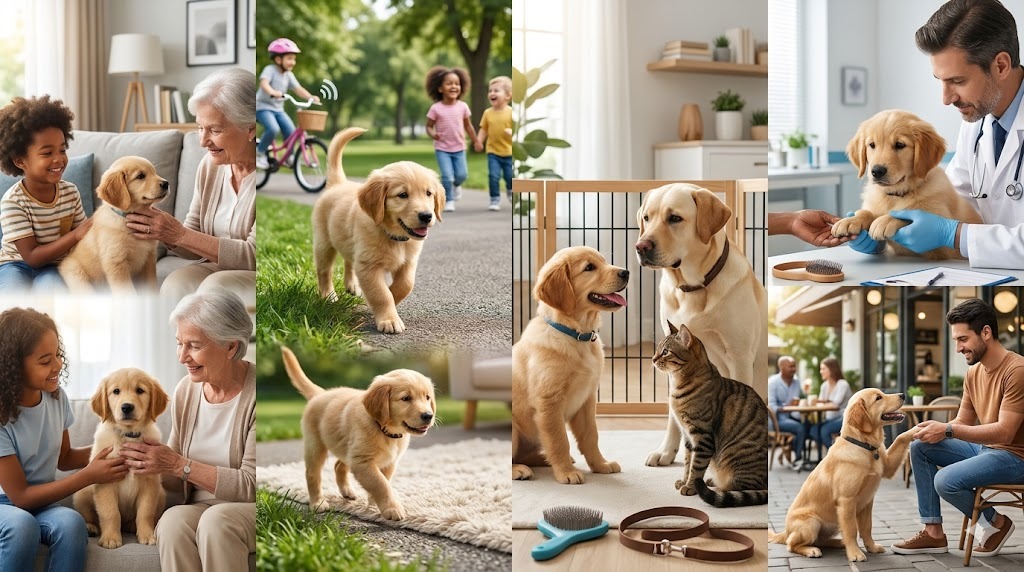
- People - different ages, sizes, ethnicities, clothing styles, mobility aids
- Animals - calm adult dogs, cats if relevant, livestock if relevant
- Environments - surfaces, sounds, sights
- Handling - vet exam, grooming, restraint
- Objects - strollers, suitcases, umbrellas, garbage trucks
For each category, the puppy should have dozens of positive experiences, not just one or two.
Week-by-Week Plan
Week 8-9 (just home)
The puppy has just left their litter - major emotional adjustment. Don’t immediately overwhelm them.
Focus:
- Acclimate to your home, crate, family
- Begin name recognition
- Basic potty training routine
- Start handling: gentle paw touches, ear checks, mouth opens (paired with treats)
- Begin crate training (5-10 minute sessions)
Exposure goals (low intensity):
- Doorbell ringing (with someone outside)
- Vacuum (off, then briefly on at distance)
- Different floor surfaces inside the home
- Calm visitors (1-2 at a time, brief visits)
Carrier or sling note: A pet carrier sling lets you take the puppy on errands without putting them down in disease-risky areas. This is one of the highest-value early purchases.
Week 9-10 (begin gentle outings)
The puppy is settled. Time to take socialization outside the home in controlled ways.
Focus:
- Continue handling
- Introduce loose-leash walking in the yard
- First car rides (short, positive)
- Meet 3-5 new adult humans this week (one at a time)
Exposure goals:
- Carry puppy on a short walk in a quiet neighborhood
- Sit on a bench at a coffee shop with puppy in carrier for 15 minutes
- Drive to a low-traffic parking lot and let puppy see cars from inside your car
- Bath at home (warm water, gentle, treats)
Week 10-11 (puppy class begins)
If your vet approves, this is the week to start puppy class. A good puppy class requires vaccine records from all puppies and supervises play closely.
Focus:
- Enroll in puppy socialization class
- Begin meeting calm adult dogs (friends’ dogs only, verified vaccinated)
- Continue daily handling exercises
Exposure goals:
- 1-2 different adult dogs this week
- 5-10 new humans
- New surfaces: grass, gravel, wood deck, tile, metal grates
- Quick visits to: hardware store (in cart), bank drive-through, gas station
Week 11-12 (build variety)
Puppies are absorbing rapidly. The variety, not just the count, of experiences matters.
Focus:
- Add complexity to existing experiences
- Begin meeting children (calm, supervised)
- Continue handling and grooming exposure
Exposure goals:
- Walk in 3-5 new environments
- 10+ new humans across the week
- Hear: traffic, dogs barking, kids playing, motorcycles
- See: people in hats, sunglasses, large coats, with strollers, on bikes, in wheelchairs
- First visit to vet for “happy visit” (no exam, just treats and praise)
Week 12-13 (vet exam exposure)
Start preparing for the lifelong vet relationship.
Focus:
- Practice handling exercises that mimic vet exams
- Begin chewable item training (food puzzles, lick mats)
- Begin separation training (10-20 minute alone time)
Exposure goals:
- Touch every part of puppy (paws between toes, ears, mouth, tail) with treats
- Practice “stay still” on a table or counter (with non-slip mat)
- Continue puppy class
- Hear: thunder recordings, fireworks recordings (low volume, lots of treats)
Week 13-14 (more humans, more dogs)
By now the puppy should be confident in many situations.
Focus:
- High-volume positive human exposure
- Begin training cues: sit, down, come, leave it
- Continue puppy class
Exposure goals:
- 15+ new humans this week
- Outdoor café visit
- Pet-friendly store visit (in carrier or cart only if not fully vaccinated)
- Hear: doorbell, smoke alarm chirp, oven timer, dishwasher
- Meet: men with beards, people with hats, people of different ethnicities, elderly with canes, kids
Week 14-15 (controlled chaos)
Time to expose to slightly higher intensity.
Focus:
- Crowd exposure (still in carrier if not fully vaccinated)
- Train through distractions
- Continue handling exercises
Exposure goals:
- Farmer’s market or outdoor festival (in carrier or sling)
- Restaurant patio
- Car wash from inside car (loud, weird sounds)
- See: skateboards, dogs of different sizes from a distance, runners
- Continue puppy class
Week 15-16 (transition to ground)
If vaccines are complete, the puppy can now interact with the ground freely.
Focus:
- Free walking on leash in busy areas
- Group classes with other vaccinated dogs
- Continue exposure to anything you haven’t covered
Exposure goals:
- Walk in a city park
- Visit dog-friendly stores on the floor
- Meet calm dogs at puppy class or controlled playdates
- Vet visit for booster vaccines (with treats!)
Tools That Make Socialization Easier
A waist-attached treat pouch
You’ll go through hundreds of treats during socialization. A treat pouch on your hip means treats are always in reach.
Tiny soft training treats
Puppies need treats small enough to eat in a second and high-value enough to motivate. Look for treats that are roughly pea-sized, soft, and meat-based.
A long line for safe outdoor exploration
A 15-30 foot light cotton or biothane line lets the puppy explore at a distance while you maintain control. Used in safe fenced areas, this is more enriching than a 6-foot leash.
The Three Common Mistakes
1. Going too fast
Five overwhelming experiences a day is worse than one positive experience a day. If the puppy becomes fearful or tail-tucked, you’ve overdone it - back off and pair the next exposure with more treats.
2. “He needs to figure it out”
Letting a puppy “tough it out” when scared sensitizes them. The right response to a fearful puppy is to retreat to a comfortable distance, offer treats, and try again at lower intensity.
3. Skipping handling
A puppy who’s wonderful with strangers and dogs but freaks out at the vet hasn’t been properly socialized. Daily handling exercises - touching every body part with treats - pay off for the dog’s entire life.
When to Get Professional Help
Some puppies show fearful tendencies that won’t respond to amateur socialization. Signs you need a certified veterinary behaviorist or trainer:
- Puppy avoids eye contact, hides, or shakes regularly
- Aggressive displays (growling, snapping) at humans or dogs
- Excessive startle reflex with slow recovery
- Inability to settle in any environment
Early intervention is dramatically more effective than waiting until the dog is older.
After 16 Weeks: It’s Not Over
The critical window closes around 16 weeks, but socialization continues for life. Adolescent dogs (4-18 months) often go through a “second fear period” around 6-14 months where new fears can develop. Continue exposing the dog to positive new experiences throughout adolescence and adulthood.
Frequently Asked Questions
Can I socialize my puppy before they’re fully vaccinated?
Yes - and you should. The AVSAB and most modern veterinary organizations recommend starting socialization at 8 weeks, with sensible precautions: avoid dog parks and unknown dogs, carry the puppy in busy areas, host only known healthy dogs.
How many people should my puppy meet?
Aim for 100 different people in the 8-16 week window. They should vary in age, appearance, and behavior. Many should give treats.
What if I missed the socialization window?
Older puppies and adult dogs can still be socialized, but the process takes longer and the results are often partial. A certified trainer or veterinary behaviorist can help.
Is dog park exposure good for puppies?
Not before 16 weeks (disease risk), and not at any age unless your dog is confident and the park is well-managed. Most experienced trainers recommend skipping dog parks entirely in favor of curated playdates.
Are puppy classes worth it?
Yes, for almost every puppy. The structured exposure, professional supervision, and access to multiple vaccinated puppies for play is hard to replicate at home.
My puppy is fearful - am I doing something wrong?
Possibly not. Some breeds and individual puppies have higher baseline anxiety - our dog breed guides note temperament tendencies worth knowing going in. Work with a trainer early. Avoid the temptation to “expose more” - that often backfires. Focus on quality and positive emotional state.
Final Word
The puppy socialization window is short and unforgiving. The owners who put in the work between 8 and 16 weeks tend to have the dogs people compliment in their teens - calm at the vet, friendly with strangers, unbothered by weird noises, easy in new environments. The owners who skip this period often spend years compensating.
Carry your puppy to weird places. Feed treats while strangers pet them. Bring them to the vet to say hello with no exam. Brush them, examine their paws, look in their ears. Do it dozens of times. Future you will be grateful.
Related Reading
Last updated: May 2026.