Beauceron
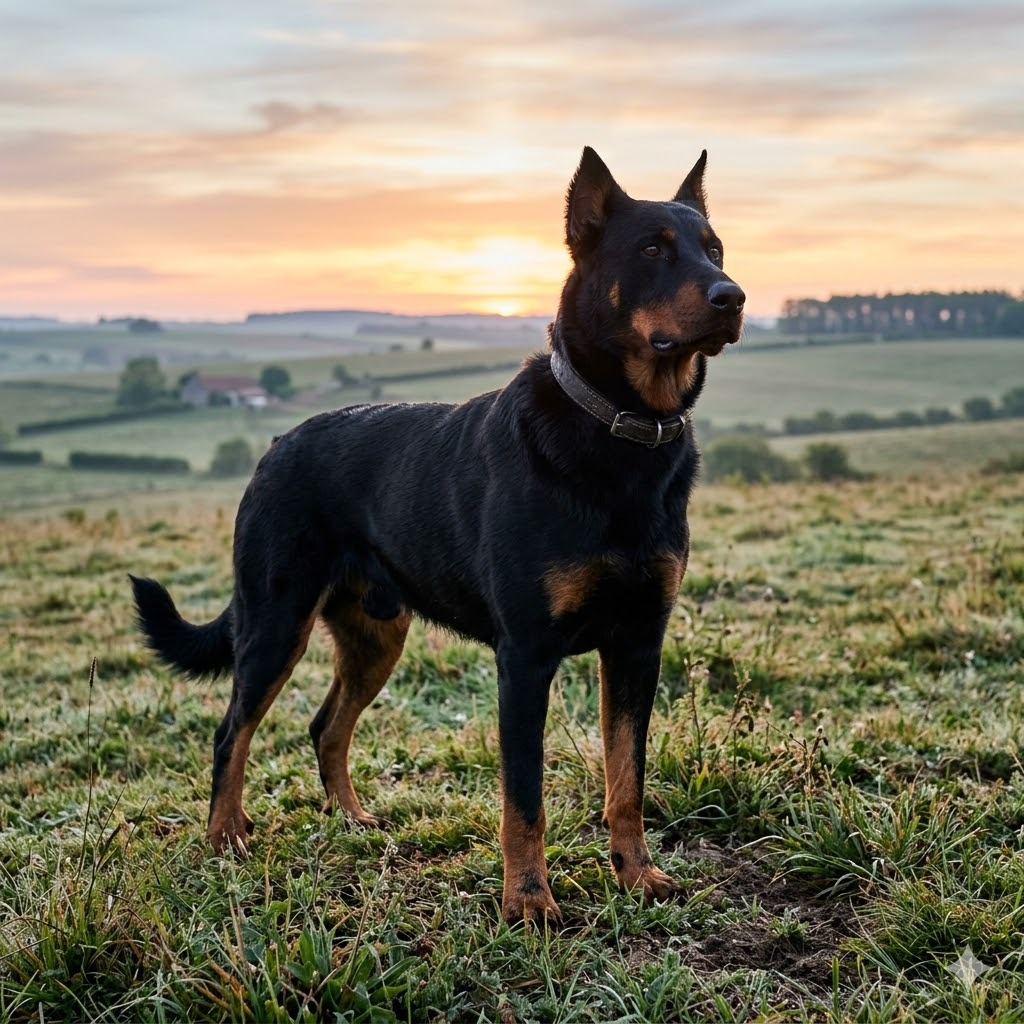
The Beauceron is a large, powerful French herding dog - an athletic, intense, and highly capable working breed sometimes called the "Bas Rouge" for the distinctive red markings on its lower legs.
🗓️ Last reviewed: July 2026
Overview
The Beauceron is a large, powerful French herding dog - an athletic, intense, and highly capable working breed sometimes called the "Bas Rouge" for the distinctive red markings on its lower legs. Bred to move and guard vast flocks across the plains of France, the Beauceron combines the drive of a serious working dog with a deeply biddable, loyal nature. It is intelligent, trainable, and eager to partner with its owner, but it is emphatically not a beginner's dog: it needs experienced leadership, real physical and mental exercise, and a genuine job to be at its best. Males typically weigh 32-50 kg (70-110 lb).
History & Origins
The Beauceron is a native French herding and guarding breed, developed on the open agricultural plains around Paris - its name is linked to the Beauce region, though it worked widely across northern France. For centuries it managed large flocks of sheep, moving them without wolf-hunting aggression and guarding them and the farm against predators and intruders.
The breed was formally distinguished from its rough-coated relative, the Briard, in the late 1800s. A French veterinarian, Pierre Mégnin, is credited with identifying and naming the two breeds separately around 1888, with the smooth-coated plains dog becoming the Beauceron and the long-coated one the Briard. The first breed standard followed soon after.
Beaucerons served with distinction in both World Wars as messenger dogs, mine detectors, and search dogs, and the breed's intelligence and courage were widely noted. Today the Beauceron works in herding, protection sport, police and military roles, and search and rescue, while also being kept as a devoted family guardian by experienced owners. The American Kennel Club recognised the breed in 2007.
Appearance
Large, muscular, and imposing, but built for endurance rather than bulk. Males stand 65-70 cm (25.5-27.5 in) and weigh 32-50 kg (70-110 lb); females are smaller. The overall impression is of a strong, athletic, well-balanced dog capable of covering ground tirelessly.
Key features:
- Coat: short, dense, coarse outer coat lying close to the body, with a fine woolly undercoat; slightly longer feathering on the legs and tail.
- Colour: black-and-tan (the classic "Bas Rouge" with rust markings, including on the lower legs) or harlequin (grey, black, and tan mottling).
- Head: long and well-chiselled, with a confident, alert expression.
- Eyes: dark and expressive; harlequins may have one or both blue eyes.
- Ears: set high; traditionally cropped, but natural (drop) ears are now standard in many countries.
- Feet: distinctively, the breed carries double dewclaws on each hind leg, a required breed trait.
- Tail: long, carried low with a slight hook.
Temperament & Character
Confident, intense, and deeply loyal. The Beauceron is a serious working dog with strong instincts to herd, guard, and protect. It bonds closely with its family and is calm and affectionate at home once its needs are met, but it is watchful, territorial, and naturally suspicious of strangers - a genuine guardian.
The breed is highly intelligent and biddable, which makes it a joy to train for an experienced owner but a handful for an unprepared one. A Beauceron matures slowly, often not settling until two or three years old, and during that time it needs firm, fair structure. Under-stimulated or poorly led, the breed can become dominant, pushy, or reactive.
With children in its own family the Beauceron is typically protective and gentle, though its size, energy, and herding instinct mean supervision is important. It can be dog-selective and needs careful socialisation.
Care
Coat & Grooming
The Beauceron's short, dense double coat is low-maintenance compared with its long-coated cousins. A weekly brush with a firm bristle brush or grooming mitt keeps it healthy and removes loose hair, increasing to several times a week during the twice-yearly seasonal shed, when the woolly undercoat blows out heavily.
Baths are only needed occasionally as the coat is fairly self-cleaning. Clean ears weekly, trim nails every 3 weeks (taking care with the double dewclaws), and brush teeth several times weekly.
Exercise & Activity Needs
Very high. The Beauceron needs a minimum of 90-120 minutes of vigorous daily exercise plus meaningful mental work. Long runs, hikes, structured play, herding, and dog sports all suit it; a simple walk around the block is nowhere near enough for this powerful, driven breed.
The Beauceron excels at herding, protection sport (IGP), tracking, agility, obedience, and search and rescue, and it genuinely needs a job. An under-exercised, under-employed Beauceron will find its own outlets, usually destructive ones, and can develop serious behavioural problems.
Health & Lifespan
Average lifespan is 10-12 years.
Common concerns:
- Hip and elbow dysplasia - screen breeding stock.
- Bloat (GDV) - a real risk in this deep-chested breed.
- Dilated cardiomyopathy and other heart conditions.
- Osteochondritis dissecans (OCD) in growing dogs.
- Hypothyroidism.
Buying from a breeder who screens hips, elbows, and heart is important for this breed.
Feeding & Nutrition
A large, highly active Beauceron typically eats 3-4 cups of quality food per day divided into two meals, with amounts adjusted for size, age, and heavy workload - working dogs need considerably more. As a deep-chested breed, it should be fed in two smaller meals rather than one large one, and kept from hard exercise within an hour of eating to reduce bloat risk.
Because the breed grows slowly and is prone to joint issues, large-breed puppy nutrition and controlled growth matter. Keep adults lean and muscular, use slow-feeder bowls for fast eaters, and always provide fresh water.
Pros & Cons
Pros
- Intelligent, biddable, and versatile working dog.
- Deeply loyal, protective family guardian.
- Athletic and capable in almost any dog sport.
- Low-maintenance coat.
- Striking, powerful appearance.
Cons
- Very high exercise and mental stimulation needs.
- Needs experienced, confident handling - not for beginners.
- Slow to mature; requires long-term structure.
- Naturally wary and territorial without strong socialisation.
- Large, powerful dog that needs space and a job.
Best Suited For
- Experienced owners who want a serious working dog.
- Active homes with space and time for real exercise.
- Sport, herding, or protection enthusiasts.
- Households wanting a devoted, capable guardian.
- Owners committed to ongoing training and socialisation.
Not suited for first-time dog owners, sedentary households, apartment living without serious activity, or anyone unable to provide leadership, exercise, and a job.
Beauceron puppy growth chart
A typical growth curve for a large breed like the Beauceron, estimated from its adult weight of 32-50 kg. Puppies vary with sex, genetics and diet, so treat this as a guide - for your own puppy, use the puppy weight predictor.
| Age | Typical weight | % of adult |
|---|---|---|
| 2 mo | 7-11 kg | 22% |
| 3 mo | 10.6-16.5 kg | 33% |
| 4 mo | 13.8-21.5 kg | 43% |
| 6 mo | 19.2-30 kg | 60% |
| 9 mo | 25.6-40 kg | 80% |
| 12 mo | 29.4-46 kg | 92% |
| Adult | 32-50 kg | 100% |
Beauceron - frequently asked questions
Is a Beauceron a good first dog?
No. The Beauceron is a powerful, intelligent, driven working breed that needs experienced, confident handling. First-time owners are usually overwhelmed by its exercise needs, slow maturity, and guarding instinct.
What does "Bas Rouge" mean?
It means "red stockings" in French, referring to the rust-coloured tan markings on the Beauceron's lower legs, a hallmark of the classic black-and-tan colouring.
Are Beaucerons aggressive?
No, not when properly raised. They are protective and territorial by nature but should be stable and discerning. Early socialisation and firm, fair leadership turn the guarding instinct into sound judgement.
How much exercise does a Beauceron need?
A lot - at least 90 to 120 minutes of vigorous daily activity plus mental work and ideally a job. A walk around the block will not satisfy this breed.
Beauceron vs Briard - what is the difference?
Both are French herders once considered the same breed. The Beauceron is smooth-coated, more intense and protection-oriented; the Briard is long-coated and more of a devoted companion herder. Both carry double hind dewclaws.
🧠 Test yourself: guess the dog
Three clues from our quiz bank, each about another of our dogs. Can you name them?
Clue 1.A medium-large guarding breed, it served as one of the first police and military service dogs in its homeland.
It's the Boxer - read the full profile →
Clue 2.This versatile liver-spotted gundog freezes and aims its whole body at hidden game, even in water.
It's the German Shorthaired Pointer - read the full profile →
Clue 3.Developed in southern Africa from native dogs and European breeds, this muscular hunter is nicknamed the lion dog.
It's the Rhodesian Ridgeback - read the full profile →
💛 Adoptable Beaucerons near you
Real dogs of this breed (and close mixes) waiting in shelters and rescues right now, live from Petfinder. We have no affiliation and earn nothing - if someone catches your eye, the link goes straight to their shelter. New to adopting? Start with our adoption guide.
Widget not loading (some ad-blockers hide it)? Search directly on petfinder.com.