Bluetick Coonhound
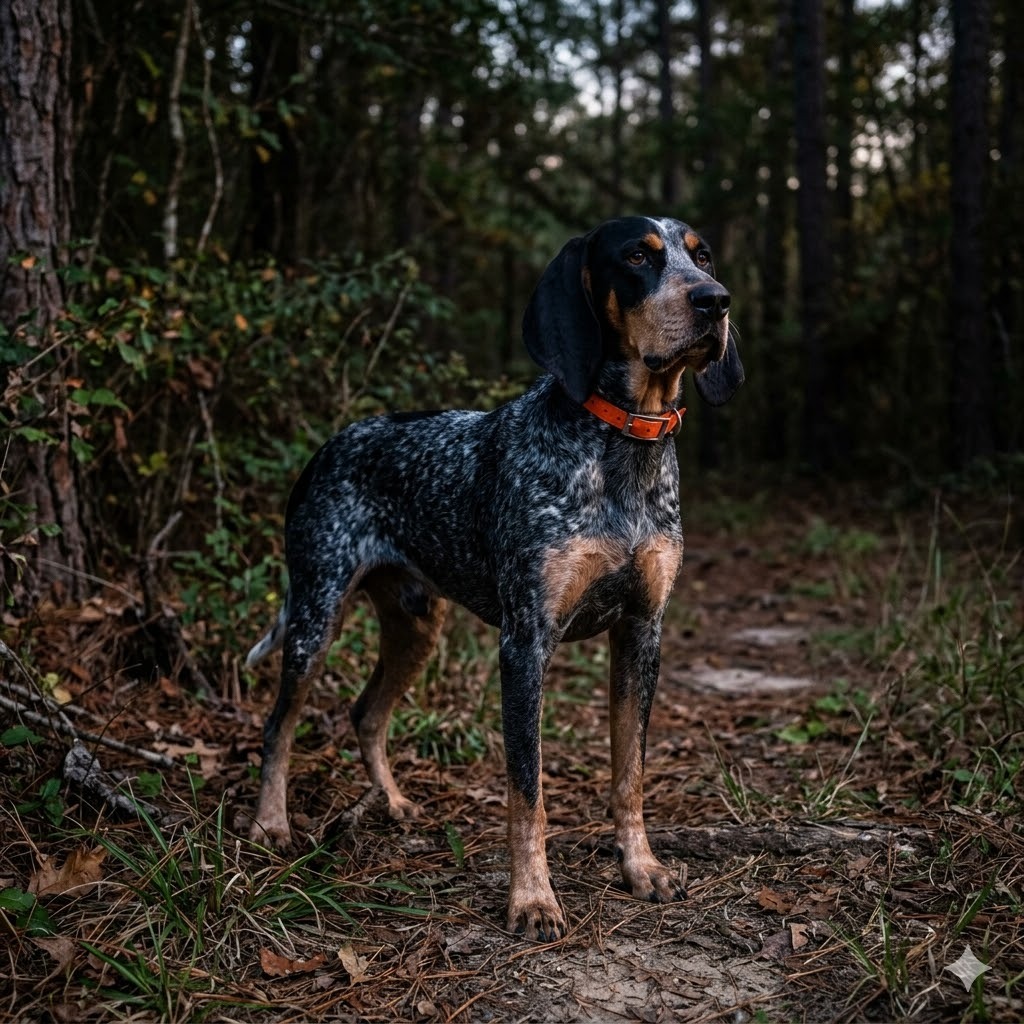
The Bluetick Coonhound is a striking American scenthound named for its dense, mottled coat of black ticking on a white base that reads as a deep, cold blue.
🗓️ Last reviewed: July 2026
Overview
The Bluetick Coonhound is a striking American scenthound named for its dense, mottled coat of black ticking on a white base that reads as a deep, cold blue. Bred in the southern United States to trail and tree raccoon and larger game, it is a cold-nosed, determined tracker with legendary endurance and one of the loudest voices in the dog world. Males stand 56-69 cm at the shoulder and weigh 20-36 kg. Let us be honest about this breed: the Bluetick is beautiful, loyal, and hardworking, but it is also intensely vocal, deeply driven by its nose, and not an easy first dog. It bays, it bawls, it chops, and it will follow a scent for miles regardless of what you shout. In the right active, rural, secure-fenced home it is a magnificent companion. In the wrong one it is a very loud problem.
History & Origins
The Bluetick Coonhound descends from hounds brought to the American South by European settlers - especially the French hounds (such as the Grand Bleu de Gascogne) that lent the breed its blue mottling and cold-nose trailing ability, crossed with English Foxhounds and other regional coonhounds. The breed was developed across the southern states, with a particular association with Louisiana and Tennessee.
Originally Blueticks were classed together with the English Coonhound, but breeders who valued a slower, colder-nosed, more deliberate tracker split them off to preserve that style. The Bluetick was bred to work older, fainter trails ("cold noses") with dogged persistence, and to bawl and chop loudly so hunters could follow the chase and know when quarry was treed.
The United Kennel Club recognised the Bluetick Coonhound as a separate breed in 1946, and the AKC in 2009. The Bluetick is also the mascot of the University of Tennessee, "Smokey." Today it remains a working coon and big-game hound and, increasingly, a companion for owners who can handle its voice and drive.
Appearance
A handsome, muscular, medium-large hound built for stamina over rough terrain rather than raw speed. Males stand 56-69 cm (22-27 in) and weigh 20-36 kg (45-80 lb); females are somewhat smaller. The overall impression is of a well-proportioned, sturdy, athletic working hound with a keen, businesslike expression.
Key features:
- Coat: short, smooth, glossy, and dense enough to protect against brush and weather.
- Colour: the distinctive dark blue effect created by heavy black ticking and mottling over a white ground, usually with black patches, and often tan points on the head, chest, and legs, sometimes with red ticking on the lower legs.
- Head: broad, slightly domed, with a squarish, deep muzzle.
- Eyes: large, round, dark brown, with a soft, pleading hound expression.
- Ears: long, thin, low-set, hanging in graceful folds.
- Body: deep chest, level back, muscular hindquarters for endurance and climbing.
- Tail: medium length, set high, carried up in a graceful curve.
Temperament & Character
Devoted, affectionate, and intelligent, but strong-willed and intensely driven. At home a well-exercised Bluetick is loyal and loving with its family, often gentle and playful with children it is raised with, and generally sociable with other dogs, especially fellow pack hounds. It bonds closely with its people and does not like being left alone for long stretches.
The breed is alert and will bay at strangers and unusual sounds, which makes it a good alarm dog, though it is rarely truly aggressive. With small pets, cats, and poultry, caution is needed - the prey drive is high and instinctive.
The defining traits are voice and nose, and it is only fair to be blunt about both. The Bluetick is one of the most vocal of all breeds: it bawls on the trail, chops when the quarry is treed, and will "sing" from the yard when bored or excited. And it is cold-nosed and single-minded - once it locks onto a scent, its ears switch off, and it will trail with grim determination for as long and as far as the scent runs. These are working virtues in the field and genuine management challenges in a pet home.
Care
Coat & Grooming
Very low-maintenance. The short, glossy coat needs only a weekly going-over with a rubber curry or hound mitt to remove loose hair and keep it shining. Blueticks shed moderately all year. Bathe every couple of months or after they roll in something pungent, which scenthounds reliably do.
The long, low-set ears are the real grooming focus - they hang over the canal, trap moisture and dirt, and are prone to infection, so check and clean them weekly and dry them after wet work. Trim nails regularly, brush teeth several times a week, and keep an eye on the folds of the ears for redness or odour.
Exercise & Activity Needs
Very high. The Bluetick was built to hunt all night over rough country, and it carries that stamina into the living room. An adult needs a good hour or more of vigorous daily exercise - long walks, jogging, hiking, or safe running in a secure area - plus mental work. An under-exercised Bluetick becomes destructive, restless, and, above all, loud, baying and howling to release pent-up energy.
Off-lead freedom must be confined to securely fenced or genuinely safe areas, and the fence must be tall and solid. On a scent the Bluetick is deaf to recall and relentless; it will trail across roads, climb, dig, and roam for miles. Strong, secure fencing is not optional with this breed - a loose Bluetick can be gone for days.
Scent work, tracking, and nose games are the ideal outlet, engaging the dog's greatest strength. Many Blueticks also thrive in competitive coonhound events, tracking trials, and lure coursing, which channel the drive productively.
Health & Lifespan
Average lifespan is 11-12 years.
Common concerns:
- Hip dysplasia - the chief orthopaedic concern.
- Ear infections - very common due to the long, heavy, low-hanging ears.
- Bloat and gastric torsion (GDV) - a real risk in this deep-chested breed.
- Cataracts and other eye conditions in some lines.
- Obesity - a food-driven hound that gains weight readily without enough exercise.
- Krabbe disease (globoid cell leukodystrophy) - a rare inherited neurological disorder for which a DNA test exists.
Overall the Bluetick is a hardy, healthy working breed, and diligent ear care plus weight and joint management head off most everyday issues.
Feeding & Nutrition
A high-energy, food-motivated hound that needs quality nutrition to fuel its endurance. Adults typically eat a large-breed or active formula divided into two meals a day, with more for working or heavily exercised dogs and less for quieter ones. Blueticks will happily overeat, so portions must be measured to prevent the weight gain the breed is prone to.
Because the breed is deep-chested and at risk of bloat, feed two smaller meals rather than one large one, use a slow feeder for fast eaters, and avoid hard exercise within an hour either side of meals. Keep the dog lean and hard-muscled, with ribs easily felt. Fresh water always available.
Pros & Cons
Pros
- Loyal, affectionate, and devoted to its family.
- Striking, distinctive blue-mottled coat that is easy to maintain.
- Superb cold nose and outstanding endurance.
- Hardy and generally healthy, often good with children and pack dogs.
- An excellent tracking and hunting partner.
Cons
- Extremely vocal - among the loudest of all breeds.
- Strong nose and prey drive - roams for miles and ignores recall on a scent.
- Stubborn and challenging to train; not for first-time owners.
- Needs a tall, secure fence and heavy daily exercise.
- Prone to ear infections and weight gain; poorly suited to apartments or quiet neighbourhoods.
Best Suited For
- Experienced, active owners in rural or semi-rural settings.
- Homes with a tall, securely fenced yard.
- Hunters and scent-sport enthusiasts who will use the dog's nose.
- People who genuinely do not mind a loud, vocal dog.
Not suited for first-time owners, apartment dwellers, homes with close neighbours or noise rules, owners wanting reliable off-lead recall, or sedentary households.
Bluetick Coonhound puppy growth chart
A typical growth curve for a large breed like the Bluetick Coonhound, estimated from its adult weight of 20-36 kg. Puppies vary with sex, genetics and diet, so treat this as a guide - for your own puppy, use the puppy weight predictor.
| Age | Typical weight | % of adult |
|---|---|---|
| 2 mo | 4.4-7.9 kg | 22% |
| 3 mo | 6.6-11.9 kg | 33% |
| 4 mo | 8.6-15.5 kg | 43% |
| 6 mo | 12-21.6 kg | 60% |
| 9 mo | 16-28.8 kg | 80% |
| 12 mo | 18.4-33.1 kg | 92% |
| Adult | 20-36 kg | 100% |
Bluetick Coonhound - frequently asked questions
How loud is a Bluetick Coonhound really?
Very loud, and honestly so. It bawls on the trail, chops when it trees quarry, and will bay and "sing" from the yard when bored or excited. This voice carries a long way and cannot be trained out entirely - it is a defining feature of the breed.
Are Bluetick Coonhounds good for first-time owners?
Not usually. They are intelligent but stubborn, strongly nose-driven, very vocal, and need heavy exercise and secure fencing. Experienced, active owners in the right setting do far better with them.
Can a Bluetick be trusted off the lead?
No, not reliably. It is a cold-nosed, determined tracker that will follow a scent for miles, deaf to recall. Off-lead freedom must be limited to securely fenced or genuinely safe areas.
Why do Blueticks need such secure fencing?
Because a scent trail overrides everything, and a loose Bluetick can roam for miles or even days. It will climb, dig, and test weak boundaries, so a tall, solid, secure fence is essential.
Are Bluetick Coonhounds good family dogs?
They can be, in the right home. A well-exercised Bluetick is loyal, affectionate, and often good with children and other dogs, but the noise, drive, and exercise needs mean they suit active, tolerant, rural-minded families best.
🧠 Test yourself: guess the dog
Three clues from our quiz bank, each about another of our dogs. Can you name them?
Clue 1.Despite a name suggesting Denmark, this towering German breed was bred to hunt wild boar and is nicknamed the 'Apollo of dogs.'
It's the Great Dane - read the full profile →
Clue 2.A toy breed famed for sitting on royal laps, its tricolor and ruby coats come in four named patterns.
It's the Cavalier King Charles Spaniel - read the full profile →
Clue 3.Widely considered the most intelligent dog breed, this herder controls livestock with an intense, crouching stare known as the eye.
It's the Border Collie - read the full profile →
💛 Adoptable Bluetick Coonhounds near you
Real dogs of this breed (and close mixes) waiting in shelters and rescues right now, live from Petfinder. We have no affiliation and earn nothing - if someone catches your eye, the link goes straight to their shelter. New to adopting? Start with our adoption guide.
Widget not loading (some ad-blockers hide it)? Search directly on petfinder.com.