Dogue de Bordeaux
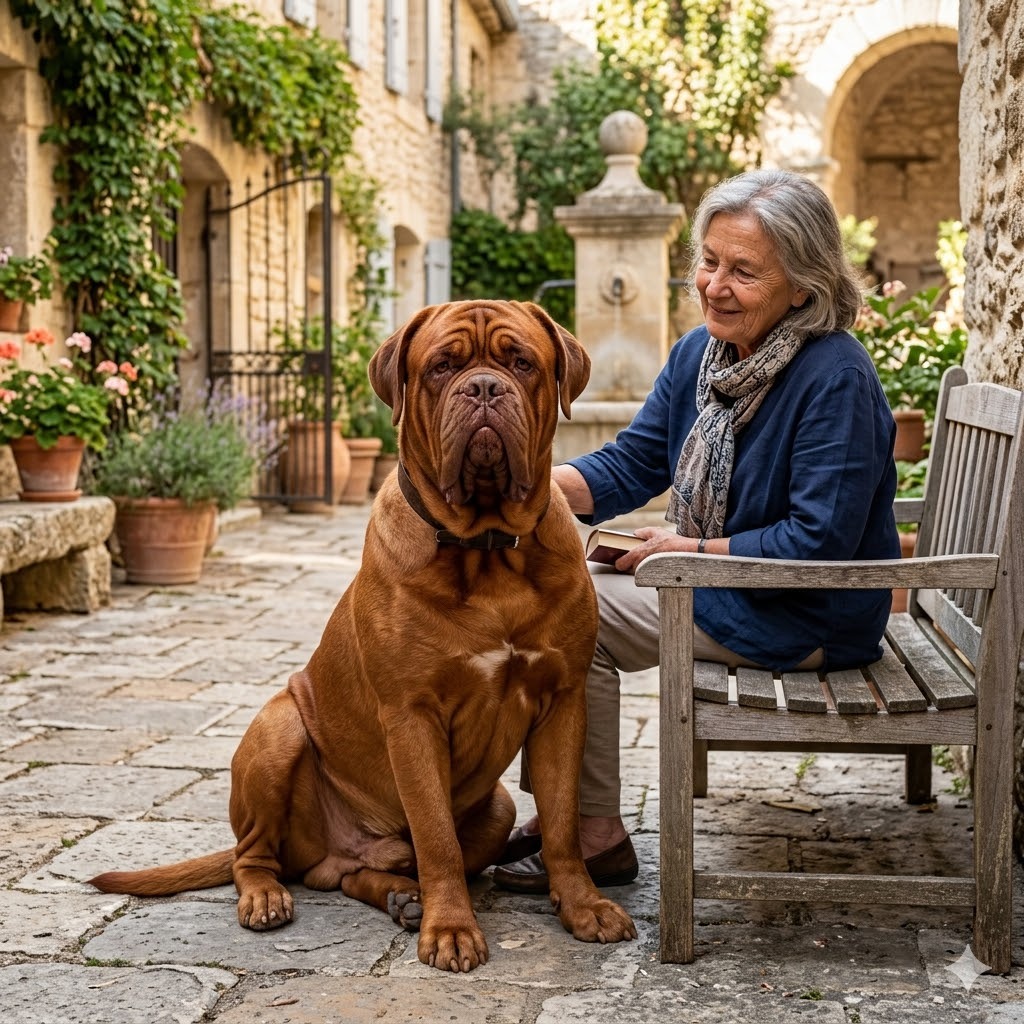
The Dogue de Bordeaux is a massive French mastiff of ancient guardian stock, instantly recognised by its enormous wrinkled head - one of the largest heads relative to body of any dog breed - and its warm, mahogany-to-fawn red coat.
🗓️ Last reviewed: July 2026
Overview
The Dogue de Bordeaux is a massive French mastiff of ancient guardian stock, instantly recognised by its enormous wrinkled head - one of the largest heads relative to body of any dog breed - and its warm, mahogany-to-fawn red coat. Also called the French Mastiff, this is a powerful, low-slung, muscular guardian that hides a deeply devoted, calm, and affectionate nature behind an intimidating exterior. Males typically weigh 50-65 kg (110-145 lb) and stand low and broad rather than tall. The breed drools heavily, snores, and lives a heartbreakingly short life, but for the right owner it is one of the most loyal companions in dogdom.
History & Origins
The Dogue de Bordeaux is among the oldest French breeds, with mastiff-type ancestors traced back centuries in the Bordeaux region of south-west France. It descends from ancient molosser guardians used across Europe for war, dog fighting, baiting large game, and guarding property and livestock.
For generations these dogs worked as estate guardians, cattle drovers, and boar-hunting catch dogs. The breed was nearly wiped out during the French Revolution, when many were killed alongside the aristocratic estates they protected, and again during both World Wars.
A written breed standard was first drawn up in the late 1800s, and French breeders worked steadily through the 20th century to stabilise type. The breed remained little known outside France until the 1989 film Turner and Hooch, which featured a Dogue and introduced the breed to a huge international audience. The AKC granted full recognition in 2008. Careful breeding today aims to reduce the exaggeration that shortens these dogs' lives.
Appearance
Massive, thickset, and low to the ground. Males weigh 50-65 kg (110-145 lb) and stand 60-68 cm (23.5-27 in); females are somewhat smaller. The body is broad, deep, and powerfully muscled, longer than tall.
Key features:
- Coat: short, soft, fine, close-lying.
- Colour: all shades of fawn, from light golden to deep mahogany red. A black or brown mask is common, and small white patches on the chest and toes are permitted.
- Head: enormous, broad, and deeply wrinkled - the breed's defining trait. The muzzle is short and thick (brachycephalic).
- Eyes: oval, set wide, hazel to dark brown.
- Ears: small, drop, set high.
- Expression: wrinkled, frowning, dignified.
- Tail: thick at the base, tapering, carried low.
Temperament & Character
Calm, confident, and profoundly devoted. The Dogue de Bordeaux is a natural guardian that bonds intensely with its family and is happiest lying near its people. Despite the fearsome look, a well-bred Dogue is even-tempered, patient, and gentle at home, often described as a "gentle giant" that thinks it is a lapdog.
The breed is watchful and territorial. It rarely needs to be taught to guard - the instinct is innate. Early, thorough socialisation is essential to keep this protectiveness balanced and to prevent it from tipping into suspicion or reactivity.
With family children the breed is typically tolerant and affectionate, but its sheer size means small children can be knocked over easily. Interactions must always be supervised. Dogues can be dog-aggressive, particularly toward same-sex dogs, and same-household pairings need care.
Care
Coat & Grooming
The short coat is very low-maintenance: a weekly rub-down with a rubber curry or hound glove removes loose hair, and baths are needed only occasionally. The breed sheds moderately year-round.
The real grooming work is the wrinkles and the drool. Facial folds must be wiped clean and dried several times a week to prevent skin infection. Dogues are champion droolers - owners keep towels handy, and slobber ends up on walls and clothing. Clean the ears weekly, trim nails regularly, and brush the teeth often.
Exercise & Activity Needs
Moderate. Despite the powerful build, this is not a high-energy breed. Two or three short-to-moderate walks a day plus some gentle play keep an adult fit - roughly 45-60 minutes total. Over-exercising, especially in a growing puppy, damages developing joints.
Crucially, the Dogue is brachycephalic and heavy, so it overheats dangerously fast. Never exercise in the heat of the day; walk in the cool of morning and evening, always carry water, and watch for laboured breathing. Heatstroke is a genuine killer in this breed.
Health & Lifespan
Average lifespan is 5-8 years - one of the shortest of any breed. This is an honest and painful reality of owning a Dogue de Bordeaux, and prospective owners must accept it.
Common concerns:
- Heart disease - dilated cardiomyopathy and aortic stenosis are leading causes of early death.
- Hip and elbow dysplasia - common in the heavy build.
- Brachycephalic airway issues - the short muzzle restricts breathing and cooling.
- Heatstroke - a major and often fatal risk.
- Bloat (GDV) - deep-chested breeds are high-risk.
- Cancer - relatively common in older dogs.
- Orthopaedic strain - cruciate ligament tears and arthritis.
Buy only from breeders who health-test hearts and hips, and be prepared for significant veterinary care.
Feeding & Nutrition
A large-breed adult typically eats 4-6 cups of quality food daily, split across two meals to reduce bloat risk. Puppies must be fed a large-breed growth formula that controls calcium and calorie intake - overfeeding a Dogue puppy forces fast growth and wrecks the joints.
Keep the dog lean; excess weight is devastating for the heart, joints, and heat tolerance. Avoid heavy activity for an hour before and after meals, use a slow-feeder or raised approach as advised by your vet, and always provide fresh water.
Pros & Cons
Pros
- Deeply loyal, affectionate family guardian.
- Calm and low-key indoors.
- Moderate exercise needs.
- Short, easy-care coat.
- Naturally protective without training.
Cons
- Very short lifespan (5-8 years) and high health costs.
- Heavy drooling and snoring.
- Serious heat intolerance - brachycephalic.
- Enormous size and strength demand real training.
- Can be dog-aggressive; not for novices.
Best Suited For
- Experienced owners who want a devoted guardian.
- Homes with space and a cool climate or good air conditioning.
- People who accept heavy drool and a short lifespan.
- Households that can supervise the dog around small children.
Not suited for first-time owners, hot climates without climate control, the house-proud, families with very young toddlers left unsupervised, or anyone unable to fund large-breed veterinary care.
Dogue de Bordeaux puppy growth chart
A typical growth curve for a giant breed like the Dogue de Bordeaux, estimated from its adult weight of 50-65 kg. Puppies vary with sex, genetics and diet, so treat this as a guide - for your own puppy, use the puppy weight predictor.
| Age | Typical weight | % of adult |
|---|---|---|
| 2 mo | 9-11.7 kg | 18% |
| 3 mo | 14-18.2 kg | 28% |
| 4 mo | 18.5-24.1 kg | 37% |
| 6 mo | 26-33.8 kg | 52% |
| 9 mo | 35-45.5 kg | 70% |
| 12 mo | 41.5-54 kg | 83% |
| Adult | 50-65 kg | 100% |
Dogue de Bordeaux - frequently asked questions
Why do Dogue de Bordeaux live such short lives?
Their great size, heart disease, and orthopaedic strain all shorten lifespan. An average of 5-8 years is normal, and owners should go in with eyes open.
Do they drool a lot?
Yes, heavily. The loose lips and jowls mean constant slobber, especially after drinking, eating, or exercise. Towels are a permanent household fixture.
Are they good with children?
Generally gentle and tolerant with their own family's children, but their size makes accidental knock-downs likely, so supervision is essential.
Can they handle hot weather?
Poorly. As a brachycephalic, heavy breed they overheat fast and are prone to fatal heatstroke. They need shade, water, cool-hour exercise, and often air conditioning.
Is the Dogue de Bordeaux good for first-time owners?
No. The combination of size, strength, guarding instinct, stubbornness, and health demands makes this a breed for experienced, committed owners.
🧠 Test yourself: guess the dog
Three clues from our quiz bank, each about another of our dogs. Can you name them?
Clue 1.This small, merry scent hound with a white-tipped tail is famously used to sniff out contraband food in airports because of its keen nose and friendly nature.
It's the Beagle - read the full profile →
Clue 2.This energetic gundog earned its name from the way it 'springs' to flush game birds from cover.
It's the English Springer Spaniel - read the full profile →
Clue 3.Bred at a hospice on a treacherous Alpine pass, this massive rescue dog could sense impending avalanches.
It's the Saint Bernard - read the full profile →
💛 Adoptable Dogue de Bordeauxs near you
Real dogs of this breed (and close mixes) waiting in shelters and rescues right now, live from Petfinder. We have no affiliation and earn nothing - if someone catches your eye, the link goes straight to their shelter. New to adopting? Start with our adoption guide.
Widget not loading (some ad-blockers hide it)? Search directly on petfinder.com.