English Setter
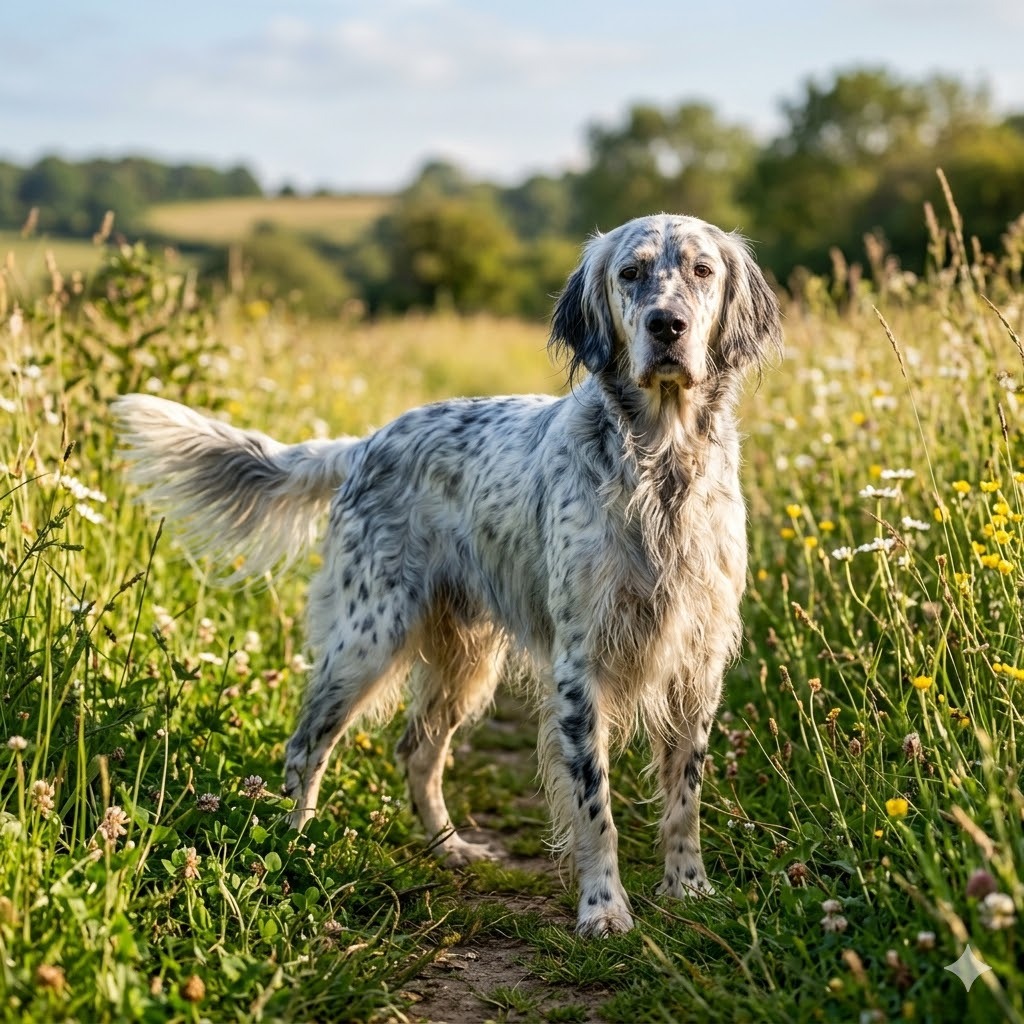
The English Setter is a gentle, elegant gundog known for its sweet nature and its distinctive speckled coat.
🗓️ Last reviewed: July 2026
Overview
The English Setter is a gentle, elegant gundog known for its sweet nature and its distinctive speckled coat. Often described as one of the mellowest of the setters, it combines the working ability of a fine bird dog with a mild, affectionate, and companionable temperament that makes it a wonderful family dog. Its beautifully feathered coat is marked with a unique flecking pattern called "belton," and its calm, people-loving disposition sets it apart from its more excitable setter cousins. Bred over centuries to find and point game birds, the English Setter remains an active dog with real exercise needs, wrapped in one of the kindest personalities in the sporting group.
History & Origins
The English Setter is one of the oldest of the pointing breeds, with roots stretching back several centuries in Britain, where "setting dogs" were used to locate game birds and crouch low so hunters could throw a net over both dog and quarry. Over time these setting spaniels were refined into the modern setter.
The breed as we know it owes much to two 19th-century breeders. Edward Laverack developed a refined strain prized in the show ring, giving rise to the heavier, more ornate "Laverack" type. Purdey and, more famously, R.L. Purcell Llewellin then bred from Laverack's stock to create a lighter, harder-working field dog, the "Llewellin" setter, still favoured by hunters today. These two lines - show and field - remain recognisable within the breed.
The English Setter was among the first breeds recognised by kennel clubs on both sides of the Atlantic in the 1870s and 1880s. It has long been valued both as a capable bird dog and as a devoted companion, and remains popular in both roles.
Appearance
The English Setter is a medium to large, elegant, and well-balanced dog. Males stand around 61-69 cm (24-27 in) at the shoulder and typically weigh 29-36 kg (65-80 lb); females are smaller and lighter, often 20-30 kg (45-66 lb). The build is athletic and graceful, conveying both stamina and refinement.
Key features:
- Coat: flat, silky, and moderately long, with feathering on the ears, chest, legs, underside, and tail.
- Colour: the distinctive "belton" pattern - a white base flecked or ticked with colour. Varieties include blue belton (black flecking), orange belton, lemon belton, liver belton, and tricolour.
- Head: long and lean with a well-defined stop and a soft, gentle expression.
- Eyes: dark and kind, giving the breed its characteristically mild look.
- Ears: moderately long, set low, hanging in a fold.
- Tail: carried level with the back, tapering and well feathered, often in constant gentle motion.
Temperament & Character
The English Setter is famed for its sweet, gentle, and easy-going temperament. Of the setters, it is generally the calmest and most placid, though it is still an active sporting dog. It is deeply affectionate, thrives on human company, and forms strong bonds with its family, disliking being left alone for long stretches.
This is a sociable, tolerant breed that typically gets on beautifully with children and other dogs. Its mild nature makes it a poor guard dog - it is far more likely to greet a stranger than to challenge one. English Setters are sensitive and eager to please, responding to a kind word and wilting under harsh treatment.
While mellow indoors when well exercised, the breed retains a strong bird-finding instinct and enjoys ranging and sniffing. Under-exercised, an English Setter can become bored, restless, and mischievous. Overall, though, it is one of the most companionable and family-friendly of the gundogs, valued as much for its temperament as for its beauty.
Care
Coat & Grooming
The silky, feathered coat needs regular grooming to stay clean and free of mats. Brush two to three times a week, focusing on the feathering behind the ears, on the legs, chest, and tail, where tangles form quickly. Many owners have the coat trimmed periodically to keep the dog neat and manageable.
The long, low-set ears need weekly checking and cleaning, as they trap moisture and are prone to infection. English Setters shed moderately, with heavier seasonal periods. Bathe as needed, keep the feet trimmed and tidy, clip nails regularly, and brush teeth several times a week.
Exercise & Activity Needs
Despite its calm reputation, the English Setter is a sporting breed with real exercise needs - around 60-90 minutes of activity daily. Long walks, off-lead running in safe areas, hiking, and field work all suit it well. Once its needs are met, the breed is famously relaxed and gentle at home.
English Setters enjoy scent games, tracking, agility, and of course hunting and pointing work, which taps their natural instincts. Mental stimulation through training and nose work keeps them content. A dog that is well exercised is a joy indoors; one that is not becomes restless and prone to destructive boredom.
Health & Lifespan
Average lifespan is 11-13 years. The breed is generally healthy, though a few hereditary conditions occur.
Common concerns:
- Hip and elbow dysplasia.
- Hypothyroidism.
- Deafness - occasional, linked to the coat colouring pattern in some lines.
- Ear infections - due to the long, hanging ears.
- Certain cancers in older dogs.
- Allergies and skin conditions.
Buying from a breeder who screens hips, elbows, thyroid, and hearing reduces risk. Regular ear care and weight management support long-term health.
Feeding & Nutrition
An adult English Setter typically eats around 2-3 cups of quality food per day, split into two meals; active and working dogs need more. A balanced diet suited to the dog's size, age, and activity keeps it in lean, athletic condition.
As with other deep-chested breeds, feeding two smaller meals rather than one large one, and avoiding heavy exercise around mealtimes, helps reduce the risk of bloat. Keep the dog lean to protect its joints and stamina. The feathering around the mouth and ears can pick up food and water and may need an occasional wipe. Monitor body condition and adjust portions to activity level.
Pros & Cons
Pros
- Exceptionally gentle, sweet-natured, and affectionate.
- Excellent with children and other dogs.
- Beautiful, distinctive belton coat.
- Calm and relaxed indoors when well exercised.
- Sensitive and eager to please; pleasant to train.
Cons
- Needs substantial daily exercise despite its mellow reputation.
- Feathered coat requires regular grooming.
- Prone to ear infections from long ears.
- Poor guard dog; too friendly to protect.
- Dislikes being left alone for long periods.
Best Suited For
- Families wanting a gentle, affectionate companion.
- Active owners who enjoy walking, hiking, or field sports.
- Homes with children and other pets.
- Owners with time for grooming, exercise, and company.
Not suited for people seeking a guard dog, households where the dog is left alone for long hours, or owners unwilling to provide daily exercise and regular coat care.
English Setter puppy growth chart
A typical growth curve for a large breed like the English Setter, estimated from its adult weight of 29-36 kg. Puppies vary with sex, genetics and diet, so treat this as a guide - for your own puppy, use the puppy weight predictor.
| Age | Typical weight | % of adult |
|---|---|---|
| 2 mo | 6.4-7.9 kg | 22% |
| 3 mo | 9.6-11.9 kg | 33% |
| 4 mo | 12.5-15.5 kg | 43% |
| 6 mo | 17.4-21.6 kg | 60% |
| 9 mo | 23.2-28.8 kg | 80% |
| 12 mo | 26.7-33.1 kg | 92% |
| Adult | 29-36 kg | 100% |
English Setter - frequently asked questions
Are English Setters good family dogs?
Yes. They are among the gentlest and most affectionate of the sporting breeds, typically wonderful with children and other pets, and calm indoors once their exercise needs are met.
What is a "belton" coat?
Belton is the English Setter's distinctive flecked or ticked coat pattern - a white base speckled with colour. Common varieties include blue belton, orange belton, lemon belton, and tricolour.
Are English Setters calm?
For a setter, yes - they are known as the mellowest of the group and are relaxed at home when properly exercised. But they are still active sporting dogs that need daily activity.
Do English Setters need a lot of grooming?
They need brushing several times a week to keep the feathered coat mat-free, plus regular ear cleaning and occasional trimming. Grooming is moderate but consistent.
What is the difference between Laverack and Llewellin setters?
Both are English Setters. The Laverack type comes from a 19th-century show line and tends to be heavier and more ornate, while the Llewellin type was bred for the field and is lighter and harder-working.
🧠 Test yourself: guess the dog
Three clues from our quiz bank, each about another of our dogs. Can you name them?
Clue 1.This rugged, non-shedding working dog has webbed feet and was once a fisherman's helper, even carrying messages between boats.
It's the Portuguese Water Dog - read the full profile →
Clue 2.Famous for its huge size and gentle nature, this drooling mountain dog comes in short and long coats.
It's the Saint Bernard - read the full profile →
Clue 3.One of the oldest Arctic sled dogs, this powerful freighting breed was developed by an Inuit people to haul heavy loads over long distances, not to race for speed.
It's the Alaskan Malamute - read the full profile →
💛 Adoptable English Setters near you
Real dogs of this breed (and close mixes) waiting in shelters and rescues right now, live from Petfinder. We have no affiliation and earn nothing - if someone catches your eye, the link goes straight to their shelter. New to adopting? Start with our adoption guide.
Widget not loading (some ad-blockers hide it)? Search directly on petfinder.com.