Zoanthids
Zoanthids ('zoas') are button-like colonial polyps in wild neon colours that reefers collect like stamps, growing in spreading mats on rock.
🗓️ Last reviewed: July 2026
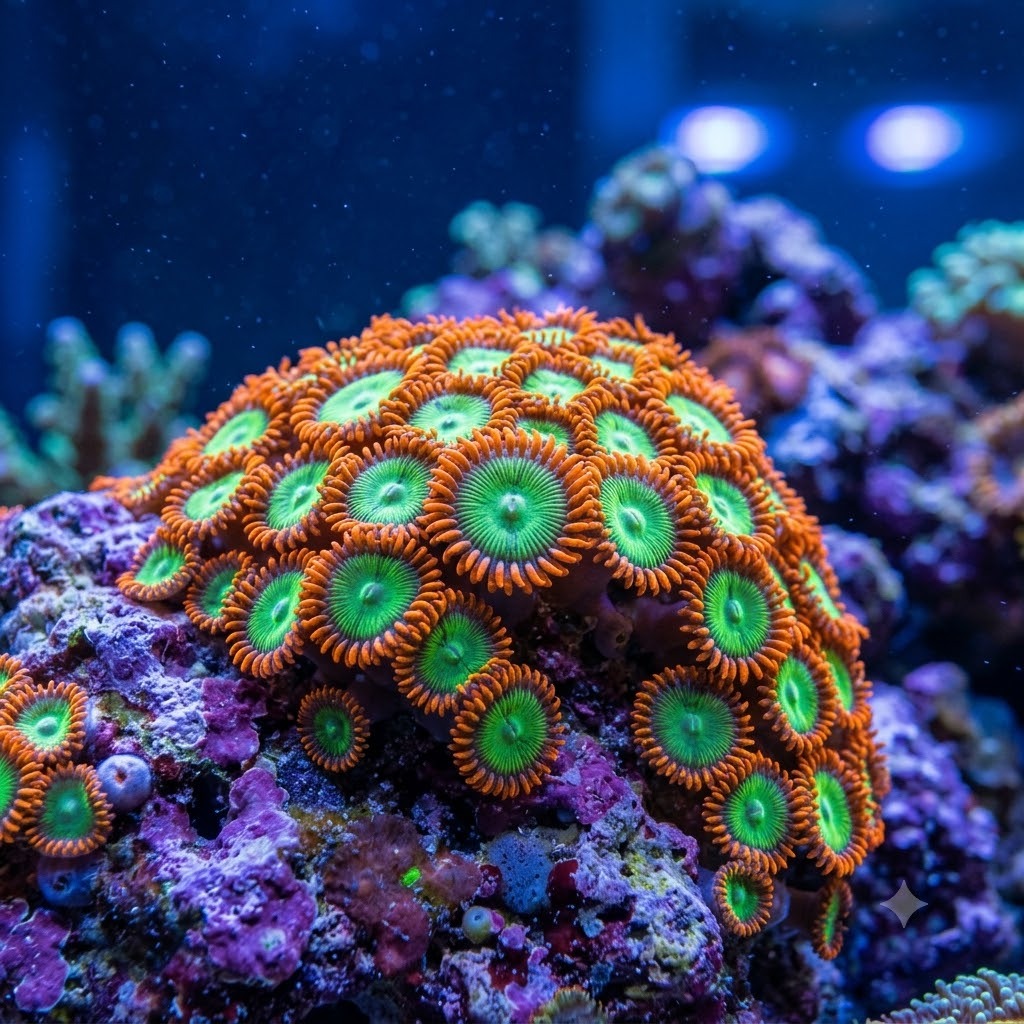
Overview
Zoanthids ('zoas') are button-like colonial polyps in wild neon colours that reefers collect like stamps, growing in spreading mats on rock. They are hardy and beautiful - but many carry palytoxin, one of the most poisonous natural substances known, so they demand real respect when handled. (Zoanthus and Palythoa species.)
Origin & Habitat
Shallow tropical reefs worldwide, encrusting rock and rubble in bright, surgy water.
Appearance
Flat discs of tightly packed round polyps ringed with a skirt of short tentacles, in electric greens, oranges, pinks and multicolour 'morphs' with collector names.
Placement & Temperament
Peaceful and slow-spreading; can be placed near other soft corals. Some Palythoa can slowly encroach, so give prized neighbours a little room.
Tank & Water Conditions
Salinity 1.024-1.026, 24-27°C, stable alkalinity 8-11 dKH, calcium 400-450, magnesium 1300-1350.
Lighting & Flow
Low to moderate light (about 75-150 PAR) and moderate flow bring out the brightest colours.
Feeding
Photosynthetic; benefit from occasional tiny meaty foods but do not require target feeding.
Health & Growth
Very hardy. Main threats are 'zoa-eating nudibranchs' and other pests - dip new colonies before adding them.
Pros & Cons
Pros
- Spectacular collectible colours
- Hardy and forgiving to keep
- Slow, well-behaved spreader
Cons
- ⚠️ Palytoxin risk when handled
- Pests (nudibranchs, spiders) hitchhike in
- Prices for rare morphs get silly
Zoanthids - frequently asked questions
Are zoanthids dangerous?
They can be. Many zoas and palys contain palytoxin, a severe poison. Always wear gloves and eye protection when fragging or scrubbing them, never boil or heat-treat rock that has them, keep the room ventilated, and keep hands away from your face. If exposed - especially to eyes or a cut - seek medical help. Keep them out of reach of children and pets.
Why are my zoas melting or disappearing?
Often zoa-eating nudibranchs or 'zoa pox'. Inspect closely and dip new frags in a coral dip before they ever touch the tank.
🧠 Test yourself: guess the exotic
Three clues from our quiz bank, each about another of our exotic. Can you name them?
Clue 1.From a single island nation, this glossy brown roach gives live birth and males sport bumpy 'horns.'
It's the Madagascar Hissing Cockroach - read the full profile →
Clue 2.One of the world's largest land mollusks, this shelled creature can grow as long as an adult's hand and is a serious invasive pest.
It's the Giant African Land Snail - read the full profile →
Clue 3.A slow-moving herbivore whose elongated body resembles a branch; it may sway gently to imitate a twig in the breeze.
It's the Stick Insect (Phasmid) - read the full profile →