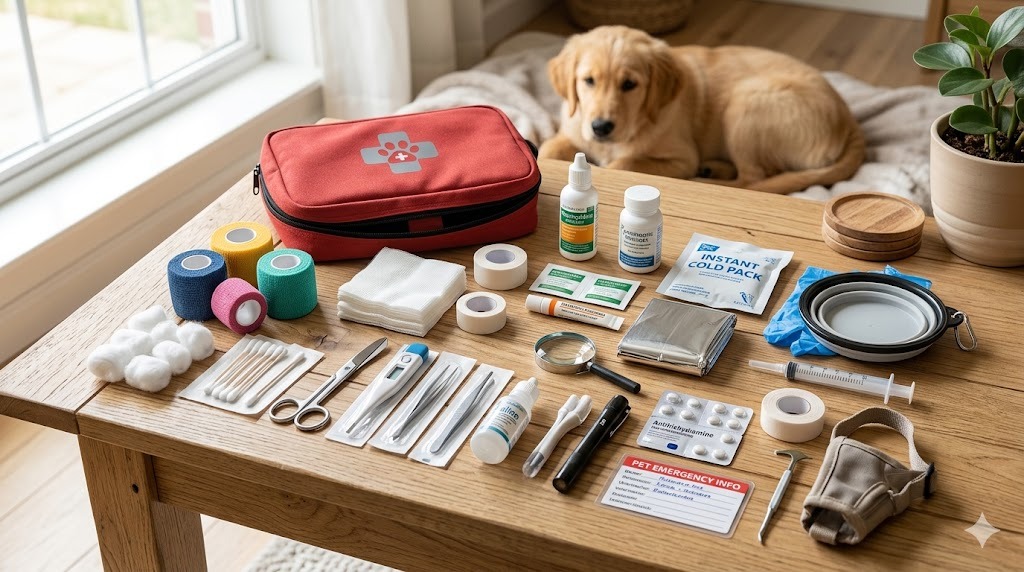
Pet Microchip vs GPS Tracker
Microchip vs GPS tracker - what each one does, what each one can't do, and why owners who use both have dramatically better recovery rates for lost pets.
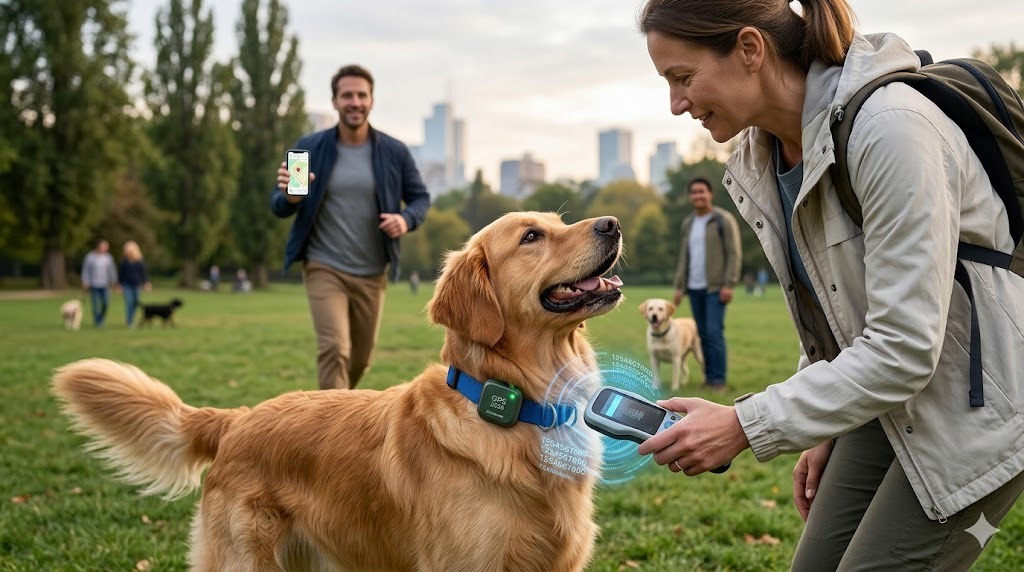
Microchip vs GPS tracker isn’t really a choice - you want both. A microchip is permanent ID that reunites a found pet with you, but it can’t tell you where the pet is; a GPS tracker shows the live location before anyone finds them. Layer both, plus a visible collar tag, for the best odds of getting a lost pet back.
Owners regularly treat them as alternatives - “I have a microchip, so I don’t need a tracker” or vice versa - and end up under-protected. The two technologies are complementary: a microchip identifies a found pet, while a GPS tracker tells you where the pet is before anyone finds them.
This guide explains exactly what each tool does, what it doesn’t do, what they cost, and how to set them up so they actually work when you need them. The numbers on lost pet recovery rates are stark - and they almost always favor owners with layered systems.
What a Microchip Actually Is
A microchip is a passive RFID device about the size of a grain of rice, implanted under the skin between a pet’s shoulder blades. It contains a unique ID number - nothing else. No GPS, no battery, no signal of its own. When a microchip scanner is held within a few inches, it reads the ID number, which the scanner operator then looks up in a database.
The recovery process
- A lost pet is found by a stranger, neighbor, animal control, or vet
- The finder takes the pet to a vet, shelter, or animal control facility
- The pet is scanned for a microchip
- The ID number is looked up in a registry
- The registered owner (you) is contacted
What microchips can do
- Permanent identification that can’t fall off
- Survive water, mud, weight loss, collar removal
- Last the pet’s lifetime (no battery, no maintenance)
- Inexpensive (~$30-60 one-time at most vets)
What microchips can’t do
- Tell you where the pet is
- Help if no one picks the pet up
- Help if the finder doesn’t take them to be scanned
- Help if the registry information is outdated
The biggest single mistake owners make: getting the chip implanted, then never registering it or letting registration lapse when they move. An unregistered microchip is useless.
What a GPS Tracker Actually Is
A GPS tracker is an active device - typically attached to the collar - with onboard GPS, cellular, or LoRa radio (some models) plus a battery. It transmits location data to your phone via an app.
What GPS trackers can do
- Show real-time or near-real-time location on a map
- Send geofence alerts (e.g., “Buddy left the yard”)
- Track activity and exercise
- Live-tracking during the recovery of a lost pet
- Help recover pets without third-party involvement
What GPS trackers can’t do
- Identify the pet to a finder
- Work without a charged battery
- Work in areas without cellular coverage (most LTE-based trackers)
- Help if the collar is removed or lost
- Identify the pet if the tracker is damaged
The Recovery Math
Statistics from large shelter databases tell a clear story:
- Microchipped dogs are returned to their owners about 52% of the time when found
- Non-microchipped dogs are returned only about 22% of the time
- Microchipped cats are returned about 38% of the time
- Non-microchipped cats are returned only about 2% of the time
The cat numbers are especially dramatic - cats without microchips almost never make it home, which is one more reason indoor-outdoor cat owners should treat chipping as non-negotiable. Add a GPS tracker on top of a microchip, and you handle the recovery scenarios that microchip alone misses: pets that haven’t been picked up by anyone yet, pets in a yard that escaped to a specific known location, pets being moved by someone (stolen pets).
Microchip Setup Done Right
Step 1: Get the chip implanted
Most vets offer chipping for $30-60. Many shelters chip every adopted animal as part of the adoption fee. The procedure is simple - a thicker-than-normal needle injects the chip under loose skin between the shoulder blades. Most pets react like getting a standard vaccination.
Step 2: Register the chip
This is the step most owners skip or fumble. The chip ID needs to be registered with at least one universal registry. Common options:
- AAHA Universal Pet Microchip Lookup - free, links to manufacturer databases
- HomeAgain - paid service ($20/year) with additional benefits
- AKC Reunite - popular with breeders, one-time fee
- 24PetWatch - chip-specific registry
Whichever you use, make sure the registry has:
- Your current name, address, phone number, and email
- A backup contact (family member or close friend)
- The pet’s microchip number, breed, color, and distinguishing marks
Step 3: Verify annually
- Test scan at your vet’s office during yearly exams (most vets do this routinely)
- Verify registry information is current
- Update phone, address, and email when you change them
A microchip with stale registry data is essentially useless.
Visible ID Tag: The Forgotten Layer
Most lost pets are returned by neighbors who simply call the phone number on the collar - long before anyone gets to a vet for scanning. A good ID tag costs $10-15 and is the single highest-value pet ID purchase you can make.
Information to include:
- Pet’s name (or skip - some experts recommend against, to prevent thieves)
- Your phone number (primary, secondary if room)
- “Microchipped” notation
- Medical alerts if relevant (“DIABETIC” or “NEEDS MEDS”)
GPS Tracker Selection
The GPS tracker market has consolidated around a few quality brands:
Fi Series 3
- LTE-M tracker with strong battery life
- Best for active dogs (durable, waterproof)
- $11-15/month subscription
- $149 hardware
Whistle Switch / Go Explore
- Combines GPS with health monitoring
- $10/month subscription
- $130-180 hardware
Tractive LTE
- Cheaper hardware ($50)
- $7-13/month subscription
- Slightly less polish on app, but solid performance
AirTag (cheaper backup, not a real GPS)
- $29 hardware, no subscription
- Uses Apple Find My network rather than GPS
- Useful as supplemental in urban areas; not adequate as primary tracker for escape-prone dogs
Cat-Specific Considerations
Cats present unique challenges:
- Indoor cats still benefit from microchipping; an open door = lost cat scenarios are common
- Outdoor cats have notoriously low recovery rates without microchip
- Collars on cats must be breakaway (safety) - which means cat GPS trackers attached to collars are less reliable
Smaller cat-specific GPS trackers (Tractive Mini, others) exist but battery life is shorter. For most cats, microchip + breakaway ID collar is the practical default.
Common Mistakes
1. Microchip never registered
Implanted at the vet or shelter, then no follow-up. Verify registration explicitly - don’t assume it’s done.
2. Old phone number on file
Owner moved cities and never updated. Pet found, registered owner can’t be reached.
3. GPS tracker collar with no microchip
Owner relies on GPS, then dog escapes with collar removed. Microchip would have caught them; without it, the dog is in shelter limbo.
4. Microchip and no visible ID
Dog wanders into a neighbor’s yard. Neighbor sees no ID and doesn’t know to take pet for scanning, so pet sits with neighbor for days or weeks.
5. Multiple registries with conflicting info
Microchip registered with manufacturer plus a third-party service plus a vet, all with different addresses. Update all of them when you move.
Setting Up Layered Protection (10-Minute Checklist)
- Microchip implanted by your vet
- Registered with the manufacturer’s registry and AAHA Universal Lookup
- Backup contact added to registry
- Annual scan at vet to confirm chip is working
- Visible ID tag with current phone number on every collar
- GPS tracker if budget allows and pet is escape-prone or outdoor
- Recent photos stored on your phone (used in lost pet posters)
- Microchip number written down somewhere you can find it without the pet - a printable pet care and ID log is a handy place to keep it alongside vaccine dates
The whole layered system costs $50-200 upfront plus $7-15/month for GPS subscription if you use one. Compared to the cost of a permanently lost pet, it’s a bargain.
Frequently Asked Questions
How much does microchipping cost?
$30-60 at most vet clinics. Many shelters chip every adopted animal as part of the adoption fee, or offer low-cost microchip clinics for $10-25.
Does a microchip have GPS?
No. A microchip is a passive RFID device that only transmits when scanned at very close range. It has no GPS, no battery, and no location capability.
Is microchipping painful?
The injection feels like a vaccination - brief, mild discomfort. Most pets react the same as they would to a normal shot.
How often should I update microchip information?
Every time you change your phone number, address, or email. Verify the information is correct at least once a year.
Are there universal microchip scanners?
Modern scanners read most microchip frequencies (125 kHz, 134.2 kHz, 128 kHz). Almost all U.S. vets and shelters can scan any standard chip. If you’re traveling internationally, ISO-compliant chips (134.2 kHz) are universally readable.
What’s the difference between Fi and Whistle?
Fi has stronger battery life (weeks vs. days) and more rugged build. Whistle has better health monitoring features. For escape artists, Fi. For health tracking, Whistle.
Can a microchip get lost or moved?
Rarely. Chips can occasionally migrate from the implant site over months or years (which is why vets scan multiple areas). Failure or expulsion is rare but does happen - chip presence should be verified annually.
Do I need GPS tracking if my pet stays inside?
Microchip is still essential - open doors happen. GPS tracker is less critical for indoor pets but can be valuable for cats that occasionally escape. If you are working through a broader safety setup, our pet problem-solver hub covers related escape-proofing and behavior issues.
Final Word
A microchip is not a substitute for a GPS tracker. A GPS tracker is not a substitute for a microchip. A visible ID tag is not a substitute for either, but solves the most common lost pet scenarios faster than either of them. The right approach is layered protection: microchip implanted and registered, visible ID on every collar, GPS tracker if budget and use case warrant.
The total cost is modest. The protection is dramatic. Almost every pet owner can - and should - implement this within a week.
Related Reading
Last updated: May 2026.