Cat Litter Types Compared 2026
Honest comparison of cat litter types in 2026 - clumping clay, crystal silica, wood pellet, corn, and more. Pros, cons, costs, and which suits which cat.
The best cat litter for most cats is unscented clumping clay - it’s what cats prefer, and it controls odor and cost well - with crystal (silica) litter for low dust and natural wood, corn, or paper litters for the eco-minded or cats with allergies. Cats form strong early preferences, so switch types gradually.
Cat litter looks like a commodity. It isn’t. The litter you choose affects your cat’s willingness to use the box, the air quality in your home, your monthly costs, and your environmental footprint. Cats develop strong preferences early and often refuse to use a box with the “wrong” litter - a problem that frequently shows up as inappropriate elimination on rugs and beds. Preferences vary by individual and breed; our cat breed guides note which cats tend to be fussier about their setup.
This guide walks through every major litter category honestly: what’s in it, how it performs, what it costs, and which kinds of cats and households suit it best. We’ll skip the marketing claims and stick to the practical differences that matter day to day.
The Six Litter Categories
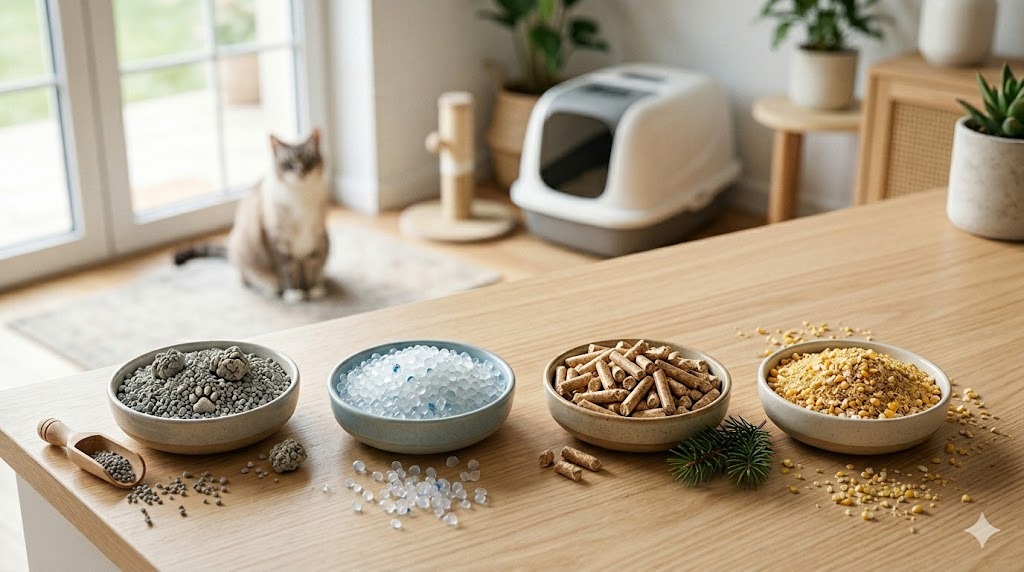
There are roughly six categories of cat litter on the U.S. market:
- Clumping clay (bentonite) - the default, ~70% market share
- Non-clumping clay - old-school absorbent clay
- Silica crystals - color-changing absorbent beads
- Wood pellets - pine, often unscented
- Plant-based clumping - corn, wheat, tofu, walnut
- Paper pellets - recycled paper
Each has trade-offs across odor control, dust, weight, cost, and how well most cats accept it.
1. Clumping Clay (Bentonite)
The most common litter. Bentonite clay clumps tightly around urine, making waste removal easy. It’s the cheapest per-use option and has the strongest odor control.
Pros
- Excellent clump formation
- Strong odor control
- Most cats accept it readily
- Cheap (under $0.20 per pound at scale)
- Easy to find anywhere
Cons
- Heavy (40 lb bags are a workout)
- Dusty (worse for asthmatic cats and humans)
- Not biodegradable - landfill bound
- Strip-mined (environmental cost)
- Tracks aggressively
2. Non-Clumping Clay
The original cat litter. Absorbs moisture but doesn’t form scoopable clumps - you toss the whole box every few days.
Pros
- Cheapest of all litters
- Low-dust options exist
- Lightweight per unit
Cons
- Weak odor control once saturated
- Requires complete box change frequently
- More work over time despite cheaper per-bag cost
- Most cats prefer clumping
Most owners who try non-clumping clay switch to clumping within a few months. The only practical use case is for very young kittens who might eat clumping clay (which can cause intestinal blockages).
3. Silica Crystal Litter
Silica gel beads - the same material in shoe boxes’ moisture packets. Beads absorb urine and gradually change color as they saturate.
Pros
- Excellent odor control (often best in category)
- Low dust
- Lasts longer than clay between full changes
- Lightweight
Cons
- Crunchy texture some cats hate
- Expensive per pound
- Not biodegradable
- Beads can stick to wet paws
4. Wood Pellet Litter (Pine)
Compressed pine pellets, sometimes with kiln drying. Pellets break apart into sawdust when wet.
Pros
- Natural, biodegradable
- Mild pine scent (most cats tolerate)
- Lightweight
- Cheap if you buy horse-bedding pellets (same material, fraction of price)
Cons
- Pellets are uncomfortable for some cats’ paws
- Doesn’t clump in the conventional sense
- Sifting box recommended (special pan with grate)
- Sawdust tracks once pellets break down
The hidden tip: horse-bedding pine pellets at Tractor Supply or Rural King cost $7 for 40 lbs and are functionally identical to “cat-specific” pine pellets sold for 4× the price.
5. Plant-Based Clumping (Corn, Wheat, Walnut, Tofu)
Plant-derived clumping litters. Behavior varies by base material.
Pros
- Biodegradable (most are flushable in small amounts, but check local rules)
- Low dust
- Lightweight
- Most form decent clumps
Cons
- Pricier than clay
- Corn-based can attract pantry pests if stored loosely
- Wheat litters can grow mold in humid climates
- Some cats refuse the texture or scent
Tofu litter
Made from soy fiber. Forms surprisingly hard clumps, flushes well, very low dust. Becoming popular in 2026. Downside: shorter shelf life and higher cost.
6. Paper Pellet Litter
Recycled newspaper pulp pressed into pellets. Often recommended for post-surgical cats (won’t stick to incisions) and kittens.
Pros
- Soft on paws
- Very low dust
- Recycled / biodegradable
- Safe for healing wounds
Cons
- Weak odor control
- Doesn’t clump well
- Needs frequent full changes
Use case: post-surgery transition or kittens under 8 weeks. Most adult households move to a different litter eventually.
Direct Comparison Table
| Type | Odor Control | Dust | Weight | Cost/Month (1 cat) | Cat Acceptance |
|---|---|---|---|---|---|
| Clumping clay | ★★★★★ | ★★ | Heavy | $10-15 | ★★★★★ |
| Non-clumping clay | ★★ | ★★★ | Medium | $8-12 | ★★★ |
| Silica crystal | ★★★★★ | ★★★★★ | Light | $20-30 | ★★★★ |
| Wood pellet | ★★★ | ★★★★★ | Light | $5-15 | ★★★ |
| Plant-based clumping | ★★★★ | ★★★★ | Medium | $20-30 | ★★★★ |
| Paper pellet | ★★ | ★★★★★ | Light | $15-25 | ★★★ |
How to Switch Litters Without a Strike
Cats refuse abrupt litter changes. Method:
- Week 1: 75% old / 25% new in the box
- Week 2: 50/50
- Week 3: 25% old / 75% new
- Week 4: 100% new
If the cat shows hesitation or starts going outside the box, slow down or revert. Some cats simply will not change litter type and you have to accept that.
Tracking and Mess Management
Most owners underestimate how much litter their cat tracks. A litter mat reduces this by 60-80%.
Box Setup Recommendations
- Number of boxes: N+1 where N = number of cats (two cats = three boxes)
- Litter depth: 2-3 inches (deeper is wasted; shallower is uncomfortable)
- Box size: 1.5x the length of the cat from nose to base of tail
- Hood: unhooded preferred by most cats (hoods trap odor and feel like ambush risk)
- Location: quiet, low-traffic, away from food and water, multiple floors if multi-story home
Scoop and Clean Frequency
- Scoop: twice daily for clumping; once daily acceptable for single-cat household
- Full litter change: every 2-4 weeks for clumping; every 1-2 weeks for non-clumping
- Box wash: monthly with mild soap, fully dry before refill (avoid scented cleaners - cats hate them)
Special Cases
Kitten under 8 weeks
Use paper pellets or non-clumping clay only. Kittens may eat clumping litter.
Post-surgery cat
Use paper pellets. Standard litter sticks to incisions.
Cat with urinary issues
Consider color-changing crystal litter (PrettyLitter, Pretty Litter alternatives) for early UTI/crystal detection.
Cat with respiratory issues
Low-dust litters: silica crystal, tofu, wood pellets.
Multi-cat household
Stick with high-odor-control options: clumping clay (Dr. Elsey’s), silica crystal.
Frequently Asked Questions
What’s the safest litter for kittens?
Non-clumping clay or paper pellets until at least 8 weeks. Clumping clay can swell in the digestive tract if eaten.
Is silica crystal litter safe?
Yes, when used as intended (in a box, not eaten). Silica gel is non-toxic and inert.
Can I flush plant-based litter?
Some plant litters claim flushability, but most municipal sewer systems and septic tanks aren’t designed for it. Check local rules and your plumbing.
How often should I fully change the litter?
For clumping litters with proper scooping, every 2-4 weeks. For non-clumping, every 1-2 weeks.
My cat suddenly stopped using the box - is it the litter?
Possibly. Sudden box rejection has many causes: medical (UTI, crystals, kidney issues), environmental (new pet, change in location), or litter (texture change, scent change). Vet visit first to rule out medical, then work through our litter box troubleshooting guides to fix the environment and litter.
Are scented litters bad?
Most cats prefer unscented. The “fresh scent” is for humans and often deters cats. Choose unscented and rely on scooping frequency for odor control.
How much does litter actually cost per year?
For one cat, $120-360 per year depending on litter type. Clay is cheapest, crystal and tofu are most expensive.
Final Word
There is no universally best cat litter - only the best litter for a specific cat in a specific home. For most multi-cat households on a budget, low-dust clumping clay (Dr. Elsey’s) is the strong default. For single-cat low-maintenance setups, silica crystal litter requires less frequent intervention. For eco-conscious households, tofu or pine pellets are reasonable. The cat is the final judge.
The two highest-leverage upgrades regardless of litter type: enough boxes (N+1) and a quality mat at every box.
Related Reading
- Best Smart Litter Box
- Best Pet Insurance for Cats
- Best Cat Trees & Towers
- Best Cat Brush for Shedding
Last updated: May 2026.