Why Cats Lick Plastic
The short answer: plastic bags appeal to a cat's senses through their crinkle, the smell of food they held and the coatings some bags carry, and for a few cats licking or chewing them is a sign of stress or pica. What is normal, what is not, and when to call the vet.
 AI illustration
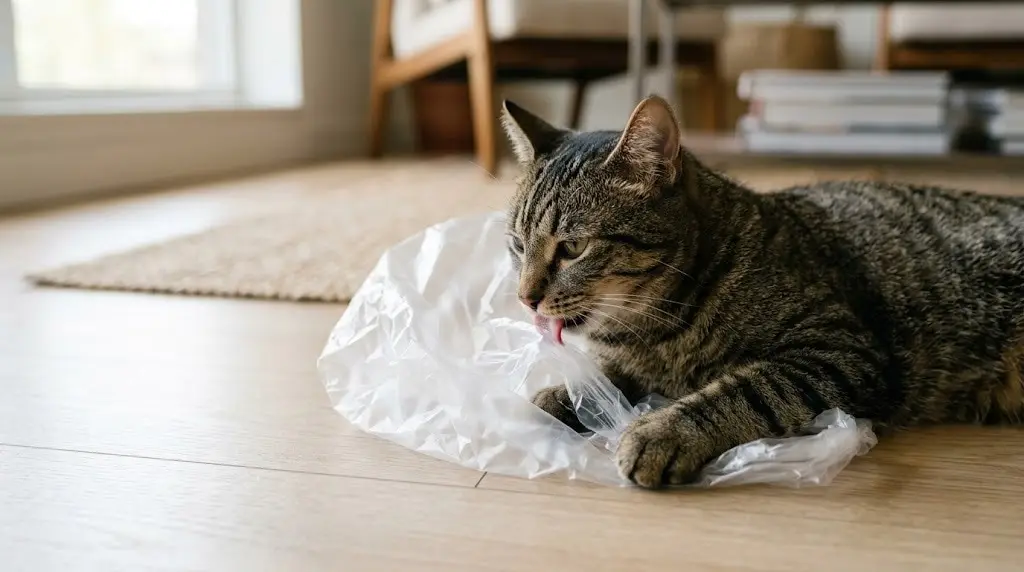
The short answer: many cats lick plastic because they like it. Hill’s sums it up as a full sensory experience: the crinkle, the smell of the food a bag once held, and the smooth surface. An occasional lick is odd but normal. Chewing and swallowing plastic, or licking that ramps up when your cat is stressed, is the version worth taking seriously.
The innocent reasons
Plastic is more appealing to a cat than it looks from human height. Hill’s lists these:
- It smells of what it touched. A shopping bag that carried food can keep smelling of that food.
- Some bags carry coatings. Quoting the Pet Health Network, Hill’s notes that many bags are coated in substances such as cornstarch or stearates, or are made with animal by-products such as gelatin, which can make them attractive to cats. This is a plausible explanation rather than something that has been tested.
- The sound and the feel. The crinkle of the plastic and its smooth surface are part of the appeal.
Veterinary behaviourist Dr Valarie Tynes told Live Science that licking plastic on its own does not worry her if the cat has always licked unusual things and does not spend a large part of the day doing it, as long as the cat is not eating it. If your cat gives a bag a few licks and moves on, put the bags away and nothing more is needed.
When it means something more
A smaller group of cats take it further, and the pattern matters more than the act:
- Stress. Hill’s notes that cats may chew bags and harder plastics to relieve anxiety caused by changes such as moving house, a new pet or a new baby, or by illness and ageing. Dr Tynes describes plastic sucking as a kind of self-soothing, similar to a baby sucking its thumb. Another vet in the same Live Science piece, Dr Nicholas Dodman, links it to a kitten’s leftover suckling drive; Dr Tynes points out that this weaning theory has not been proven.
- Pica: eating it. Eating non-food items such as plastic, fabric, cardboard or rubber is called pica. PetMD’s vet authors say it is uncommon. Swallowed material can lodge in the gut and cause a blockage that can be life-threatening and often needs surgery. Causes range from stress, boredom and compulsion to medical problems such as anaemia, hormonal disease, parasites and infections, and breeds such as the Siamese and the Burmese are affected more often than others, although any cat can be.
What to do about it
- Remove the temptation. Hill’s calls this the safest way: keep bags in a cupboard or a cat-free room, and use a bin with a lid that the liner tucks under. Keeping bags away also protects your cat from getting the handles caught around its neck.
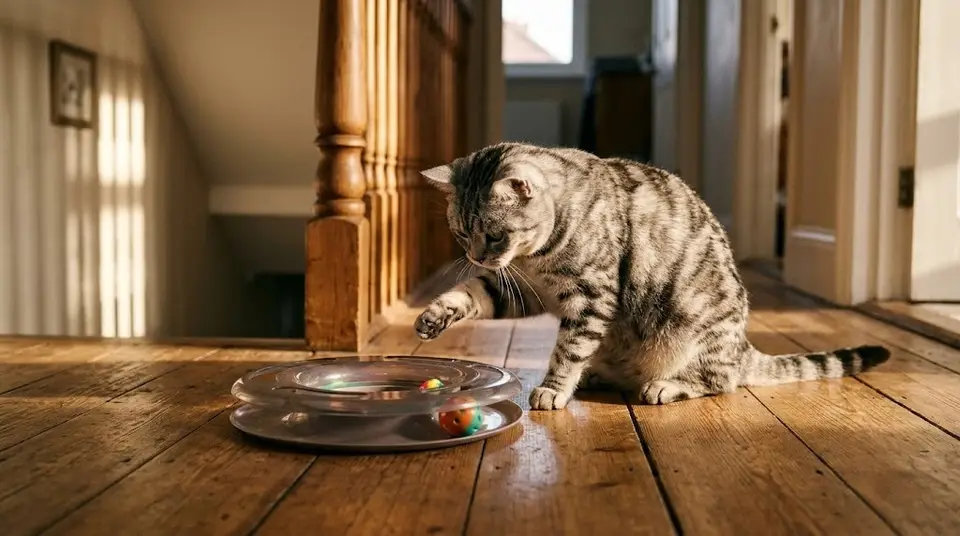
- Offer something better. Hill’s suggests food puzzles and ball mazes, soft toys to chase, sturdy dog toys, and a spot of its own where it can chew treats and toys. Dr Tynes suggests growing some cat grass.
- Watch for swallowing. If pieces are missing from bags, or your cat is vomiting, has diarrhoea, stops eating or drinking, strains to pass stool or seems lethargic, call your vet promptly. PetMD lists these among the signs that can come with pica or its results.
- Let the vet rule things out. If you suspect more than sensory fun, Hill’s advises a vet appointment to rule out pica and other medical problems. Both vets in the Live Science piece recommend a vet visit for any cat that eats non-food items, and Dr Tynes suggests a behaviour specialist if that does not help.
In short
An occasional plastic-licker is a normal cat doing normal weird cat things. A cat that seeks plastic out, eats it, or started suddenly may be telling you about stress or a medical problem, and that version deserves a vet conversation rather than a shrug. This is general information, not veterinary advice; when in doubt, ask your vet.
Curious about more odd habits? Our cat behavior guides cover the rest of the mysteries, and the Can They Eat It? checker answers the food-safety half of “my cat licked something strange”.
Sources
- Hill’s Pet Nutrition, “Why Do Cats Eat Plastic?” (read 28 October 2026): hillspet.com
- PetMD, “Pica in Cats: What It Is, Symptoms, and Treatment”, by Michael Kearley, DVM, reviewed by Melissa Boldan, DVM (read 28 October 2026): petmd.com
- Live Science, “Why do cats lick plastic bags?”, with Dr Nicholas Dodman and Dr Valarie Tynes (read 28 October 2026): livescience.com
Recommended Gear on Amazon
- Puzzle feeder - browse current options and reviews on Amazon.
- Cat grass kit - browse current options and reviews on Amazon.
- Kitchen bin with lid - browse current options and reviews on Amazon.
As an Amazon Associate, we earn from qualifying purchases - at no extra cost to you. This helps us keep producing free, in-depth guides.